

Prioritize coordination, supervised strength, and play-based sprint exposure over structured speed programs until a child shows real movement readiness. Structured speed training with timed reps and heavy sprint volume belongs to older, more mature athletes. Younger kids need games, reactive movement, and low-impact plyometrics first, with screening checks like balance and hopping control guiding when it's safe to add intensity.
TL;DR:
- Children under 10 should focus on coordination, play-based sprinting, and landing control before engaging in structured speed drills.
- Speed development relies on mastery of basic skills such as balance, smooth mechanics, and bodyweight strength, not just running faster.
- Progression in speed training should prioritize proper mechanics and recovery, limiting high-intensity sprints to four to six reps per session for younger kids.
- Incorporating speed work into regular practice or short sessions twice weekly supports development without overloading young athletes.
- Certified coaches should oversee speed training to ensure safe load progression and proper technique, especially when resistance exercises are added.
Table of Contents
- When Should Kids Start Youth Speed Training?
- The Building Blocks Every Fast Athlete Needs First
- Sample Youth Speed Training Drills and Session Templates
- How to Progress Youth Speed Training Without Overloading Young Athletes
- Tracking Progress Without Losing the Fun
- Fueling Youth Speed Development the Right Way
- Building Confidence and Focus in Young Athletes
- Speed Training Looks Different Across Youth Sports
- Fitting Speed Training Into a Busy Youth Sports Schedule
- How We Run Youth Speed Classes at Repphilosophy
- Ready for Supervised, Age-Appropriate Speed Training?
- Sources
When Should Kids Start Youth Speed Training?
There's a real difference between letting a child sprint during tag and enrolling them in a structured speed program with stopwatch splits and prescribed rest intervals. The first is appropriate at almost any age. The second should wait until a young athlete shows specific readiness markers, not just a birthday.
Coaches at Simplifaster argue that kids between 8 and 12 gain more from coordination work and play-based sprinting than from technical speed programs built around drills adults use. That doesn't mean skipping sprints. It means the context matters more than the clock.
A simple readiness check works better than age alone:
- Can the child balance on one foot for roughly 15 seconds? If not, coordination work comes first.
- Can they hop and land with control, without their knee caving inward?
- Do they stay engaged and focused across a 20 to 30 minute session, or do they lose interest and start freelancing?
- Can they follow a two-step direction cue during a game without needing constant reminders?
Session length should scale with attention span, not ambition. Kids age 6 to 9 do well with 30 to 40 minutes built mostly around games. Ages 10 to 13 can handle 40 to 50 minutes with a real skill circuit. Teens who've built a coordination base can train 50 to 60 minutes, two to three times weekly, with actual acceleration and top-speed work included. Parents can run a rough version of these checks in the backyard before ever booking a class.
The Building Blocks Every Fast Athlete Needs First
Speed isn't a skill you install directly. It's the output of several smaller skills working together, and skipping them to chase faster times almost always backfires later.
Coordination comes first. Balance, rhythm, spatial awareness, and reaction time determine how efficiently a young athlete's nervous system fires during a sprint. A kid who can't change direction without stumbling won't get faster by running more 40-yard dashes. They'll just practice inefficient movement at higher speed, which is how bad habits calcify.
Mechanics cues should stay simple at this stage. Think "tall posture," "relaxed hands," and "quick feet," not stride-length percentages or ground-contact time. Kids respond to imagery, not biomechanics lectures. Telling a 9-year-old to "run like you're being chased by a friendly dog" works better than any technical correction.
Strength progressions follow a clear order: bodyweight control first, then resistance bands, then light supervised loading once technique is solid. The pediatric sport framework recommends exactly this kind of individualized, health-centered progression rather than pushing kids into adult-style lifting schemes. Reviews of youth resistance training back this up: when qualified coaches manage load and instruction, resistance training is safe and effective for children and adolescents.
Plyometrics need to start with landing, not jumping. A child should master absorbing force in a controlled landing before you ever ask them to produce force in an explosive jump. Skip this order and you're building a launchpad without brakes.
- Coordination: balance beams, agility ladders, reactive catch games
- Mechanics: tall posture drills, arm swing cues during light jogs
- Strength: bodyweight squats and lunges, then band work, then light loaded carries
- Plyometrics: pogo hops, snap-downs, single-leg landing holds before any bounding
Pro Tip: Film a 10-second clip of a kid landing from a small jump on your phone. If the knee drifts inward or the landing looks loud and stiff, that's your cue to spend two more weeks on landing mechanics before adding any sprint-specific plyometric work.
Sample Youth Speed Training Drills and Session Templates
A good session follows the same skeleton regardless of age: warm-up, coordination or skill circuit, play-based sprints, cool-down. What changes is volume, complexity, and how much structure you layer on top.
Warm-up sequence (5 to 8 minutes):
- Dynamic mobility: leg swings, walking lunges, hip circles
- Skipping for distance across 15 to 20 yards
- Reactive hops: two-foot pogo jumps, then single-leg holds
Drill bank with cues:
- Shark tag or freeze tag — builds change of direction and reactive speed without kids realizing they're sprinting
- Ladder runs — quick feet, low volume, focus on rhythm over speed
- Pogo jumps — "quiet feet, quick pop," 2 sets of 8 to 10
- Single-leg landing holds — stick the landing for a 2-count before resetting
- Short relay shuttles — 10 to 15 yards, teaches acceleration mechanics through competition, not instruction
- Light resisted shuttles (band or partner-assisted, ages 12+) — short bursts of 5 to 8 yards only
Session templates:
Regress any drill by removing the reactive element (turn a chase game into a follow-the-leader jog) if a child struggles with control. Progress by adding distance or resistance only after landing mechanics look clean on a soft surface like grass or turf rather than concrete. Our own drill bank breakdown covers several of these movements with more detail on regressions.
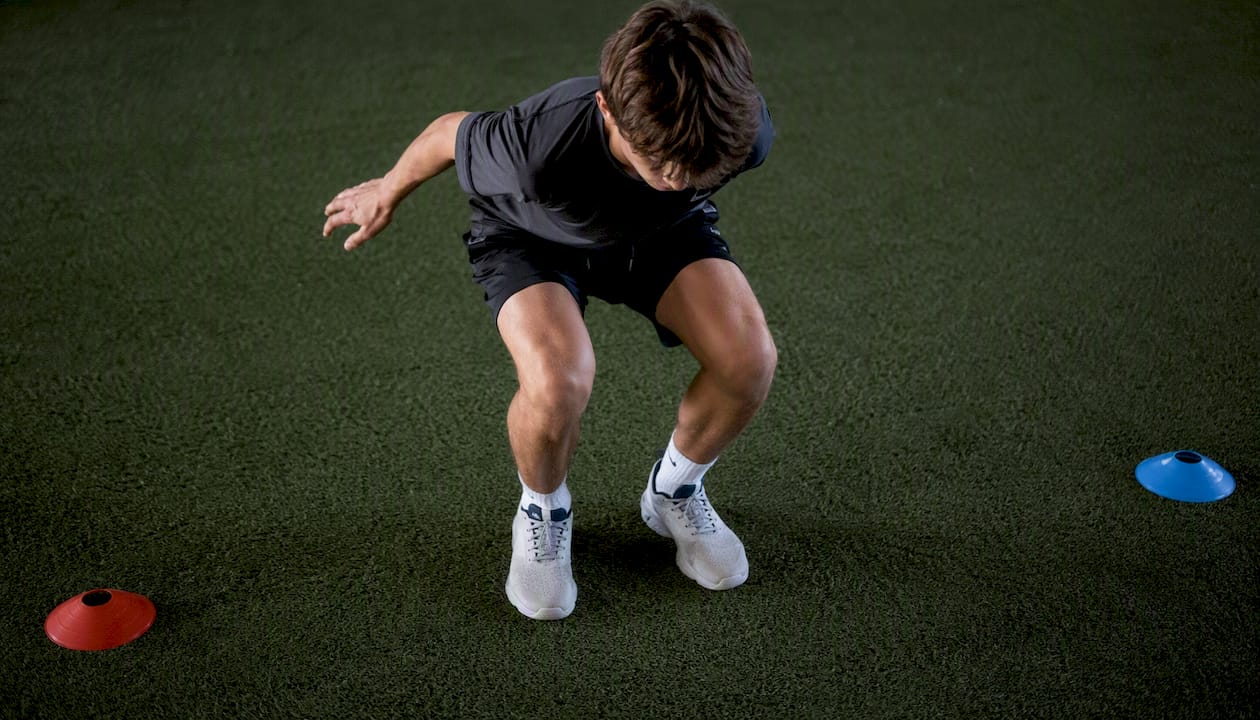
How to Progress Youth Speed Training Without Overloading Young Athletes
Progression isn't about adding more. It's about adding the right thing at the right time, and pulling back the moment recovery or form breaks down.
The International Olympic Committee's consensus statement recommends short, high-quality efforts with full recovery over high sprint volume. That translates into practical limits: younger kids should cap true high-intensity sprints at 4 to 6 per session, with rest long enough that heart rate drops back near baseline between reps, often 30 to 60 seconds of active recovery per second of sprint work. Teens with a solid base can handle more reps, but the same full-recovery principle still applies.
- Resistance training additions should follow a coach's confirmation that landing mechanics and bodyweight control are solid, not a birthday.
- Look for coaches with recognized strength and conditioning credentials or specific youth training certifications, not just a sports background.
- A qualified coach who manages load carefully is the biggest single factor in avoiding injury, since most youth resistance training injuries trace back to poor instruction or rushed progression rather than the training itself.
- Red flags include persistent joint pain, a noticeable limp after sessions, or a child dreading practice they used to enjoy.
Pro Tip: If a young athlete's performance drops for two sessions in a row without an obvious reason, treat it as a recovery flag before assuming they need to work harder. Massage and soft-tissue work, like the kind covered in this guide to training recovery, can help older youth athletes manage the accumulated fatigue of multi-sport schedules.
Tracking Progress Without Losing the Fun
Kids don't need a stopwatch to know they're improving. They need to feel more capable, and the right benchmarks confirm that feeling instead of undermining it.
Simple movement checks work better than sprint times for younger athletes: can they hold a landing without wobbling, balance longer than last month, or complete an agility circuit with fewer errors? These are the metrics that actually track development.
Short splits and pacing games become useful once athletes hit their teens. Research on youth athletic development shows pacing behavior and effort regulation are learned skills, not fixed traits, and coaches can teach them through split monitoring and simple task constraints, like racing to hit a target time on the third rep of four rather than sprinting all-out every time.
- Track process goals ("stick every landing today") more than outcome goals ("run faster than last week")
- Use relay games and team scoring to keep tracking fun instead of clinical
- Expect performance to fluctuate with growth spurts. A temporary coordination dip during rapid growth is normal, not a training failure
Fueling Youth Speed Development the Right Way
Speed work asks a lot of a young body, and nutrition either supports that demand or quietly undercuts it. Growing kids need consistent fuel across the day, not a single pre-practice snack treated as a fix.
Regular meals spaced through the day matter more than any single "performance" food. A young athlete training after school on an empty stomach since lunch will look sluggish in a coordination drill, not because their speed regressed but because their fuel tank is empty. A balanced snack with carbohydrates and some protein 60 to 90 minutes before a session, like fruit with a bit of yogurt or a turkey sandwich, gives working muscles what they need without sitting heavy.
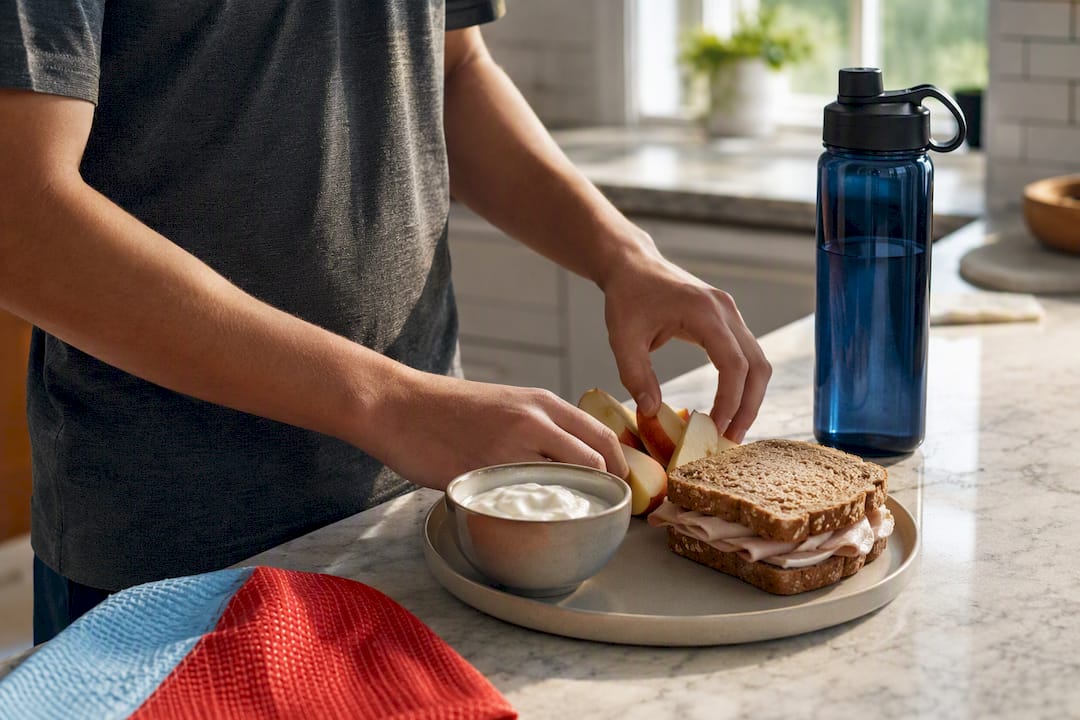
Hydration deserves more attention than it usually gets. Kids regulate body temperature less efficiently than adults, and a mildly dehydrated athlete shows the same warning signs coaches often mistake for poor effort: slower reaction time, early fatigue, and irritability. Water before, during, and after sessions covers most needs. Sports drinks aren't necessary for a 30 to 45 minute youth session unless it's unusually hot.
Growing athletes also need adequate protein and calories across the whole day to support both the muscle development that underlies power output and normal growth. This isn't the moment for restrictive eating patterns, even well-intentioned ones aimed at "leaning out" for performance. A hungry, undersupported young athlete plateaus faster than one who's simply less experienced. Consistency in meals matters more here than any single ingredient or supplement claim.
Building Confidence and Focus in Young Athletes
The mental side of speed training gets far less attention than drills and reps, but it often determines whether a kid sticks with the sport at all. Confidence comes from mastering small, visible wins, not from being told they're fast.
Coaches who break skills into achievable steps, stick a landing, beat a personal split, complete a drill without a cue, give kids concrete proof of improvement they can feel. That proof builds a kind of confidence that pep talks can't manufacture. Praise the process ("your first step off the line was quick") more than the outcome, since process praise teaches kids what to repeat.
Focus in young athletes is a trainable skill, not a fixed trait. Short, varied drills hold attention better than long, repetitive ones, which is part of why game-based sprint work outperforms cone-to-cone running for this age group. A 9-year-old chasing a flag in a tag game is practicing acceleration, deceleration, and reaction time while thinking they're just having fun.
Motivation research on youth sport points to something coaches see constantly on the field: enjoyment and the coaching environment predict whether kids stay in a sport far more than raw skill does. Roughly 70% of youth athletes drop out before high school, usually because training stopped being fun or the coaching relationship soured, not because they lacked talent. That statistic should reframe how every session gets designed. Fun isn't a reward for finishing the "real" work. It's the delivery mechanism for the real work.
Speed Training Looks Different Across Youth Sports
A soccer player, a sprinter, and a young baseball infielder all need speed, but the type of speed they need diverges quickly once you look past the general drills.
Soccer and basketball demand multidirectional speed: quick starts, sharp cuts, and repeated short bursts rather than one long sprint. Training for these sports should emphasize change-of-direction drills and reactive agility work over pure linear sprint mechanics. Our guide to sport-specific training covers how this balance shifts as kids specialize.
Track and field athletes eventually need dedicated acceleration and top-speed mechanics work, but that specificity should wait until the coordination base described earlier is solid, typically the young teen years rather than early elementary school.
Baseball and softball players need short, explosive first-step speed more than sustained sprint speed, since most game-relevant sprints cover 60 to 90 feet at most. Football skill players sit somewhere between soccer's multidirectional demands and track's linear speed needs, depending on position.
The practical takeaway for parents: a general athletic base built on coordination, landing control, and play-based sprinting transfers to any of these sports. Sport-specific speed work should layer on top of that base once a coach confirms the fundamentals are solid, not replace it.
Fitting Speed Training Into a Busy Youth Sports Schedule
Most young athletes today aren't training in a vacuum. They're juggling practice for their primary sport, maybe a second sport, school demands, and family schedules, which makes speed training one more thing competing for limited energy and time.
The fix isn't necessarily adding another dedicated session. Many of the coordination and landing drills described earlier fold naturally into a warm-up for an existing practice, adding 10 to 15 minutes rather than a whole new commitment. Coaches running multi-sport athletes should coordinate with other coaches when possible to avoid stacking high-intensity days back to back, since two separate sprint-heavy sessions on the same day multiply fatigue and injury risk without multiplying benefit.
Consistency matters more than volume here. A steady, twice-weekly rhythm of shorter, focused sessions builds more durable speed than occasional long sessions squeezed in when the schedule allows. Watch total weekly load across all activities, not just the dedicated speed sessions, since a child playing club soccer three days a week already has a substantial sprint volume before any extra speed work gets added.
Off-season windows are the ideal time to build the coordination and strength base described earlier, since in-season schedules rarely leave room for anything beyond maintenance. Parents juggling multiple kids and multiple sports should treat rest days as a scheduling priority, not an afterthought squeezed in only when nothing else fits.
How We Run Youth Speed Classes at Repphilosophy
Coach Justin's approach starts with the same readiness screen covered earlier: balance, landing control, and attention span before anything resembling a timed sprint. Classes open with a coordination circuit, move into supervised, age-scaled strength work, and close with play-based sprints disguised as games, because kids perform better when they're not thinking about performing.
Small-group and buddy memberships work well for this model because they let a coach watch two or three athletes closely enough to catch a bad landing before it becomes a habit, while still keeping the energy of training alongside a friend. The balance is deliberate: enough challenge to build real capability, enough safety margin that a growth spurt or an off day doesn't turn into an injury. Our sports performance training breakdown covers how these building blocks connect to the athletic development described throughout this piece.
— Coach Justin
Ready for Supervised, Age-Appropriate Speed Training?
If you've read this far, you already know the honest answer: DIY sprint drills in the backyard are a fine starting point, but they can't replace a coach watching for the landing mechanics, coordination gaps, and load progression that actually keep kids safe as intensity rises. Repphilosophy runs youth speed and agility classes at WayALife Athletics built around exactly the readiness screening and progression model covered above.

Parents wanting a coach-led starting point can book a trial class or small-group session where Coach Justin runs the same balance, landing, and coordination checks described in this guide before any young athlete touches a stopwatch. Buddy memberships let two friends train together at a lower cost than one-on-one coaching, while the virtual training library gives families a home-practice option between in-person sessions. A first session typically includes the readiness screen, a light coordination circuit, and a few play-based sprints so Coach Justin can see how a young athlete moves before building out a plan. Visit the WayALife Athletics program page to see current class times, or head to the booking page to reserve a spot.
Sources
- What is the pediatric sport framework, and how can it be applied in professional practice? | Sport Sciences for Health
- International Olympic Committee consensus statement on youth athletic development
- Epidemiology and safety of resistance training in youth (PMC review)
- The Myth of Speed Training and the Young Athlete