
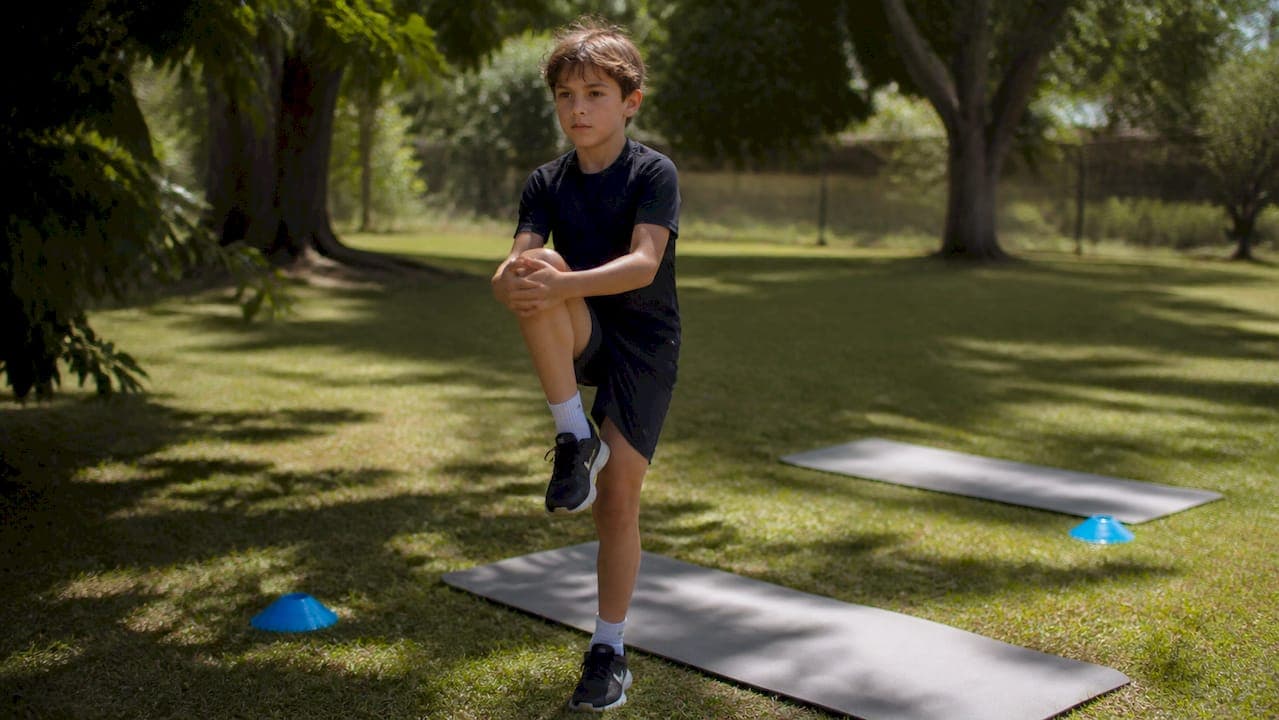
Kids get sports injuries because growing bones, tendons, and muscles don't adapt to training load the same way adult tissue does, and most youth sports programs still train children like small adults. More than 3.5 million children aged 14 and younger sustain sports-related injuries every year in the U.S., which works out to roughly 37 kids treated in an emergency room or clinic every single hour. The American Academy of Pediatrics points to two forces driving that number: bodies that are still under construction, and training schedules that push those bodies harder than they're built to handle.
Here's what you can do about it right now, before reading another word:
- Check the age-to-hours rule. Your child's weekly training hours, across all teams and practices combined, shouldn't exceed their age in years.
- Don't ignore pain that sticks around. A limp, a favored arm, or complaints that outlast a day or two mean it's time to stop play and get it looked at, not push through.
Those two habits alone address the majority of preventable youth sports injuries. The rest of this guide explains why, and gives you the specific tools coaches and pediatric specialists actually use to keep young athletes on the field longer.
Key Takeaways
Youth sports injuries stem from growing bones and tendons meeting training loads that outpace their ability to adapt, and most of these injuries are preventable with age-aware load management and evidence-based warm-ups.
| Point | Details |
|---|---|
| Cap weekly hours by age | Keep total weekly training hours at or below your child's age in years across all teams combined. |
| Never train through persistent pain | Pain lasting more than a day or two, or worsening with activity, means stop and get evaluated. |
| Use proven warm-up programs | FIFA 11+, PEP, and Thrower's 10 have documented evidence for reducing ACL and shoulder injuries. |
| Protect sleep and nutrition | Sleep and recovery directly affect how well growing tissue adapts to training load. |
| Vet programs for individualized coaching | Repphilosophy's youth training in 4S Ranch builds progressions around each athlete's developmental stage, not just their age. |
Table of Contents
- Why Kids Get Sports Injuries More Easily Than Adults
- Acute Trauma Versus Overuse: The Two Ways Injuries Actually Happen
- What Injuries Show Up at Each Age and in Which Sports
- Modifiable Versus Non-Modifiable Risk Factors Parents Should Know
- A Prevention Checklist Parents Can Actually Use
- First Aid, Red Flags, and Getting Back to Play Safely
- What to Look for in a Youth Strength and Conditioning Program
- Balancing the Benefits of Sport with Smart Risk Management
- Youth Training Built Around Age-Smart Progressions in 4S Ranch
- Frequently Asked Questions
- Sources
Why Kids Get Sports Injuries More Easily Than Adults
A ten-year-old's skeleton isn't a scaled-down version of yours. It's still assembling itself, and the assembly points are the weakest parts of the whole structure.
At the ends of a child's long bones sit growth plates, called physes, along with apophyses where tendons attach to bone. These zones are made of cartilage that hasn't yet hardened into solid bone, and they're mechanically softer than the bone tissue around them. That makes them the first place to give under repeated stress, which is exactly why so many pediatric injuries cluster around the knee, heel, and shoulder rather than the mid-shaft of a bone the way an adult fracture might.
Growth adds a second complication: bones, muscles, and tendons don't lengthen at the same rate. During a growth spurt, the bone can outpace the muscle-tendon unit stretched across it, leaving that tissue tighter and stiffer relative to the bone it's attached to. The result is added traction at exactly the spot where a tendon anchors into a growth plate, which is the mechanical story behind conditions like Osgood-Schlatter disease at the knee, Sever's disease at the heel, and Little League shoulder or elbow in throwing athletes.
Children are not small adults. Their bones can outgrow their muscles during a growth spurt, and pediatric orthopedists see the consequences of that mismatch constantly in overuse injuries that would never happen in a mature skeleton.
That single mismatch, bone racing ahead of soft tissue, explains why an eleven-year-old pitcher can develop elbow pain after a normal-looking season while a college pitcher throwing twice as often stays fine. The young arm is absorbing traction stress at a growth plate that simply isn't there anymore in an adult joint.
Acute Trauma Versus Overuse: The Two Ways Injuries Actually Happen
Sports injuries in kids fall into two distinct categories, and telling them apart changes what you should do next.
Acute injuries happen in a single moment: a collision on the field, a bad landing, an ankle that rolls on an uneven patch of turf. You usually see the mechanism happen, and the pain shows up immediately. Overuse injuries are the opposite. They build slowly from repetitive microtrauma, the kind of submaximal, repeated stress that OrthoInfo notes is frequently mistaken for ordinary growing pains until it doesn't go away.
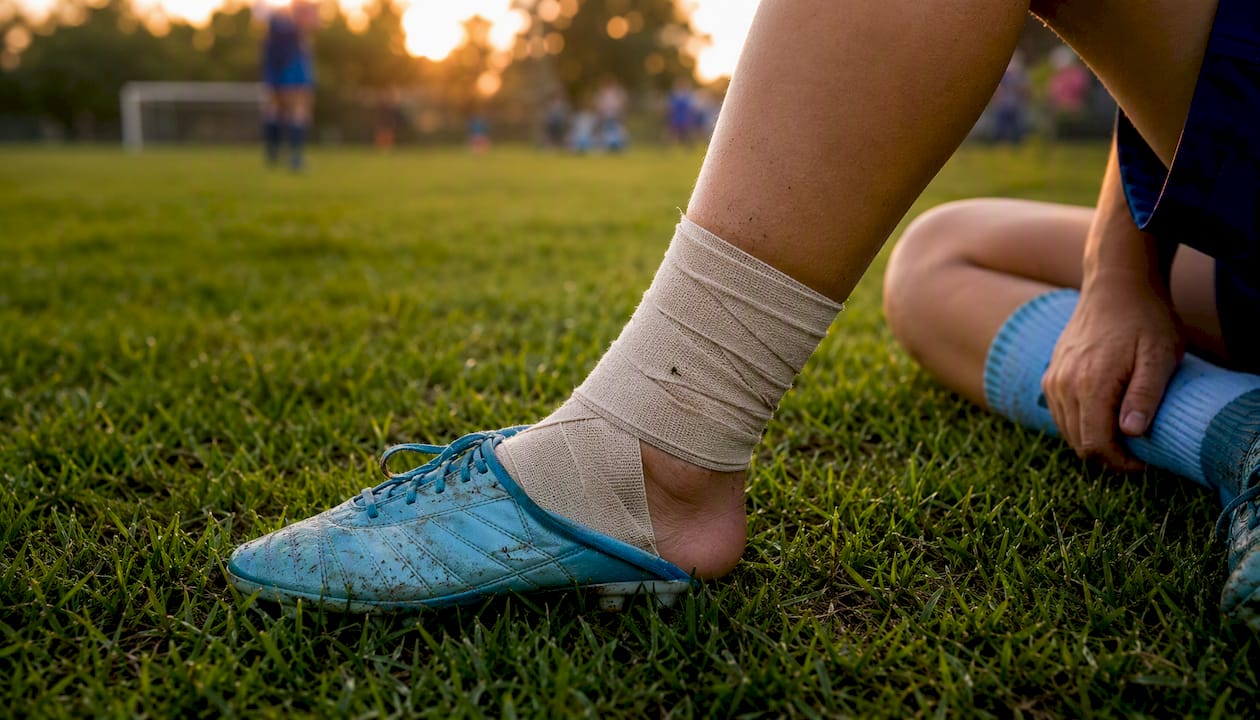
Overuse injuries now account for roughly half of what pediatric sports medicine clinics see, according to Cedars-Sinai, and training load is the biggest driver behind them. Sudden spikes, a new travel team added on top of a school team, a tournament weekend after weeks off, create the exact conditions where tissue doesn't have time to adapt before the next stress hits it.
Watch for these signals that overuse is building, not just a bad practice day:
- A drop in performance a child can't explain (slower sprint times, a weaker throw)
- Pain that shows up at the same point in every practice and lingers afterward
- Trouble sleeping, unusual fatigue, or a noticeable mood shift around practice days
- Reluctance to talk about a specific joint or body part
Pro Tip: Track weekly training minutes the same way you'd track screen time. If this week's total jumps more than 10% over last week's, dial it back. That single guardrail catches most load spikes before they turn into an injury.
If you suspect an overuse issue is forming, act on it the same week:
- Cut training volume by at least a third for 7 to 10 days
- Swap one high-impact practice for a low-impact cross-training session
- Ask the coach directly whether technique has changed under fatigue
- Book a same-week evaluation if pain persists past 10 days
What Injuries Show Up at Each Age and in Which Sports
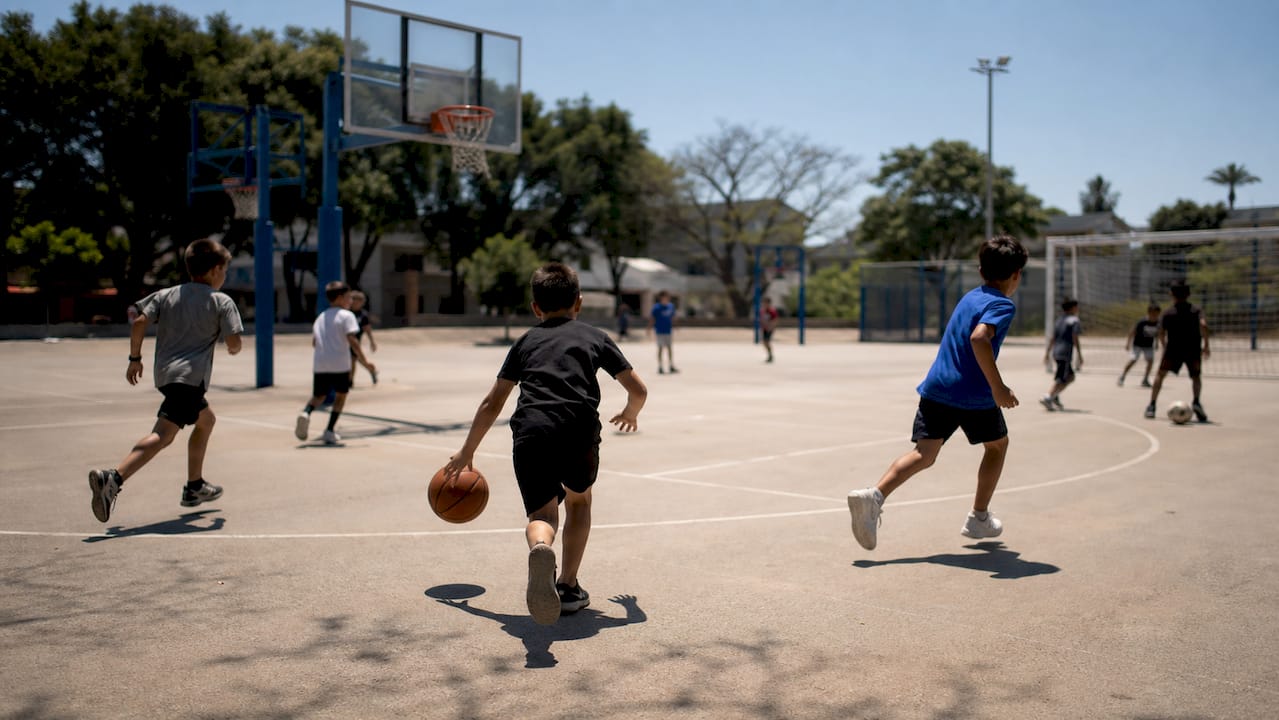
Injury patterns shift as kids grow, and so does the sport most likely to cause them. Basketball, football, bicycling, playgrounds, and soccer rank as the five activities most commonly behind pediatric sport and recreational injuries, and each age band has its own predictable weak points.
| Age Group | Common Sports Involved | Typical Injuries |
|---|---|---|
| Elementary (ages 5-10) | Playgrounds, bicycling, youth soccer | Fractures near growth plates, ankle sprains, falls-related trauma |
| Pre-adolescent (ages 9-12) | Basketball, soccer, baseball | Sever's disease, early Osgood-Schlatter, growth-plate stress injuries |
| Early adolescence (ages 12-15) | Football, basketball, baseball/softball | Osgood-Schlatter, Little League elbow/shoulder, ACL sprains, concussions |
Parents can pick up on trouble earlier than most coaches, because you see the same kid every day, not just at practice. Watch for these presentation clues by age:
- Elementary-age kids: a new limp after a fall, reluctance to bear weight, swelling around a wrist or ankle within hours of a tumble
- Pre-adolescents: knee pain that worsens with running or jumping and improves with rest (a classic Osgood-Schlatter pattern), or heel pain first thing in the morning
- Early adolescents: a drop in throwing velocity or accuracy, recurrent ankle sprains on the same side, or any confusion, headache, or vomiting after a hit to the head
Modifiable Versus Non-Modifiable Risk Factors Parents Should Know
Some things about a young athlete's injury risk you can control. Others you simply can't, and knowing the difference keeps you from wasting energy on the wrong lever.
Modifiable factors are where prevention actually lives:
- Weekly training hours and number of concurrent teams or leagues
- Whether a child specializes in one sport year-round versus playing multiple sports
- Warm-up quality, footwear, and equipment fit
- Sleep duration and nutrition
- Coach and athletic trainer qualifications
Non-modifiable factors are the ones you work around rather than fix:
- Skeletal maturity, which doesn't always match chronological age (two 12-year-olds can have very different growth-plate timelines)
- Prior growth-plate injuries, which leave that site more vulnerable going forward
- Sex-related injury patterns, such as the higher ACL injury rate seen in female athletes in cutting sports
- Individual bone density and connective-tissue characteristics
Training load sits at the center of the modifiable list. Research in Frontiers in Physiology identifies training volume, intensity, and frequency as the primary modifiable driver of overuse injury, with sudden increases in load repeatedly linked to when injuries actually start.
Two pressures often sit underneath the numbers, too. Kids who feel pushed toward early specialization sometimes hide pain because they're afraid of losing a starting spot, and playing surface matters more than most parents assume, hard-packed dirt infields and waterlogged turf both raise acute injury risk independent of anything the child does.
A Prevention Checklist Parents Can Actually Use
Prevention isn't complicated, but it does require doing a handful of things consistently rather than one big thing occasionally.
1. Start every season with a baseline screening. A preseason sports physical catches issues like leg-length differences, prior injuries that never fully healed, or asymmetries in strength that predict where the next injury is likely to show up. Research on prevention strategies for pediatric sports injuries places preseason exams alongside qualified coaching and proper equipment as a foundational, evidence-backed protective step.
2. Manage load with two simple rules. Cap weekly training hours at your child's age in years, and don't let weekly volume climb more than 10% to 20% from one week to the next. Limit how many teams or leagues run at the same time, since two overlapping seasons quietly doubles load without anyone noticing until pain shows up.
3. Use warm-up programs with actual evidence behind them. A few structured programs have research support strong enough to recommend by name:
- FIFA 11+, a 20-minute neuromuscular warm-up built for soccer, targets balance, strength, and landing mechanics and has documented reductions in lower-limb and ACL injuries.
- PEP (Prevent Injury and Enhance Performance), developed for cutting and jumping sports, focuses on the same neuromuscular control that FIFA 11+ builds, with emphasis on landing technique.
- Thrower's 10, a shoulder and rotator cuff routine, protects throwing athletes in baseball, softball, and similar sports from the cumulative strain behind Little League shoulder.
Cedars-Sinai's research on youth injury prevention confirms that neuromuscular programs like these measurably cut ACL and lower-limb injury rates in running and cutting sports, and they require minimal equipment to run during a normal practice.
Run through this checklist across the season:
- Preseason: sports physical, equipment fit check, baseline conversation about pain reporting
- Weekly: total training hours logged, one full rest day scheduled, sleep target of 9 to 11 hours for school-age kids protected
- Practice or game day: structured warm-up (FIFA 11+, PEP, or Thrower's 10 depending on sport), hydration before and during, cross-training built in on off days
Programs that layer this kind of sport-specific training onto a season, rather than just running more reps of the sport itself, tend to see fewer overuse complaints by midseason.
Pro Tip: Ask your child's coach to run the FIFA 11+ or PEP warm-up as the default, not an occasional extra. Programs that treat neuromuscular warm-ups as optional almost never do them consistently enough to see the benefit.
First Aid, Red Flags, and Getting Back to Play Safely
Most minor sports injuries respond well to basic first aid, but knowing which symptoms need same-day medical attention is the difference between a short setback and a much longer one.
For a straightforward sprain or minor impact, RICE still holds up: Rest the area, Ice for 15 to 20 minutes at a time, Compress gently with a wrap, and Elevate above heart level when possible. Most mild sprains and bruises improve noticeably within 48 to 72 hours using this approach alone.
Certain symptoms mean you skip home care and go straight to evaluation:
- A visibly deformed limb or joint
- Inability to bear any weight on a leg or ankle
- Head injury with confusion, repeated vomiting, or loss of consciousness, even briefly
- Numbness, tingling, or weakness in an arm or leg
- Pain that worsens over days instead of improving
A child who can't tell you clearly what happened, or who seems foggy after a hit, needs to sit out that game and every subsequent practice until a clinician says otherwise. Concussion symptoms can worsen with continued play in ways that aren't obvious in the moment.
Getting back to sport after a real injury, not just a bad practice, should follow a graded path rather than a return the moment pain fades:
- Full rest from the aggravating activity until pain resolves at rest
- Light, pain-free range-of-motion work
- Sport-specific movement at reduced intensity, monitored for any pain return
- Clinician clearance before full-contact or full-speed participation
- Gradual reintroduction to full training volume over one to two weeks, not a single day
Keep a short list of contacts ready before the season starts, not after an injury happens: your child's pediatrician, a sports medicine clinic or pediatric orthopedist, the team's athletic trainer if one exists, and the nearest urgent care for after-hours concerns. For ankle-specific injuries, which account for a large share of youth sports visits, a parent's guide to pediatric ankle sprains walks through what a proper recovery timeline looks like before a child returns to cutting and pivoting sports.
What to Look for in a Youth Strength and Conditioning Program
Not every youth training program is built the same way, and the difference shows up in injury rates more than in win totals. A program worth your money treats strength and conditioning as injury insurance first and performance enhancement second.
Run any program you're considering through this checklist:
- Coach certifications matter more than facility size. Ask specifically about credentials in youth strength and conditioning, not just general personal training.
- Progressions should match developmental stage, not chronological age alone. Two 13-year-olds can be at very different points physically, and a program should adjust for that.
- Movement quality comes before load. A coach who prioritizes clean squat and landing mechanics over how much weight is on the bar is building a safer athlete.
- Load management should be individualized. A program tracking each athlete's weekly volume, not running identical workouts for a whole group regardless of age or injury history, catches problems earlier.
- Recovery days are built into the schedule, not treated as optional. If a program never mentions rest, that's a red flag on its own.
A generic pattern shows up often in pediatric sports medicine: a young athlete develops nagging knee or shoulder pain from a single-sport, high-volume schedule, switches into a program built around varied movement and monitored load, and the overuse symptoms resolve within weeks without any change to the underlying sport itself. The pain wasn't the sport. It was the volume and the lack of variety around it.
Neuromuscular training built around movement quality, the same principle behind FIFA 11+ and the PEP program, consistently reduces ACL and lower-limb injury rates in youth athletes when it's applied consistently across a season rather than treated as a one-time preseason event.
Pro Tip: When you tour a youth program, ask these four questions directly: How do you individualize load for different kids on the same team? What's your rest day policy during a competitive season? How do you handle an athlete reporting pain? Can I see a sample week of programming? A coach who answers all four without hesitation knows what they're doing.
Balancing the Benefits of Sport with Smart Risk Management
Youth sports build things that show up nowhere on a stat sheet: confidence, discipline, the ability to lose a game and show up to the next practice anyway. None of that is worth undermining, and nothing in this guide argues against letting kids compete hard. The argument is against training them the same way you'd train an adult and hoping their still-growing bodies keep up.
The programs I trust most share a common thread: they treat variety and recovery as performance tools, not obstacles to performance. A kid who plays two or three sports across a year, sleeps enough, and trains with age-appropriate progressions almost always outlasts the kid locked into one sport, one position, twelve months a year, by the time high school tryouts roll around.
- REP Philosophy's youth sports performance programming builds around age-smart progressions rather than one-size-fits-all workout templates.
- Small-group formats keep coach-to-athlete attention high enough to catch early warning signs before they become injuries.
- The emphasis stays on movement quality and long-term athletic development, not maximizing output in a single season.
If there's one thing worth repeating to every parent sitting in the stands: the goal isn't zero risk. It's a kid who's still playing, and still healthy, three seasons from now.
Youth Training Built Around Age-Smart Progressions in 4S Ranch
Most youth sports programs hand every kid the same workout regardless of age, growth stage, or injury history, which is exactly the gap this article has been walking through. Repphilosophy's youth sports performance training in 4S Ranch takes the opposite approach: certified coaches build progressions around where each athlete actually is developmentally, not just how old they are on paper.

Families working with our youth programs get a few things most general youth leagues don't offer on their own:
- Small-group coaching at our 4S Ranch performance center, where attention stays high enough to catch a movement issue before it becomes an overuse injury
- Neuromuscular warm-up principles, the same kind behind FIFA 11+ and PEP, built into regular training sessions rather than treated as an afterthought
- A "bring a buddy" membership option that keeps costs down while keeping the coach-to-athlete ratio low
- Access to our on-demand exercise library for families who want structured, age-appropriate programming between in-person sessions
If your child plays a sport where overuse injuries are common, throwing, running, cutting sports, this is the kind of programming that fills the gap between "just playing the sport" and actual injury prevention. Book a session or ask about our youth performance track through our cart page to get started.
Frequently Asked Questions
Why do kids get sports injuries more often than adults playing the same sport? Children's growth plates and apophyses are softer than mature bone, and their muscles and tendons don't always grow at the same rate as their bones. That mismatch creates weak points that adult athletes simply don't have anymore.
What's the single biggest cause of youth sports injuries? Overuse from training load is the leading modifiable cause, accounting for roughly half of what pediatric sports clinics treat. Sudden increases in training volume, often from adding a second team or a tournament schedule, are the most common trigger.
How many hours a week should a child train? A widely used guideline caps weekly training hours at a child's age in years, so a 10-year-old should train no more than about 10 hours a week across all teams and leagues combined.
What are the warning signs that a child's pain isn't just normal soreness? Watch for pain that persists past a day or two, gets worse with activity instead of better, changes how the child moves (a limp, a shortened throwing motion), or disrupts sleep.
Do warm-up programs like FIFA 11+ actually reduce injuries? Yes. Structured neuromuscular warm-ups like FIFA 11+ and PEP have documented reductions in ACL and lower-limb injuries in running and cutting sports when coaches run them consistently, not just occasionally.
This article is general information, not a substitute for advice from a qualified doctor. Consult a qualified healthcare professional about your own circumstances before acting on anything here.
Sources
- Sports-related injuries in children (PMC4264650)
- How to prevent sports injuries in young athletes - Cedars-Sinai
- Healthychildren
- Overuse injuries in children - OrthoInfo (AAOS)