
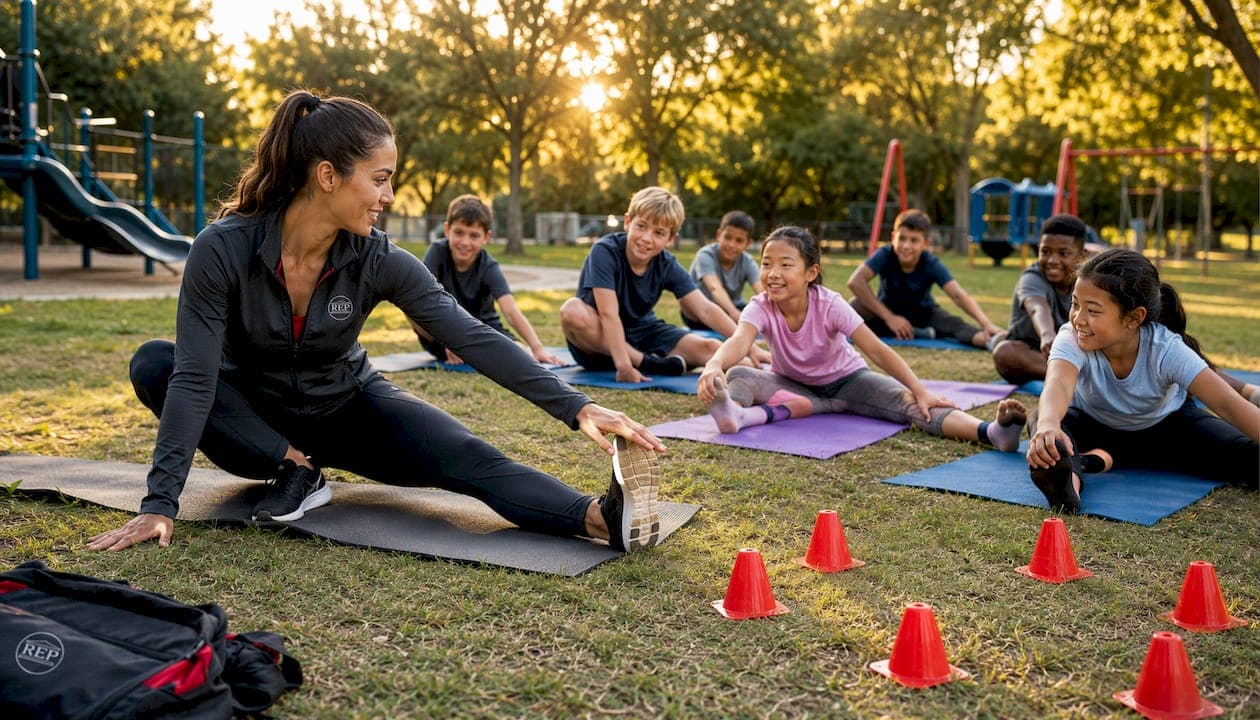
Why certified trainers matter for kids
Certified trainers give children something no enthusiastic but untrained adult can: the specialized knowledge to make exercise safe, age-appropriate, and genuinely fun. Kids' bodies are not smaller versions of adult bodies. Their bones, growth plates, and neuromuscular systems are still developing, and a poorly designed program can cause real harm. Here is what certification actually delivers for your child:
- Developmental expertise: Certified trainers understand growth plate vulnerability and adjust intensity, resistance, and progression accordingly.
- Tailored programming: They design sessions around each child's physiological and psychological stage, not a generic adult template.
- Industry validation: Organizations like the American Academy of Pediatrics (AAP), the National Strength and Conditioning Association (NSCA), and the American College of Sports Medicine (ACSM) all recognize certification as the baseline standard for working with youth.
- Risk reduction: Uncertified trainers often apply adult training loads to young bodies, a pattern linked to overuse injuries and burnout.
- Professional credibility: Reputable fitness facilities require NCCA-accredited credentials before a trainer ever works with a child.
How certification protects your child's safety and development
No federal or state law in the United States requires trainers to be certified, yet certification functions as the de facto industry standard for safety, liability, and employment. That gap matters enormously for parents. Without a legal floor, the only reliable protection you have is choosing a trainer whose credentials have been independently verified.
Children's physiology creates specific risks that untrained adults simply do not face. Growth plates, the soft cartilage near the ends of long bones, are particularly vulnerable to compressive loads and repetitive stress. Certified trainers learn to adapt exercises to each developmental stage, keeping loads appropriate and progressions gradual. They also understand that a child's cardiovascular system, neuromuscular coordination, and psychological readiness develop on different timelines, so a program that works brilliantly for a 14-year-old can be genuinely harmful for a 9-year-old.
| Factor | Certified trainer | Uncertified trainer |
|---|---|---|
| Growth plate awareness | Adapts loads to developmental stage | May apply adult-level resistance |
| Program progression | Gradual, age-appropriate | Often based on adult templates |
| Injury risk management | Trained in overuse and acute injury prevention | Limited or no formal protocol |
| Psychological approach | Understands child motivation and burnout | May use adult-focused pressure tactics |
| Professional accountability | Bound by ethics codes and credential renewal | No formal oversight |
Key protective measures certified trainers implement include:
- Monitoring training volume to prevent overtraining and growth-related injuries
- Teaching correct movement mechanics before adding any load
- Building recovery periods into every program
- Screening for pre-existing conditions before designing sessions
- Adjusting session intensity based on the child's energy and mood that day
What the experts and leading organizations say
Dr. Eric Small, chair of the Council on Sports Medicine and Fitness for the AAP, puts it plainly: trainers can harm kids if they lack a proper understanding of child development, because kids' needs and abilities are far different from those of adults. He advises parents to hire trainers certified by nationally recognized organizations specifically to avoid that risk.
Dr. Avery Faigenbaum, a leading pediatric exercise scientist, adds another layer. Training children is genuinely different from training adults, and many excellent adult trainers have simply not developed the charisma, willingness to listen, and enthusiasm that working with kids demands.
The International Coaching Federation's code of ethics binds credentialed coaches to formal conduct standards, creating accountability and a clear path for recourse if something goes wrong. Without that framework, parents have no formal mechanism to address misconduct or negligence.
Recognized certifications that carry real weight for youth fitness professionals include:
- NSCA Certified Strength and Conditioning Specialist (CSCS): The gold standard for strength and conditioning work with young athletes
- ACSM Certified Exercise Physiologist: Strong academic and clinical credibility, especially for kids with health considerations
- NASM Certified Personal Trainer (CPT): Widely recognized by employers, NCCA-accredited, with specialization pathways for youth populations
- ICF credential: Signals ethical accountability and ongoing professional development beyond initial certification
How certified trainers make fitness genuinely enjoyable for kids
Keeping a 10-year-old engaged for 45 minutes takes a completely different skill set than coaching an adult. Dr. Faigenbaum highlights this directly: the challenge of engaging children in fitness is real, and certified trainers' ability to make it enjoyable and motivating is one of their most underappreciated assets.
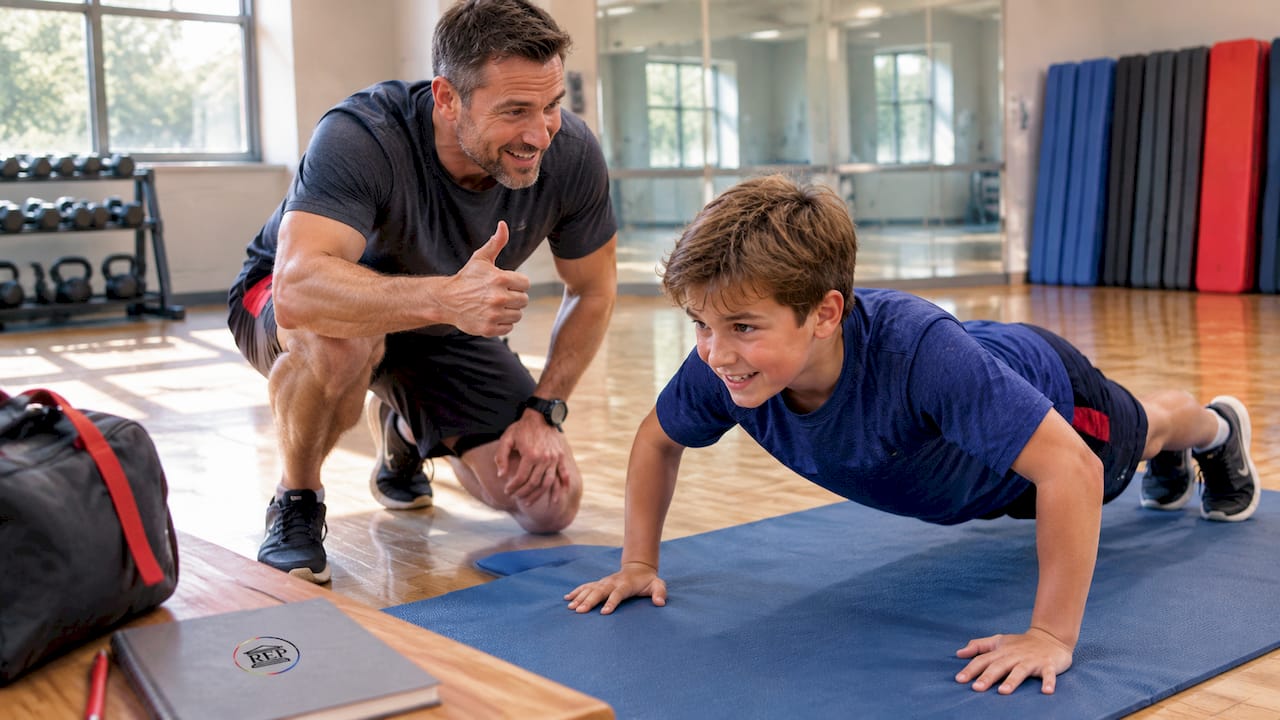
Certified youth trainers build those skills deliberately. They learn to gamify movement, read a child's emotional state mid-session, and pivot when something is not landing. That adaptability is what separates a session a child looks forward to from one they dread.
Techniques certified trainers use to keep kids motivated and moving:
- Turning drills into games with points, challenges, or friendly competition
- Rotating exercises frequently to prevent boredom
- Celebrating small wins loudly and specifically ("You held that plank five seconds longer than last week")
- Letting kids have input on activities so they feel ownership over their training
- Using age-appropriate language that explains the "why" behind each movement
Pro Tip: Watch how a trainer responds the first time your child struggles or gets frustrated. A certified professional will redirect with encouragement and a modified challenge. That moment tells you more about their youth training skills than any credential on the wall.
Certified trainers also protect kids from the psychological damage that poorly managed training can cause. Pressure to perform, repetitive monotony, and adult-style intensity are the fastest routes to a child who hates exercise for life. The goal, as Dr. Faigenbaum frames it, is to create independent exercisers who carry healthy habits into adulthood.
How to choose the right certified trainer for your child
Certification is the starting point, not the finish line. Certification acts as a safety baseline but does not guarantee a perfect fit, so parents need to go further than checking a credential box. Here is what to look for when choosing a certified youth trainer:
- Credentials: NSCA, ACSM, or NASM certification, ideally with a specialization in youth or pediatric exercise science
- Experience with kids: Ask directly how many of their current clients are children. Dr. Small suggests that number should be at least 50%
- Child development knowledge: Look for coursework or continuing education in pediatric exercise science or child psychology
- CPR and first aid certification: Non-negotiable for anyone working with minors
- Communication style: Watch them interact with your child before committing. Do they get down to the child's level? Do they listen?
- References: Ask for references from other parents, not just adult clients
Red flags to walk away from:
- No nationally recognized certification or only an unaccredited online certificate
- Little or no experience working specifically with children
- A training style that mirrors adult programming with no visible modifications
- Poor communication with your child during a trial session
- Reluctance to provide references or let you observe a session
Long-term benefits your child builds with a certified trainer
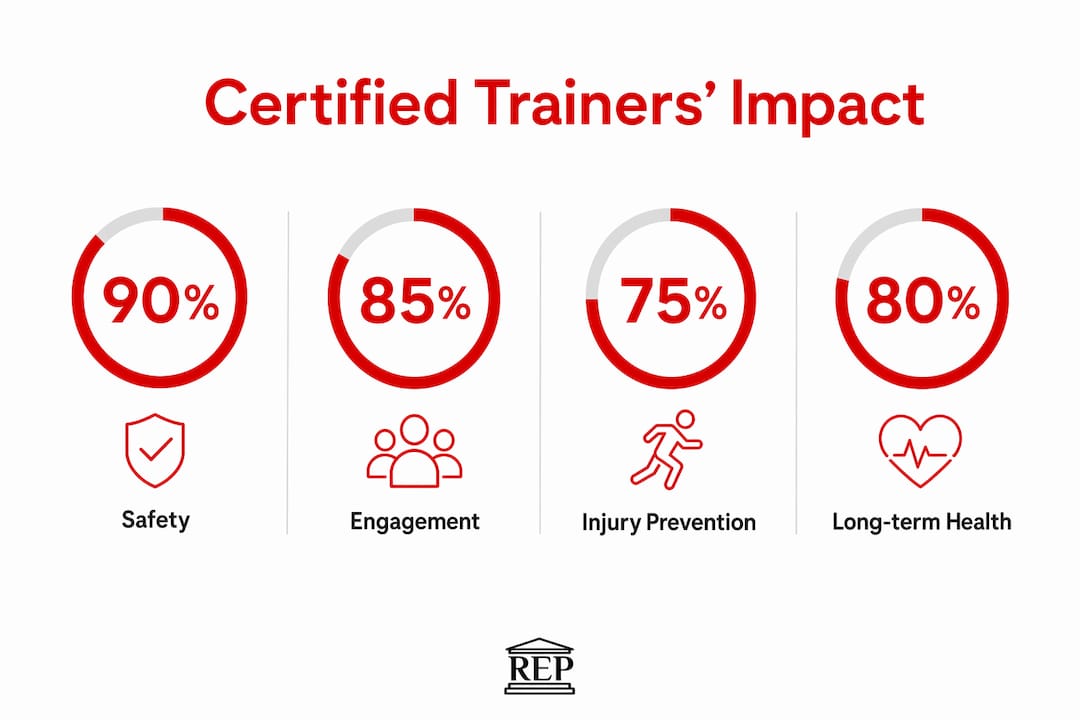
The payoff of kids training with certified professionals extends well beyond the gym. Research backed by the AAP, ACSM, and NSCA shows that properly supervised resistance training builds strength, reduces injury risk, improves long-term health, and enhances sports performance. Equally important, it builds confidence and self-esteem in ways that carry into every other area of a child's life.
Injury prevention is one of the clearest long-term gains. A certified trainer teaches correct movement mechanics from the start, which means your child enters competitive sports with a movement foundation that protects them through years of athletic development. Skill progression follows the same logic: structured, graduated programming builds genuine competence rather than the plateau that comes from random or adult-copied workouts.
What the research shows about certified trainers' impact on kids
Dr. Faigenbaum's work with youth populations consistently demonstrates that when overweight or sedentary children are trained by qualified professionals who prioritize fun and individual strengths, the outcomes go far beyond physical fitness. In group settings where he combined elite athletes with overweight children and emphasized each child's strengths, peer interactions produced confidence gains that no trainer-led instruction could replicate alone.
The IDEA Health & Fitness Association documents similar patterns: children who work with trainers who understand child development and age-appropriate programming develop discipline, social skills, and a positive relationship with physical activity that lasts into adulthood. The contrast with poorly managed training is stark. Kids pushed too hard, too fast, by trainers without youth-specific knowledge are the ones who quit sports and avoid gyms as adults.
Certified vs. uncertified trainers: what actually changes
The difference between a certified and uncertified trainer is not just a piece of paper. It is the difference between a program built on exercise science and one built on personal experience or guesswork. Certified trainers hold NSCA or ACSM credentials and often hold exercise science degrees, which means they bring verified, peer-reviewed knowledge to every session design decision.
Uncertified trainers may be well-intentioned and physically fit, but they lack the formal framework to recognize when a child's growth stage changes what is safe, or when a psychological signal means a session needs to shift. They also carry no formal accountability. If something goes wrong, there is no ethics board, no credential at risk, and no insurance requirement that was met. For your child, that gap is the one that matters most.
Repphilosophy: youth sports performance training in 4S Ranch
If you are ready to put your child in the hands of a trainer who genuinely gets it, Repphilosophy offers youth sports performance training in a safe, challenging environment right here in 4S Ranch. This is not a generic gym program adapted for kids. It is purposefully designed youth training that meets children where they are physically and emotionally, and builds from there.
Repphilosophy also offers group classes and bring-a-buddy memberships, so your child can train alongside friends and build that social confidence Dr. Faigenbaum talks about. Pricing is accessible, with options designed for families who want professional-quality coaching without the premium price tag of a private facility. Ready to see what a difference the right trainer makes? Book a trial session and let your child experience it firsthand.
Key Takeaways
Certified trainers protect children's safety and build lifelong fitness habits by applying specialized knowledge of child development, growth plate physiology, and age-appropriate program design that uncertified trainers simply do not have.
| Point | Details |
|---|---|
| Certification fills a legal gap | No U.S. law requires trainer certification, making your verification of credentials the only reliable safety check. |
| Child physiology demands expertise | Growth plates and developing neuromuscular systems require age-specific programming that certified trainers are trained to deliver. |
| Expert bodies back certification | The AAP, NSCA, ACSM, and ICF all recognize certified trainers as the standard for safe, effective youth fitness. |
| Long-term outcomes are measurable | Properly supervised youth training builds strength, reduces injury risk, and creates positive lifelong relationships with exercise. |
| Repphilosophy offers youth training | Youth sports performance programs in 4S Ranch combine professional certification with an engaging, child-centered environment. |