
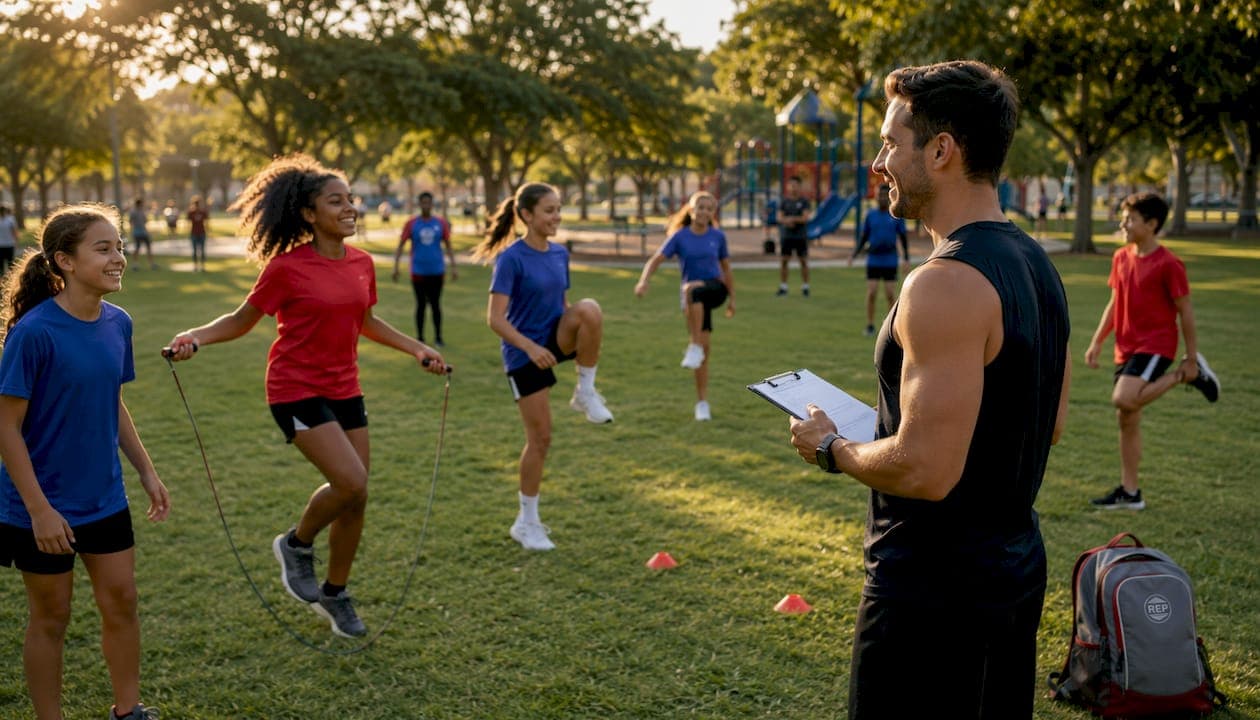
Consistency, not occasional intensity or raw talent, is the primary driver of long-term youth athletic development. The CDC recommends that children aged 6–17 get at least 60 minutes of moderate-to-vigorous activity daily, with vigorous effort and muscle-strengthening work on at least 3 days per week. A practical starting point for most families is two coached sessions per week along with daily playful movement, monitored with a simple attendance log. That minimum viable routine, held consistently over weeks and months, is where real progress lives.
Table of Contents
- Why consistency matters more than intensity in youth fitness
- What a consistent training week actually looks like by age and level
- Why consistency beats motivation, and what coaches can do about it
- What happens when training is inconsistent, and when it is too much
- Practical tips parents and coaches can use right now
- How Repphilosophy measures consistency and progress in real programs
- Key Takeaways
- Consistency is the skill coaches and parents build together
- Repphilosophy youth programs: built around your child's consistency
- Useful sources for parents and coaches
Why consistency matters more than intensity in youth fitness
The body adapts to repeated stimulus, not occasional effort. When a young athlete trains once a week, the nervous system barely has time to register a pattern before the next session arrives. Train three times a week with appropriate recovery, and the neural pathways for that sprint mechanic or squat pattern start to consolidate. That is the difference between a child who "kind of knows" a movement and one who owns it under pressure.
Here is what is actually happening inside a young athlete's body when training is regular:
- Motor learning and neural patterning: Repeated movement rehearsal strengthens the neural pathways that coordinate muscle firing sequences. Frequency matters more than duration for this process.
- Neuromuscular coordination: The brain and muscles learn to communicate faster and more efficiently, improving speed, balance, and reaction time.
- Connective-tissue remodeling: Tendons and ligaments adapt more slowly than muscles. Meaningful structural change requires sustained, progressive loading over time.
- Cardiovascular conditioning: The heart and lungs adapt to regular aerobic demand, improving endurance and recovery between efforts.
- Psychological habit consolidation: Regular training builds an automatic behavioral loop, reducing the daily negotiation over whether to show up.
Detraining effects can begin within a few weeks of stopping, while structural adaptation in tendons and connective tissue requires several months of consistent, appropriate loading. Neural gains tend to appear faster, often within the first weeks of a new program, which is why young athletes often feel more coordinated before they look stronger.
| Mechanism | Typical timescale | What to measure |
|---|---|---|
| Neural patterning | 2–6 weeks | Movement quality, coordination |
| Neuromuscular coordination | 4 weeks | Sprint times, agility scores |
| Cardiovascular conditioning | 6–12 weeks | Resting heart rate, endurance |
| Strength gains | 6–12 weeks | Bodyweight squat quality, push-up count |
| Tendon/connective tissue | several months | Pain-free load tolerance, joint stability |
What a consistent training week actually looks like by age and level
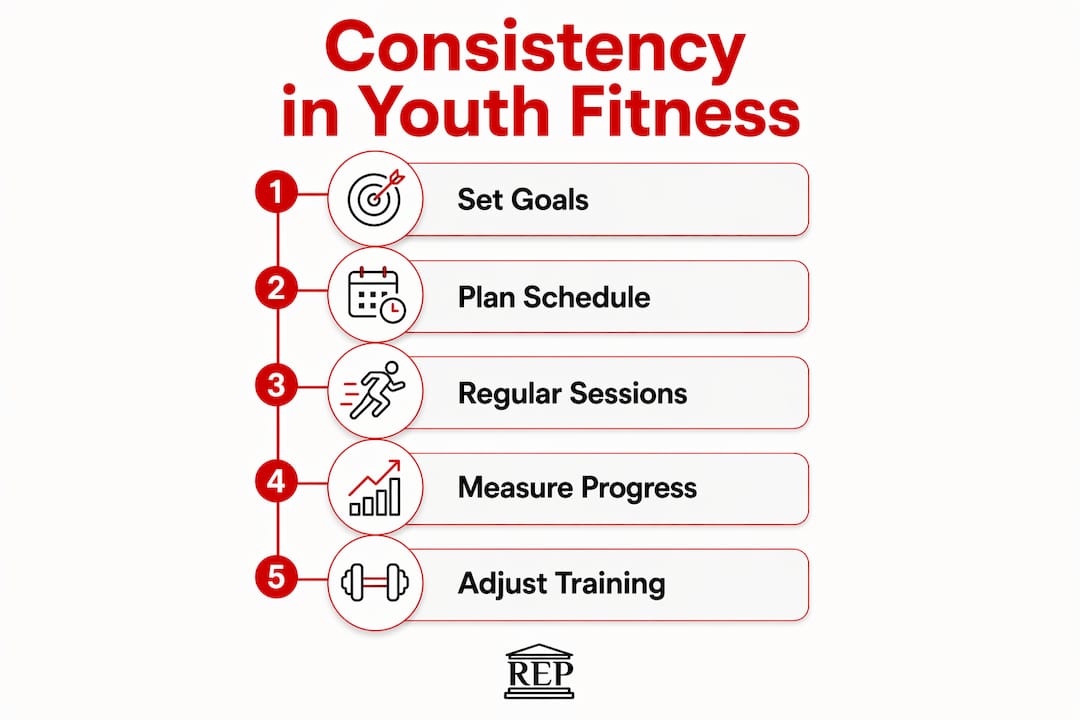
Consistency does not mean doing the same thing every day. It means showing up regularly with a plan that matches the athlete's age, readiness, and goals. IDEA Health & Fitness Association guidance recommends starting youth strength work with bodyweight and low-load exercises on 2–3 nonconsecutive days per week, prioritizing technique over load at every stage.
Template 1: Recreational (ages 6–10)
| Day | Session focus | Duration |
|---|---|---|
| Monday | Skill play + movement games | 30 min |
| Wednesday | Bodyweight strength basics | 30 min |
| Friday | Aerobic play (tag, bike, swim) | 45 min |
| Daily | Unstructured active play | 20–30 min |
Template 2: Committed club athlete (ages 11–14)
| Day | Session focus | Duration |
|---|---|---|
| Monday | Strength fundamentals | 45 min |
| Tuesday | Sport practice | 60 min |
| Thursday | Speed/agility work | 45 min |
| Saturday | Aerobic conditioning or sport | 60 min |
| Other days | Active recovery or free play | 20–30 min |
Template 3: Multisport teen (ages 15–17)
| Day | Session focus | Duration |
|---|---|---|
| Monday | Strength and power | 60 min |
| Tuesday | Sport-specific practice | 30–45 min |
| Wednesday | Active recovery or mobility | 30 min |
| Thursday | Speed, agility, or conditioning | 60 min |
| Saturday | Competition or long aerobic session | 45–55 min |
| Sunday | Full rest or light movement | — |
Progression checklist: Add load or complexity only when technique is solid, recovery is complete, and the athlete is genuinely engaged. If any one of those three conditions is missing, hold the current level. The NHS guidelines reinforce this with an emphasis on variety and balance across the week, not just volume.
Measurable strength gains generally appear after consistent work over several weeks to months. Skill refinement continues as neural adaptations occur early and more profound mastery develops over longer periods. Structural tendon changes take more time, underscoring the importance of consistent attendance over occasional intense sessions.
Why consistency beats motivation, and what coaches can do about it
Motivation is a feeling. Habits are a system. For kids especially, relying on motivation to drive attendance is a losing strategy because motivation fluctuates with mood, school stress, and social dynamics. What actually works is building an automatic behavioral loop: a consistent cue that triggers the routine before the brain has time to negotiate.
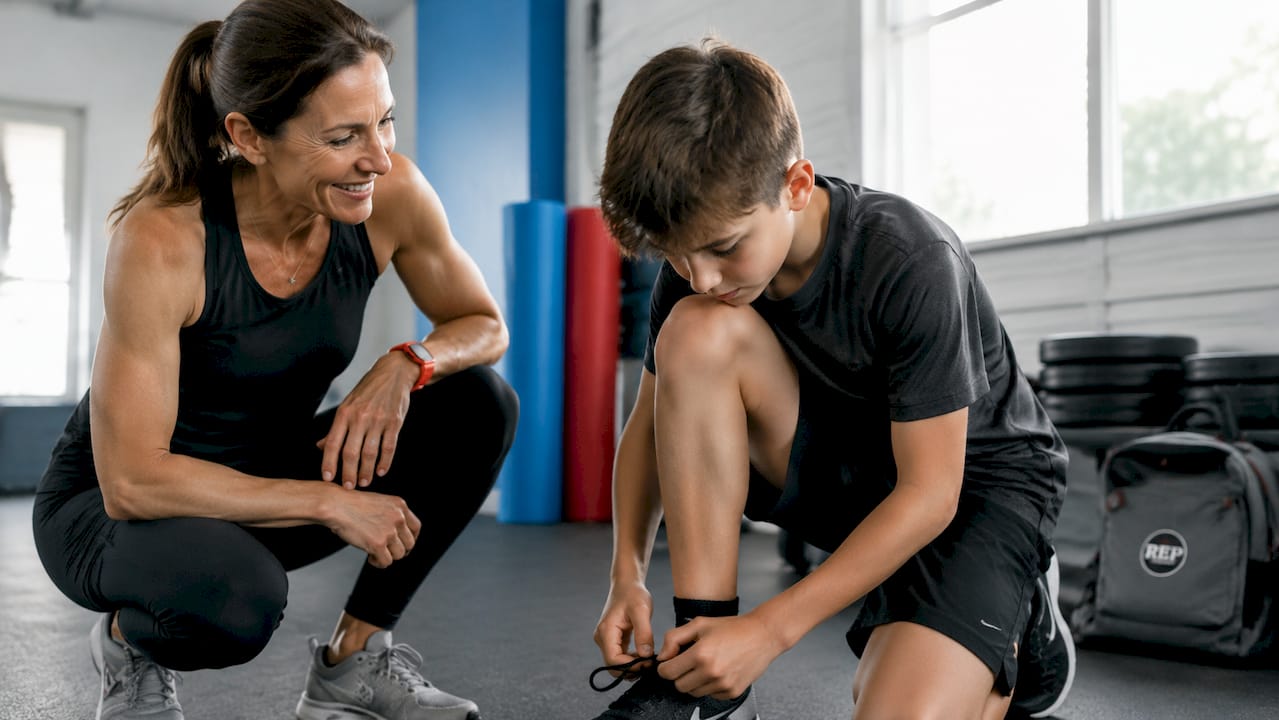
The habit loop works like this: a reliable cue (same time, same place, same gear ritual) triggers the routine (training session), which is followed by an immediate reward (praise, a fun drill, a visible progress marker). Over time, the loop becomes self-reinforcing. The AAP's guidance on youth fitness emphasizes making activity playful and intrinsically rewarding, which is exactly what keeps the reward side of that loop strong.
Here are four tactics that reliably build consistent attendance:
- Fixed scheduling rituals. Same day, same time, same location. Predictability removes the daily decision and reduces friction. A child who knows "Tuesday and Thursday are training days" does not need to be convinced each week.
- Immediate feedback and micro-rewards. Praise a specific movement improvement right after it happens. Let athletes track one personal metric (a sprint time, a jump height) so they can see their own progress.
- Buddy and small-group accountability. Kids show up for their friends. Pairing athletes or running small-group sessions creates social commitment that outlasts individual motivation on a tough day.
- Equipment and arrival rituals. Laying out gear the night before, a consistent warm-up song, or a team handshake on arrival all reduce decision fatigue and signal "it's time to work."
To track psychological consistency, consider monitoring attendance patterns, session completion, and simple enjoyment ratings; declining enjoyment may signal upcoming attendance issues.
What happens when training is inconsistent, and when it is too much
Sporadic training creates a frustrating cycle. An athlete trains hard for two weeks, takes three weeks off, and returns to find that detraining effects have already begun to erode the gains. Skills regress, movement quality drops, and the risk of injury on return is higher because the body has partially de-adapted while the athlete's ambition has not. Confidence takes a hit too, and that psychological setback is often harder to recover from than the physical one.

But the opposite extreme carries its own risks. Coaches and sports performance specialists caution against year-round single-sport specialization. Repeating the same movement patterns without variety overloads specific tendons and joints, raising the risk of chronic overuse injuries. Burnout follows when a child loses all intrinsic enjoyment in a sport they once loved.
Safe consistency follows a few clear rules:
- Schedule at least one full rest day per week and one lighter recovery week every 4–6 weeks.
- Rotate movement variety: mix strength, speed, aerobic, and skill work rather than repeating the same drills every session.
- Monitor tolerance. IDEA's resistance training guidance is direct: if a young athlete cannot tolerate the planned stimulus, modify the program immediately rather than pushing through.
- Keep cross-training in the plan. A soccer player who swims or does gymnastics builds resilience that single-sport repetition cannot.
Red flags that require an immediate program change: persistent fatigue that does not resolve with rest, declining school performance, mood changes or irritability around training, and recurrent pain in the same joint or muscle group. If you see these signs, reduce load and consult a pediatrician or sports medicine professional before continuing.
Practical tips parents and coaches can use right now
Building consistency is a design problem, not a willpower problem. Here is a checklist you can put to work this week:
- Lock in a consistent time and place. Same days, same location, every week. Predictability is the foundation.
- Start with a minimum viable session. Two to three 30–45 minute coached sessions per week is enough to build real adaptation. Do not wait for the "perfect" schedule.
- Track attendance visibly. A simple calendar on the fridge or a shared app works. Seeing a streak builds its own momentum.
- Celebrate process, not just outcomes. Praise showing up, effort, and technique improvement, not just wins or PRs.
- Use buddy systems. Pair your athlete with a training partner or enroll in a small-group class. Social accountability is one of the most reliable consistency drivers.
- Build variety into the plan. Rotate activities to keep sessions fresh and reduce overuse risk. Check out sport-specific training guidance for ideas on how variety fits into a balanced plan.
- Protect recovery. Rest days and deload weeks are part of the program, not gaps in it.
Three quick session templates to copy:
Younger children (ages 6–9): 5-minute warm-up game, 15 minutes of movement skill stations (jumping, crawling, throwing), 10 minutes of free active play. Total: 30 minutes.
Early teens (ages 10–13): 10-minute dynamic warm-up, 20 minutes of bodyweight strength circuits (squat, hinge, push, pull), 15 minutes of speed or agility games. Total: 45 minutes.
Committed teens (ages 14–17): 10-minute warm-up, 25 minutes of loaded strength work with technique focus, 15 minutes of conditioning, 5-minute cool-down. Total: 55 minutes.
For tracking, pick one metric per athlete and measure it every 2–3 weeks: a 10-meter sprint time, a vertical jump, or a bodyweight squat quality score (1–3 scale). One number, tracked consistently, tells a clearer story than a dozen loosely measured variables.
Pro Tip: Turn drills into games by adding a competitive element or a micro-goal. Instead of "do 10 squats," try "beat your last squat depth score" or "first one to complete the circuit with perfect form wins." Intrinsic motivation, the kind that comes from mastery and fun, is far more durable than external pressure for young athletes.
How Repphilosophy measures consistency and progress in real programs
At Repphilosophy, consistency is not just encouraged, it is built into the program structure. Every youth athlete in our sports performance programs starts with a baseline assessment: movement quality, one simple performance metric (sprint time or jump), and an attendance target for the first four weeks.
Here is the measurement template we use:
- Attendance log: Session date, duration, and a 1–5 engagement rating from the athlete.
- Performance metric: One objective measure recorded every 2–3 weeks (e.g., 10m sprint, vertical jump, or push-up count).
- Movement quality checklist: A three-point coach assessment (needs work / acceptable / solid) for the session's primary movement pattern.
Example 4–6 week microcycle:
| Week | Primary focus | Recovery placement | Checkpoint |
|---|---|---|---|
| 1 | Movement baseline and technique | Full rest day after each session | Attendance + movement quality score |
| 2 | Introduce bodyweight strength circuits | Rest day mid-week | Technique checklist |
| 3 | Add speed or agility component | Active recovery Friday | Sprint or jump metric |
| 4 | Increase session density slightly | Deload: reduce volume by 20% | Re-assess movement quality |
| 5–6 | Progress load or complexity | Maintain rest structure | Compare metric to Week 1 baseline |
Coach Justin's note: the most common adherence problem is not a lack of motivation. It is a schedule that is too ambitious for the family's actual week. When athletes miss sessions, the first fix is simplifying the plan, not pushing harder. A two-session week held for 12 weeks beats a five-session week held for two.
For parents considering in-person options, our 4S Ranch training programs are designed with exactly this measurement-first approach in mind.
Key Takeaways
Consistent, age-appropriate training, held at 2–3 sessions per week with daily active movement, is the single most reliable path to measurable youth athletic progress.
| Point | Details |
|---|---|
| Consistency beats intensity | Regular moderate training over months produces more lasting gains than sporadic high-effort bursts. |
| Follow the 60-minute daily guideline | CDC guidance calls for 60+ minutes of activity daily, with vigorous effort and strength work at least 3 days per week. |
| Detraining starts fast | Gains can begin to erode within 2–3 weeks without regular stimulus; structural adaptation takes several months to build. |
| Habits outlast motivation | Fixed schedules, buddy systems, and immediate feedback create durable attendance habits that motivation alone cannot sustain. |
| Repphilosophy builds it in | Youth programs at Repphilosophy use attendance tracking, one performance metric, and a movement quality checklist to make progress visible from week one. |
Consistency is the skill coaches and parents build together
Here is what I genuinely believe after working with young athletes: the families who see the biggest long-term results are not the ones with the most talented kids. They are the ones who made showing up a non-negotiable part of the week, kept sessions fun enough that the child wanted to come back, and trusted the process long enough to see real change.
The conventional wisdom says "train harder." What actually moves the needle is training smarter and more often, with enough variety to keep the body resilient and enough enjoyment to keep the athlete engaged. Early specialization and grinding through fatigue are two of the fastest ways to derail a young athlete's development. Seasonality, play, and a well-structured minimum viable schedule are underrated by almost every parent I talk to.
If you are a coach, the most valuable thing you can do is design a program your athletes will actually attend. If you are a parent, the most valuable thing you can do is protect the schedule and make the experience positive. Those two things, done consistently, compound into something genuinely impressive over 6–12 months.
Repphilosophy youth programs: built around your child's consistency
Repphilosophy offers youth sports performance training in 4S Ranch, San Diego, structured specifically to make regular attendance easy and measurable. Small-group classes and buddy training memberships keep sessions affordable and socially engaging, so kids show up because they want to, not because they have to. Every program includes structured progress tracking, so you can see exactly what is improving and when.

For families who need flexibility, the on-demand exercise library and virtual coaching memberships make it possible to maintain a consistent routine from anywhere. Whether your child is just getting started or already competing at a club level, there is a program format that fits your schedule and budget.
Ready to put a real consistency plan in place? Book a trial session at our 4S Ranch facility and let's build a routine your athlete will actually stick to.
Useful sources for parents and coaches
These resources are worth bookmarking as you build and refine your child's training plan:
- CDC Physical Activity Guidelines for School-Aged Children: The federal standard for daily and weekly activity targets; use this to validate any program's frequency and intensity recommendations.
- HealthyChildren.org (American Academy of Pediatrics): Pediatrician-backed guidance on age-appropriate activity, play-based fitness, and building lifelong habits.
- IDEA Health & Fitness Association: Foundations First: Practical, practitioner-level guidance on starting youth strength training safely, with specific rep, set, and frequency recommendations.
- IDEA: Resistance Training for Youth: Ten evidence-informed tips on readiness, technique, and monitoring tolerance in young athletes.
- NHS Physical Activity Guidelines for Children and Young People: UK guidance that triangulates well with CDC recommendations; useful for understanding international consensus on frequency and variety.
- Workout Lab: Consistency Beats Intensity: A practitioner-friendly summary of detraining timelines and why sustained moderate training outperforms sporadic intensity.
Bring specific questions from these sources to your child's coach or pediatrician. The best program is one that is evidence-informed, age-appropriate, and built around your child's actual schedule and readiness.