
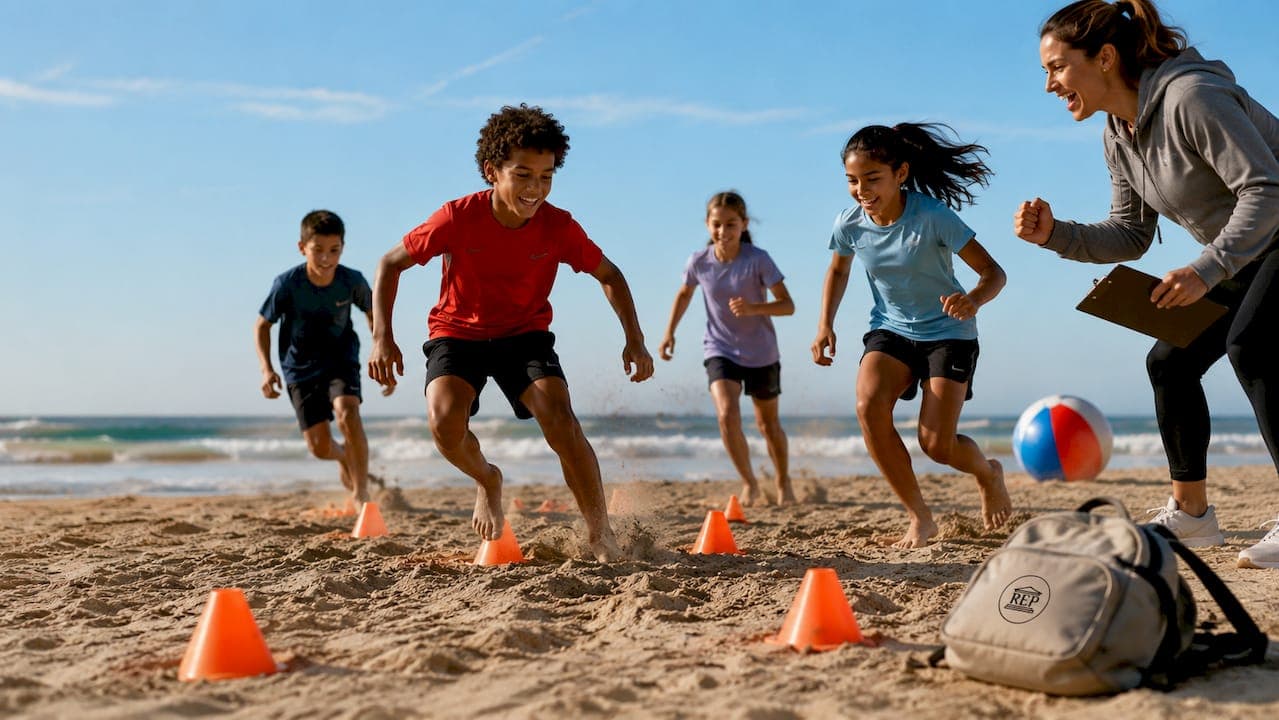
Youth speed and agility classes are structured training programs designed to improve young athletes' ability to move quickly, change direction efficiently, and build the physical foundation for long-term sports performance. Known in the industry as youth athletic development programs, these classes go far beyond running drills. They teach proper movement mechanics, build strength, and sharpen the brain-body connection that every sport demands. If your child plays soccer, basketball, football, or any field sport, investing in quality speed training for kids is one of the most effective steps you can take right now.
1. What do youth speed and agility classes actually develop?
Speed and agility training for youth targets three foundational pillars: movement mechanics, physical capacity, and neuromuscular coordination. Each one builds on the other, and skipping any of them limits your child's long-term potential.
Movement mechanics cover the basics of how your child runs and reacts. Correct technique prioritizes arm drive forward and back, leaning from the ankles, and planting off the outside foot when changing direction. These habits, built early, carry into every sport your child plays.
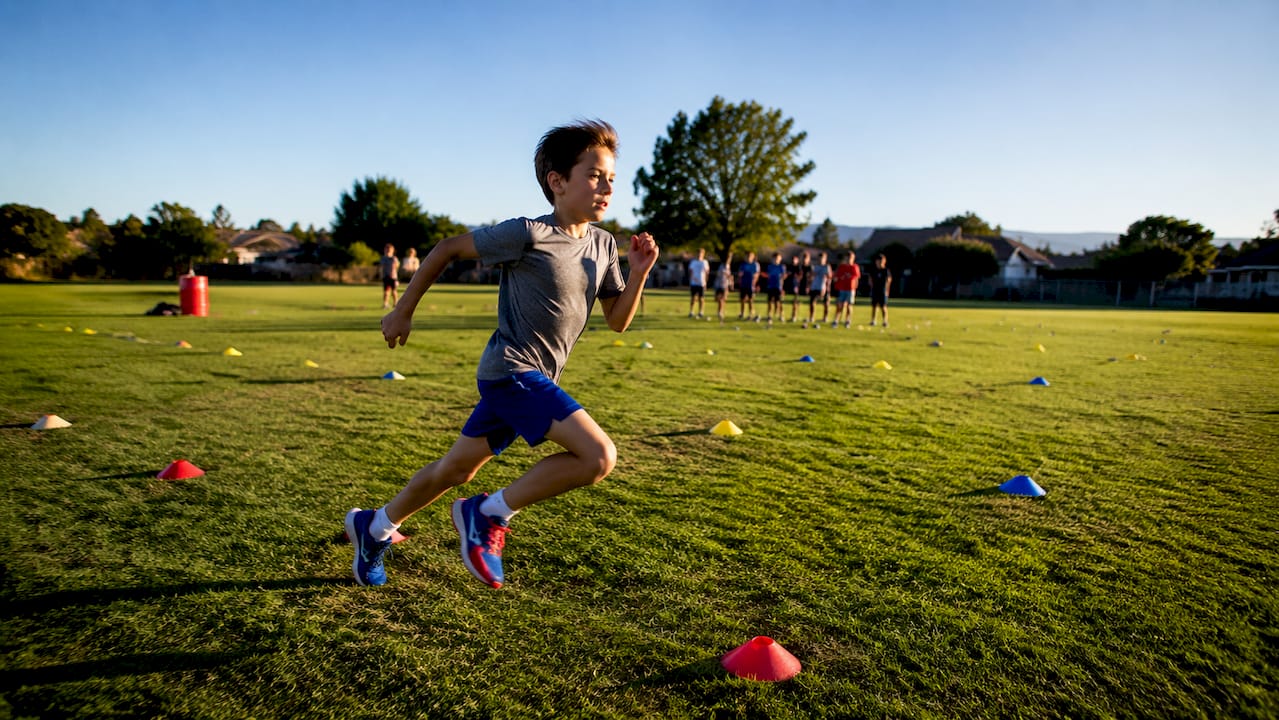
Physical capacity is the engine behind those mechanics. Bodyweight strength and plyometrics boost the force behind every movement. Without that physical base, even perfect technique produces weak, slow results. Think of it this way: mechanics are the steering wheel, but capacity is the engine.
Neuromuscular coordination is the brain-body connection that lets athletes react, stop, and start on demand. Reactive drills that respond to external cues, like a coach's signal or a partner's movement, train this connection far better than pre-planned footwork patterns. This is what separates a well-trained young athlete from one who just runs fast in a straight line.
- Arm drive mechanics (forward and back, not across the body)
- Ankle lean for acceleration posture
- Outside foot planting for direction changes
- Plyometric jumps and bounds for force production
- Reactive drills for game-speed decision making
Pro Tip: Speed training for kids is about how to move correctly first, not how fast to run. Coordination, balance, and posture come before raw pace.
2. How classes are structured for different ages and stages
Age-appropriate programming is what separates a quality youth sports performance class from a generic workout. The right program meets your child where they are developmentally, not where you wish they were.
Ages 5–8: Fun and foundational movement. At this stage, classes focus on games, basic coordination, and body awareness. Drills feel like play. The goal is building comfort with running, jumping, and changing direction without any pressure on technique or speed.
Ages 9–12: Technical introduction.
- Introduce proper sprinting mechanics, including arm drive and posture cues
- Add reaction drills with visual or auditory signals
- Begin short acceleration work like falling starts and wall drives
- Keep sessions to 20–30 minutes with full rest between efforts
Ages 13–18: Strength and plyometric progression. Teens benefit most from adding strength training for speed gains. Plyometrics remain valuable, but resistance work becomes the primary driver of improvement at this stage. Programs should also introduce more complex change-of-direction drills and sport-specific scenarios.
Youth programs recommend training 1–3 days per week, with sessions lasting 20–30 minutes to maintain quality and avoid fatigue. Mechanical improvement typically begins within 2–4 weeks, and measurable performance gains show up around the 6–8 week mark. That timeline matters because it sets realistic expectations for parents and keeps kids motivated through the early weeks.
3. The most effective drills to look for in a quality program
The best agility training for children uses a mix of acceleration work, direction change drills, and top-end speed development. Knowing which drills to look for helps you evaluate any program before enrolling your child.
Acceleration drills build the explosive first step that wins races to the ball.
- Wall drives: athlete leans against a wall and drives knees up, grooving sprint posture
- Falling starts: athlete leans forward until balance breaks, then sprints to catch themselves
- Resisted sprints: light resistance bands or sleds teach athletes to push against the ground
Change of direction drills train the ability to decelerate, redirect, and re-accelerate. Proven drills include the 5-10-5 shuttle, T-drill, and reactive mirror drills where one athlete follows another's movements in real time.
Top-end speed drills develop maximum velocity mechanics.
- Flying 20s: athlete builds speed over 20 meters, then sprints at full effort for the next 20
- Hill sprints: natural resistance builds power without equipment
- A-skip and B-skip: technical drills that reinforce high knee drive and foot strike
| Drill category | Example drills | Primary benefit |
|---|---|---|
| Acceleration | Wall drives, falling starts, resisted sprints | Explosive first step |
| Change of direction | 5-10-5 shuttle, T-drill, mirror drill | Deceleration and redirection |
| Top-end speed | Flying 20s, hill sprints, A-skip, B-skip | Maximum velocity mechanics |
| Reactive agility | Mirror drills, signal-based starts | Game-speed decision making |
Pro Tip: Reactive drills that respond to a coach's cue or a partner's movement build the brain-body connection that pre-planned footwork patterns simply cannot replicate.
4. How to choose the best youth speed and agility class for your child
Choosing the right program takes more than checking the schedule and the price. The quality of coaching and session design matters far more than the equipment in the gym.
Evaluate programs on these criteria:
- Coaching emphasis on mechanics and safety. Coaches should teach movement fundamentals, not just run kids through drills. If a coach cannot explain why a drill matters, that is a red flag.
- Short, focused sessions. Quality over volume produces the best long-term results. Sessions longer than 45 minutes for younger athletes often mean too much volume and not enough recovery.
- Fun and engagement. Kids who enjoy training show up consistently. Consistency is what actually produces results.
- Progress tracking. Good programs adapt based on how each child develops. Look for coaches who notice and respond to individual readiness, not just group averages.
- Balanced athletic development. Programs that push early specialization or single-sport focus too young can limit long-term growth. The best youth athletic development programs build general athleticism first.
Understanding why sport-specific training matters helps you ask better questions when evaluating any program. A coach who cannot connect drills to real game situations is teaching fitness, not athletic development.
5. Common mistakes to avoid in youth speed and agility training
Most mistakes in youth speed training come from doing too much, too soon, with too little recovery. These errors are easy to avoid once you know what to watch for.
"Training speed when fatigued ingrains bad form and raises injury risk. Quality neural output only happens when athletes are fresh." — Sports Steps
Overtraining and long sessions are the most common problem. Too many reps cause fatigue, and fatigue teaches poor movement habits. Short sessions with full recovery between efforts protect developing bodies and produce better results over time.
Forcing technique before physical capacity is ready creates stiff, robotic movement. Mechanics improve naturally as a consequence of building strength and plyometric capacity. Drilling technique on a body that lacks the physical base to support it is counterproductive.
Chasing gimmicky drills and equipment distracts from what actually works. Fundamental movements done consistently with intent, like acceleration starts, deceleration practice, and basic plyometrics, outperform complex ladder sequences and novelty tools every time.
Early specialization is a risk worth naming directly. Kids who train only one sport or one movement pattern too young often hit a ceiling earlier and face higher injury rates. The best programs build broad athletic capacity first and layer sport-specific skills on top.
Key takeaways
Youth speed and agility classes produce the best results when they prioritize physical capacity, correct mechanics, reactive drills, and age-appropriate progression over volume, complexity, or early specialization.
| Point | Details |
|---|---|
| Capacity before mechanics | Build strength and plyometric ability first; technique improves naturally as a result. |
| Age-appropriate structure | Match drills and intensity to developmental stage, not just chronological age. |
| Short, quality sessions | Train 1–3 days per week for 20–30 minutes; fatigue during drills teaches poor form. |
| Reactive drills matter | Drills responding to external cues build game-speed agility better than planned footwork. |
| Evaluate coaches carefully | Look for mechanics-focused coaching, progress tracking, and a balance of structure and fun. |
What I've learned coaching youth athletes that most programs miss
When parents ask me what separates a good youth speed program from a great one, my answer surprises them. It is not the drills. It is not the equipment. It is patience.
Most programs I have seen rush kids into complex footwork patterns before they have the physical capacity to do them well. The result is kids practicing bad movement at high speed, which is the opposite of what you want. At Repphilosophy, we build capacity first. We get kids strong enough, coordinated enough, and confident enough to actually benefit from technical speed work. That foundation makes everything else click faster.
The other thing I have learned is that consistency beats intensity every single time at this age. A child who shows up twice a week for six months and does simple drills with full effort will outperform a child who trains five days a week for six weeks and burns out. Parents sometimes push for more sessions because they want to see results faster. I understand that instinct completely. But the research backs patience, and so does my experience.
Your job as a parent is to keep your child excited about training. Celebrate small wins. Ask them what they liked about practice. Let them feel proud of their progress. That emotional investment is what keeps kids coming back, and coming back is what produces athletes.
— Coach Justin
Repphilosophy youth speed programs in 4S Ranch and online
If you are looking for a program that puts these principles into practice, Repphilosophy offers youth sports performance training at the WayALife Athletics center in 4S Ranch. Sessions are designed around the exact approach described in this article: capacity first, mechanics second, reactive drills throughout, and a coaching environment that keeps kids engaged and progressing.

Repphilosophy also offers virtual coaching memberships for families who need flexibility, along with group class options and bring-a-buddy memberships that make quality training more accessible. Whether your child is just starting out or ready to take their game to the next level, there is a program built for where they are right now. Visit the Repphilosophy coaching shop to see current options and get your child started with professional guidance.
FAQ
What age should kids start speed and agility training?
Children as young as 5 can begin movement-based training focused on coordination and fun. Structured speed and agility drills with technical coaching are most effective starting around ages 9–12.
How often should youth athletes train speed and agility?
Programs recommend 1–3 sessions per week, each lasting 20–30 minutes. This frequency builds consistent improvement while giving developing bodies enough recovery time.
What is the difference between speed training and agility training for kids?
Speed training focuses on acceleration and maximum velocity mechanics. Agility training develops the ability to change direction quickly and react to unpredictable situations, which is the skill most sports actually demand.
How long before my child sees results from speed and agility classes?
Movement improvements typically appear within 2–4 weeks. Measurable performance gains, like faster sprint times or sharper direction changes, generally show up around the 6–8 week mark with consistent training.
What should I look for in a youth speed and agility coach?
Look for a coach who teaches movement fundamentals, keeps sessions short and focused, tracks individual progress, and creates an environment that balances challenge with genuine enjoyment.