
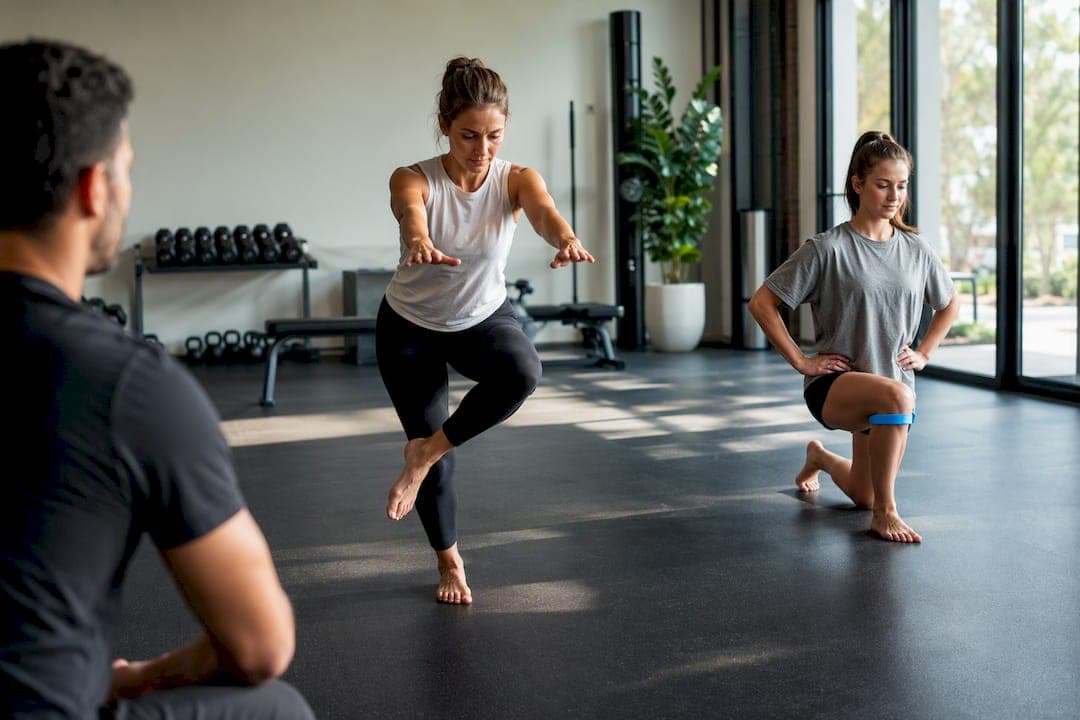
The right move is to hire a certified trainer who runs a real initial assessment, checks CPR and insurance credentials, and tracks your progress with more than a bathroom scale. Whether you go one-on-one, buddy up with a friend, join a group class, or train virtually, that formula holds. Repphilosophy offers all four formats out of 4S Ranch, so you don't have to choose a delivery style before you even know what works for you.
TL;DR:
- Verify that your trainer holds recognized certifications like CPT through NSCA, ACSM, ACE, or NASM, along with current CPR and liability insurance.
- Expect a thorough initial assessment including medical history, movement screening, and baseline strength and mobility measurements before starting workouts.
- Choose youth trainers with specific credentials like IYCA, experience coaching kids, small group sizes, and a focus on fun and injury prevention over early specialization.
- Match training format to your goal: one-on-one for injuries or performance, group classes for conditioning, or virtual programs with personalized plans and progress tracking.
- Conduct a trial session to assess coaching style, communication, and compatibility, which heavily influences long-term adherence and results.
Table of Contents
- What to check first when you choose a trainer
- Youth-athlete considerations for parents choosing a trainer
- Which training format matches your goals?
- What does a personal trainer cost, and what should it include?
- What should you ask before hiring a trainer?
- Why coaching fit matters more than credentials alone
- Ready to start? Here's how Repphilosophy fits your situation
- Sources
What to check first when you choose a trainer
Before you hand anyone your money or your schedule, you need proof they're qualified to coach you safely. The title "personal trainer" isn't regulated nationally, which means anyone can print business cards and call themselves one. That's exactly why the American College of Sports Medicine tells consumers to verify credentials directly instead of trusting the label.
Here's what actually separates a qualified coach from someone winging it:
- A recognized certification such as CPT through NSCA, ACSM, ACE, or NASM
- CSCS credentials if you want sport-specific strength coaching
- Youth-specific training like IYCA if you're hiring for a child or teen
- Current CPR and first-aid certification, plus liability insurance
- A degree or documented continuing education history, not just a certificate from a weekend course
A trainer worth hiring will also walk you through an initial fitness assessment before writing a single workout. That means a medical history review, a movement screen, and baseline numbers for strength, mobility, and conditioning. Skip this step and you're basically buying a stranger's guess.
Pro Tip: Ask to see the assessment paperwork before your first paid session. If a trainer can't show you what they measure and how often, they're not tracking your progress, they're just running you through workouts.
The IDEA Health & Fitness Association frames this screening as non-negotiable, and for good reason: it's how a good trainer catches red flags in your health history before they show up mid-set.
Youth-athlete considerations for parents choosing a trainer
Training kids isn't a smaller version of training adults, and any coach who treats it that way isn't the right fit. Younger children benefit most from movement play, agility games, and coordination work, not structured strength programs. Older kids and teen athletes can handle more structured conditioning once growth plates and coordination catch up.
Look for these specifics before you sign your child up:
- Youth-specific credentials such as IYCA, or documented experience coaching kids, not just adults
- Pediatrician clearance for any structured strength or conditioning work
- Small group sizes so your child actually gets coached, not just supervised
- CPR-certified staff and a written emergency plan posted or on file
- Sessions built around variety, fun, and technique first, not maxing out reps
Parents should watch for warmth and pacing in a session, not just intensity. The IDEA Health & Fitness Association notes that trainers who succeed with kids emphasize enjoyment and age-appropriate skill-building over early specialization, and Type A Training points to injury-prevention habits as a marker of a coach who actually understands youth development.
Which training format matches your goals?
Not every goal needs the same delivery model, and picking the wrong one wastes both money and motivation.
- One-on-one coaching works best for rehab, sport-specific performance goals, or anyone with a complex injury history. You get full personalization and undivided attention, at the highest per-session cost.
- Small-group or buddy training keeps most of that personalization while splitting the bill. It's a strong fit if accountability matters to you but a private session doesn't.
- Group classes trade personalization for structure and energy. They suit people chasing steady conditioning who don't need individualized programming.
- Virtual or on-demand training offers convenience and flexibility, especially between in-person sessions. It only works as a primary option if the program includes custom plans and real progress tracking, not just a video library.
Repphilosophy runs all four, which means you can start where your budget and goals actually sit today, then shift formats later without switching coaches.
What does a personal trainer cost, and what should it include?
Hourly rates for personal training in the United States typically range from around $20 to $150 or more per session, depending on the trainer's experience, specialization, and where you live. San Diego rates tend to sit toward the middle to upper end of that range for certified, experienced coaches.
A fair price should include more than just someone counting your reps. Expect it to cover:
- The initial assessment and any follow-up screenings
- Actual programming, not a generic template pulled off a shelf
- Regular progress check-ins with measurable data, not just "you look great"
- Some support between sessions, even if it's just a quick text on form questions
Package pricing, monthly memberships, and bring-a-buddy discounts are all common and can lower your per-session cost significantly. Watch for a few honest red flags: no written cancellation policy, promises of dramatic results on a fixed timeline, no proof of insurance or CPR certification, and vague answers when you ask how they'll measure your progress. Real trainers track more than scale weight. Strength gains, mobility, and how you feel day to day all matter, and Cleveland Clinic lists these broader metrics as the standard for judging whether a program is actually working.
What should you ask before hiring a trainer?
A short interview and a trial session tell you more than any five-star review ever will. Here's the order that works:
- Confirm certification, CPR status, and liability insurance up front, no exceptions.
- Ask about their experience with clients who share your goals, whether that's weight loss, strength, or return from injury.
- Ask exactly how they run an initial assessment and how often they'll re-test you.
- Ask what metrics they track for progress, beyond body weight.
- Get their cancellation policy, availability, and pricing structure in writing.
- Book a 15 to 30 minute intro or trial session before committing to a package.
During that trial, pay attention to how they explain exercises, whether they adjust cues when something isn't clicking, and whether their energy matches your preferred style. Some clients want a drill-sergeant push; others want quiet encouragement. Neither is wrong, but mismatched styles are the number one reason people quit programs early, according to Women's Health, which recommends testing exactly this before signing on for months of sessions.
Pro Tip: Bring the same question to every trainer you interview: "How will I know this is working in four weeks?" The answer reveals more about their coaching philosophy than any certification on their wall.
Once you've run this checklist against two or three finalists, the decision usually gets easy. The trainer who answered clearly, showed you their assessment process, and felt right in the trial session is your answer.
Why coaching fit matters more than credentials alone
Certifications get you in the door, but they don't guarantee a coach who actually understands you. I've seen plenty of clients hire the most credentialed trainer in the building and quit within six weeks, not because the programming was bad, but because the communication style never clicked. A trainer who barks corrections at someone who needs quiet encouragement is technically qualified and practically useless for that specific client.
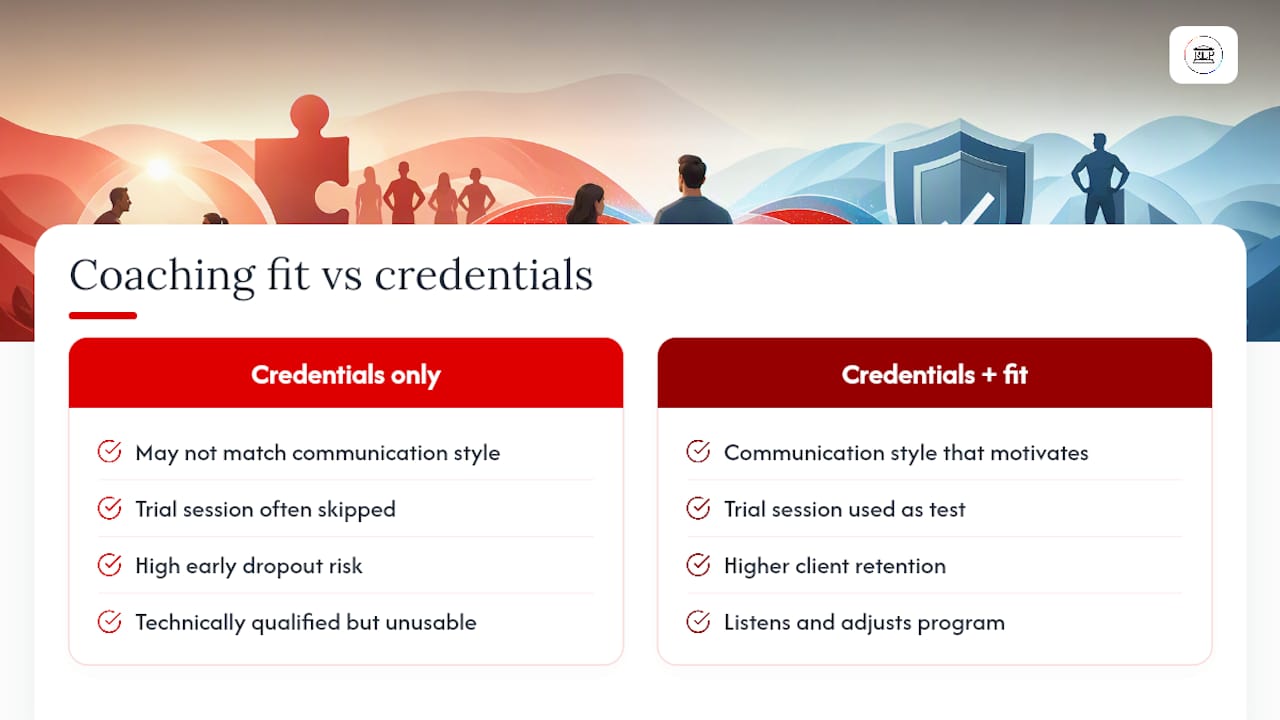
What gets overlooked in most advice on this topic is that fit isn't a soft factor you weigh after checking the boxes. It's the deciding factor once the boxes are checked. Two trainers with identical NASM certifications and identical assessment protocols can produce wildly different results for the same person, purely because one listens and adjusts and the other doesn't. That's why the trial session isn't optional. It's the only part of the hiring process that actually tests the thing most likely to make or break your consistency: whether you want to show up next week.
Progress tracking backs this up. Clients who feel heard tend to stick around long enough for the progress metrics to matter at all. A perfect program abandoned in month two produces zero results. A decent program followed for a year changes lives.
— Coach Justin
Ready to start? Here's how Repphilosophy fits your situation
If you're dealing with an injury history or chasing a serious performance goal, one-on-one coaching gives you the personalized attention and tailored programming that generic templates can't match. If cost is the bigger concern, buddy or small-group memberships keep coaching quality high while splitting the bill with a friend. If your schedule is the obstacle, the virtual on-demand library gives you custom programming and a full exercise video catalog you can access anywhere.
Every path through Repphilosophy starts the same way: an actual initial assessment, not a sales pitch disguised as a fitness test, following the principles outlined by HTK Training. Our staff carries current CPR certification, and progress gets tracked with real numbers, not just what the scale says on a Monday morning. Parents looking into youth athletic development can also check out the 4S Ranch sports performance program built specifically around age-appropriate coaching and injury-prevention practices.
Not sure which format fits yet? Book your initial consultation and assessment and we'll help you figure it out before you spend a dollar on a package. Or if you're ready to commit to in-person coaching now, you can book your first personal training session directly and get started this week.
Sources
- How to Find a Personal Trainer — Cleveland Clinic
- How to Choose the Personal Trainer Who's Right For You — IDEA Health & Fitness Association
- Investing in a personal trainer (handout) — American College of Sports Medicine (ACSM)
- 5 questions to ask before hiring a personal trainer — Women's Health