

A free consultation or assessment in personal training is a no-charge, no-obligation session designed to evaluate your current fitness level, health history, and goals before you commit to any program. Think of it as the first real conversation between you and a potential coach. It gives you expert insight at zero cost and zero risk. Repphilosophy offers this kind of session to help you figure out exactly where you stand and what kind of training will actually move the needle for you.
What happens during a free consultation or assessment?
A no-cost consultation in personal training typically lasts 30 to 60 minutes, giving your coach enough time to gather real information and align on your goals. That time matters. A rushed 10-minute call is a screening call, not a true assessment. Knowing the difference helps you set the right expectations before you walk in.
Here is what a well-structured session covers:
- Health and fitness history: Current activity level, past injuries, medical conditions, and any movement limitations.
- Goal alignment: What you want to achieve, your timeline, and what has or has not worked before.
- Lifestyle factors: Sleep, nutrition habits, stress levels, and schedule availability.
- Program fit: Whether the coach's training style, format, and pricing structure match your needs.
After the session, a quality coach delivers more than a handshake. Assessments commonly include a summary of findings, prioritized recommendations, and a clear timeline for your progress. That roadmap belongs to you whether you sign up for paid services or not.
| Session element | What it looks like |
|---|---|
| Duration | 30–60 minutes for a full assessment; 10–15 minutes for a screening call |
| Information gathered | Fitness level, health history, goals, lifestyle factors |
| Deliverables | Summary of findings, recommendations, progress timeline |
| Obligation | None. No purchase required. |
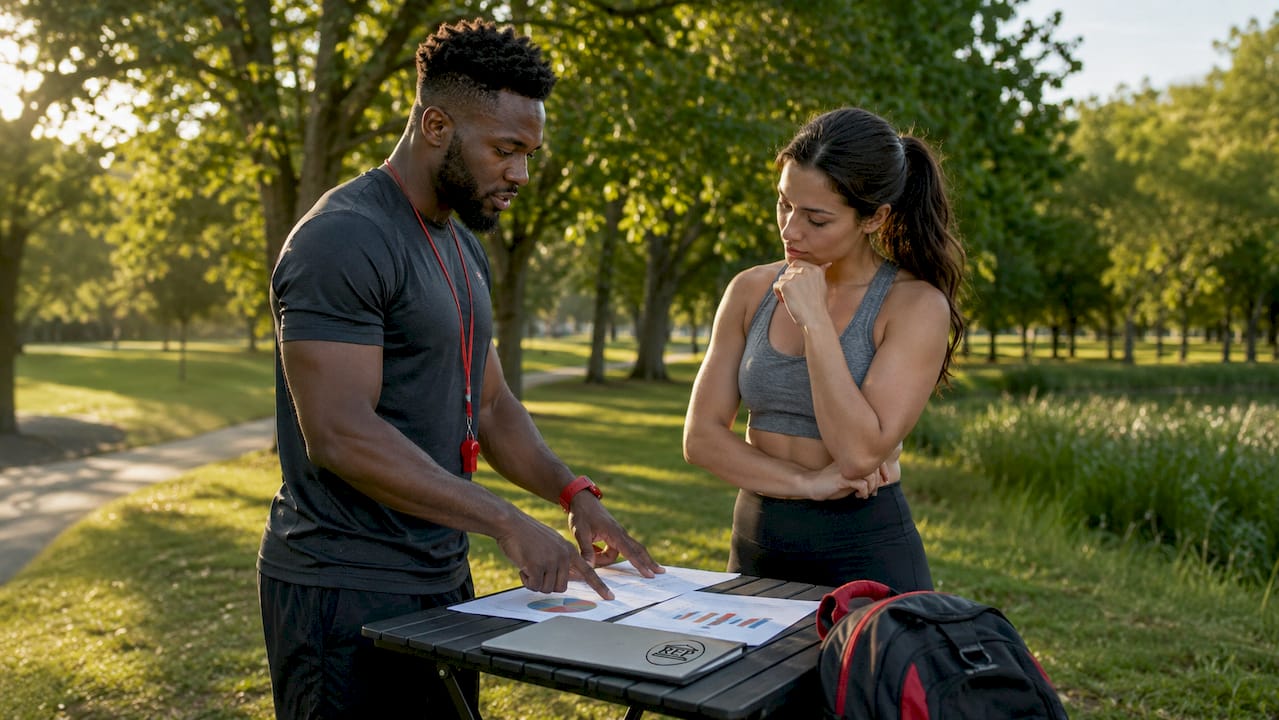
Pro Tip: Ask upfront how long the session runs. A coach who books 30 minutes or more is planning a real conversation. One who offers 10 minutes is qualifying you, not coaching you.
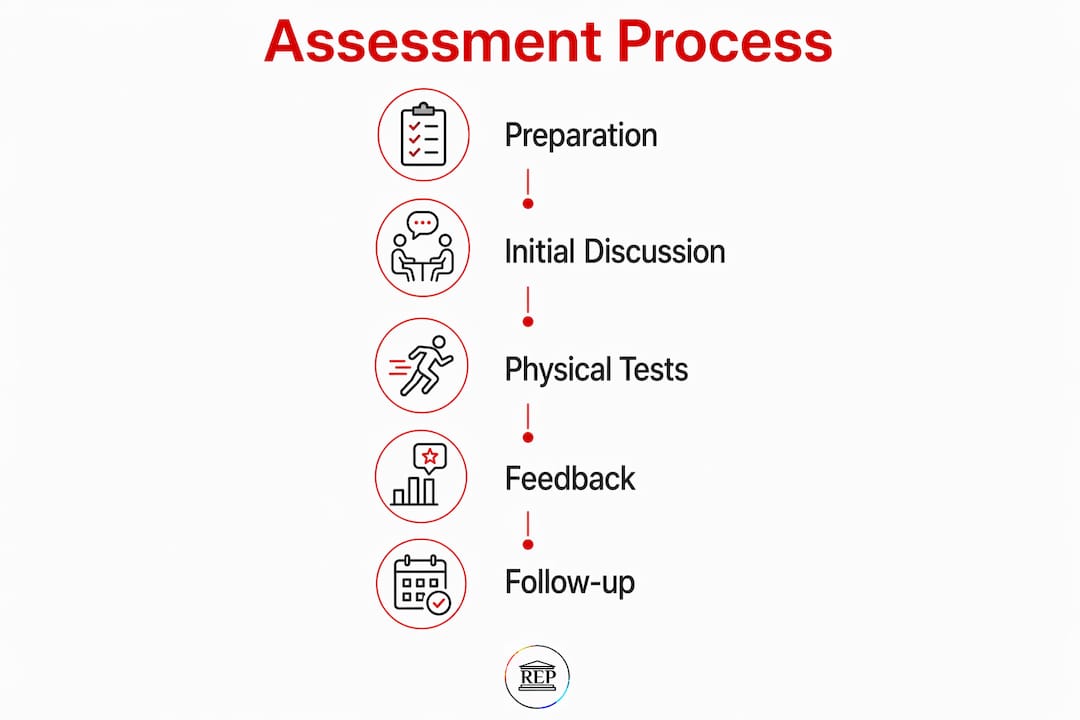
How to prepare for your complimentary assessment
Preparation separates a productive session from a forgettable one. Experts recommend bringing raw documentation rather than polished summaries. Your actual workout logs, injury timeline, and health conditions give a coach far more to work with than a vague description of "I work out a few times a week."
- Pull your workout history. Even a rough log of what you have been doing for the past 3–6 months tells a coach a lot about your baseline and your consistency.
- List your injuries and health conditions. Be specific. A left knee issue from 2022 or a history of lower back pain changes how a program gets built.
- Write down your goals. Not just "lose weight" or "get stronger." Think about what achieving that goal looks like in your daily life and why it matters to you right now.
- Prepare 3 to 5 questions. Having specific questions ready signals that you are serious and helps you get real answers about program structure, how adjustments get made, and what support looks like between sessions.
- Think about your constraints. Budget, schedule, equipment access, and travel time all shape what kind of program actually works for you.
Treat the session as a two-way interview. You are evaluating the coach just as much as they are evaluating your needs. Successful consultations function as mutual assessments where both sides figure out if the fit is right. A good coach welcomes that dynamic.
Pro Tip: Be honest about what has not worked before. A coach who hears "I tried a program and quit after three weeks" learns something valuable. That information shapes a better plan.
Why a free evaluation service is worth your time
The clearest benefit of a no-cost consultation is risk-free clarity. Free consultations give you expert insight without any financial commitment. That means you can explore your options, ask hard questions, and walk away with real information before spending a dollar.
Here is what you actually gain from a well-run complimentary assessment:
- Goal clarity. Many people arrive thinking they want one thing and leave with a sharper understanding of what they actually need. A coach who asks the right questions surfaces that distinction fast.
- A personalized roadmap. You receive a set of prioritized recommendations and a progress timeline regardless of whether you enroll. That plan has real value on its own.
- Informed decision-making. You learn whether the trainer's communication style, training philosophy, and program structure match how you work best. That knowledge prevents expensive mismatches.
- Confidence to commit. Walking into a paid program knowing exactly what to expect and why it fits your goals is a completely different experience from signing up on hope alone.
"A free assessment is not just a courtesy. It is the most efficient way to align a coach's expertise with a client's actual needs. The session itself is the first act of coaching."
Learning about personalized fitness solutions before committing to a program is one of the smartest moves you can make. The session costs you nothing but an hour of honest conversation.
Common misconceptions about free fitness consultations
The biggest misconception is that a free session means a full program. It does not. A complimentary assessment is a starting point, not a complete training plan. Expecting a coach to hand you a 12-week program for free sets you up for disappointment and misses the actual value of the session.
- "It's just a sales pitch." Some sessions are. But a coach who spends the entire time talking about pricing and packages without asking about your goals is showing you exactly who they are. A genuine assessment is mostly questions and listening, not selling.
- "Short sessions are just as good." Sessions under 15 minutes are screening calls designed to assess basic fit, not deliver advice. If a coach offers you a 10-minute slot, ask whether a longer session is available before you commit your time.
- "I have to sign up if I show up." A truly no-obligation consultation carries no pressure to purchase. Any coach worth working with understands that trust takes time and never pushes for a decision on the spot.
- "They will judge my current fitness level." A good coach has worked with every starting point imaginable. Your current level is data, not a grade. Honesty about where you are produces a better assessment every time.
The benefits of hiring a fitness coach become clear only when the initial session is honest and well-structured. A rushed or sales-heavy consultation is a red flag, not the norm.
Key Takeaways
A free consultation or assessment is the most efficient first step toward a fitness program that actually fits your goals, your body, and your life.
| Point | Details |
|---|---|
| Session length matters | A true assessment runs 30–60 minutes; anything shorter is a screening call, not coaching. |
| Bring raw documentation | Workout logs, injury history, and specific goals make the session faster and more useful. |
| Prepare real questions | Having 3–5 questions ready helps you evaluate coach fit and get answers that matter. |
| Deliverables are yours | You receive a roadmap and recommendations regardless of whether you enroll in a paid program. |
| No obligation means no pressure | A legitimate no-cost consultation never requires a purchase decision on the spot. |
What I have learned from running these sessions
Every coach has an opinion on free consultations. Mine is simple: the session reveals more about the coach than it does about the client.
I have sat across from people who came in apologetic about their fitness level, convinced they needed to "get in shape" before working with a trainer. That thinking is backward. The assessment exists precisely because you are not sure where to start. Showing up with your honest history, your real goals, and a few sharp questions is the whole point.
What I look for in those first 30 minutes is not how fit someone is. I look for self-awareness and honesty. A client who says "I quit my last program because I was bored and the schedule did not fit my life" gives me everything I need to build something that actually sticks. A client who says "I just want to get healthier" gives me almost nothing to work with until we dig deeper.
Treating the consultation as an interview is the right frame. You are hiring a coach. You should ask hard questions about how they handle plateaus, how they adjust when life gets in the way, and what their communication looks like between sessions. A coach who gets defensive at those questions is not the right fit. A coach who lights up is.
The sessions I remember most are the ones where the client came prepared, pushed back a little, and left with a clear picture of what comes next. That is what a good assessment looks like. It should feel like the start of something real, not a formality before the sales conversation.
— Coach Justin
Ready to see what a real assessment looks like?
At Repphilosophy, the initial session is built around you. No cookie-cutter questions, no pressure, and no obligation to sign up for anything. You get a real conversation about where you are, where you want to go, and what kind of training fits your life in 4S Ranch or wherever you are training.
Whether you are curious about one-on-one coaching, group classes, or virtual training options, the first step is the same: a no-cost session that gives you clarity. Repphilosophy also offers virtual training options for those who prefer to train from home. When you are ready to take that step, book your personal training session and kick things off with a coach who is genuinely invested in your results.
FAQ
What is a free consultation or assessment in personal training?
A free consultation or assessment is a no-cost, no-obligation session where a coach evaluates your fitness level, health history, and goals to recommend the right program for you. It typically runs 30–60 minutes and includes a summary of findings.
How do I get the most out of a complimentary assessment?
Bring your workout history, a list of injuries or health conditions, and 3–5 specific questions about the coach's program structure and communication style. Raw, honest information produces a far more useful session than a polished summary.
Is there any obligation to buy after a free evaluation service?
No. A legitimate no-cost consultation carries no obligation to purchase. Any pressure to commit on the spot is a red flag worth paying attention to.
What should I expect to receive after the session?
Most quality assessments deliver a set of prioritized recommendations and a progress timeline. That roadmap is yours to keep regardless of whether you enroll in a paid program.
How is a free assessment different from a screening call?
A screening call runs 10–15 minutes and focuses on basic fit, not advice. A true assessment runs 30–60 minutes and covers your full health history, goals, and a personalized plan of action.