

Virtual personal training is defined as a structured coaching relationship delivered remotely through video calls, apps, or on-demand platforms, giving you access to expert guidance without stepping inside a gym. The benefits of virtual personal training go far beyond simple convenience. Research now confirms that app-based training produces health outcomes comparable to face-to-face supervision when the programming quality and coaching contact are consistent. Whether you are juggling a packed schedule, managing caregiving duties, or simply want to train from home, virtual fitness coaching delivers personalized, evidence-backed support that meets you exactly where you are.
1. Benefits of virtual personal training: flexible scheduling that fits your life
The most immediate advantage of remote fitness coaching is freedom from the gym clock. You are no longer locked into a trainer's in-studio availability or a facility's operating hours. You train when your schedule allows, whether that is 5 a.m. before the kids wake up or 9 p.m. after work winds down.
This flexibility is not just a comfort feature. It is a proven adherence driver. When workouts fit naturally into your existing routine, you are far more likely to show up consistently. Consistency, not intensity, is what produces long-term results.
Virtual training also removes the commute entirely. The average gym round-trip in a suburban area like 4S Ranch can consume 30 to 45 minutes. Reclaiming that time means more recovery, more sleep, or simply more life outside the gym.
- Train from your living room, backyard, hotel room, or office
- Schedule sessions around work shifts, school pickups, and travel
- Access on-demand workouts when live sessions are not possible
- Adjust session length from 20 to 60 minutes based on your day
Pro Tip: Book your virtual sessions at the start of each week the same way you schedule a meeting. Treating your workout as a non-negotiable appointment is one of the simplest behavioral changes that separates people who get results from those who stay stuck.
2. Personalized coaching that rivals in-person training
One of the most persistent myths about online personal training is that it sacrifices quality for convenience. The research says otherwise. Personalization and programming quality matter as much as, or more than, whether coaching happens in person or virtually. A well-designed virtual program built around your specific goals, fitness level, and health history will outperform a generic gym plan every time.
Modern virtual coaches use fitness apps, wearables like Garmin or Apple Watch, and structured check-ins to monitor your progress in real time. Your coach sees your workout logs, heart rate data, and recovery metrics without being in the same room. That feedback loop keeps programming sharp and responsive.
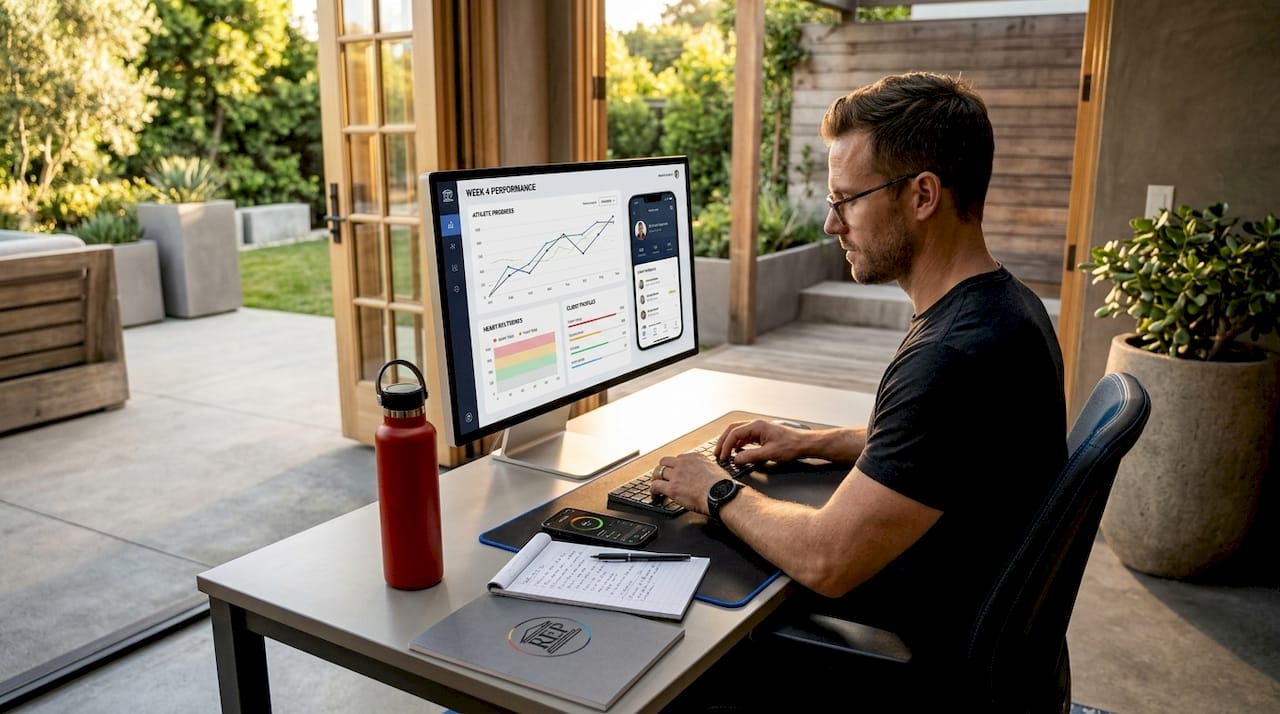
Here is how virtual coaching customization compares to a standard gym membership:
| Feature | Virtual personal training | Standard gym membership |
|---|---|---|
| Program design | Tailored to your goals and history | Generic templates or none |
| Coach accountability | Scheduled check-ins and feedback | No direct coach contact |
| Progress tracking | App-based logs and wearable data | Self-managed or absent |
| Flexibility | Train anywhere, anytime | Facility hours only |
| Injury/health adaptation | Ongoing program adjustments | Rarely available |
The structured supervision element is what separates effective virtual programs from random YouTube workouts. Supervised remote exercise improves fitness metrics and adherence compared to unsupervised self-management. Your coach is your accountability partner, your program architect, and your unwavering guide through every phase of training.
- Initial assessment covering fitness level, goals, and any physical limitations
- Custom program built around your available equipment and schedule
- Weekly or biweekly check-ins to review progress and adjust intensity
- Real-time feedback on form via video during live sessions
- Ongoing communication through app messaging between sessions
3. Cost-effectiveness and accessibility of remote fitness coaching
Personal training from home costs significantly less than traditional in-person sessions when you factor in the full picture. You eliminate gym membership fees, commuting costs, and the premium pricing that comes with a trainer's physical studio overhead. Virtual coaching memberships often run at a fraction of the cost of weekly in-person sessions, making expert guidance accessible to a much wider group of people.
Geography is no longer a barrier. You can work with a specialist coach based in San Diego, New York, or anywhere in the world, regardless of where you live. This matters enormously if you are in a suburb or rural area where qualified trainers are scarce. It also matters if you have a very specific goal, such as powerlifting, postnatal recovery, or managing a chronic condition, and need a coach who specializes in exactly that.
For people with mobility limitations, caregiving responsibilities, or physical conditions that make gym travel difficult, virtual training is not just more affordable. It is the only realistic option. Tailored social and emotional support is critical for retention and success in virtual fitness programs for people facing these kinds of barriers. A good virtual coach builds that support directly into the program structure.
- No gym membership required, saving $40 to $100 per month on average
- No commuting costs or time lost to travel
- Access to specialized coaches regardless of your zip code
- Viable for people with limited mobility, chronic conditions, or caregiving duties
- Portable fitness equipment keeps startup costs low for home training setups
4. Psychological and behavioral support for lasting motivation
Motivation is not a personality trait. It is a system. Virtual personal training builds that system around you through structured feedback, goal tracking, and consistent human contact. These are not soft benefits. They are the mechanisms that determine whether you stick with a program for three weeks or three years.
Fitness apps designed to meet your psychological needs around autonomy, competence, and relatedness increase exercise adherence through improved self-efficacy and perceived control over your health. That means when an app or coaching platform gives you choices, tracks your wins, and connects you to a community, you are more likely to keep showing up. This is not accidental design. It is behavioral science applied to fitness.
"Behavioral support mechanisms in virtual programs enhance motivation and help overcome common exercise barriers." — Frontiers in Psychology, 2026
The human element amplifies all of this. Knowing that your coach will review your workout log on Friday is a powerful motivator on a Wednesday when you would rather skip. That accountability loop, combined with visible progress data, turns every workout into a meaningful stride toward your goal rather than an isolated effort.
Pro Tip: Pair your virtual coaching program with a fitness smartwatch to give your coach real data between sessions. Heart rate trends, sleep quality, and step counts give your trainer the full picture, not just what happened during your workout.
5. Comparable health outcomes to face-to-face training
You might wonder whether virtual training actually works as well as standing in a gym with a trainer beside you. The evidence is clear. An 8-week randomized controlled trial with early postmenopausal women showed comparable improvements in menopausal symptoms, fitness, and psychological well-being between in-person and app-based training groups following the same protocol. Same program, same results, different delivery method.
The key variable is not location. It is supervision quality and adherence. Supervised remote exercise interventions showed the best outcomes for HbA1c reduction in a network meta-analysis of 54 randomized controlled trials involving adults with type 2 diabetes. Programs with a real coach driving accountability outperformed automated or unsupervised digital programs by a measurable margin. That finding holds across multiple health conditions and populations.
What this means for you is straightforward. If you commit to a virtual program with a qualified coach who checks in regularly, tracks your progress, and adjusts your plan, you will get results that match what you would achieve training in person. The gym is not the magic ingredient. The coaching is.
6. Overcoming common fitness barriers with virtual training
The most common reasons people stop exercising are time, cost, access, and motivation. Virtual personal training addresses all four directly. But there is a fifth barrier that rarely gets discussed: mid-program fatigue. Around weeks four to six of a new program, adherence typically dips as novelty wears off and life gets in the way. Research on web-based lifestyle interventions confirms this pattern, noting variable exercise adherence even in structured online programs.
The solution is not willpower. It is program design. A skilled virtual coach anticipates this dip and builds in progression adjustments, alternative workouts, and check-in touchpoints specifically timed to catch you before you fall off. Contingency protocols built into virtual programs maintain effectiveness even during real-world disruptions like travel, illness, or schedule changes.
| Barrier | How virtual training addresses it |
|---|---|
| Time constraints | Flexible scheduling and shorter session options |
| Cost | Lower pricing than in-person sessions, no gym fees |
| Geographic access | Train with any coach, anywhere in the world |
| Mid-program fatigue | Proactive check-ins and dynamic program adjustments |
| Low digital literacy | Simplified app interfaces and coach-guided onboarding |
| Mobility limitations | Home-based programming with equipment alternatives |
For people with low digital literacy or limited emotional support networks, machine-learning research identifies these as the highest dropout risk factors in virtual programs. The fix is targeted: coaches who recognize these risk profiles and build in extra touchpoints, simplified tools, and community features that replace the social energy of a gym floor.
Key takeaways
Virtual personal training delivers results comparable to in-person coaching when structured supervision, consistent check-ins, and personalized programming are built into the program from day one.
| Point | Details |
|---|---|
| Comparable effectiveness | App-based and in-person training produce similar health outcomes when programming quality is equal. |
| Supervision drives results | Professional coaching contact, not the remote format alone, is what improves adherence and outcomes. |
| Cost and access | Virtual training removes geographic and financial barriers, opening expert coaching to far more people. |
| Behavioral support matters | Apps and coaches that address autonomy, competence, and relatedness significantly boost long-term adherence. |
| Barrier management | Proactive program adjustments and check-ins prevent mid-program dropout before it happens. |
My honest take on virtual training after years of coaching
I have worked with clients in person and virtually, and the single biggest misconception I hear is that virtual training is the "lesser" option. It is not. What I have found is that the clients who thrive virtually are often the ones who struggled most with in-person training, not because they lacked motivation, but because the rigid schedule, the commute, and the gym environment itself were working against them.
What virtual coaching does is remove the friction. When the only thing standing between you and your workout is opening an app or joining a video call, the excuses shrink. I have seen clients in their 50s transform their body composition, manage chronic conditions, and build genuine confidence, all from a spare bedroom with a set of dumbbells and a resistance band.
The one thing I will always push back on is the idea that virtual training works without real coaching contact. Sending someone a PDF workout plan and calling it virtual coaching is not coaching. It is content delivery. The programs that produce results are the ones with structured check-ins, honest feedback, and a coach who actually reviews your data and adjusts your plan. That is what I build at Repphilosophy, and it is what you should demand from any virtual program you invest in.
If you are weighing your options, take a look at personal training vs. gym membership to get a clearer picture of what each model actually delivers.
— Coach Justin
Ready to try virtual personal training with Repphilosophy?
At Repphilosophy, virtual coaching is built around the same principles that drive results in our 4S Ranch studio: structured programming, real accountability, and a coach who genuinely invests in your progress. You get a customized plan, regular check-ins, and access to our on-demand workout video library, all without leaving home.

Whether you are brand new to fitness or returning after a long break, our virtual coaching memberships give you everything you need to train with purpose and consistency. You can also explore our full coaching services to find the option that fits your goals and budget. If you want to see what overweight adults specifically gain from structured coaching, our breakdown of personal training benefits is worth your time. Ready to invest in yourself? Let's get started.
FAQ
What is virtual personal training?
Virtual personal training is a remote coaching model where a certified trainer delivers personalized workout programs, live video sessions, and progress check-ins through apps or video platforms. It produces health outcomes comparable to in-person training when professional supervision is maintained.
Is virtual personal training as effective as in-person coaching?
Yes, when the program includes structured supervision and regular coach contact. Research across multiple randomized controlled trials confirms that supervised remote programs match or closely approach in-person results for fitness, body composition, and health markers.
How much does virtual personal training cost?
Virtual coaching typically costs less than in-person sessions because it eliminates studio overhead and commuting expenses. Pricing varies by coach and program structure, but virtual memberships often run significantly below the cost of weekly in-studio sessions. See why private training costs more for a detailed cost breakdown.
What equipment do I need to train virtually at home?
Most virtual programs are designed around minimal equipment. A set of resistance bands, adjustable dumbbells, and a mat cover the majority of exercises. Your coach will build your program around what you already have or recommend affordable additions as you progress.
How do I stay motivated with virtual personal training?
Scheduled check-ins, progress tracking, and app-based goal setting are the primary motivation tools in virtual programs. Fitness apps that support autonomy and competence measurably improve adherence by strengthening self-efficacy and your sense of control over your health outcomes.