

Personalized fitness solutions are customized workout and nutrition programs built around your unique body, goals, and lifestyle. Generic programs treat everyone the same, but your metabolism, recovery capacity, and schedule are yours alone. Platforms like OneFit AI, Arvo, and fytrr now use AI to deliver individualized exercise strategies that adapt as you progress. Evidence-based tools like the Mifflin-St Jeor equation and ISSN protein guidelines power the nutrition side of these plans. The result is a program that fits your real life, not a hypothetical average person's life.
What are personalized fitness solutions and how do they work?
Personalized fitness solutions combine AI algorithms with exercise science to build and continuously refine your training plan. You start by entering your goals, experience level, available equipment, and weekly schedule. The system uses that data to generate a program grounded in proven methods like periodization and hypertrophy protocols.
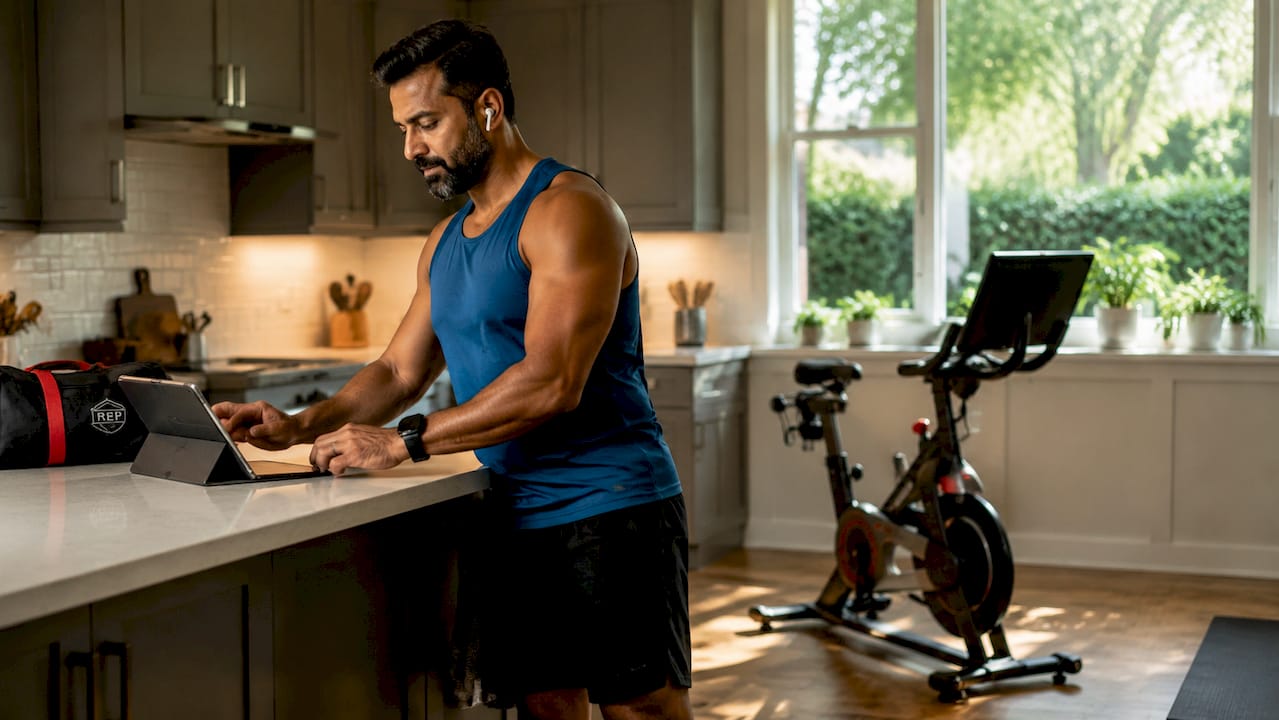
What separates modern platforms from a static PDF plan is real-time adaptation. AI coaching platforms modify training based on performance data to prevent plateaus by adjusting intensity and volume as you go. Arvo, for example, adjusts your plan set by set based on your rate of perceived exertion and the weights you actually lifted. That is a fundamentally different experience from receiving a plan that sits unchanged for months.
Nutrition personalization runs alongside the training side. Platforms like fytrr apply evidence-based nutrition calculations, including the Mifflin-St Jeor equation and ISSN protein guidelines, to calculate your calorie and macronutrient targets. OneFit AI takes this further by combining workout tracking, AI meal scanning, and a personal AI coaching chat into one platform. Recovery data, sleep quality, and stress levels can also feed into the plan, giving you a complete picture of your health.
Pro Tip: When you first set up any personalized fitness platform, be brutally honest about your schedule. Overestimating your available training days is the fastest way to derail a plan before it starts.
Why personalized plans outperform generic workout programs
There is no average physiology. Your metabolic rate, hormonal profile, and biomechanical movement patterns are distinct, and a generic program cannot account for any of them. Personalized exercise prescriptions consistently outperform generic ones because they factor in recovery capacity and individual biomechanics from day one.
Adherence is the real battleground in fitness. The most common reason plans fail is a mismatch with your real-life constraints. A program that calls for five gym sessions per week when you can realistically manage three will not survive contact with your actual life. Personalized plans built around your true schedule and equipment access remove that friction entirely.
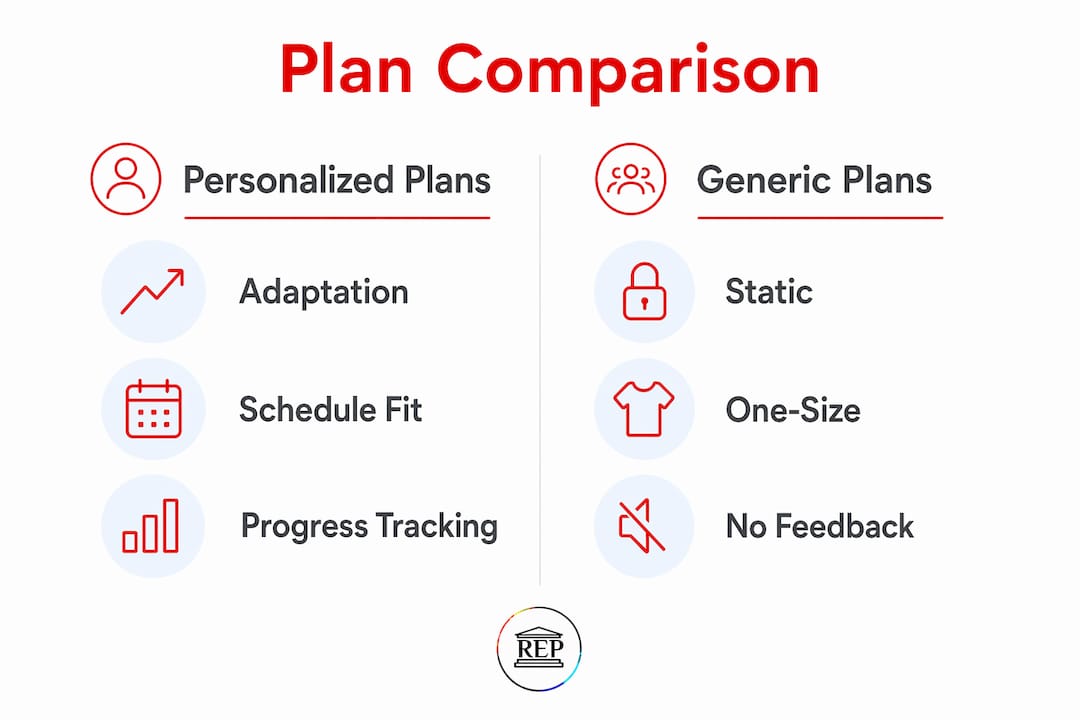
Injury risk drops significantly when training loads match your current capacity. Adaptive programs track your performance week over week and pull back volume or intensity when your output signals fatigue. That kind of responsive management is something a static plan simply cannot provide.
| Factor | Generic program | Personalized plan |
|---|---|---|
| Training load | Fixed for all users | Adjusted to your capacity |
| Nutrition guidance | General calorie targets | Calculated using Mifflin-St Jeor and ISSN guidelines |
| Schedule fit | Assumes standard availability | Built around your real weekly time |
| Adaptation | Static or manually updated | Real-time or refreshed every 4–6 weeks |
| Injury management | No individual risk assessment | Volume reduced based on performance signals |
"Successful long-term outcomes depend not just on a custom starting point, but on adjusting volume and intensity based on real-time performance feedback."
The table above makes the gap clear. A personalized plan is not just a nicer version of a generic one. It is a structurally different approach that treats you as an individual at every stage.
Key features to look for in a personalized fitness platform
Not every platform that calls itself personalized actually delivers meaningful customization. Here is what separates genuinely adaptive tools from glorified template generators.
-
Real-time or frequent adaptation. The plan should change based on what you actually do in your workouts, not just what you planned to do. Arvo adjusts set by set. Other platforms like OneFit AI update plans holistically using workout tracking and AI coaching chat. Either approach beats a plan that never changes.
-
Integrated nutrition personalization. Workout programming without nutrition guidance leaves half the equation unaddressed. Look for platforms that calculate your calorie and protein targets using established formulas, not generic ranges.
-
Easy workout logging. If logging a session takes longer than the warm-up, you will stop doing it. The best platforms make tracking fast and frictionless, which keeps the data flowing and the AI adapting accurately.
-
Access to expert guidance. AI coaching chat features, video libraries, and human coach access all serve different needs. Virtual coaching memberships that combine structured programming with expert oversight give you the best of both worlds.
-
Flexible equipment and lifestyle options. A plan that assumes you have a fully equipped gym is useless if you train at home. Quality platforms ask about your equipment upfront and build accordingly.
Pro Tip: Before committing to any platform, check whether it offers a free tier or trial. Many AI fitness platforms offer free basic plans, with premium subscriptions ranging from $4.00 to $14.99 per month. Test the adaptation logic before you pay.
How to implement a personalized fitness solution effectively
Getting the most from a tailored fitness program comes down to how you set it up and how consistently you engage with it. These are the habits that separate people who see real results from those who abandon their plan after three weeks.
-
Define your goals with specificity. "Get fit" is not a goal. "Add 20 pounds to my squat in 12 weeks" or "lose 15 pounds before my sister's wedding in june" gives the platform and your coach something concrete to build toward.
-
Be honest about your constraints upfront. High-quality customization incorporates your real time and equipment constraints from the start. Telling the platform you have 45 minutes four days per week produces a better plan than claiming you have unlimited time.
-
Track consistently, not perfectly. You do not need to log every gram of food or every rep forever. But consistent tracking of your key lifts, body weight, and energy levels gives the AI the data it needs to adapt your plan accurately.
-
Refresh your plan on schedule. Plans should be updated every 4–6 weeks or after any significant life change, like a new work schedule, an injury, or a shift in your primary goal. Stale programming stops producing results.
-
Do not skip rest days. Adaptive plans build recovery into the schedule deliberately. Overriding rest days because you feel motivated is one of the most common ways people undermine their own progress.
-
Communicate your preferences clearly. If you hate a specific exercise or find a movement painful, say so. Personalized plans only stay personalized when you give honest feedback. Suffering through exercises you dread is a fast track to quitting.
Understanding what fitness coaching includes before you start helps you set realistic expectations and get more from every session.
Key Takeaways
Personalized fitness solutions outperform generic programs because they adapt to your unique physiology, schedule, and goals at every stage of your progress.
| Point | Details |
|---|---|
| Personalization starts with honest inputs | Accurate goals, schedule, and equipment data produce a plan that fits your real life. |
| AI drives real-time adaptation | Platforms like Arvo and OneFit AI adjust intensity and volume based on your actual performance. |
| Nutrition must be included | Evidence-based calculations like Mifflin-St Jeor and ISSN guidelines make nutrition guidance accurate, not generic. |
| Plans need regular refreshing | Update your program every 4–6 weeks to maintain progress and prevent stagnation. |
| Adherence beats perfection | A realistic plan you follow consistently outperforms an aggressive plan you abandon. |
What I've learned coaching real people through personalized programming
I have worked with clients at every level, from beginners who have never touched a barbell to competitive athletes chasing performance records. The single most consistent finding across all of them is this: the best program is the one the person actually does.
Early in my coaching career, I leaned heavily on what the science said was optimal. High frequency, precise periodization, detailed macro targets. And those plans worked beautifully for clients whose lives had room for them. For everyone else, they became a source of guilt and frustration. That taught me something no textbook covers. Sustainability is not a soft goal. It is the goal.
AI platforms have genuinely changed what is possible for people who cannot afford one-on-one coaching five days a week. Tools like OneFit AI and Arvo bring adaptive programming to anyone with a phone. That is a real shift. But I want to be direct about one limitation. AI cannot read the look on your face when a movement feels wrong. It cannot tell the difference between productive discomfort and the early warning signs of an injury. Human expertise still matters, especially when you are pushing your limits or working through a physical limitation.
My honest recommendation is to use technology as the foundation and human coaching as the layer that catches what the algorithm misses. At Repphilosophy, that combination is exactly what we build our programs around. Whether you are training in person in 4S Ranch or working with us virtually, the goal is always a plan that fits your life and grows with you.
— Coach Justin
Repphilosophy's approach to tailored fitness coaching
Ready to put a plan in place that actually fits your life? Repphilosophy offers personalized coaching programs built around your goals, schedule, and training environment, whether you prefer in-person sessions in 4S Ranch, group classes, or the flexibility of virtual coaching.
Our virtual coaching memberships give you on-demand access to structured workouts and expert programming you can follow from anywhere. If you want to train with a friend, our Bring a Buddy memberships make quality coaching more affordable without sacrificing the personal attention. Youth sports performance training is also available for young athletes who want to build strength and confidence in a safe, challenging environment.
FAQ
What are personalized fitness plans?
Personalized fitness plans are workout and nutrition programs built around your specific goals, physiology, schedule, and equipment. They differ from generic programs by adapting to your individual recovery capacity, biomechanics, and lifestyle constraints.
How often should I update my personalized workout plan?
Personalized plans should be refreshed every 4–6 weeks or after any significant change in your schedule, goals, or training environment. Regular updates prevent stagnation and keep your program aligned with your current capacity.
Are AI fitness platforms worth using?
AI fitness platforms like OneFit AI and Arvo deliver adaptive programming that adjusts to your real performance data, making them far more effective than static plans. Premium subscriptions typically range from $4.00 to $14.99 per month, with free tiers available on most platforms.
How is a personalized plan different from a generic gym program?
A personalized plan accounts for your unique metabolism, recovery rate, and available time, while a generic program applies the same variables to every person. That difference in fit is why individualized programs produce better results on strength, fat loss, and long-term adherence.
Do I need a coach or is an AI platform enough?
An AI platform handles adaptive programming well, but human coaching adds the judgment and real-time observation that algorithms cannot replicate. The strongest approach combines both, using AI for daily programming and a coach for form feedback, injury prevention, and accountability. Learn more about adaptive fitness training to understand how the two work together.