

Starting a weight loss journey alone is tough. The alarm goes off, motivation is low, and skipping feels easy when no one is counting on you. That’s exactly why learning how to find a training partner for your weight loss journey can be the single biggest shift you make. Research shows that people who exercise with a partner have a 95% program completion rate compared to just 76% when going solo. A weight loss workout buddy doesn’t just make workouts more fun. They make you far more likely to actually finish what you started.
Table of Contents
Key takeaways
| Point | Details |
|---|---|
| Partners dramatically boost completion | People with a workout buddy complete weight loss programs at a 95% rate versus 76% alone. |
| Compatibility matters more than proximity | Aligning on goals, schedule, and workout intensity prevents conflict and keeps the partnership strong. |
| Multiple channels exist to find partners | Local gyms, fitness apps, community groups, and virtual platforms all connect you with the right fit. |
| Clear expectations prevent burnout | Defining roles and communication styles before you start protects the partnership long term. |
| Post-workout connection builds habits | Sharing a meal or coffee after training reinforces psychological commitment to your program. |
Why a training partner transforms your weight loss results
The numbers are hard to argue with. People who work out with a partner or group increase their effort by 160% compared to training alone. That’s not a small bump. That’s a complete shift in the quality of every session you show up to.
There’s a psychological principle behind this called the Kohler effect. It describes how people naturally push harder when they know someone else is watching or depending on them. You don’t want to be the one who quits first. That competitive edge, even when it’s gentle and friendly, turns average workouts into genuinely productive ones.
Beyond performance, a workout partner provides something that’s easy to underestimate: social support. Social companionship from partners actively counters the health risks of isolation, which include both mental and physical consequences. When you’re working toward weight loss, the emotional support of someone who truly gets what you’re going through matters as much as the physical effort.
There are also real safety advantages to training with someone. A partner acts as a second set of eyes on your form, catching technique breakdowns before they lead to injury. This is especially true during compound lifts like squats or deadlifts, where fatigue makes form the first thing to go.
Here’s a quick look at what a training partner brings to your weight loss journey:
-
Accountability. An external commitment to another person is harder to break than a promise to yourself.
-
Motivation. Seeing your partner push through a tough set pulls you forward when your own energy dips.
-
Safety. A partner spots form issues and can assist during heavy lifts to prevent injury.
-
Emotional support. Someone to celebrate wins with and talk through setbacks keeps your mindset strong.
-
Consistency. Scheduled sessions with another person are far less likely to get canceled than solo plans.
What to consider before you start searching
Before you go looking for a fitness partner, it pays to get clear on what you actually need. Jumping into a partnership without alignment is one of the fastest ways to create friction that derails both of you.
Successful fitness partnerships require defined expectations around workout intensity, schedule, and each partner’s role. Think about what days and times work for you consistently. Think about whether you want someone to train at the same intensity or someone who will push you harder. These aren’t small details. They determine whether the partnership lasts two weeks or two years.
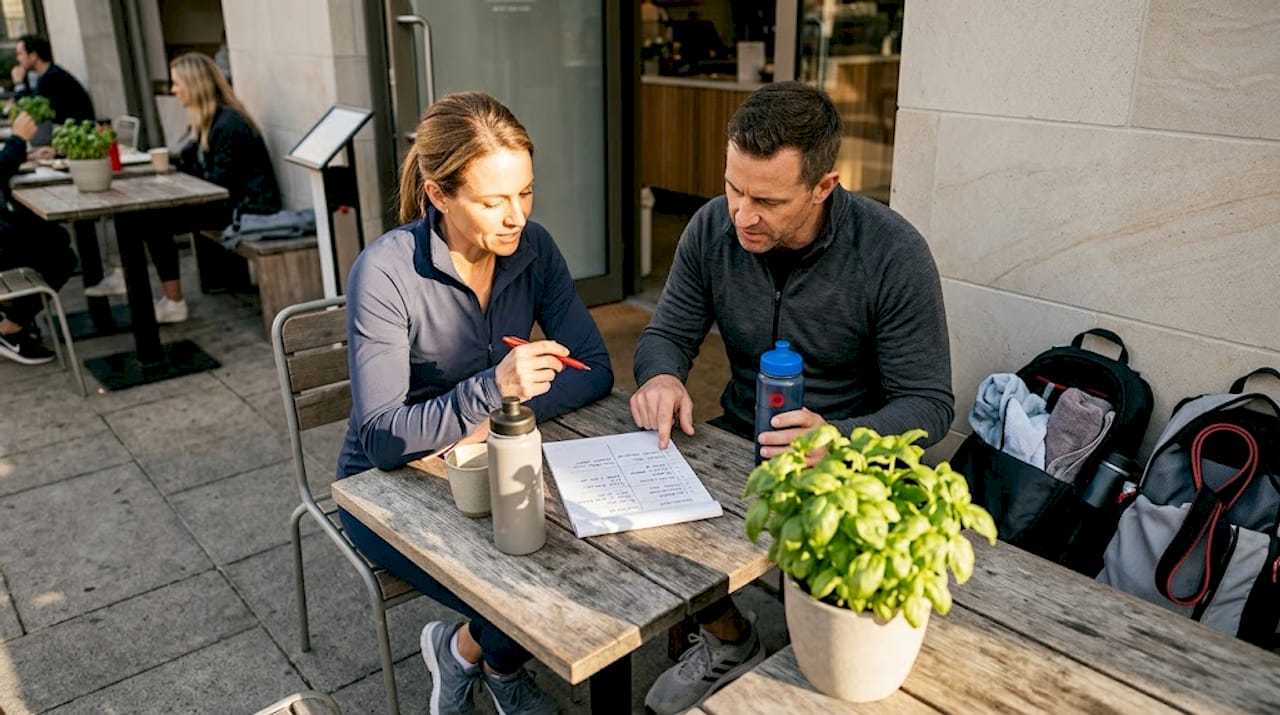
Consider the roles you each want to play. Some people want a motivator who keeps the energy high. Others need a planner who organizes the sessions. Some want a spotter for lifting, while others just want someone to show up and run alongside them. Knowing your role preferences before you approach anyone saves a lot of awkward conversations later.
Personality and communication style matter too. If you’re someone who needs encouragement during hard moments and your partner responds to struggle with silence, that mismatch will wear on you. A quick honest conversation about how you each prefer to communicate during and after workouts goes a long way.
Pro Tip: Before starting any new intense exercise program, the American Heart Association recommends consulting a medical professional. Aim for gradual progress of 1 to 2 pounds of weight loss per week, and let that guide the intensity you bring to your partnership from day one.
How to find and connect with the right fitness partner
Once you know what you’re looking for, the next step is knowing where to look. The good news is that there are more options than most people realize, both in person and online.
-
Your current gym or fitness class. This is the most natural starting point. Pay attention to who shows up consistently at the same time as you. Consistency is already a shared value. A simple “I’ve seen you here a lot, would you want to train together sometime?” is all it takes.
-
Community fitness groups. Local running clubs, cycling groups, and recreational sports leagues are full of people who are already motivated and social about fitness. Joining one puts you in a room with built-in compatibility.
-
Friends and family. Don’t overlook the people already in your life. A sibling, neighbor, or coworker who has mentioned wanting to get healthier could be your ideal weight loss support group of two. The shared history makes accountability feel more personal.
-
Fitness apps and partner-matching platforms. Technology has made it easier than ever to find an exercise accountability partner beyond your immediate circle. Apps designed for digital paired training let you connect with remote partners, share progress, and even do “ghost trainings” where you work out simultaneously from different locations.
-
Social media fitness communities. Facebook groups, Reddit fitness communities, and Instagram hashtags connect people with shared goals. Posting that you’re looking for an accountability partner in a local fitness group often gets a faster response than you’d expect.
Here’s a side-by-side look at your main options:
| Method | Best for | Effort to start |
|---|---|---|
| Local gym or class | In-person training, consistent schedule | Low |
| Community fitness group | Social motivation, group energy | Medium |
| Friends or family | Personal accountability, shared history | Low |
| Fitness apps | Remote or flexible schedules | Low to medium |
| Social media groups | Broad reach, niche fitness interests | Medium |
Best practices for making the partnership work
Finding a partner is step one. Making the partnership actually work for your weight loss goals is where most people need guidance. A few intentional habits make the difference between a partnership that fades after a month and one that carries you to your goal.
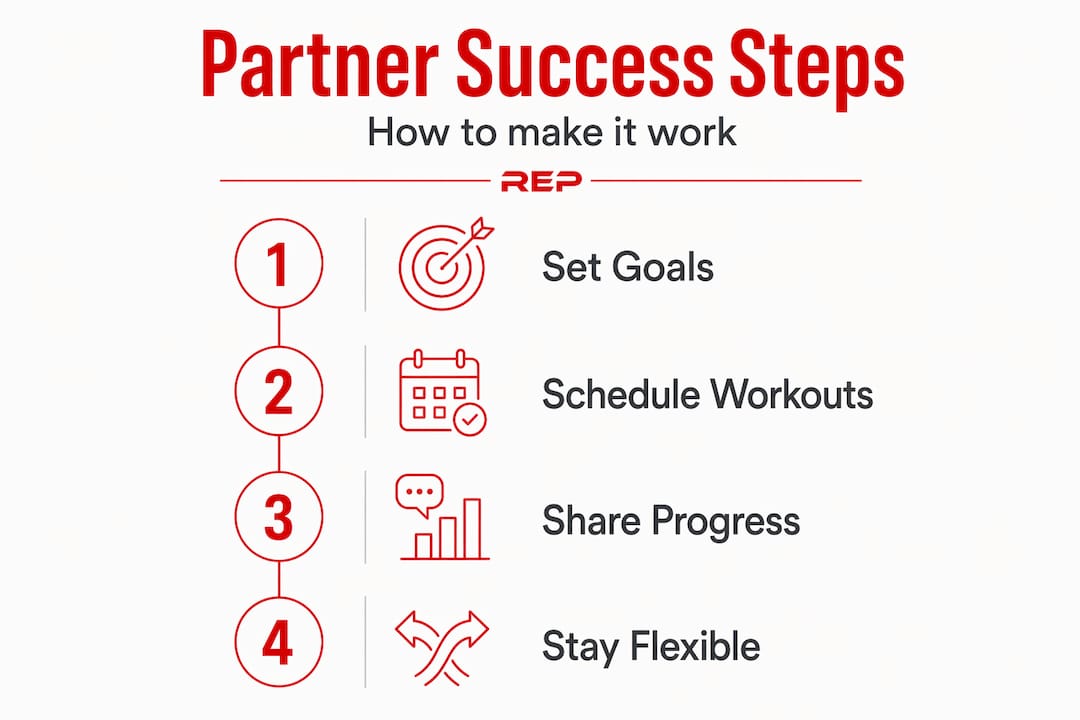
Set shared goals from the start. Write them down together. Whether it’s losing 20 pounds in four months or completing a 5K, having a concrete shared target gives both of you something to move toward. Schedule regular check-ins, even brief ones, to talk about progress and adjust if something isn’t working.
Pro Tip: The most motivating workout partner is someone who is slightly fitter than you. They offer a realistic challenge without being so far ahead that you feel discouraged. Look for someone one step ahead, not ten.
Use each other to monitor form during exercises. This is one of the most underused advantages of training with someone. You don’t need to be a certified trainer to notice when a knee is caving in during a squat or when someone’s lower back is rounding on a deadlift. Catching those things early protects both of you from setbacks that could sideline your progress for weeks.
Here are a few more practices that keep partnerships strong:
-
Celebrate small wins together. Acknowledge every milestone, not just the big ones. Five pounds down deserves recognition.
-
Be honest about bad days. A good partner creates space for you to say “I’m struggling today” without judgment.
-
Adjust the plan together. Life changes. Schedules shift. Treat the plan as a living document you both own.
-
Build in post-workout connection. Post-workout social activities like grabbing coffee or a healthy meal after training create psychological reinforcement that strengthens your commitment to the program long term.
Troubleshooting common partnership challenges
Even the best partnerships hit rough patches. Knowing how to handle them keeps you from losing momentum when things get complicated.
Differences in fitness level or motivation are the most common friction point. If one of you is progressing faster, that’s actually a good thing. It means the program is working. The key is to reframe it as inspiration rather than competition. Adjust your individual targets while keeping the shared commitment intact.
Communication breakdowns are the other big one. When sessions start getting canceled or one partner seems checked out, address it directly and early. A five-minute honest conversation is far easier than the resentment that builds when nothing gets said.
“The best partnerships are built on honesty, not just encouragement. Telling your partner the truth about your struggles is what keeps both of you moving forward.”
There are times when a partnership simply runs its course. If your goals have diverged significantly or the dynamic has become more stressful than supportive, it’s okay to seek a new partner. That’s not failure. It’s knowing what you need to keep going.
Watch for signs of overtraining too. Partner pressure can push you to train harder than your body is ready for, especially early on. Rest days are part of the program, not a break from it.
My take on what a great partner actually does
I’ve worked with hundreds of people on their weight loss goals, and I’ll tell you something that most fitness content skips over. The best training partners aren’t the ones who hype you up the loudest. They’re the ones who show up quietly and consistently, and who tell you the truth when you need to hear it.
I’ve seen partnerships where one person was clearly fitter, and it worked beautifully because the dynamic was supportive rather than competitive. I’ve also seen partnerships between people at the exact same level fall apart because neither one was willing to lead when the other was struggling. The energy you bring matters more than the weight you lift.
What I’ve learned is that the post-workout ritual is wildly underrated. When two people sit down together after a hard session, even just for 20 minutes over water and a meal, something shifts. The workout becomes a shared experience rather than a task you completed in the same room. That shift is what turns a temporary arrangement into a lasting habit.
My honest advice: don’t wait for the perfect partner. Find someone who shares your commitment level, set clear expectations from day one, and build the relationship one session at a time. The right person will make you STRONGER, not just more motivated.
— Coach
Ready to train with real support behind you?
You now know exactly how to find a training partner for your weight loss journey. But sometimes the most powerful thing you can do is plug into a community that’s already built around your goals.
At Repphilosophy, we’ve created programs specifically designed for people who want accountability, community, and expert guidance without going it alone. Our Bring a Buddy training memberships let you train with your chosen partner at a price that works for both of you. Our group coaching programs put you in a room with people who are working toward the same goals. And if your schedule makes in-person training tough, our virtual coaching memberships give you structured workouts and accountability from anywhere. We’re based in 4S Ranch and we’re ready to stand by your side every step of the way.
FAQ
How does a training partner improve weight loss results?
People who exercise with a partner complete weight loss programs at a 95% rate compared to 76% alone, and they show 78% more exercise consistency over 18 months. The external accountability and shared commitment make it significantly harder to skip sessions.
What should I look for in a weight loss workout buddy?
Look for someone with a compatible schedule, similar workout intensity, and aligned goals. The ideal partner is slightly fitter than you, honest about expectations, and willing to define roles clearly before you start.
Can I find a fitness partner online if I don’t have a local gym?
Yes. Apps designed for remote workout partnerships let you share progress, sync training sessions, and stay accountable from different locations. Social media fitness communities are also a strong option for connecting with people who share your goals.
How do I handle it when my partner and I have different fitness levels?
Reframe the gap as motivation rather than competition. Adjust individual targets while keeping your shared commitment to showing up. If one of you is progressing faster, that’s proof the program is working for both of you.
When is it okay to find a new training partner?
If the partnership has become more stressful than supportive, your goals have significantly diverged, or communication has broken down despite honest effort, it’s reasonable to seek a new partner. Protecting your progress matters more than preserving an arrangement that no longer serves you.