
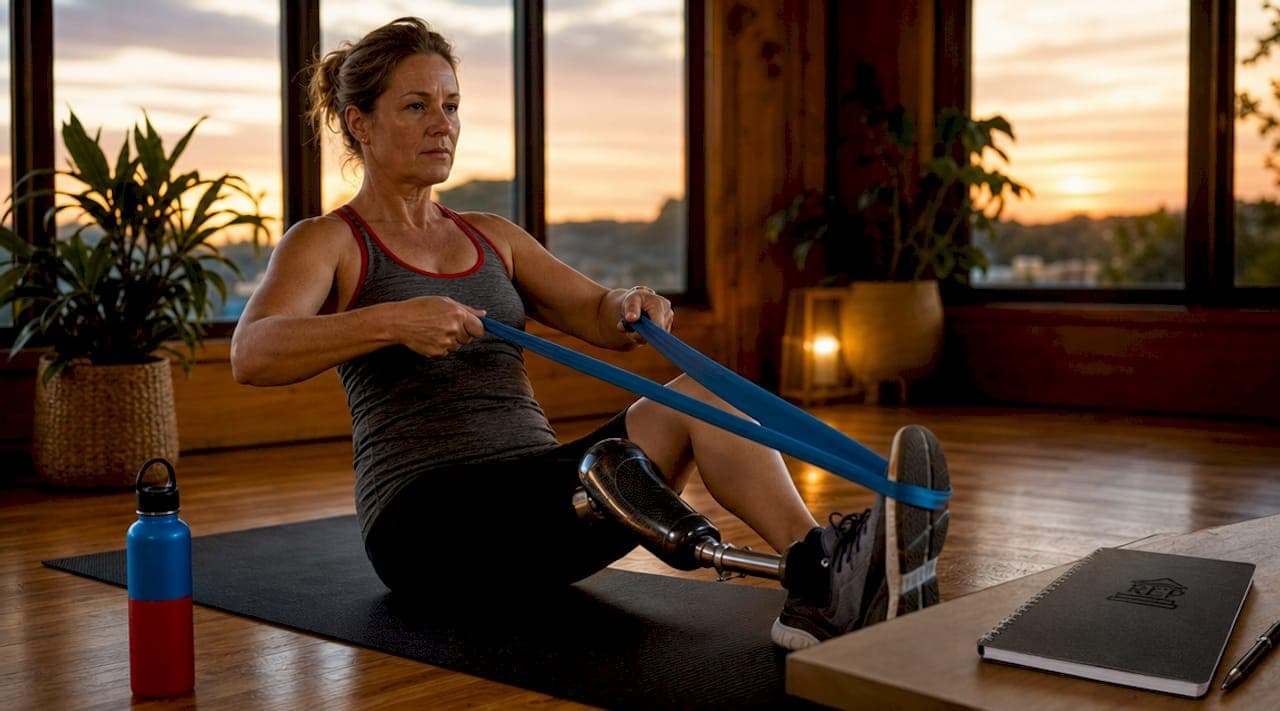
Adaptive fitness training is defined as a personalized approach to exercise that modifies traditional workouts so people with physical, cognitive, or mobility limitations can move safely and build real strength. Rather than forcing you into a one-size-fits-all program, adaptive fitness training reshapes the workout around your body, your goals, and your current abilities. Whether you are managing a chronic condition, recovering from injury, or simply looking for a program that meets you where you are, this approach makes fitness genuinely attainable. Repphilosophy works with clients across all ability levels, and the principles behind adaptive training sit at the heart of everything we do.
What is adaptive fitness training and how does it work?
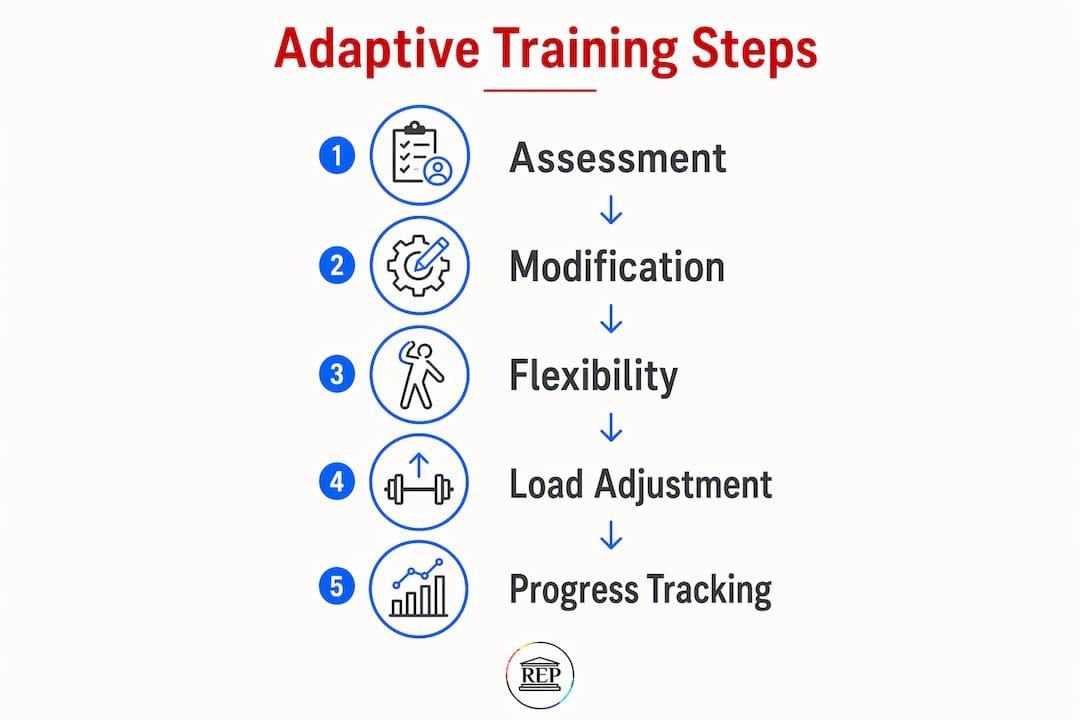
Adaptive fitness training works by identifying what your body can do today and building a program that challenges you safely within those boundaries. It is not about doing less. Adaptive fitness modifies how you train to reach your goals using alternative mechanics, not reduced effort. That distinction matters enormously, because many people walk away from fitness entirely when a standard program does not fit their needs.
The core mechanism is modification. A trainer or coach looks at a target movement, identifies the risk factors specific to you, such as pain, limited range of motion, or balance challenges, and rebuilds that movement with alternative mechanics. A standing barbell squat becomes a seated leg press. A traditional push-up becomes a wall push or a resistance band press. The training intent stays intact; the delivery changes.
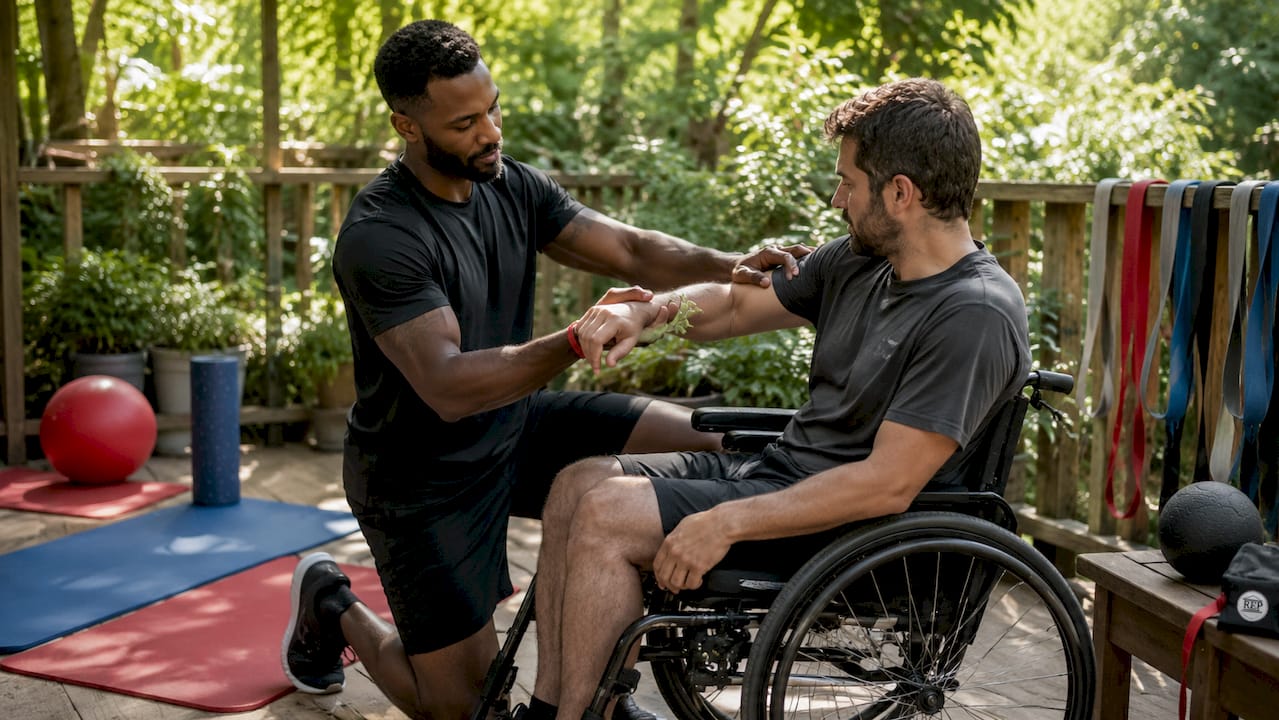
Flexibility and mobility work are not optional extras in adaptive programming. They are foundational components that improve posture, joint health, and daily movement comfort. Gentle stretching and joint mobility drills are woven into every session, not tacked on at the end.
Common adaptive fitness exercises and how programs adjust
Adaptive programs draw from a wide toolkit of modifications. Here are the most practical examples you will encounter:
- Seated vs. standing variations: Chair-based squats, seated dumbbell presses, and seated rows replace standing versions when balance or lower-body limitations are present.
- Resistance bands: Bands provide scalable resistance without the joint loading of free weights, making them ideal for shoulder injuries, arthritis, or post-surgical recovery.
- Assistive devices: Stability bars, balance boards, and foam pads modify the environment rather than the exercise itself, allowing more natural movement patterns.
- Bodyweight progressions: Wall push-ups progress to incline push-ups and eventually floor push-ups, giving you a clear, safe ladder to climb.
- Aquatic exercise: Water reduces gravitational load by up to 90% at neck depth, making it one of the most forgiving environments for adaptive strength and cardio work.
Beyond exercise selection, flexible program design adjusts training load, volume, and intensity daily based on your performance and recovery indicators. If you slept poorly or are managing a flare-up, the program shifts rather than pushes through. This reduces injury risk and keeps you progressing over the long term.
Pro Tip: The most common mistake in adaptive training is treating every session as identical. Track how you feel before each workout using a simple 1-to-5 readiness scale. That single habit gives your coach the data needed to make smart adjustments and keep your progress moving forward.
How adaptive training serves different populations and goals
Adaptive training is not a single program. It is a design philosophy applied differently depending on who you are and what you need. Here is how it plays out across four distinct groups.
-
Wheelchair users. Seated cardiovascular training and chair yoga build cardiovascular health, upper-body strength, and flexibility while reducing secondary health risks like pressure sores and circulatory issues. Upper-body ergometers, seated resistance circuits, and shoulder mobility work form the backbone of these programs.
-
Individuals with chronic pain. Adaptive exercise for chronic pain starts with sessions as short as 5 to 10 minutes and increases volume by no more than 10% per week. That measured pace prevents flare-ups while building the tissue tolerance and movement confidence that chronic pain often erodes.
-
People managing Long COVID or complex conditions. Research on symptom-responsive exercise in Long COVID shows that individualized, tolerance-guided training safely modulates physiological markers. Two people with identical diagnoses may need completely different programs, which is why symptom tracking and personal baselines are non-negotiable in this population.
-
Older adults and those returning from injury. Balance training, low-impact cardio, and progressive resistance work address the specific risks of falls, muscle loss, and joint degeneration. The goal is not just fitness. It is maintaining independence and quality of life.
What unites all four groups is the principle of meeting the individual where they are. Personalized adaptive programs do not ask you to fit the program. The program fits you.
How flexible program design makes adaptive training sustainable
The science behind adaptive programming rests on one foundational idea: stress and recovery must stay in balance for adaptation to occur. Flexible program design accounts for the full picture of stress in your life, including sleep quality, emotional health, and work demands, not just training load. That biological reality is why rigid, fixed programs often break down for people managing health conditions.
Autoregulation is the practical tool that makes flexibility work. Instead of prescribing a fixed weight and rep count, autoregulated programs set performance targets and let daily readiness guide the actual load. If you hit your targets easily, you push a little harder. If you are struggling, you scale back without guilt or confusion.
"Adaptive training interprets deviations as information, not failure." This mindset shift is one of the most powerful things a coach can give you. A missed session or a lighter workout is data that informs the next training decision, not evidence that you are falling behind.
Programs that combine exercise modifications with readiness monitoring consistently produce better long-term outcomes than fixed programs. The reason is simple: they stay aligned with your actual capacity rather than an idealized version of it. For anyone exploring signs you need a personal trainer, the ability to deliver this kind of responsive programming is one of the clearest markers of a qualified coach.
Facility accessibility and equipment in adaptive fitness
A perfectly designed adaptive program fails if the training environment prevents you from reaching or using the equipment safely. ADA standards for exercise equipment areas focus on accessible routes and clear floor space rather than requiring every piece of equipment to be universally usable. That distinction shapes how gyms and training spaces should be evaluated.
Safe routes and maneuvering space to reach and set up equipment are the baseline requirement. Wide aisles, non-slip flooring, adjustable benches, and clear sightlines between stations all contribute to a space where adaptive training can actually happen.
The table below clarifies the difference between what accessibility standards require and what adaptive equipment features deliver.
| Feature | Accessibility standard | Adaptive equipment feature |
|---|---|---|
| Floor space | Clear maneuvering room around equipment | Adjustable height benches and platforms |
| Routes | Accessible path to equipment area | Wheelchair-compatible cable machines |
| Equipment access | Reachable controls and entry points | Resistance bands, seated cardio options |
| Safety | Non-slip surfaces and stable anchors | Padded supports and balance assists |
The practical takeaway is that you need both. A gym can meet every ADA architectural requirement and still be functionally inaccessible if the equipment itself does not accommodate your needs. When evaluating a training space, ask about both the physical layout and the specific tools available for adapted physical activity.
Key takeaways
Adaptive fitness training succeeds because it modifies exercise mechanics, adjusts daily training loads, and designs accessible environments to match each individual's real capacity and goals.
| Point | Details |
|---|---|
| Core definition | Adaptive training modifies how you exercise, not how hard you work, to reach goals safely. |
| Flexible programming | Daily readiness guides load and volume, reducing injury risk and sustaining long-term progress. |
| Population-specific design | Wheelchair users, chronic pain patients, and Long COVID survivors each need distinct program structures. |
| Facility environment | Accessible routes and adaptive equipment are both required for training to be practically usable. |
| Deviations are data | Missed or lighter sessions inform smarter adjustments rather than signaling failure. |
Why adaptive fitness is the future of inclusive training
I have worked with clients across a wide range of abilities, and the single biggest shift I have seen in this field is the move away from the idea that fitness has a standard form. For a long time, the industry built programs for a narrow slice of the population and told everyone else to modify on their own. That approach left a lot of people behind.
What I find genuinely exciting about adaptive fitness right now is how much the research has caught up with what good coaches have known intuitively. The Long COVID data showing that symptom-responsive exercise produces measurable physiological benefits is a perfect example. It validates what adaptive practitioners have been doing for years: listening to the individual, tracking responses, and adjusting accordingly.
My honest observation is that adaptive training makes every coach better, not just coaches who specialize in disabilities. Learning to read readiness, rebuild movements with alternative mechanics, and treat a program as a living document rather than a fixed prescription sharpens your skills across the board. If you are exploring fitness options and wondering whether a program can truly fit your life, the answer is yes. It just requires a coach who knows how to build it that way.
— Coach Justin
Ready to train in a way that actually fits you?
At Repphilosophy, we build programs around the person in front of us, not a template. Whether you are managing a physical limitation, returning from injury, or simply looking for a training approach that respects where you are today, we have options that work.
Our virtual coaching memberships give you access to structured, personalized workouts you can do from anywhere, at a pace that fits your life. If you prefer in-person coaching, our 4S Ranch location offers small group classes, bring-a-buddy sessions, and one-on-one training in an environment built for real people with real goals. Explore our coaching programs and take the first step toward a program that is built for you.
FAQ
What is adaptive fitness training in simple terms?
Adaptive fitness training modifies traditional exercises so people with physical, cognitive, or mobility limitations can train safely and reach their goals. It changes how you move, not how hard you work.
Who benefits most from adaptive training programs?
Wheelchair users, individuals with chronic pain, older adults, people recovering from injury, and those managing complex conditions like Long COVID all benefit from adaptive training programs. Any person whose needs are not met by a standard program is a candidate.
How do I start adaptive training if I have a disability?
Start by consulting a certified trainer experienced in adapted physical activity, sharing your medical history and current limitations, and setting clear goals. A qualified coach will build a program from your baseline, not a generic template.
Are adaptive fitness exercises less effective than standard workouts?
Adaptive exercises are not less effective. They preserve the training intent of standard movements by rebuilding them with alternative mechanics, meaning you still build strength, cardiovascular fitness, and mobility through a different delivery method.
How does flexible program design differ from a fixed training plan?
A fixed plan prescribes the same load and volume regardless of how you feel. Flexible or autoregulated design adjusts daily variables based on your readiness and recovery, which reduces injury risk and produces better long-term results for adaptive populations.