

Fitness coaching is defined as a structured, personalized service that combines exercise programming, movement instruction, nutrition guidance, progress tracking, and behavioral accountability to support long-term health and performance goals. It goes far beyond handing you a workout sheet. What does fitness coaching include, at its core, is a relationship built on assessment, adaptation, and genuine partnership between coach and client. At Repphilosophy, that partnership is the foundation of everything we do, whether you're training one-on-one in 4S Ranch, joining a group class, or working with us virtually.
What does fitness coaching include as a complete service?
Fitness coaching is a program-first practice built on structured planning and dynamic adjustments, which separates it from ad hoc personal training where sessions are designed on the fly. The components of fitness coaching form an interconnected system: each element reinforces the others, so removing one weakens the whole.
The core components you can expect from a quality fitness coaching service include:
- Initial health and lifestyle assessment to understand your starting point, injury history, and daily habits
- Customized exercise programming built around your goals, schedule, and physical capacity
- Technique and form coaching with real-time feedback during every session
- Nutrition guidance focused on habits, education, and sustainable choices
- Progress tracking using performance metrics, body composition data, and recovery signals
- Motivational accountability through check-ins, milestone recognition, and honest communication
- Ongoing program adaptation as your fitness, lifestyle, or goals evolve
Each of these components works together to create a coaching experience that is both safe and genuinely effective. The International Coaching Federation defines coaching as a client-led, thought-provoking process oriented to growth, not a one-way delivery of expert instructions. That distinction matters enormously when you are deciding whether fitness coaching is worth your investment.
What assessments and goal-setting processes are included in fitness coaching?
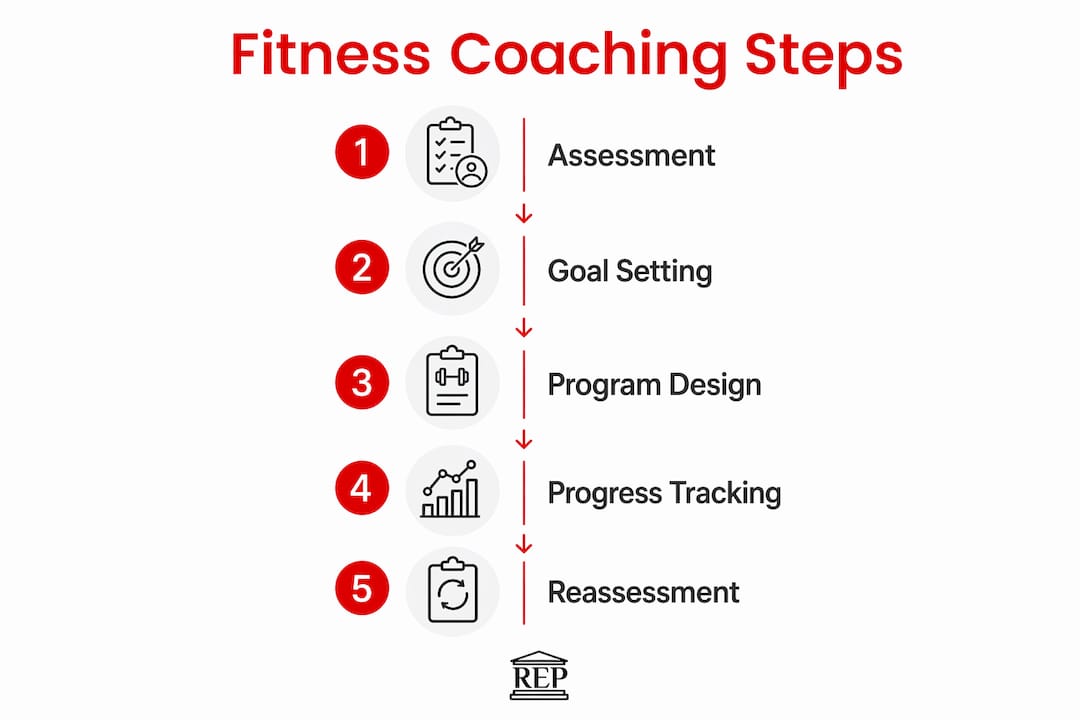
Every quality coaching relationship kicks off with a thorough assessment phase. This is where your coach gathers the information needed to build a plan that actually fits your life, not a generic template pulled from a fitness magazine.
A standard intake process covers your health history, current activity levels, sleep patterns, stress load, and any movement limitations or past injuries. From there, your coach runs movement and fitness tests to establish baseline numbers across strength, endurance, flexibility, and mobility. These numbers are not just data points. They are the map your coach uses to design programming that challenges you without breaking you.
Goal-setting follows assessment, and the best coaches use the SMART framework: goals that are Specific, Measurable, Achievable, Relevant, and Time-bound. "Get stronger" becomes "add 20 pounds to your squat in 12 weeks." That specificity gives both of you something concrete to work toward and measure against.
Reassessments every 4 to 8 weeks are standard practice in professional coaching. Body composition is typically reviewed every 4 to 6 weeks, while fitness testing repeats around the 8 to 12 week mark. This cadence keeps your program aligned with your current capacity rather than where you were when you started.
Pro Tip: Ask your coach to share your baseline assessment numbers with you on day one. Seeing your starting point in writing makes progress feel real and gives you a personal benchmark that no one else's results can diminish.
Assessments also protect you. A coach who skips this step is guessing, and guessing with your body is a shortcut to injury. Assessment-driven programming consistently produces better outcomes because the plan is built for you, not for a hypothetical average client.
How do fitness coaches design and deliver personalized training programs?
Program design is where coaching becomes a craft. A skilled coach does not just pick exercises they enjoy. They build a structured plan using periodization, which means organizing training into phases with intentional load progression and planned recovery periods.
Structured periodization breaks training into macrocycles (the full program, often 12 to 24 weeks), mesocycles (4 to 6 week phases with a specific focus), and microcycles (individual weeks). This architecture prevents plateaus, reduces injury risk, and builds fitness in a logical sequence rather than random effort.
Fitness coaching vs. personal training: what's the difference?
| Feature | Fitness coaching | Personal training |
|---|---|---|
| Program structure | Periodized, phased planning | Often session-by-session |
| Client focus | Long-term behavior and performance | Immediate workout execution |
| Nutrition role | Habit-based guidance included | Often excluded |
| Accountability | Ongoing between sessions | Primarily in-session |
| Reassessment | Scheduled every 4 to 12 weeks | Variable or absent |
Personal training and fitness coaching often overlap, but coaching carries a broader scope. Structured coaching includes the full cycle of consult, assessment, baseline testing, goal setting, tracking, and refinement. Personal training, in its traditional form, focuses on delivering a great workout in the room.
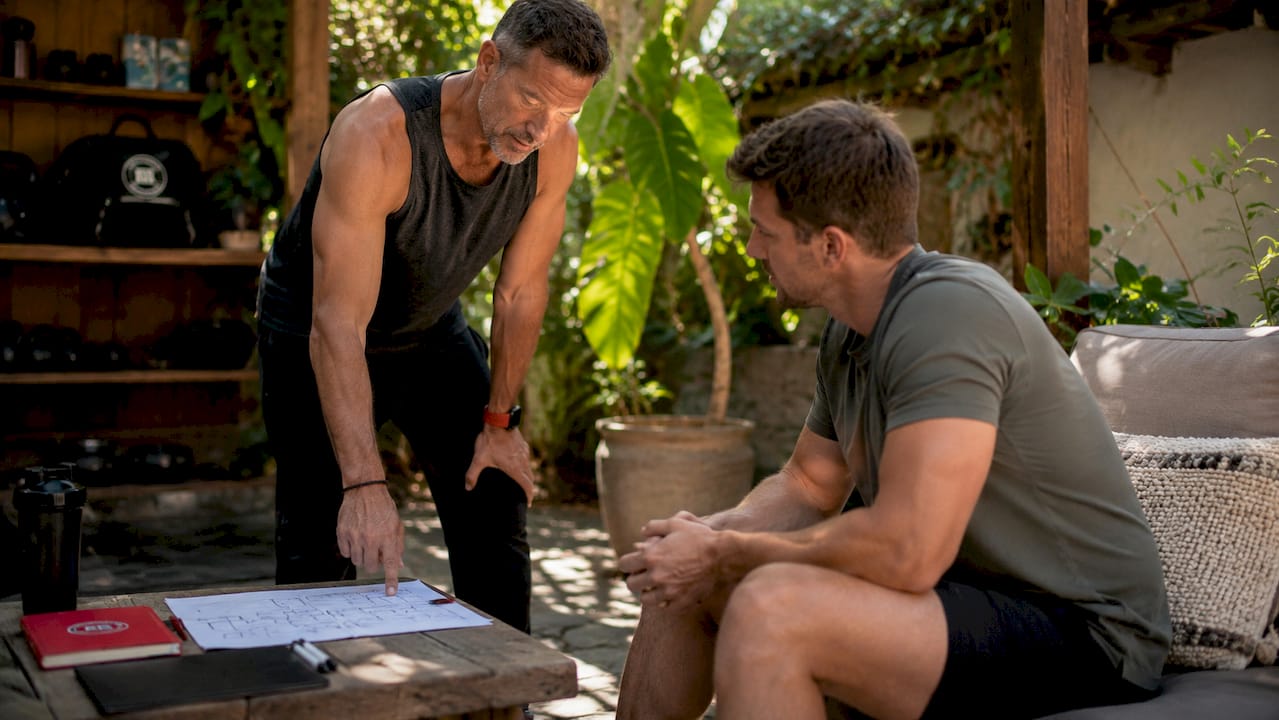
Within each session, your coach structures work around a warm-up, the main training block, and a cooldown. Real-time technique feedback is one of the most undervalued components of coaching. Coaches observe your movement patterns, correct form before it becomes a bad habit, and modify exercises on the spot when something is not working for your body.
Pro Tip: If your coach uses the FITT-VP framework (Frequency, Intensity, Time, Type, Volume, Progression), ask them to walk you through how each variable is set for your current phase. Understanding the "why" behind your program makes you a more committed and informed training partner.
What role does nutrition guidance and lifestyle coaching play in fitness coaching?
Nutrition is one of the most misunderstood components of fitness coaching services. Coaches are not registered dietitians, and the best ones are clear about that boundary. What they do offer is habit-based nutrition guidance focused on macronutrient awareness, meal timing, hydration, and building sustainable eating patterns that support your training.
The distinction matters. Fitness coaches educate and guide. They help you understand how protein supports muscle repair, why carbohydrates fuel performance, and how to build meals that keep your energy stable. They do not prescribe clinical meal plans or treat medical conditions like diabetes or eating disorders. When those needs arise, a quality coach refers you to a registered dietitian without hesitation.
Lifestyle coaching extends this support beyond food. Sleep quality, stress management, and daily movement habits all directly affect your training results. A coach who only focuses on your workouts is leaving significant progress on the table. Health and wellness coaching centers on client-led behavior change and holistic lifestyle support, which is exactly the lens a great fitness coach applies to your overall wellbeing.
What you can realistically expect from this component of coaching includes:
- Guidance on protein, carbohydrate, and fat targets relative to your goals
- Education on pre and post-workout nutrition timing
- Accountability check-ins around eating habits and energy levels
- Sleep and stress management strategies that support recovery
- Referrals to registered dietitians when clinical support is needed
How do fitness coaches track progress and keep clients motivated?
Progress tracking is what separates a coaching relationship from a gym membership. Without data, you are training on hope. With it, you are training on evidence.
Here is how a structured tracking system typically works in fitness coaching:
- Session adherence is logged first. Showing up consistently is the single most powerful predictor of results, and your coach monitors this closely.
- Performance metrics like strength numbers, cardio benchmarks, and mobility measurements are recorded at each session or weekly.
- Recovery signals including sleep quality, soreness levels, and energy are checked regularly to prevent overtraining.
- Body composition is assessed approximately every 4 to 6 weeks using measurements, photos, or body fat testing.
- Fitness retests repeat every 8 to 12 weeks to formally measure progress against your baseline.
Motivational accountability is delivered through check-ins, milestone celebrations, and honest conversations when progress stalls. The best coaches combine technology with human empathy. Apps and tracking tools give you data, but it is your coach's ability to read your mindset and adjust their communication style that keeps you moving forward when motivation dips.
Pro Tip: Track at least one non-scale victory each week, whether that is lifting heavier, sleeping better, or completing a workout you would have skipped before. These markers build the psychological momentum that sustains long-term change.
Celebrating milestones is not a soft skill. It is a retention strategy. Clients who feel recognized for their progress stay consistent longer and push harder when things get difficult.
What makes fitness coaching adaptable and client-focused over time?
Life does not pause for your training schedule, and a good coach does not expect it to. Adaptability is one of the defining qualities of effective fitness coaching, and it is what makes the difference between a program you stick with and one you abandon after six weeks.
Here is what genuine adaptability looks like in practice:
- Injury or illness adjustments: Your coach modifies exercises or reduces load rather than pushing through pain, protecting your long-term capacity.
- Schedule disruptions: When travel, work, or family demands shift your availability, your coach restructures sessions or provides home-based alternatives.
- Plateau management: When progress stalls, your coach analyzes your data, identifies the bottleneck, and changes variables like volume, intensity, or exercise selection.
- Goal evolution: As you achieve early goals, your coach helps you set new ones that reflect your growing capacity and shifting priorities.
- Autonomy building: Over time, a great coach teaches you to understand your own body well enough to make smart decisions independently.
Coaching effectiveness depends on ongoing data-driven adaptations, not fixed plans that ignore how you are actually responding. The benefits of sports performance coaching are most visible precisely in this adaptive capacity, where coaches modify workouts continuously to match an athlete's evolving needs.
The coaching relationship is a partnership. Your coach brings expertise, structure, and accountability. You bring honesty, effort, and communication. When both sides show up fully, the results tend to exceed what either of you expected at the start.
Key takeaways
Fitness coaching delivers results because it combines structured programming, regular reassessment, and genuine accountability into one personalized system that adapts as you grow.
| Point | Details |
|---|---|
| Assessment drives everything | Health history, movement testing, and SMART goals shape every program decision from day one. |
| Periodization prevents plateaus | Phased training with planned progression builds fitness logically and reduces injury risk over time. |
| Nutrition guidance has clear limits | Coaches provide habit-based education and refer clinical needs to registered dietitians. |
| Reassessments keep programs current | Body composition and fitness retests every 4 to 12 weeks align your plan with your actual progress. |
| Adaptability is the long game | Coaches who adjust for life disruptions, injuries, and goal shifts produce the most sustainable results. |
Why the "just follow the plan" mindset misses the point
Here is something I have learned working with clients across all experience levels: the people who get the most out of coaching are not the ones who follow the plan perfectly. They are the ones who communicate when something is not working.
I have seen clients grind through a program that stopped fitting their life three weeks in, too afraid to say anything because they thought the plan was sacred. It is not. The plan is a tool, and tools get adjusted. What I care about far more than perfect adherence is honest feedback. Tell me your knee is bothering you. Tell me you have not slept in four days. Tell me the workouts feel too easy or too hard. That information is what lets me actually coach you rather than just supervise you.
The other thing most people underestimate is how much reassessments change the game. Clients often resist them because they are nervous about the numbers. But reassessments are not a report card. They are a navigation update. Without them, I am steering by memory instead of by the road in front of us, and that is how programs drift off course.
Technology has made tracking easier than ever, and I use it. But no app replaces the moment when a client walks in and I can see in their posture that something is off before they say a word. That is the human side of coaching that no algorithm replicates. If you are evaluating whether personal training is right for you, ask yourself whether you want a program or a partnership. The answer tells you everything.
— Coach Justin
Ready to experience what real fitness coaching looks like?
At Repphilosophy, every coaching relationship starts exactly the way this article describes: with a thorough assessment, a bespoke plan built around your goals, and an unwavering guide standing by your side through every phase of the process. Whether you are looking for one-on-one personal training in 4S Ranch, a more affordable group class option, youth sports performance training at WayALife Athletics, or the flexibility of virtual coaching, there is a program designed for where you are right now.
You do not have to figure this out alone. Explore Repphilosophy's coaching packages and services and take the first meaningful stride toward the results you have been working toward. Your best training is ahead of you.
FAQ
What does fitness coaching include at a basic level?
Fitness coaching includes initial assessments, customized exercise programming, technique instruction, nutrition guidance, progress tracking, and motivational accountability. These components work together to support your goals safely and consistently over time.
How is fitness coaching different from personal training?
Fitness coaching takes a broader, long-term approach that includes behavior change, nutrition habits, and scheduled reassessments, while personal training traditionally focuses on delivering effective workouts session by session. Many coaches combine both roles.
How often should a fitness coach update my program?
Body composition is reassessed approximately every 4 to 6 weeks and fitness testing repeats every 8 to 12 weeks, with program adjustments made based on those results to keep your training aligned with your current capacity.
Is fitness coaching worth it for beginners?
Fitness coaching is especially valuable for beginners because it establishes safe movement patterns, realistic goal-setting, and consistent habits from the start, preventing the common mistakes that derail unsupervised training early on.
Does fitness coaching include nutrition advice?
Yes, fitness coaches provide habit-based nutrition guidance covering macronutrients, meal timing, and sustainable eating habits. For clinical nutrition needs or medical conditions, coaches refer clients to registered dietitians.