
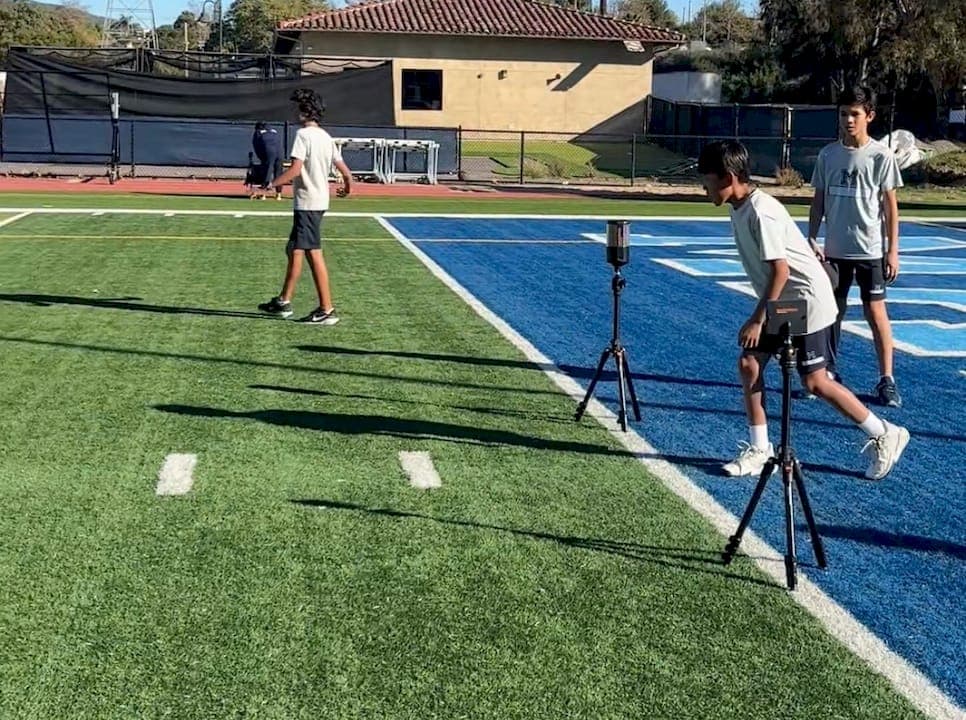
Most athletes believe that grinding harder in practice is the path to peak performance. Work more, rest less, push through. But a 2024 study of 880 athletes found that coaching quality is the single strongest predictor of athletic outcomes, surpassing training intensity and nutrition combined. The real benefits of sports performance coaching go far beyond technique corrections. They touch your psychology, your recovery, your injury risk, and your long-term trajectory as an athlete. Whether you are competing at the youth level, training recreationally, or chasing a personal best, understanding what quality coaching actually delivers can change everything.
Table of Contents
-
1. Benefits of sports performance coaching start with personalized programming
-
2. Injury prevention is one of the most underrated coaching advantages
Key takeaways
| Point | Details |
|---|---|
| Coaching quality outranks effort | Research shows coaching quality predicts athletic success more reliably than training volume or diet alone. |
| Injury risk drops significantly | Coached multicomponent programs reduce sports injuries by up to 39% in youth athletes. |
| Mental performance is trainable | Psychological skills coaching measurably improves mental toughness, decision-making, and resilience. |
| Recovery needs structure and flexibility | Coaches who balance structured habits with athlete autonomy produce better recovery and prevent burnout. |
| Personalization prevents plateaus | Tailored programming with ongoing feedback keeps athletes progressing when generic plans stall. |
1. Benefits of sports performance coaching start with personalized programming
Generic training plans are built for the average athlete. You are not average. You have a specific sport, a specific schedule, specific weaknesses, and a life outside of training that affects how you recover and adapt.
Sport performance coaching means your program gets adjusted weekly based on how your body is responding, what stressors you are carrying, and where your performance data points. A coach notices that your sprint times have plateaued for three weeks and changes the stimulus before you waste another month spinning your wheels. That kind of real-time responsiveness is something no app or cookie-cutter program can replicate.
-
Weekly adjustments based on athlete feedback, soreness levels, and life demands
-
Targeted work on sport-specific weaknesses rather than generalized fitness
-
Progressive overload managed intelligently to avoid stagnation
-
Structured deload periods that most self-coached athletes skip entirely
Pro Tip: Keep a brief training journal and share it with your coach weekly. Even two or three sentences about your energy, sleep, and perceived effort gives your coach the data needed to make smarter programming decisions.
Accountability is woven into every session when a coach is involved. Knowing someone is tracking your progress and genuinely invested in your results makes you far less likely to skip a session or cut it short. That consistency, compounded over months, is where real performance improvement in sports happens.
2. Injury prevention is one of the most underrated coaching advantages
Ask any athlete who has lost a season to a torn ACL or a stress fracture how much they would have paid to prevent it. The answer is always: anything.
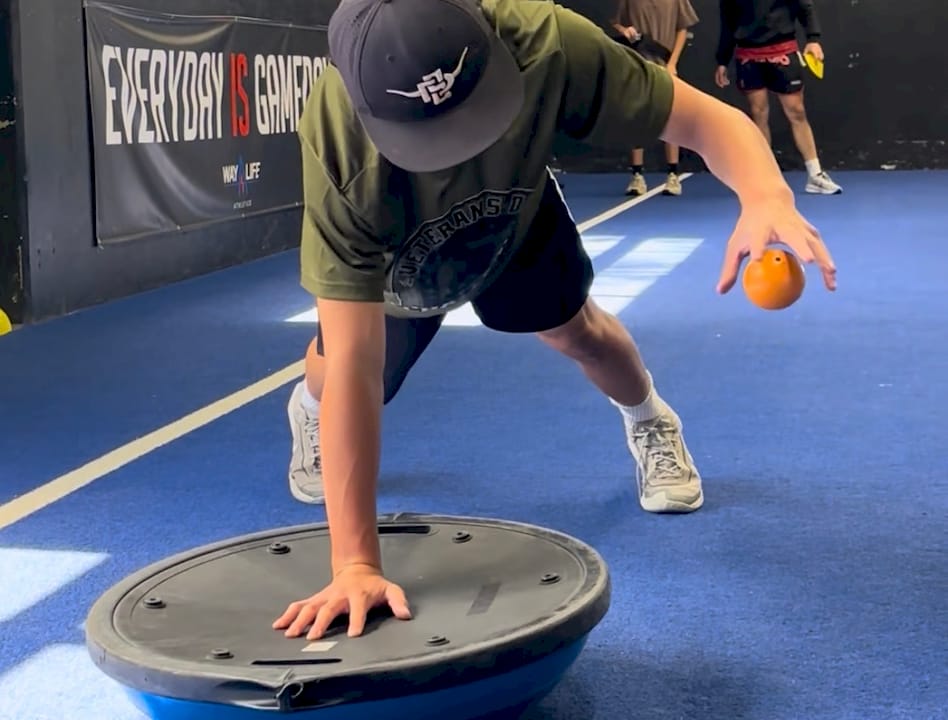
A meta-analysis of 16 randomized controlled trials found that multicomponent injury prevention programs reduce total sports-related injuries by 35% and overuse injuries by 39% among adolescent athletes. These programs combine warm-up sequences, plyometrics, strength work, agility drills, and balance training. The key is that they work best when kept under 20 minutes and repeated consistently.
| Program Component | Injury Prevention Benefit |
|---|---|
| Dynamic warm-up | Prepares joints and reduces acute muscle strains |
| Plyometric training | Strengthens tendons and improves landing mechanics |
| Strength training | Builds structural support around vulnerable joints |
| Balance and agility | Reduces non-contact lower-limb injury risk |
| Consistent repetition | 10% adherence increase00129-5/abstract) links to 10% injury risk reduction |
A coach does not just design this program. A coach watches your movement, corrects your form in real time, and makes sure you are executing each component with the fidelity that actually produces results. Without that oversight, athletes often rush through warm-ups or skip the balance work entirely, which is exactly where the protective benefit lives.
Pro Tip: For youth athletes especially, concise multicomponent programs under 20 minutes are easier to implement consistently and deliver the most protective benefit. Shorter and more frequent beats longer and sporadic every time.
3. Mental performance coaching builds the mindset that wins
Physical training gets most of the attention. But ask any elite athlete what separates the good from the great, and they will point to what happens between the ears.
One of the most significant mental benefits of sports coaching is the development of psychological safety. When athletes feel supported rather than judged, they take smarter risks, recover faster from mistakes, and stay engaged longer. A study of 369 athletes confirmed that supportive coaching behaviors improve perceived performance through higher self-efficacy and resilience. Controlling coaching behaviors, by contrast, actively reduce these benefits even when the training plan itself is solid.
-
Self-efficacy: Athletes coached with encouragement believe more deeply in their ability to execute under pressure
-
Resilience: Supportive environments help athletes bounce back from losses, injuries, and setbacks faster
-
Decision-making: Mental skills training sharpens the split-second choices that determine outcomes in competition
-
Mental toughness: A psychological skills intervention with U-19 football players showed measurable gains in mental toughness and game-relevant tactical skills
The coaching style you or your child trains under matters enormously. An autonomy-supportive coach asks questions, offers choices within structure, and treats setbacks as learning opportunities. That approach does not just feel better. It produces better athletes.
4. Cognitive flexibility and smarter recovery strategies
Recovery is not just sleep and protein shakes. It is also a mental skill, and coaches play a direct role in teaching it.
Research on 467 competitive athletes found that cognitive flexibility supports psychological recovery through self-regulation, with the strongest benefits occurring at moderate levels of perceived control. What this means practically is that athletes recover better when they have structured habits to follow AND the mental flexibility to adapt when things do not go as planned.
Coaches who over-control every detail of an athlete’s recovery actually undermine the process. The best approach teaches athletes repeatable recovery habits while also building the cognitive tools to self-regulate under stress. That balance is something most athletes cannot develop on their own without guidance.
Pro Tip: If you feel mentally drained after training more than physically tired, that is a signal worth bringing to your coach. Psychological fatigue is a real performance limiter, and a good coach will adjust your load accordingly rather than push through it.
Self-regulation skills, once developed, carry over beyond sport. Athletes who learn to manage stress, set boundaries around training, and adapt their approach under pressure tend to perform better in school, work, and relationships. That is a return on investment that extends well past the final whistle.
5. Measurable performance gains that go beyond the obvious
The impact of performance coaching shows up in the numbers. Coached athletes consistently improve power output, sprint speed, and endurance beyond what self-coached peers achieve over the same time period. But the more interesting story is how those gains happen.
Coaching quality predicts performance outcomes more reliably than training volume because a coach diagnoses the reason behind a plateau rather than just prescribing more work. An athlete stuck at the same vertical jump for two months might need hip flexor mobility work, not more box jumps. A swimmer who cannot break a time barrier might need stroke mechanics adjusted, not longer yardage sets.
| Without Coaching | With Coaching |
|---|---|
| Training volume increases to break plateaus | Root cause of plateau diagnosed and addressed |
| Weaknesses often go unidentified | Specific deficits targeted in programming |
| Progress is linear until it stops | Progress continues through intelligent variation |
| Mental blocks persist without support | Psychological barriers identified and worked through |
The advantages of athletic coaching also show up in retention. Athletes under effective coaching show greater capacity to handle adversity and sustain effort under pressure, which means they stay in their sport longer and accumulate more developmental time. Longevity in sport is itself a performance advantage.
-
Strength and power gains are accelerated through periodized programming
-
Speed improvements come from technical corrections, not just more sprinting
-
Endurance athletes benefit from pacing strategy and threshold management
-
Youth athletes develop sport-specific movement patterns that protect long-term athletic potential
6. Long-term athlete development and life skills
Sports training coaching benefits are not limited to what happens on the field this season. Quality coaching for athlete development builds a foundation that compounds over years.
Young athletes who train under skilled coaches develop movement literacy early. They learn how to warm up properly, how to listen to their bodies, and how to train with intention rather than just effort. Those habits become automatic, which means they carry them into adulthood and pass them on to their own kids someday.
For parents, this is worth understanding clearly. Enrolling your child in a coached program is not just about making them faster or stronger right now. It is about teaching them the process of improvement. A coach models how to respond to failure, how to set goals, and how to stay committed when progress feels slow. Those are life skills wrapped in athletic development.
The sports coaching benefits that show up years later, in a college athlete’s work ethic or a recreational runner’s injury-free decade, trace back to the quality of coaching they received early on.
My take on why coaching changes everything
I have worked with athletes at every level, from kids just learning to cut and change direction, to adults trying to reclaim performance they thought was behind them. And the pattern I keep seeing is the same: athletes undervalue coaching until something forces them to pay attention. Usually it is an injury. Sometimes it is a plateau that will not budge. Occasionally it is watching a peer with less raw talent outperform them because that peer had better guidance.
What surprises most people when they start working with a coach is not the programming. It is the relationship. The psychological safety that comes from having someone in your corner who genuinely understands your goals, your history, and your limitations. That trust is what allows athletes to push past the edges they set for themselves.
I also think the industry undersells the mental side of coaching. We talk a lot about sets and reps and speed work. But the most transformative coaching moments I have witnessed happen when an athlete realizes they were the one holding themselves back, and a coach helped them see it. That shift in self-belief produces results that no training plan can manufacture on its own.
Coaching is not a shortcut. It is a smarter path. And the athletes who commit to it early, rather than waiting for a crisis, are the ones who look back and wonder why they waited so long.
— Coach Justin
Ready to experience these coaching benefits firsthand?
At Repphilosophy, we build programs around you, not around a template. Whether you are a competitive athlete chasing measurable performance gains, a parent looking for a safe and challenging environment for your young athlete, or someone who wants expert guidance without the premium price tag, we have options that fit your life and your goals.

From youth sports performance training at our 4S Ranch training center to flexible virtual coaching memberships you can access anywhere, Repphilosophy delivers the personalized attention, injury prevention focus, and mental performance support this article covers. Bring a buddy and save even more. The path to your best performance starts with one decision. Ready to invest in yourself? Explore our coaching programs and let’s get to work.
FAQ
What are the main benefits of sports performance coaching?
The top benefits include personalized programming, injury prevention, mental performance development, smarter recovery strategies, and measurable gains in strength and speed. Research confirms that coaching quality is the strongest single predictor of athletic outcomes.
How does sports coaching help prevent injuries?
Coached multicomponent programs that combine warm-ups, plyometrics, strength, and balance work reduce injuries by up to 39% in youth athletes, especially when sessions stay under 20 minutes and are repeated consistently.
What are the mental benefits of sports coaching?
Supportive coaching improves self-efficacy, resilience, and decision-making by creating psychological safety. A study of 369 athletes found self-efficacy is the strongest mediator between coaching behavior and perceived performance.
Is performance coaching worth it for youth athletes?
Yes. Beyond physical development, youth athletes gain movement literacy, mental toughness, and self-regulation skills that carry into adulthood. Early quality coaching builds habits that compound over an entire athletic career.
How quickly can athletes see results from performance coaching?
Most athletes notice measurable improvements within 6 to 12 weeks of consistent coached training, particularly in areas where a plateau or movement inefficiency was limiting progress. Mental performance gains often appear even sooner.