
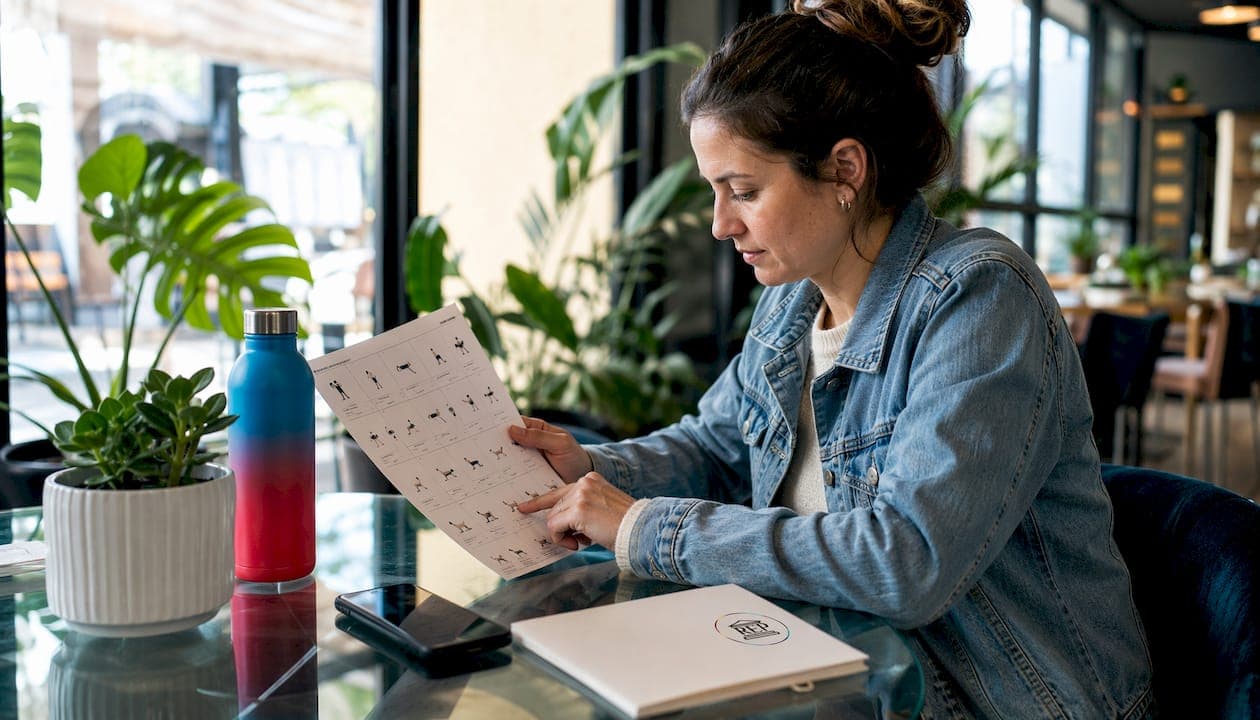
Every safe, effective youth fitness program must include these eight elements. Use this checklist when touring a gym, interviewing a coach, or evaluating any structured program for your child. Repphilosophy's Coach Justin and the WayALife Athletics sports performance center in 4S Ranch are one gym-based option you can evaluate against every item below.
The 8-point youth fitness program checklist:
- Safety & supervision: Documented staff-to-youth ratios, background-checked coaches, and a written emergency action plan. Red flag: no written emergency procedure on file.
- Age-appropriate programming: Bodyweight-first progressions, sub-maximal loads, no 1RM testing before puberty. Red flag: heavy maximal lifts in the first month.
- Coach credentials: Youth-specific certifications, current CPR/first aid, and verifiable experience with teen athletes. Red flag: coach cannot name or show a certification.
- Measurement & progression plan: Baseline assessment, re-test schedule, and documented load-increase rules. Red flag: no written plan for your child specifically.
- Session structure: Warm-up, technique block, strength work, conditioning, and cooldown every session. Red flag: sessions that skip warm-up or cooldown.
- Recovery & rest policy: Scheduled rest days written into the program. Red flag: training seven days a week with no recovery guidance.
- Facility & equipment safety: Age-appropriate equipment sizes, padded areas, maintained machines, and a visible AED. Red flag: adult-only equipment with no modifications.
- Parental consent & medical screening: Signed consent, health history, allergy disclosure, and emergency contacts on file before day one. Red flag: no intake paperwork at all.
Table of Contents
- What does a complete youth fitness program checklist actually verify?
- What does a safe weekly session plan look like for youth?
- When is your child ready for resistance training?
- How do you inspect a gym before your child trains there?
- What questions should you ask a coach before enrolling?
- How do you track your child's progress without risky testing?
- What does a youth fitness program cost in the U.S.?
- What paperwork should a program require before your child starts?
- Key Takeaways
- What a youth performance coach actually prioritizes
- Repphilosophy: a safe, supervised option in 4S Ranch
- Authoritative sources and further reading
What does a complete youth fitness program checklist actually verify?
Each checklist item has a concrete verification step. Knowing what to ask makes the difference between a program that builds your child up and one that risks setting them back.
Safety and supervision means more than a coach in the room. Ask for the written staff-to-athlete ratio and confirm background checks are completed before any coach works with youth. A youth program safety checklist aligned with AAP and NSCA guidance maps these items to state licensing standards, so you have a benchmark to compare against.
Coach qualifications deserve more than a quick glance at a wall certificate. Ask for the certification name, issuing body, and expiration date. Youth-specific credentials from organizations like NSCA (CSCS or NSCA-CPT with youth experience), NASM, or ACE carry more weight than a general personal training cert alone. CPR and first aid must be current, not expired.
Age-appropriate programming is where most programs either earn or lose your trust. Clinical guidance from St. Louis Children's Hospital is clear: injuries in youth training stem from poor technique, misuse of equipment, and loads inappropriate for the athlete's developmental stage, not from weight training itself. Bodyweight mastery before adding resistance is the standard, not a suggestion.
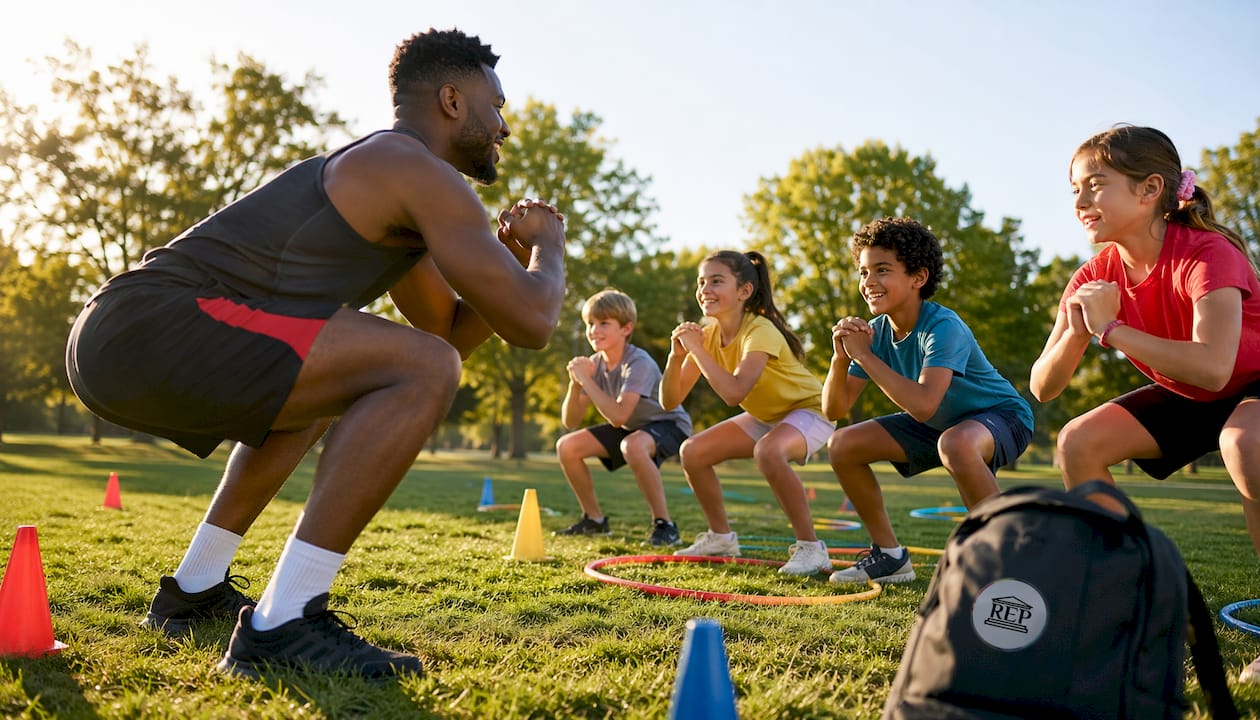
Pro Tip: Ask the coach to show you a sample progression plan for a 12-year-old beginner. If they cannot produce one in writing, that tells you everything.
Youth programs should follow WHO and CDC recommendations of at least 60 minutes of moderate-to-vigorous physical activity daily for ages 6–17. A gym-based program contributes to that total but should not replace all other movement.
What does a safe weekly session plan look like for youth?
A single gym session for youth should run 45–60 minutes and follow a consistent five-phase structure.
| Phase | Time | Objective | Sample Activities |
|---|---|---|---|
| Warm-up | Several minutes | Raise heart rate, mobilize joints | Light jog, dynamic stretches, arm circles |
| Technique block | Several minutes | Teach or reinforce movement patterns | Squat form, hinge pattern, push mechanics |
| Strength work | Duration to support strength gains | Build functional strength | Bodyweight squats, push-ups, dumbbell rows |
| Conditioning | Several minutes | Cardiovascular and athletic capacity | Shuttle runs, jump rope, medicine ball work |
| Cooldown | Several minutes | Lower heart rate, reduce soreness | Static stretches, breathing, mobility holds |
St. Louis Children's Hospital guidance recommends 2–3 sessions per week, 20–30 minutes of actual strength work per session, 6–8 exercises, and starting with 1–2 sets of 10–15 reps before progressing.
Three weekly templates by age and experience:
- Beginner (ages 10–12): Monday/Wednesday/Friday strength sessions, Tuesday/Thursday light cardio or sport play, Saturday fun movement, Sunday full rest. Focus: movement quality over load.
- Intermediate (ages 13–15): Monday/Wednesday/Friday gym sessions with progressive resistance, Tuesday/Thursday active recovery or sport practice. Focus: adding volume before adding weight.
- Sport-season maintenance (teen athletes): Two gym sessions per week timed away from competition days, one active recovery day. Focus: maintain strength without accumulating fatigue.
Increase weight only when your athlete can complete 15 reps with controlled form. The 5–10% weight increase rule is the clinical standard: small jumps, patient progression.
When is your child ready for resistance training?
Most practitioners agree that basic strength activities are appropriate once children have sufficient postural control and attention span, with structured resistance programs typically introduced at an age around late childhood.
The non-negotiable rule: no 1RM testing before puberty. Single-rep maximum testing stresses growth plates and offers almost no developmental value before physical maturity. Sub-maximal progressive overload is both safer and more effective for building long-term athletic capacity.
Adding resistance or complexity is justified when the athlete demonstrates movement mastery with consistent good form, maintains regular attendance over time, and experiences no pain or discomfort.
Bodyweight-only programming for ages 10–17 builds safe, functional strength without heavy loads. The DAREBEE Junior framework puts it plainly: the goal is building limits, not pushing them.
Pro Tip: Place multi-joint exercises like squats, hinges, and push patterns at the start of every session when your athlete is freshest. Save isolated work for the end. Fatigue degrades technique, and technique errors are where youth injuries begin.
How do you inspect a gym before your child trains there?
A quick facility walk-through takes ten minutes and tells you a lot. Use this yes/no checklist on your tour:
- Padded flooring in youth training areas
- Clear, unobstructed walkways between stations
- Age-appropriate equipment sizes (not adult-only machines)
- Adjustable benches and machines that fit smaller frames
- No loose weight plates left in youth training zones
- Equipment maintenance log available on request
- AED present and staff confirmed trained to use it
- Emergency exits clearly marked and unblocked
Operational checks matter as much as physical ones. Ask to see a spotting demonstration. Ask whether coaches actively correct form during sessions or simply supervise from a distance. A well-designed safety checklist covers both physical setup and behavioral standards, and the best programs run through one weekly.
What questions should you ask a coach before enrolling?
Ten questions worth asking on any program tour or call:
- What youth-specific certifications do you hold, and when do they expire?
- What is your coach-to-athlete ratio during youth sessions?
- Can you walk me through a sample session for my child's age group?
- How do you track and document progress over time?
- What is your written emergency action plan?
- Does the program carry liability insurance?
- What is your cancellation or trial policy?
- How do you handle a child who reports pain during a session?
- At what point do you introduce resistance, and how do you decide?
- Can I observe a session before committing?
Immediate red flags that should end the conversation:
- No written safety or emergency policy
- Coach refuses to show credentials or cannot name the issuing body
- Pressure to sign a long contract before a trial session
- No documented progression plan for individual athletes
Request a trial session before any commitment. Watching your child in a real session tells you more than any brochure. Check why certified trainers matter for youth if you want a deeper breakdown of credential types.
How do you track your child's progress without risky testing?
Simple, non-invasive metrics show real progress without pushing young athletes toward maximal efforts.
| Metric | Baseline | 6–8 Weeks | 12+ Weeks |
|---|---|---|---|
| Movement quality score | Coach-rated 1–5 per pattern | Improvement in 2+ patterns | Consistent 4–5 across all patterns |
| Reps at controlled load | Starting rep count at set weight | +3–5 reps at same weight | Progressed to next weight increment |
| Timed sprint or agility drill | Initial time recorded | Measurable time reduction | Consistent improvement trend |
| Attendance rate | Baseline frequency | 80%+ sessions attended | Sustained over full program |
Tracking movement quality and consistency outranks any single heavy lift as a predictor of long-term youth athletic development. Expect measurable neuromuscular and skill gains after 8–12 weeks of consistent 2–3x weekly training. Strength gains are also fragile: clinical guidance notes a roughly 3% weekly loss when training stops, with near-complete loss after about 8 weeks off. Consistency matters far more than any single high-intensity push.
What does a youth fitness program cost in the U.S.?
Typical local gym-based youth program pricing in the U.S. breaks down roughly like this:
- Drop-in single sessions: $25–$60 per session depending on location and coach credentials
- Monthly small-group youth programs: $80–$200 per month for 2–3 sessions per week
- Private one-on-one coaching: $60–$120 per session, higher in major metro areas
Coach credentialing, group size, and facility quality are the main price drivers. A highly credentialed coach running a small group of four athletes will cost more than a large class with a general fitness instructor. Trial sessions and starter packages reduce your financial risk and let you evaluate coach fit before signing anything long-term. For a teen fitness program, a four-to-six-week starter package is a reasonable first commitment.
What paperwork should a program require before your child starts?
Any legitimate youth fitness program should collect the following before the first session:
- Signed parental consent form
- Emergency contact information
- Health history questionnaire (chronic conditions, medications, allergies)
- Allergy and medication disclosure
- Liability release form
When to seek medical clearance before participation: chronic cardiovascular or metabolic conditions, recent concussions, uncontrolled seizures, active cancer treatment, or any condition flagged by your child's pediatrician. A sports medicine physician or pediatrician can provide written clearance and specific modifications.
Pro Tip: Before your child's first session, confirm in writing that the coach has read any documented medical modifications and that those modifications are built into your child's individual program, not just filed in a folder.
Key Takeaways
A safe youth fitness program requires eight non-negotiables: verified coach credentials, age-appropriate progressive programming, documented safety and supervision policies, a structured session format, scheduled recovery, facility safety checks, a written measurement plan, and completed medical and consent paperwork before day one.
| Point | Details |
|---|---|
| Technique before load | Injuries stem from poor technique and inappropriate loads, not weight training itself. |
| Start small, progress slowly | Begin with 1–2 sets of 10–15 reps and progress to 2–3 sets as tolerated; increase weight by 5–10% only when 15 reps feel controlled. |
| Expect results in 8–12 weeks | Consistent 2–3x weekly training produces measurable gains; strength fades roughly 3% per week off. |
| Ask ten questions on every tour | Credentials, ratios, emergency plans, and trial policies are non-negotiable before enrolling. |
| Repphilosophy as a local option | Coach Justin at Repphilosophy in 4S Ranch offers supervised youth sessions with a trial session available. |
What a youth performance coach actually prioritizes
Most parents walk into a gym tour focused on equipment. The facility matters, but it is the last thing I look at. What I watch first is how the coach interacts with a young athlete who gets something wrong. Do they correct the movement with patience, or do they push through it? That single moment tells you more about a program's safety culture than any certificate on the wall.
The other thing parents consistently underestimate is recovery. A well-designed program builds rest days in from week one, not as an afterthought when an athlete gets hurt. Planned rest supports muscle repair, bone development, and the hormonal environment that actually drives adaptation during growth. A program that brags about training every day is not a sign of dedication. It is a warning sign.
For parents who want to reinforce good habits at home: keep it simple. A short daily movement check, eight hours of sleep, and consistent hydration do more for your child's athletic development than any supplement or extra session. The gym builds the foundation. Everything outside the gym determines whether it holds.
Repphilosophy: a safe, supervised option in 4S Ranch
If you want a program where every item on this checklist is already in place, Repphilosophy's youth sports performance training at the WayALife Athletics 4S Ranch center is worth a serious look. Coach Justin leads supervised sessions in a safe, challenging gym environment designed specifically for young athletes, with small-group formats that keep the coach-to-athlete ratio tight and the feedback personal.

Repphilosophy also offers a virtual on-demand exercise library for families who want supplemental programming between gym sessions or prefer to start at home before committing to in-person training. The bring-a-buddy and group class options keep costs accessible without sacrificing supervision quality.
Ready to see it in person? Book a trial session at the 4S Ranch location and bring your checklist. Ask Coach Justin every question on this list. A program confident in its standards will welcome every one of them.
Authoritative sources and further reading
Use these to cross-check any program's claims and to request specific written policies from providers:
- St. Louis Children's Hospital Strength Training Booklet — clinical guidance on technique, progression, and 1RM rules for youth
- DAREBEE Junior Training Plan — bodyweight-first programming framework for ages 10–17
- POPProbe Youth Fitness Program Safety Checklist — operational safety checklist aligned with AAP and NSCA standards
- VerywellFit: Weight Training for Children — practical summary of ACSM, AAP, and NSCA positions on youth resistance training
- Les Mills Born to Move — example of age-graded, instructor-trained youth class programming
When reviewing a program, ask for their written progression plan, their emergency action plan, and their staff certification records. Any program worth your child's time will hand those over without hesitation.