

Yes, crash diets cause real, measurable muscle loss — and it starts faster than most people expect. A significant portion of the weight you lose during calorie restriction is typically muscle mass, not fat, unless you take deliberate steps to protect it. Three actions make the biggest difference right now:
- Start resistance training at least 2–3 sessions per week. Without a mechanical stimulus, your body has no reason to hold onto muscle during an energy shortage.
- Raise your protein intake to at least 1.0–1.2 g per kilogram of body weight daily. Spreading that across 3–4 meals matters as much as the total.
- Slow your calorie deficit. Targeting a loss of roughly 0.5–1% of body weight per week keeps fat loss moving without triggering the aggressive muscle breakdown that extreme restriction causes.
The biology behind why crash diets cause muscle loss is straightforward once you see the steps. The good news: every mechanism is addressable.
Key Takeaways
Crash diets cause muscle loss because severe calorie restriction triggers gluconeogenesis, suppresses muscle protein synthesis, and drives hormonal shifts that the body cannot easily reverse without deliberate countermeasures.
| Point | Details |
|---|---|
| 25% rule for lean-mass loss | Roughly 25% of weight lost during calorie restriction is typically lean mass, not fat. |
| VLEDs raise the proportion | Deficits below 800 kcal/day produce proportionally greater lean-mass loss than moderate deficits. |
| Resistance training is the key lever | At least 2–3 sessions per week of resistance training is the most effective way to preserve muscle during a deficit. |
| Protein target: 1.0–1.2 g/kg | Spreading this across 3–4 meals maximizes the muscle-preserving effect of dietary protein. |
| Slow the pace | Targeting 0.5–1% of body weight lost per week limits the gluconeogenic pressure that drives muscle breakdown. |
Table of Contents
- What exactly is a crash diet, and how does it differ from a smart deficit?
- Why crash diets cause muscle loss: the step-by-step physiology
- How much muscle do you actually lose, and how fast?
- Why losing muscle matters more than the number on the scale
- An evidence-based plan to protect muscle while you lose weight
- A realistic one-week workout and protein plan for a typical adult
- How to rebuild muscle after a crash diet
- Red flags that mean it's time to talk to a professional
- Your quick do/don't checklist for protecting muscle
- What I've seen work — and what doesn't
- Ready to protect your muscle while you lose weight?
- Sources
What exactly is a crash diet, and how does it differ from a smart deficit?
A crash diet — also called a very-low-energy diet (VLED) in clinical settings — is typically defined as eating fewer than 800 calories per day. Low-energy diets (LEDs) sit in the 800–1,200 kcal/day range. Both are far below what most adults need to maintain basic metabolic function, which is why VLEDs are associated with proportionally greater lean body mass reductions, not just faster fat loss.
A moderate deficit looks very different. Fat stores are mobilized, but the hormonal and metabolic signals that cannibalize muscle stay relatively quiet.
Here is what that contrast looks like in practice. A crash dieter might skip breakfast, eat a 400-calorie salad at lunch, and call it a day. Someone on a moderate plan eats three structured meals totaling 1,800–2,000 calories, hits a protein target, and lifts weights three times a week. The scale may move at a similar pace over a month, but the composition of what is lost is completely different.
Why crash diets cause muscle loss: the step-by-step physiology
The mechanisms are not mysterious. They follow a predictable chain reaction when calories drop too low.
- Glycogen depletion. Within the first 24–72 hours of severe restriction, your liver and muscle glycogen stores empty out. This is why the scale drops fast early on — you are losing water and stored carbohydrate, not fat.
- Gluconeogenesis kicks in. Once glycogen is gone, your body needs glucose to fuel the brain and red blood cells. It gets it by breaking down amino acids from muscle protein — a process called gluconeogenesis. When glycogen stores are depleted by extreme calorie restriction, the body converts muscle protein into glucose, accelerating muscle atrophy.
- Muscle protein synthesis drops. A severe deficit suppresses the anabolic signaling that builds and repairs muscle. Postprandial muscle protein synthesis — the spike in muscle building that follows a meal — is blunted when total calories and protein are too low.
- Proteolysis increases. The body ramps up protein breakdown (proteolysis) to meet energy demands. Muscle fibers are literally dismantled for fuel.
The hormonal picture makes this worse. Crash diets trigger hormonal and metabolic adaptations including lower T3 thyroid hormone and elevated cortisol, both of which accelerate muscle breakdown and slow resting metabolism. Insulin sensitivity can also shift in ways that reduce the muscle-building response to protein. Reduced mechanical loading compounds everything — when you are eating 600 calories a day, you rarely have the energy to train hard, so the muscle-preserving stimulus of resistance exercise disappears too.
How much muscle do you actually lose, and how fast?
The short answer: more than you think, and sooner than you expect.
A commonly cited approximate proportion of weight lost during calorie restriction is lean mass, and that proportion rises with more severe deficits. A secondary analysis of the DIETFITS trial confirmed that lean-mass loss stabilizes as total weight loss increases, with proportions varying by sex and method of weight loss, meaning women and people using extreme restriction may see a higher fraction of muscle loss.
The timeline breaks down roughly like this:
- Days 1–3: Rapid scale drop from glycogen and water loss. This is not fat or muscle yet, but it sets up the conditions for both.
- Weeks 1–4: Measurable lean-mass loss begins, especially without resistance training or adequate protein.
- Beyond 4 weeks on a VLED: Lean-mass losses compound. One trial found that a 500 kcal/day group lost significantly more muscle than a 1,250 kcal/day group over a comparable weight-loss period, even though total weight lost was similar. Rapid weight loss causes more muscle loss than slower weight loss.
Some groups face higher risk. Older adults lose muscle faster because anabolic signaling is already blunted with age. Postmenopausal women face compounded bone-mineral concerns alongside lean-mass loss. Athletes in weight-sensitive sports who cut aggressively before competition are especially vulnerable to functional decline.
| Phase | Primary loss | Timeline |
|---|---|---|
| Early restriction | Glycogen and water | Days 1–3 |
| Short-term deficit | Lean mass begins declining | Weeks 1–4 |
| Prolonged VLED | Significant lean-mass loss | Beyond 4 weeks |
| Moderate deficit + resistance | Primarily fat | Ongoing |
Why losing muscle matters more than the number on the scale
Muscle is metabolically active tissue. Losing it does not just change how you look — it changes how your body functions at rest and under load.
- Resting metabolic rate drops. Less muscle means fewer calories burned at rest. This is the metabolic trap: you lose muscle on a crash diet, your metabolism slows, and the same calorie intake that once maintained your weight now causes fat gain. Losing muscle creates a metabolic trap that makes weight regain and fat overshoot more likely.
- Functional capacity declines. Carrying groceries, climbing stairs, getting up from the floor — these tasks become harder. That is not a small inconvenience; it is a real-world signal of reduced quality of life.
- Fat regain accelerates after relapse. When people return to normal eating after a crash diet, the weight that comes back is disproportionately fat, not muscle. You end up with a higher body-fat percentage than when you started.
- Repeated cycles raise sarcopenia risk. Sarcopenia — the age-related loss of muscle mass and strength — is worsened by repeated bouts of crash dieting. Each cycle chips away at your lean-mass baseline.
- Bone health is also at stake. The DIETFITS analysis flagged bone-mineral concerns alongside lean-mass loss, particularly in women.
An evidence-based plan to protect muscle while you lose weight
Three levers work together. Pull all three, and the impact of crash diets on muscle is largely preventable.
Lever 1: Resistance training (the mechanical stimulus)
Resistance training is the single most effective non-pharmacologic stimulus to preserve muscle during a calorie deficit. Aim for at least 2–3 sessions per week. Progressive overload — gradually increasing the load, reps, or difficulty over time — is what tells your body that muscle is worth keeping. Compound movements (squats, deadlifts, rows, presses) recruit the most muscle and give you the most return per session. You can find structured guidance on strength training for fat loss to build your program around these principles.

Lever 2: Protein intake and distribution
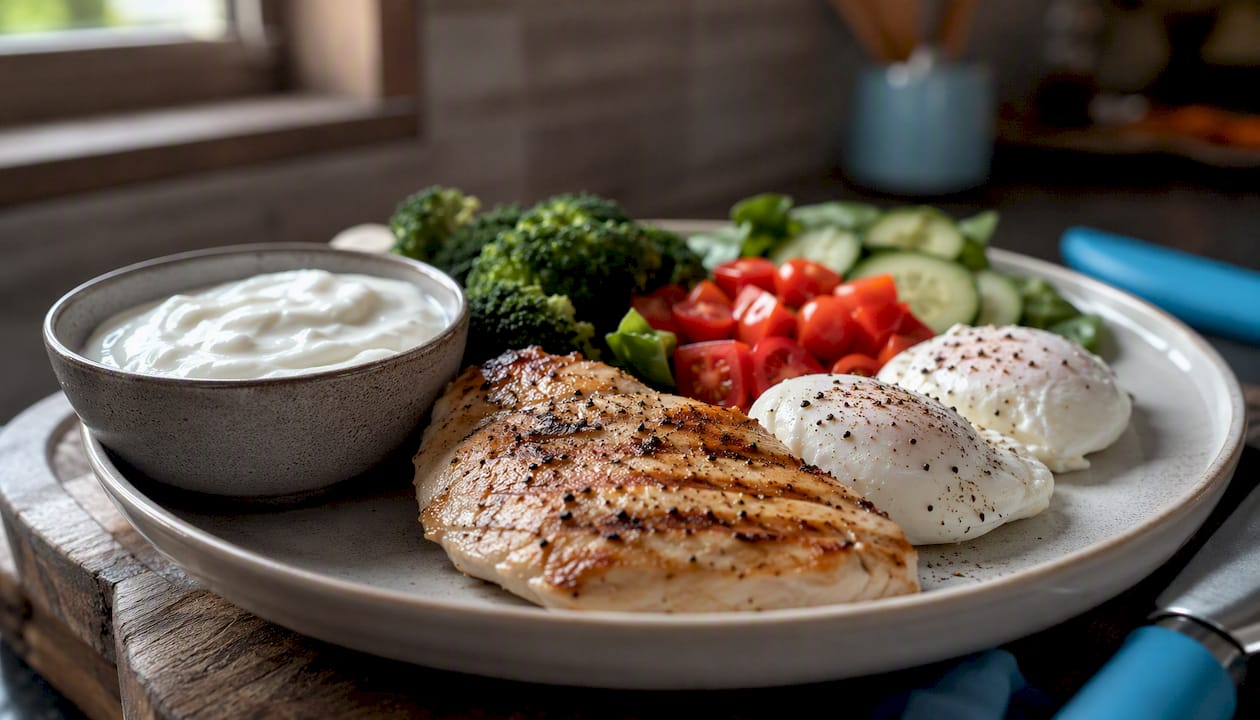
A three-tiered approach including higher protein intake around 1.0–1.2 g/kg and a moderate calorie deficit is supported to preserve muscle during weight loss. For active individuals or older adults, targets can go higher. Spreading protein across 3–4 meals maximizes the postprandial muscle protein synthesis response — one large protein meal at dinner does not do the same job as three moderate ones spread through the day. Good sources include chicken breast, Greek yogurt, eggs, cottage cheese, fish, and legumes. For supplement guidance, sports nutrition research can help you evaluate what actually supports recovery.
Lever 3: A moderate, sustainable calorie deficit
This pace keeps fat mobilization active while limiting the gluconeogenic pressure on muscle. Anything more aggressive than this consistently produces a higher proportion of lean-mass loss.
Pro Tip: Per-meal protein distribution matters as much as daily totals. Aim for 25–40 g of protein per meal rather than loading it all at one sitting — this keeps muscle protein synthesis elevated throughout the day.
A realistic one-week workout and protein plan for a typical adult
Here is how the prescriptions above translate into an actual week. This example uses a 75 kg (165 lb) adult as the reference point.
Protein math: 75 kg × 1.2 g/kg = 90 g of protein per day. Split across four meals, that is roughly 22–25 g per meal — achievable with a chicken breast, two eggs plus Greek yogurt, a protein shake, and a fish fillet across the day.
Sample weekly split:
- Monday: Full-body resistance session (squats, rows, push-ups, Romanian deadlifts) — 3 sets of 8–12 reps each.
- Tuesday: Active recovery or a 20–30 minute walk. Keep moving without taxing the muscles.
- Wednesday: Upper-body focus (dumbbell press, bent-over rows, shoulder press, bicep curls) — 3 sets.
- Thursday: Rest or light mobility work.
- Friday: Lower-body and core focus (lunges, hip hinges, planks, step-ups) — 3 sets.
- Saturday: Optional full-body circuit or a second resistance session if energy allows.
- Sunday: Full rest and recovery.
No gym? Bodyweight versions of every movement above work well for beginners. Practical guidance for busy adults can help you fit 30-minute sessions into a packed schedule without sacrificing quality.
- Track your working weights each session. If you lifted 50 lbs for 8 reps last week, aim for 50 lbs for 10 reps this week before adding load.
- Prioritize compound movements first in each session when you are freshest.
- Short on time? A 25-minute session hitting two compound movements is far better than skipping.
Pro Tip: Strength progression — not the scale — is your best weekly indicator that muscle is being preserved. If your lifts are holding steady or improving, you are protecting lean mass even as the scale drops.
How to rebuild muscle after a crash diet
Recovery is possible, but it takes longer than the damage did. Here is a realistic stepwise approach.
First, restore energy balance. You do not need a large calorie surplus — a modest 200–300 kcal above maintenance is enough to support muscle protein synthesis without excessive fat gain. This is sometimes called a body recomposition approach, where you build muscle and manage fat simultaneously.
Second, prioritize progressive resistance training. The same principles from the prevention plan apply here, but with more emphasis on gradual load increases over months. Strength comes back faster than muscle size — you will likely notice your lifts improving within 2–4 weeks, while visible muscle changes take 2–4 months of consistent training.
Third, monitor sleep and recovery. Muscle is built during rest, not during workouts. Seven to nine hours of sleep per night is not optional when rebuilding.
Realistic timeline expectations:
- Weeks 1–4: Strength gains from neural adaptation (your nervous system gets more efficient). Scale may not change much.
- Months 2–4: Visible lean-mass changes begin. Clothes fit differently before the scale reflects it.
- Months 4–6+: Meaningful muscle recovery from a significant crash-diet loss. Patience here is not passive — it is the strategy.
Use load progression and rep increases as your primary progress metrics, not body weight alone.
Red flags that mean it's time to talk to a professional
Most people can manage a moderate weight-loss plan independently. But certain signs mean you need a doctor, registered dietitian, or qualified strength coach before continuing.
See a doctor if you experience:
- Rapid unintentional weight loss without medical supervision
- Dizziness, fainting, or heart palpitations
- Persistent fatigue that does not improve with rest
- Menstrual irregularities or amenorrhea
- Significant functional decline (weakness, difficulty with daily tasks)
Rapid weight loss carries real side effects including fatigue, dizziness, and muscle loss — these are not just inconveniences. They are signals that the body is under physiological stress.
A clinical evaluation might include body-composition testing (DEXA scan or bioelectrical impedance), bloodwork for thyroid and hormonal markers, and a dietary assessment. Medically supervised VLEDs do exist and can be appropriate for specific populations — but they are delivered with clinical monitoring, structured supplementation, and regular check-ins, which is what separates them from a self-imposed 600-calorie crash diet. Personal training support can also bridge the gap between general advice and a plan that accounts for your specific starting point.
This article is general information, not a substitute for medical or dietary advice. Confirm any significant dietary changes with a qualified healthcare provider.
Your quick do/don't checklist for protecting muscle
Do:
- Lift weights at least 2–3 times per week, prioritizing compound movements
- Hit 1.0–1.2 g of protein per kilogram of body weight daily, spread across meals
- Keep your weekly weight loss at 0.5–1% of body weight
- Log your working weights weekly to track strength as a proxy for muscle retention
- Check body composition monthly when possible (not just scale weight)
Don't:
- Drop below 800 calories per day without medical supervision
- Skip resistance training while in a calorie deficit
- Rely on liquid-only or very-low-protein plans as your primary weight-loss strategy
- Judge progress by scale weight alone during the first two weeks (glycogen loss skews it)
Tracking your progress consistently with both scale weight and strength metrics gives you a far clearer picture of what is actually happening to your body composition.
What I've seen work — and what doesn't
The pattern I see most often is this: someone gets frustrated with slow progress, cuts calories dramatically, loses weight fast, and then hits a wall. The scale stalls, energy crashes, and when they return to normal eating, the weight comes back — but it comes back softer. More fat, less muscle than before. The crash diet did not fail to produce weight loss. It failed to produce the right kind.
What actually works is less dramatic and more durable. Clients who commit to resistance training two or three times a week, hit a reasonable protein target, and accept a slower pace of loss consistently end up leaner, stronger, and more capable than those who chase the fastest possible number on the scale. The sustainable approach does not feel as urgent in week one. By month three, the difference is undeniable.
At Repphilosophy, the programs — whether in-person in 4S Ranch, group training, or virtual — are built around this exact framework. The goal is never just weight loss. It is weight loss that leaves you more resilient, not less.
Ready to protect your muscle while you lose weight?
If you want a structured plan that puts these principles into practice from day one, Repphilosophy has you covered. Whether you prefer in-person personal training in 4S Ranch or a fully guided virtual workout library you can access anywhere, the programming is built to protect your lean mass while moving the scale in the right direction.

Sources
- Weight Loss Strategies and the Risk of Skeletal Muscle Mass Loss — MDPI Nutrients
- Very-low-energy diets and lean body mass outcomes — PMC narrative review
- Trying to lose weight? Be careful not to lose muscle — Harvard Health
- Crash diets may work against you — The Conversation