

Weekly weigh-ins are one of the most reliable tools you have for tracking real progress in your fitness journey. Research shows that adults who weigh themselves regularly lose about 12–18 pounds more than those who weigh infrequently, and that advantage holds up across months of consistent monitoring. The key word there is consistent. You don't need to live on the scale every morning. You need a rhythm that gives you honest feedback without stealing your peace of mind.

How weekly weigh-ins shape your fitness progress
The role of weekly weigh-ins in fitness goes far beyond a number on a scale. They create a feedback loop that connects your daily choices to measurable outcomes, and that connection is what drives lasting change.
- Reliable trend data. One reading per week smooths out the noise from daily water fluctuations, giving you a clearer picture of actual fat loss or gain over time.
- Early detection. Adults tend to gain 0.5–1 kg per year during middle age. Weekly check-ins catch that creep before it compounds.
- Built-in accountability. Stepping on the scale once a week creates a moment of honest self-reflection that reinforces your commitment to your plan.
- Habit formation. A weekly ritual is far easier to sustain than a daily obligation, and sustainability is what separates short-term results from long-term transformation.
- Psychological balance. Weekly intervals reduce the emotional rollercoaster that comes with watching normal daily fluctuations and misreading them as failure.
How often should you weigh yourself for the best results?
Frequency matters less than you might think. What actually predicts success is consistency of the habit, not how many times per week you step on the scale. That finding flips the conventional wisdom on its head.
- Weekly weighing gives you enough data points to spot trends without overwhelming you with noise.
- Daily weighing can work well for adults who find it motivating rather than stressful, but the research shows no significant weight loss advantage over weekly when both are done consistently.
- Weighing multiple times per day adds zero useful information and often adds unnecessary anxiety.
- The sweet spot for most adults is one weigh-in per week, on the same day, under the same conditions.
If you're in an intensive phase, such as a structured fat-loss program or competition prep, twice-weekly check-ins can help you and your coach make faster adjustments. For general fitness maintenance, once a week is plenty.
When is the best time to weigh yourself each week?
Timing your weigh-in correctly removes a surprising amount of variability from your readings. The goal is to measure your body under the most neutral conditions possible.
- First thing in the morning is the gold standard. Your body has been fasting overnight, your stomach is empty, and you haven't yet loaded up on food or water.
- After using the bathroom and before eating or drinking anything gives you the most stable baseline.
- Avoid weighing after exercise. Sweat loss can make you appear lighter than you actually are, and post-workout inflammation can make you appear heavier.
- Skip late-day weigh-ins. By evening, most adults carry an extra 2–5 pounds from food, water, and daily activity compared to their morning weight.
- Pick one day and stick to it. Monday mornings work well because they follow a relatively consistent weekend routine and set a clear tone for the week ahead.
Pro Tip: Set a weekly phone alarm for your weigh-in day and time. Treating it like an appointment makes it far more likely to become a lasting habit.
Daily vs. weekly weigh-ins: which approach fits you better?
Both methods have real merit, and the right choice depends on your personality and your relationship with the scale.
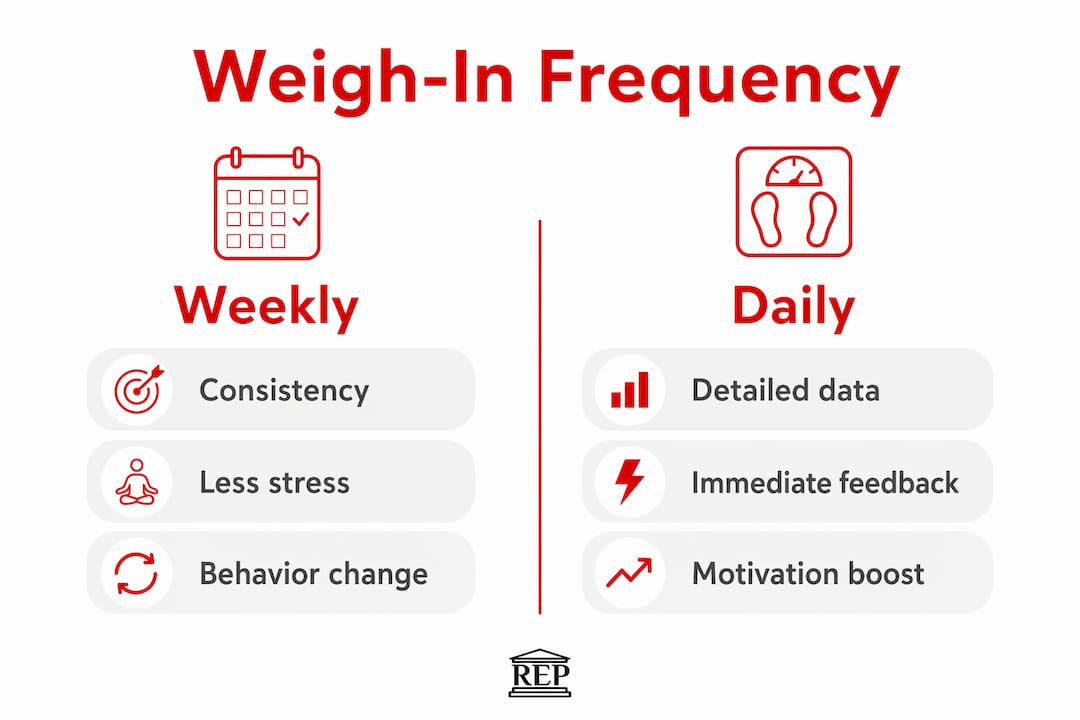
- Daily weighing provides immediate feedback on how specific behaviors, like a salty dinner or a rest day, affect your body. That learning can be genuinely useful for adults who are data-driven and emotionally resilient about fluctuations.
- The downside is that daily numbers jump around for reasons that have nothing to do with fat loss, and for many adults, that volatility triggers anxiety or restrictive eating patterns.
- Weekly weighing sidesteps that stress entirely. You get a clean weekly snapshot that reflects genuine trends rather than water retention from last night's dinner.
- Both approaches work when paired with a structured behavioral program. A meta-analysis published in Springer Nature found that multicomponent programs including self-weighing produced an average of 1.7 kg more weight loss than programs without it, regardless of whether participants weighed daily or weekly.
The honest answer: if the scale stresses you out, weekly is better. If you genuinely enjoy the data, daily is fine. What you cannot afford is to stop weighing altogether.
Practical tips for getting the most from your weekly weigh-ins
Knowing your weight is only useful if you know what to do with it. These strategies turn raw numbers into real progress.
- Log every reading. Apps like MyFitnessPal or a simple spreadsheet let you visualize trends over weeks and months, which is far more informative than any single reading.
- Pair weight data with body measurements. Waist, hip, and chest measurements often reveal fat loss that the scale temporarily hides, especially when you're building muscle.
- Track body fat percentage when possible. A smart scale or periodic skinfold assessment gives you a fuller picture of body composition changes.
- Contextualize fluctuations. Weight can shift noticeably due to water retention, stress, and salt intake. A single higher reading after a salty meal or a hard training week is not a setback.
- Use your weigh-in to adjust your plan. If three consecutive weekly readings trend upward, that's a signal to revisit your nutrition or training, not a reason to panic after one.
- Structured weekly fitness check-ins that include sleep quality, training adherence, and energy levels alongside your weight give your coach the full picture needed to make smart program adjustments.
Pro Tip: Track at least three "non-scale victories" each week alongside your weight, things like improved energy, better sleep, or a workout you crushed. These keep motivation high when the scale moves slowly.
Setting realistic goals for weekly weight loss
Your weekly weigh-in is only as useful as the target you're measuring against. Vague goals produce vague results.
- The recommended rate of weight loss is 1–2 pounds per week, a pace that preserves muscle and supports sustainable lifestyle change.
- Goals built around behavior, like hitting four workouts per week or cooking at home five nights, tend to produce more consistent results than goals built purely around a number on the scale.
- Natural weight fluctuations of 1–3 pounds are normal week to week. Evaluate your progress over a 3–4 week window, not a single reading.
- Fitness improvements like increased strength, better endurance, or improved sleep quality are legitimate progress markers even when the scale is temporarily flat.
Pairing your weekly weigh-in with fitness goal-setting best practices gives you a framework that keeps you moving forward even through the inevitable plateaus.
Why behavioral science backs weekly weigh-ins for lasting results

The psychology behind regular self-monitoring is well established, and weekly weigh-ins tap directly into it.
Stepping on the scale creates what researchers call a psychologically salient moment. That moment of accountability reduces overeating and strengthens diet adherence by making you feel observed, even when no one else is watching. It's a simple cue that keeps your goals front of mind.
Research highlight: Adults who weigh themselves regularly hold a 1–2 BMI unit advantage over those who weigh infrequently, roughly equivalent to 12–18 pounds over several months of monitoring.
Consistency of the habit is the real driver of that advantage. The research is clear that weighing at a consistent frequency predicts less weight regain after a program ends, more so than the raw number of times per week you step on the scale. A person who weighs every Monday without fail outperforms someone who weighs six days one week and once the next.
Weekly weigh-ins also reduce disinhibition, the tendency to overeat in response to perceived failure. When you're checking in regularly, small upward trends get caught early rather than snowballing into the gradual weight gain that catches so many adults off guard. And for anyone who finds the scale triggering, shifting focus to non-scale victories alongside weekly readings preserves motivation without abandoning the accountability that makes the practice work.
Ready to put your weigh-ins to work with real coaching?
Tracking your weight is a powerful start. Knowing exactly what to do with that data is where Repphilosophy comes in.

Whether you're just getting started or you've been grinding without the results you deserve, Repphilosophy's personal training programs are built around exactly this kind of consistent, data-driven progress. Based in 4S Ranch and available virtually, we combine weekly check-ins, personalized programming, and unwavering support to turn your numbers into a real transformation. You bring the commitment. We bring the plan.
Key Takeaways
Weekly weigh-ins drive better weight loss outcomes because consistency of the habit, not frequency alone, is what the research consistently links to lasting results.
| Point | Details |
|---|---|
| Consistent habit beats raw frequency | Weighing at a steady weekly cadence predicts less weight regain than sporadic daily weighing. |
| Significant weight loss advantage | Regular self-weighers lose about 12–18 pounds more than infrequent weighers across several months. |
| Best time to weigh | Weigh first thing in the morning, after the bathroom, before eating or drinking. |
| Pair with non-scale metrics | Body measurements and body fat percentage reveal progress the scale temporarily hides. |
| Target 1–2 pounds per week | This rate preserves muscle and supports sustainable change; evaluate trends over 3–4 weeks, not single readings. |