
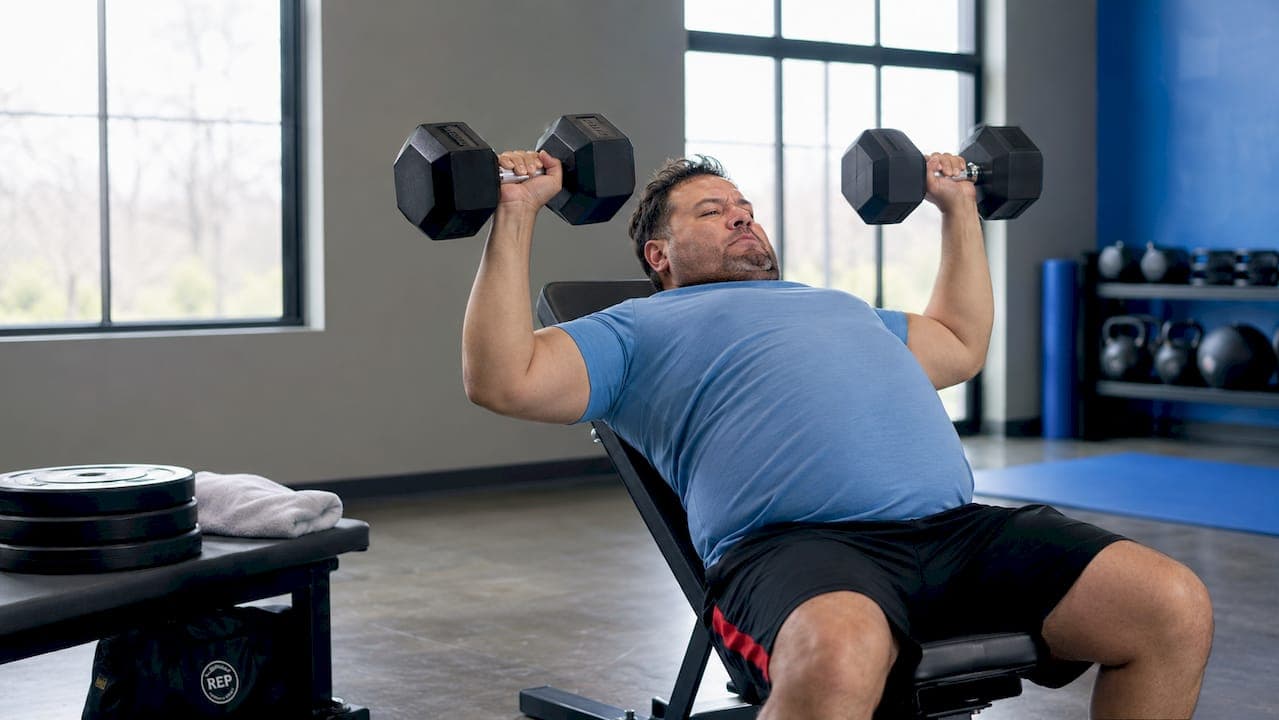
Strength training is the most effective tool an overweight beginner has for building muscle, improving metabolism, and creating lasting physical change. If you've been putting off the gym because you're not sure where to start, this guide is written specifically for you. You don't need to be fit to start strength training. You need a plan that meets you where you are. This article covers the exact steps to start strength training as an overweight beginner, from equipment and workout structure to progression and daily movement habits.
What do overweight beginners need to start strength training?
The right setup removes the biggest barrier most beginners face: not knowing what to do. Before your first session, you need a few basic tools, comfortable clothing, and a clear understanding of how to move safely.
Equipment that works for your body
You don't need a full gym to get started. Dumbbells, resistance bands, cable machines, and a stable chair are all you need to build a solid foundation. Cable machines and resistance band exercises are especially useful early on because they guide your movement path and reduce the risk of joint strain. Bodyweight exercises build essential movement patterns and joint stability, making them the ideal starting point before you add any external load.
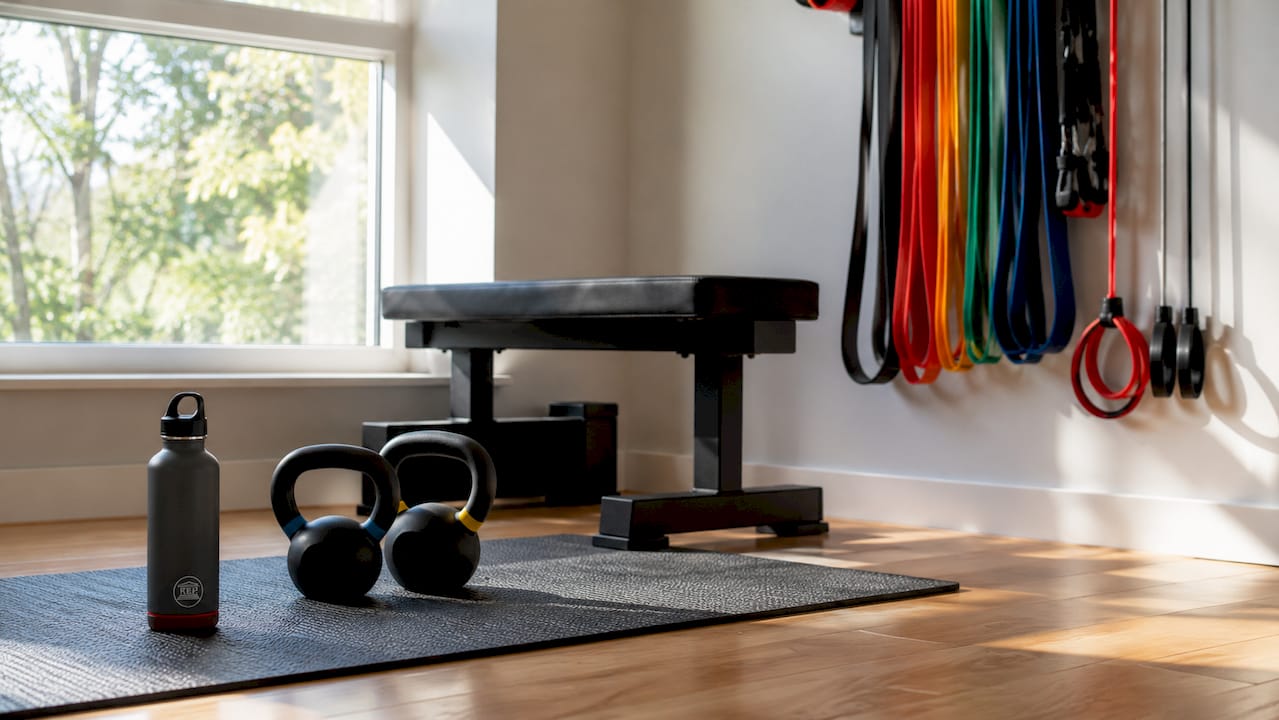
Wear supportive athletic shoes with a flat, stable sole. Avoid running shoes with thick cushioning for lifting. They reduce your connection to the ground and make lower body exercises like squats less stable. Fitted but flexible clothing lets you see your form in a mirror, which matters more than most beginners realize.
Why warm-up and cool-down are non-negotiable
A 5 to 10 minute warm-up prepares your joints, raises your core temperature, and reduces injury risk. Light walking, arm circles, hip rotations, and bodyweight squats all work well. A cool-down of equal length, including gentle stretching of the muscles you worked, helps your body recover faster and reduces next-day soreness.
Pro Tip: Film yourself from the side during your first few sessions. You don't need a coach in the room to catch obvious form errors. A quick video review before your next set can save you months of bad habits.
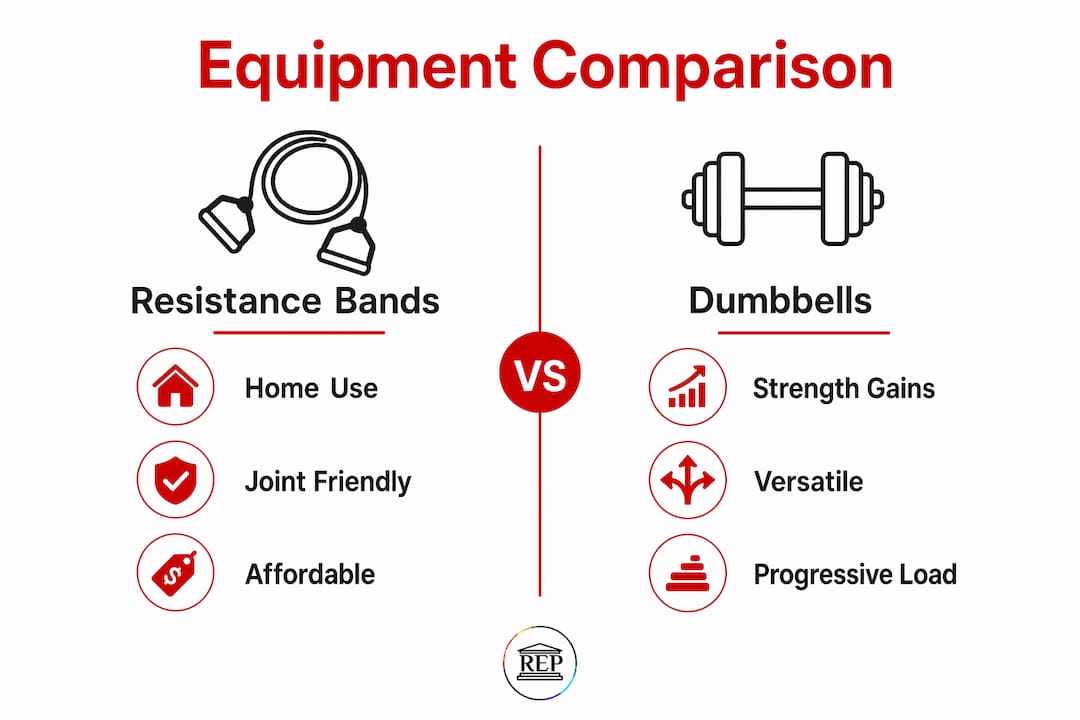
Equipment comparison: what to use and when
| Equipment | Best for | Limitation |
|---|---|---|
| Resistance bands | Home training, joint-friendly movements | Limited load for advanced progression |
| Dumbbells | Versatile, scalable for most exercises | Requires some balance and coordination |
| Cable machines | Guided movement, joint safety | Gym access required |
| Bodyweight only | Building foundational stability | Harder to track progressive overload |
| Stable chair | Assisted squats, seated presses | Limited exercise variety |
Hiring a qualified coach for even one to two months is the best investment you can make early on. A coach finds the right exercise variations for your body type, reduces pain risk, and builds your confidence faster than any app or YouTube video.
How to design a beginner strength training workout plan
A well-structured plan is what separates people who see results from those who spin their wheels. The good news is that a beginner strength training plan does not need to be complicated.
Beginners should train 2–3 full-body sessions per week, with each session lasting 25–45 minutes. That frequency gives your muscles enough stimulus to grow while allowing adequate recovery between sessions. Full-body workouts are more effective than split routines at this stage because they train each muscle group multiple times per week with lower per-session volume.
Simple, repeatable compound movements are more effective and sustainable than complex beginner workouts. Squats, rows, chest presses, and hip hinges cover the entire body and build functional strength you use every day.
A sample beginner full-body session
- Warm-up (5 minutes): Light walking, arm circles, bodyweight squats
- Goblet squat or chair squat (3 sets of 12–15 reps): Builds leg and core strength with a natural movement pattern
- Seated cable row or resistance band row (3 sets of 12–15 reps): Strengthens the upper back and improves posture
- Dumbbell chest press or push-up variation (3 sets of 12–15 reps): Targets chest, shoulders, and triceps
- Hip hinge or Romanian deadlift (3 sets of 12–15 reps): Builds posterior chain strength and protects the lower back
- Plank or dead bug (2 sets of 20–30 seconds): Core stability without spinal compression
- Cool-down (5 minutes): Gentle stretching of quads, hamstrings, chest, and back
Aim for 12–15 repetitions per set as a beginner. That rep range builds correct movement patterns and muscular endurance before you move to heavier loads. Rest 60–90 seconds between sets. That rest window keeps the session moving while giving your muscles enough time to recover for the next set.
Pro Tip: Track your progress by noting how many reps you completed and how the last rep felt. If the final rep felt easy, you're ready to increase the load slightly next session.
What progression strategies keep overweight beginners safe and improving?
Progression is what turns a workout routine into actual strength gains. Without it, your body adapts and stops changing. With too much too fast, you risk injury and burnout.
Progressive overload should increase weight, sets, or reps by about 5–10% per week once you've mastered your form. That rate of increase is small enough to be safe but consistent enough to drive real change over months. You don't need to add weight every single session. Adding one extra rep per set, or one additional set per exercise, counts as progression.
Stop 2–3 reps before your form breaks down. Training to complete exhaustion is not a badge of honor for beginners. It increases injury risk, slows recovery, and makes it harder to show up consistently. Leaving a little in the tank each set is the smarter play.
"Recovery is as important as the workouts themselves. Beginners should expect an adjustment period where fatigue is completely normal." — Runners World
Common mistakes and how to avoid them
- Skipping rest days: Muscles grow during recovery, not during the workout. Schedule at least one full rest day between sessions.
- Adding weight before mastering form: Increase load only after you can complete all reps with clean technique.
- Comparing progress to others: Your baseline is your baseline. Track your own numbers, not someone else's.
- Ignoring soreness signals: Muscle soreness is normal. Sharp or joint pain is not. Stop and reassess if something feels wrong.
- Doing too much too soon: Two solid sessions per week beats five inconsistent ones every time.
Pro Tip: Keep a simple training log in your phone's notes app. Write down the exercise, weight used, and reps completed. Looking back at week one after eight weeks is one of the most motivating things you can do.
How does daily movement support your strength training goals?
Structured workouts are only part of the picture. What you do between sessions matters just as much for fat loss and overall fitness.
Non-exercise daily movement like walking, combined with 2–3 weekly strength sessions, supports sustained weight loss. Walking is low impact, easy on the joints, and burns calories without adding recovery stress to your body. Aim for short walks after meals or during breaks rather than one long session. Consistency beats intensity at this stage.
Low-impact cardio options like swimming, cycling, and elliptical training complement strength work without grinding down your joints. These activities improve cardiovascular health, support fat loss, and keep you active on your non-lifting days. They are not a replacement for strength training. They work best alongside it.
Sample weekly activity plan
| Day | Activity | Duration |
|---|---|---|
| Monday | Full-body strength session | 30–45 minutes |
| Tuesday | Light walk or rest | 20–30 minutes |
| Wednesday | Full-body strength session | 30–45 minutes |
| Thursday | Low-impact cardio (swim or bike) | 20–30 minutes |
| Friday | Full-body strength session | 30–45 minutes |
| Saturday | Active rest (walk, stretch) | 20 minutes |
| Sunday | Full rest | — |
The combination of strength training and daily light movement creates a calorie deficit, builds muscle, and improves your metabolic rate over time. You don't need to run marathons. You need to move more than you currently do, consistently, week after week.
Key takeaways
Overweight beginners build the most sustainable strength gains by starting with bodyweight and machine exercises, training 2–3 times per week, and progressing load by 5–10% only after mastering form.
| Point | Details |
|---|---|
| Start with bodyweight and machines | These build joint stability and movement patterns before adding heavier loads. |
| Train 2–3 times per week | Full-body sessions of 25–45 minutes give enough stimulus with adequate recovery. |
| Use 12–15 reps per set | This rep range builds correct form and endurance before moving to heavier weights. |
| Progress by 5–10% weekly | Increase weight, reps, or sets gradually once form is solid to avoid injury. |
| Move daily outside the gym | Light walking and low-impact cardio between sessions accelerate fat loss and recovery. |
What I've learned coaching beginners who feel intimidated by the gym
The biggest thing I see hold people back is not lack of effort. It's the belief that they need to earn their place in a gym first. You don't. The gym is a tool, and you have every right to use it exactly where you are right now.
I've worked with clients in 4S Ranch who walked through the door convinced they were "too out of shape to lift weights." Within six weeks, they were squatting, rowing, and pressing with confidence. The turning point was never a dramatic fitness breakthrough. It was the moment they stopped waiting to feel ready and just started showing up.
Patience is the skill nobody talks about in fitness. Progress in the first month looks invisible from the outside. But inside your body, your nervous system is learning, your joints are adapting, and your muscles are waking up. That foundation is what makes everything else possible. Skipping it by going too hard too fast is the most common reason beginners quit.
If you're unsure whether you need a coach, read about the signs you need a personal trainer. Professional guidance early on is not a luxury. It's the fastest way to build confidence, avoid injury, and actually enjoy the process. I've seen it transform people who had failed on their own for years.
Celebrate the small wins. The first time you complete all your reps without stopping. The first time a weight feels lighter than it did last week. Those moments are real progress. They are worth acknowledging.
— Coach Justin
Ready to start your strength training with Repphilosophy?
You've got the knowledge. Now you need the right support to put it into action. Repphilosophy, based in 4S Ranch, offers personalized coaching programs built specifically for beginners who want to build strength safely and confidently.
Whether you prefer one-on-one sessions, bring-a-buddy training, group classes, or virtual coaching from home, Repphilosophy has a program that fits your schedule and your budget. Every program includes expert instruction, form coaching, and a progression plan tailored to your body. Explore the full range of beginner coaching programs and take the first step toward becoming STRONGER and more RESILIENT today.
FAQ
How often should an overweight beginner strength train?
Beginners should train 2–3 times per week with full-body sessions of 25–45 minutes each. That frequency builds strength while allowing enough recovery between sessions.
What are the best exercises for overweight beginners?
Bodyweight squats, seated cable rows, dumbbell chest presses, and hip hinges are the best starting exercises. They cover the full body, build functional strength, and are easy to scale as you get stronger.
Can I start strength training at home without equipment?
Yes. Bodyweight exercises build the movement patterns and joint stability needed to progress safely into weighted training. Resistance bands add variety and load without requiring a gym membership.
How do I know when to increase the weight?
Increase the weight when the final rep of your last set feels easy and your form stays clean throughout. A 5–10% increase in load per week is a safe and effective rate of progression for beginners.
Is strength training or cardio better for weight loss?
Strength training builds muscle, which raises your resting metabolic rate and burns more calories over time. Combining strength training with daily light movement like walking produces better and more lasting results than cardio alone.