

Neither format is universally better. The right choice depends on your schedule, your need for hands-on correction, and your budget — and the research backs that up. Mayo Clinic analysis shows online programs can match or even outperform in-person options in some studies, while a randomized non-inferiority trial published in PMC confirmed that a digital program produced comparable six-month weight loss to an intensive in-person program. The NIDDK's program selection guidance makes one thing clear: qualified staff, measurable goals, and a realistic plan matter far more than the delivery channel.
Here is how three common profiles tend to map out:
- Busy parent or shift worker: Virtual or blended training fits best — flexible scheduling and no commute remove the two biggest dropout triggers.
- Beginner who needs hands-on correction: In-person or blended is the safer starting point, especially for strength training or if you have a prior injury.
- Budget-conscious self-starter: Virtual programs typically cost less and still deliver results when the program is well-designed and coach access is real, not just a chatbot.
Table of Contents
- Virtual vs in-person weight loss training: side-by-side comparison
- What "virtual" and "in-person" actually mean here
- What virtual weight-loss programs get right (and where they fall short)
- What in-person training does better (and what it costs you)
- Six questions to ask before you commit to any program
- What the research actually says about effectiveness
- Key Takeaways
- The case for blended: a perspective worth considering
- Ready to find your format? Here is what Repphilosophy offers
- Useful sources and further reading
Virtual vs in-person weight loss training: side-by-side comparison
| Dimension | Virtual | In-Person |
|---|---|---|
| Effectiveness / clinical outcomes | Comparable in well-designed RCTs; slightly less in some asynchronous trials | Slight edge on some metabolic markers (e.g., glucose reduction) |
| Accountability & adherence | Relies on self-motivation; check-ins vary by program | Real-time accountability; harder to skip a session you drove to |
| Cost | Generally lower; wide range depending on coaching level | Higher; gym fees, session rates, and travel add up |
| Convenience / scheduling | High; train anywhere, anytime | Lower; fixed location and time slots |
| Personalization / clinician access | Varies widely; best programs include RD or MD access | Easier direct access to certified trainers and clinicians |
| Safety / technique correction | Limited real-time feedback; video review helps | Immediate correction; safest for beginners and complex conditions |
| Long-term maintenance | Strong when tracking tools are built in | Strong when social support and community are present |
| Technology requirements | Reliable internet, device, and app access needed | None beyond transportation |
The table shows no single format dominates across every dimension. Virtual wins on cost and convenience; in-person wins on safety and immediate accountability. For most people, the deciding factor is whichever dimension they struggle with most.
Pro Tip: Identify your single biggest barrier to consistency — cost, schedule, or technique confidence — and let that one factor drive your format choice. Everything else is secondary.
What "virtual" and "in-person" actually mean here
These terms cover more ground than most people assume, so it helps to define the boundaries before comparing them.
Virtual weight-loss training includes:
- Live one-on-one video coaching sessions (Zoom, FaceTime, or platform-specific calls)
- Asynchronous programs where you follow a custom plan and submit check-in videos or data
- App-based coaching with a real human coach reviewing your progress
- Telehealth weight-loss visits supervised by a physician or registered dietitian (RD)
In-person weight-loss training includes:
- Gym-based personal training with a certified trainer
- Clinic-based medical weight-loss programs supervised by an MD or RD
- Group fitness classes and weight-loss group meetings with live instruction
This comparison does not cover self-help books, meal-kit subscriptions without coaching, or bariatric surgery. Medical weight-loss programs supervised by a physician are within scope here when the modality differs. If you want a deeper look at what an online personal training program actually involves, that distinction matters before you commit to anything.
What virtual weight-loss programs get right (and where they fall short)
Virtual programs have earned their place in evidence-based practice, but they are not a perfect fit for everyone.
Pros:
- Flexible scheduling removes the commute barrier, the single most cited reason people quit gym-based programs
- Lower cost makes sustained coaching accessible to people who cannot afford weekly in-person sessions
- Built-in tracking tools (wearables, food logs, progress photos) create a data trail that keeps both coach and client honest
- Access to specialists regardless of geography — you can work with a registered dietitian in another state if your local options are limited
- Virtual training can work well for beginners when the program includes real coach interaction, not just pre-recorded videos
Cons:
- Tech dependency is real: a dropped connection mid-session or an incompatible app can derail momentum
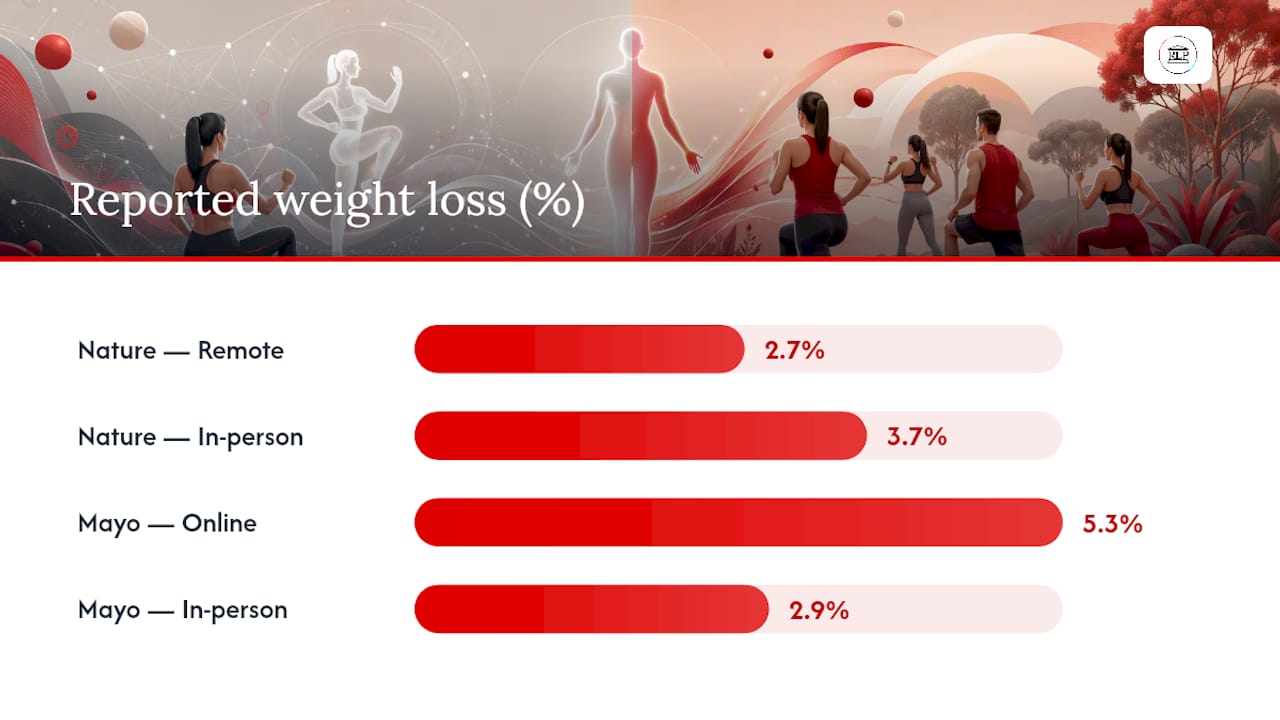
- Engagement tends to dip in fully asynchronous programs; research published in Nature found asynchronous online participants lost slightly less weight at 12 months (2.7%) compared to in-person groups (3.7%)
- Technique correction is limited to what a camera angle can show — fine for cardio, riskier for heavy compound lifts
- Data privacy varies; always check how a platform stores your health information
Quality checklist for any virtual program you're considering:
- Live coach access (not just AI chat or email-only support)
- Personalized programming, not a generic template
- Measurable progress tracking with defined checkpoints
- Option to consult an RD or MD when needed
- Clear safety guidance for exercise modifications
What in-person training does better (and what it costs you)
Hands-on coaching has advantages that video simply cannot replicate, particularly for people new to structured exercise or managing a health condition.
Pros:
- Real-time technique correction reduces injury risk, especially for resistance training movements
- The physical presence of a coach creates a stronger accountability loop — research via HR Dive found that 84% of participants reported paying closer attention in live sessions compared to digital formats
- Complex conditions (hypertension, orthopedic limitations, diabetes) are easier to manage safely with a clinician in the room
- Group classes and in-person meetings build social support, which is one of the strongest predictors of long-term adherence
- Read more on the personal training benefits for overweight adults if you are weighing whether the investment makes sense for your situation
Cons:
- Cost is the biggest barrier; personal training sessions in the U.S. typically run $50–$150 per hour depending on location and trainer credentials
- Fixed schedules and commute time create friction that compounds over weeks
- Geographic access is unequal — rural areas and underserved communities often have far fewer qualified options
Pro Tip: When evaluating any in-person provider, ask for their certifications upfront. Look for a NSCA-CSCS, ACSM-CEP, or ACE-CPT credential, and confirm CPR/first-aid certification. If you have a medical condition, ask whether an RD or MD is part of the team.
Six questions to ask before you commit to any program
A clear decision framework saves you from expensive trial-and-error. Work through these in order.
- What does my schedule actually allow? Be honest about how many days per week you can commit and at what times. A program that requires you to be somewhere at 6 AM three days a week will fail if your work schedule is unpredictable.
- Do I need hands-on technique correction? If you are new to resistance training, have a prior injury, or are managing a chronic condition, in-person or blended is the safer starting point.
- What is my realistic monthly budget? Virtual programs range from roughly $30–$200/month for coached plans; in-person personal training typically runs $200–$600/month or more. Factor in travel and gym membership fees.
- Do I have medical complexities that require clinician oversight? Conditions like type 2 diabetes, cardiovascular disease, or significant obesity benefit from MD or RD involvement. Confirm that your chosen program can provide or coordinate that care.
- What kind of accountability actually keeps me consistent? Some people thrive with weekly video check-ins; others need someone physically present to stay on track. Know yourself here — it matters more than any other variable.
- What is the trial or refund policy? A reputable program offers a trial session or a clear refund window. No trial, no transparency on pricing, and no measurable outcome metrics are all red flags per NIDDK's program selection criteria.
Red flags to watch for in any program:
- No defined measurable outcomes (weight, body fat %, BMI)
- Opaque or hidden pricing
- No access to a qualified clinician when medically necessary
- Promises of rapid weight loss beyond clinically safe rates
- No modification options for injuries or health conditions
For practical accountability strategies that work in weight-loss training, the research consistently points to scheduled check-ins and written goal-setting as the two highest-leverage habits.
What the research actually says about effectiveness
The evidence base has grown considerably, and the headline finding is more nuanced than most articles suggest.
| Study | Format Compared | Key Outcome |
|---|---|---|
| Vitadio RCT (PMC) | Digital vs. intensive in-person | Digital: −6.28 kg (ITT); In-person: −5.21 kg (ITT); non-inferiority confirmed |
| Nature asynchronous trial | Async online vs. in-person group | Remote: 2.7% weight loss; In-person: 3.7%; cost differences vary depending on program |
| IJEX randomized trial | Remote supervised vs. in-person | Both improved body composition; in-person showed greater glucose reduction |
| Mayo Clinic analysis | Online vs. in-person programs | Online: 5.3% weight loss at 6 months vs. 2.9% in-person in one cited study |
A few important limitations apply to all of this evidence. Most trials run 6–12 months, which is too short to measure long-term maintenance. Attrition rates differ significantly between arms, and program quality varies so widely that comparing "virtual" to "in-person" as categories can obscure what actually drives results. Population differences — age, comorbidities, tech access — also affect outcomes in ways the studies do not always control for.
The BizLibrary synthesis of learning modalities reaches a consistent conclusion: blended formats tend to outperform either pure approach for retention and real-world application. The NHLBI's guidance reinforces that a clinically meaningful starting target is 3–5% body weight reduction, achievable in both formats when the program is well-designed.
The strongest evidence comes from RCTs and systematic reviews. Testimonials, before-and-after photos, and brand case studies are not a substitute for peer-reviewed data when you are making a health decision.
Key Takeaways
Blended programs that combine virtual convenience with periodic in-person coaching tend to deliver the strongest outcomes across accountability, safety, and long-term maintenance.
| Point | Details |
|---|---|
| Format fit beats format prestige | The best program is the one that matches your schedule, budget, and accountability needs. |
| Clinical outcomes are comparable | RCTs show digital and in-person programs produce similar weight loss when well-designed. |
| Blended often wins | Combining virtual check-ins with in-person technique sessions addresses the limits of both formats. |
| Red flags matter | No measurable outcomes, hidden pricing, and no clinician access are signs to walk away. |
| Repphilosophy offers both | Repphilosophy provides in-person training in 4S Ranch, virtual coaching, and blended options to fit different goals and budgets. |
The case for blended: a perspective worth considering
Most of the debate around online vs. in-person weight-loss training misses the real question. People do not fail because they chose the wrong delivery channel. They fail because the program did not fit their actual life — their schedule, their confidence level, their need for human connection, or their budget. The format is a container. What goes inside it is what matters.
What I find genuinely underappreciated in this conversation is the role of trust-building in early-stage coaching. A study via HR Dive found that only 32% of digital learning in the U.S. is currently personalized — which means the majority of virtual programs are delivering a generic experience and calling it coaching. That gap is where most virtual programs lose people, not because the format is inferior, but because the personalization never showed up.
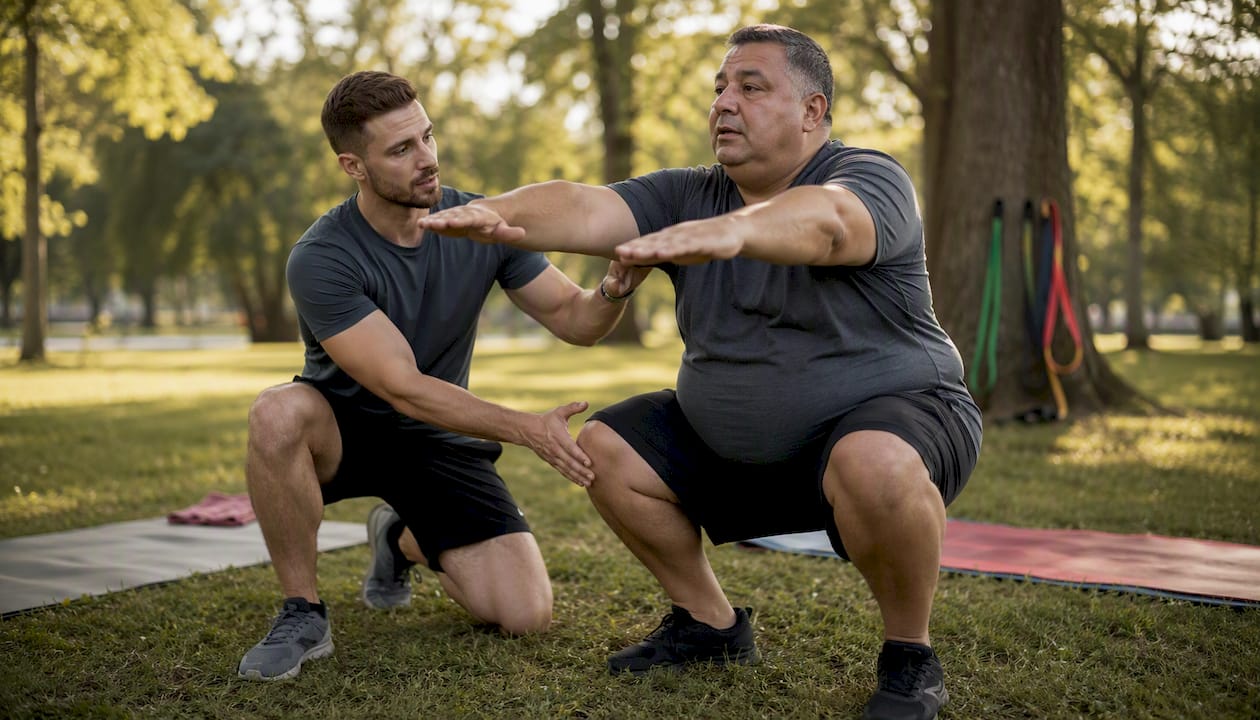
The blended model closes that gap. Use in-person time to build the trust, correct the movement patterns, and establish the relationship. Use virtual tools for daily tracking, accountability check-ins, and the flexibility that keeps people consistent between sessions. That combination is not a compromise — it is a better design.
Ready to find your format? Here is what Repphilosophy offers
Repphilosophy gives you a concrete alternative to choosing between a fully virtual program with no real coach and an expensive in-person-only commitment. Based in 4S Ranch, San Diego, the training options include in-person personal training, small group and buddy memberships, and virtual personal training with an on-demand exercise library — so you can start where you are and build from there.

A first session at Repphilosophy starts with a movement and goal assessment, a brief demo workout, and a clear picture of what a 12-week plan looks like for your specific situation. No guesswork, no generic template. If you want to try in-person coaching first, you can book a single 60-minute trial session in 4S Ranch and see exactly how it feels before committing to a package. Prefer to start virtually? The exercise library and coaching options are available the same day. Either way, the next step is one click.
Useful sources and further reading
- Online vs In-Person Weight Loss Programs: Which Delivers Better Results?
- Vitadio digital therapy non-inferiority trial (PMC article)
- Choosing a safe, successful weight-loss program — NIDDK
- International Journal of Exercise Science randomized trial comparing remote vs in-person training (DOI link)
- In-person vs. Online Training: What Actually Works in 2026 — BizLibrary
- Human-led training may be more effective than digital learning | HR Dive
- NHLBI BMI calculator and weight-loss resources
This article is for general informational purposes only and is not a substitute for professional medical or fitness advice. Consult a qualified clinician before starting any weight-loss program, particularly if you have an existing health condition.