
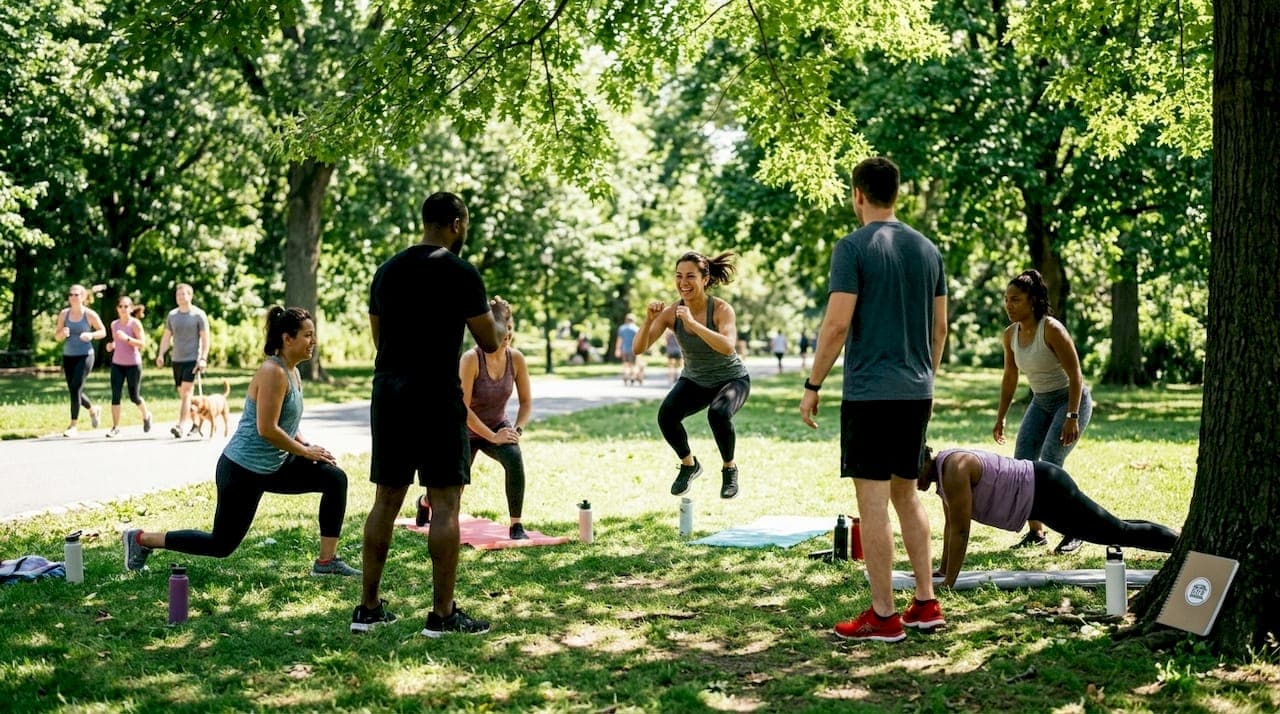
The key difference between group classes and private training lies in how much personalized attention you receive during every single workout. Group fitness classes place one instructor in front of multiple participants, while private training, also called one-on-one personal training, delivers fully customized coaching built around your specific goals, movement patterns, and limitations. Understanding the group class vs private training differences helps you spend your time and money where it counts most. Research from a meta-analysis of 71 studies with 14,429 participants confirms that both formats produce real results, but through very different mechanisms.
What are the main benefits of private training?
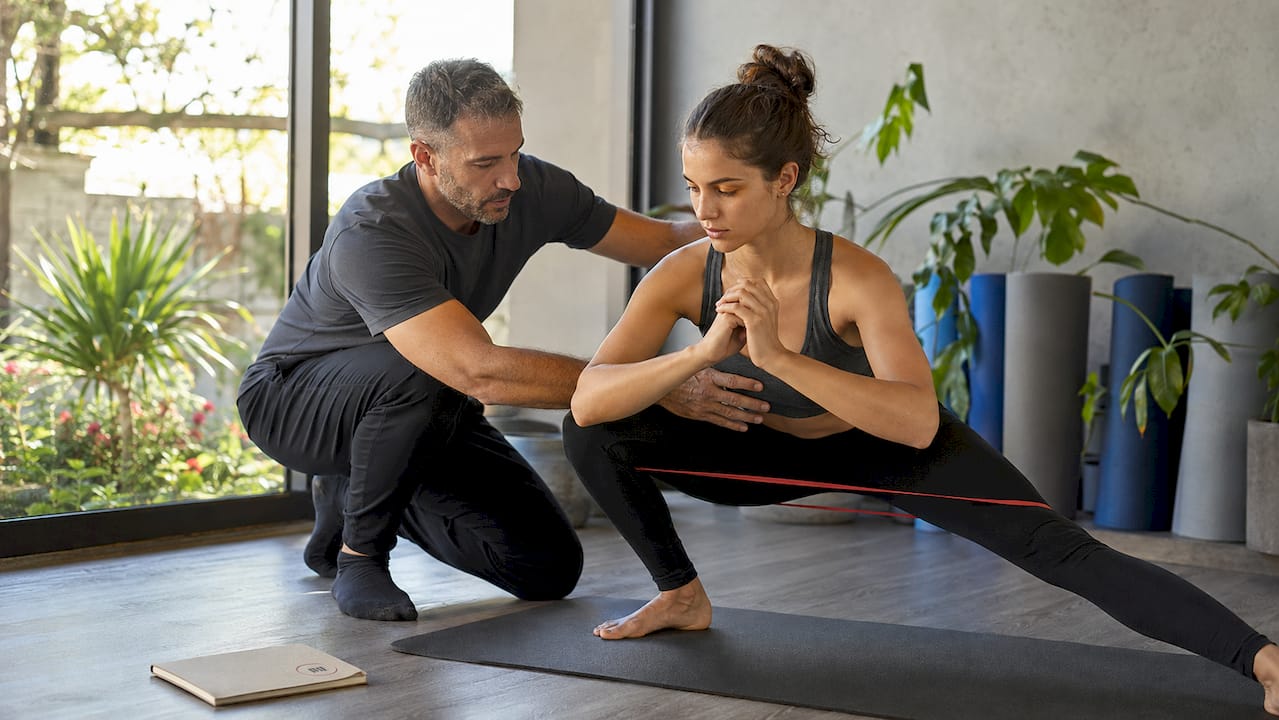
Private training is the gold standard for anyone with specific goals, injury history, or a need for technical precision. Every session is built around you, not a generalized program designed for a room full of strangers.
The private training advantages are concrete and well-documented:
- 100% customized programming. Your coach adjusts load, volume, and exercise selection based on your progress, not a fixed class template.
- Real-time form correction. A private coach catches and corrects improper movement before it becomes an injury. Injury risk drops significantly because the coach-to-client ratio is always 1:1.
- Faster, measurable progress. Personalized training sessions track your numbers session by session, so plateaus get addressed immediately.
- Higher accountability. When someone is waiting specifically for you, canceling feels different than skipping a class.
- The John Henry Effect. Private training triggers a psychological phenomenon where clients push harder simply because an expert is watching. That translates directly into better training intensity.
The adherence numbers back this up. 1-on-1 resistance training showed over 99% adherence rates in a study of breast cancer survivors. That figure reflects what happens when training feels personal, purposeful, and supported.
Pro Tip: If you feel self-conscious about your form or have never trained with weights before, a private environment removes the social pressure that often derails beginners. That psychological safety is worth more than most people realize.
How do group classes provide unique advantages?
Group classes are not a compromise. For the right person at the right stage of their fitness life, they are genuinely the better choice. The energy in a room full of people working toward similar goals is something no solo session can replicate.
Here is what group training benefits actually look like in practice:
- Built-in social accountability. When your classmates expect to see you, you show up. Consistency in attendance is often stronger in group settings because peer accountability is a powerful motivator.
- Lower cost, easier access. Group classes spread the instructor's time across multiple participants, which brings the price down significantly compared to private sessions.
- Skilled facilitation drives results. Research on group learning shows that skilled facilitation, more than the delivery format itself, drives training effectiveness. A great group instructor manages cognitive load and uses peer instruction to accelerate behavioral change.
- Community and shared identity. The group dynamic creates a sense of belonging that keeps people coming back long after the novelty wears off.
- Accessible for general fitness goals. If your goal is to move more, lose weight, or build baseline conditioning, a well-run group class delivers real results at a fraction of the cost.
The social identity research is striking. Women in all-women training groups completed training at 7% higher rates, earned certifications at 5% higher rates, and found employment at 12% higher rates compared to mixed-gender groups. That data shows how trust within a shared identity group can outperform even content quality in driving outcomes.
Pro Tip: To get the most from group dynamics, choose a class where the instructor knows your name. That one small detail shifts the experience from anonymous attendance to genuine accountability.
Group classes vs private training: a direct comparison
The right choice depends on your goals, budget, and where you are in your fitness life. Here is a structured look at the core trade-offs.
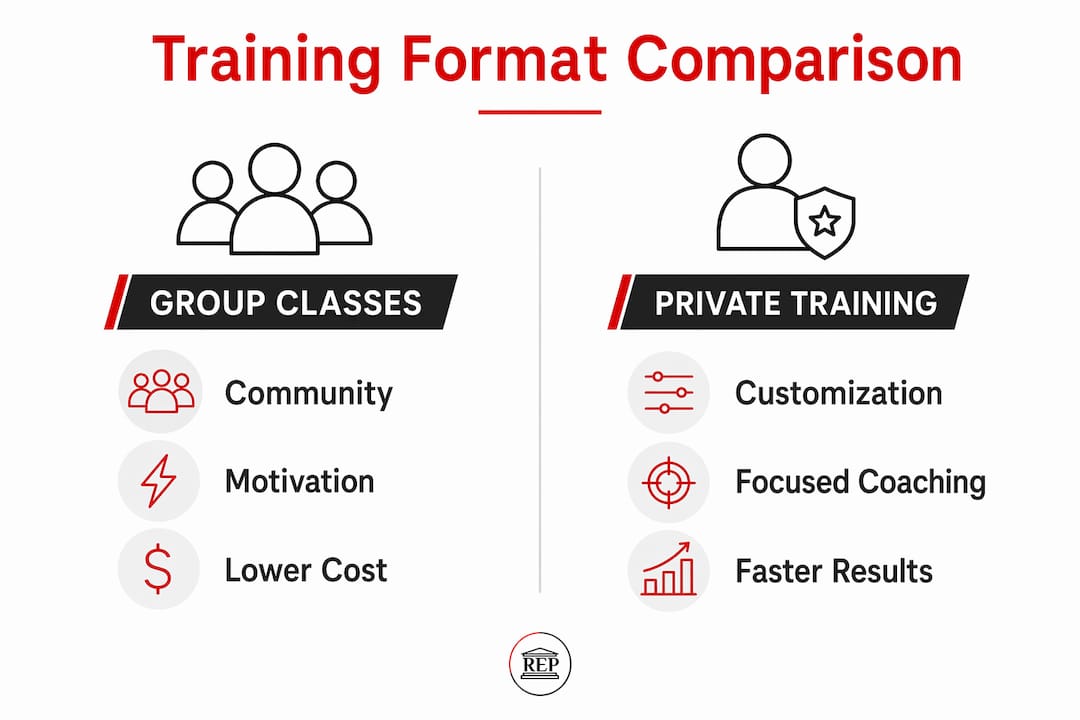
| Factor | Group Classes | Private Training |
|---|---|---|
| Customization | Generalized program for all participants | 100% tailored to your goals and limitations |
| Cost | Lower per session, typically $15–$35 | Higher per session, typically $60–$150 |
| Injury Risk | Higher due to limited individual attention | Lower with real-time form correction |
| Adherence | Strong through peer accountability | Exceptionally high, over 99% in research settings |
| Best For | General fitness, beginners, social motivation | Athletic performance, rehab, specific goals |
| Class Size Impact | Larger classes reduce individual instructor attention | Always 1:1 attention regardless of session length |
Industry consensus positions private training as the gold standard for complex or athletic needs, while group classes excel at affordability and social accountability. Neither format is universally superior. The best training approach is the one that matches your current situation. You can also explore why private training costs more to understand exactly what you are paying for before you commit.
How do psychology and social dynamics affect your choice?
Your mindset and social environment shape your results as much as any program. This is one of the most underappreciated group class vs private training differences, and it deserves serious attention.
Group settings create upward social comparison. You watch someone lift heavier, move faster, or look fitter, and that comparison can either motivate you or quietly crush your confidence. Beginners often experience this anxiety in group classes, which is why private training can be the smarter starting point for people new to structured exercise. A judgment-free environment where you learn proper technique without an audience builds the confidence that makes group classes enjoyable later.
Private training also creates psychological safety in a different way. When your coach knows your history, your fears, and your progress, the relationship itself becomes a motivator. That trust is hard to build in a class of 20 people.
Group classes, on the other hand, create community. The shared struggle of a hard workout builds bonds that keep people returning week after week. Social dynamics like trust within identity-aligned groups can outperform even content quality in driving results. That is not a small finding. It means the people around you matter as much as the program itself.
Hybrid training models address both sides of this equation. A successful long-term fitness strategy often cycles between private sessions for technical refinement and group classes for sustained motivation and energy. This approach captures the precision of one-on-one coaching and the social fuel of group dynamics without sacrificing either.
How to decide which training format fits your goals
The choice between group vs individual training is not permanent. Think of it as a decision you revisit as your goals and circumstances evolve. Here is a practical framework to get you started.
-
Define your primary goal. If you want to lose weight, build general fitness, or try something new, a group class is a strong starting point. If you are training for a sport, recovering from an injury, or chasing a specific performance target, private training is the clearer path.
-
Assess your budget honestly. Group classes offer affordable fitness options without sacrificing quality instruction. Private training costs more, but the personalized attention often produces faster results, which can mean fewer total sessions needed.
-
Consider your injury history. Any history of chronic pain, joint issues, or past injuries makes private training the safer choice. Immediate form corrections in one-on-one settings reduce injury risk in ways that group classes simply cannot match reliably.
-
Try before you commit. Start with two or three private sessions to learn foundational movement patterns, then add group classes once you feel confident. Or try a group class first to see if the social format motivates you, then layer in private sessions for technical work.
-
Revisit your choice every 90 days. The choice between formats is dynamic. What works during a high-stress season of life may not be the best fit when your schedule opens up. Build flexibility into your approach from the start.
If you are still unsure, reading through 9 signs you need a personal trainer can help you recognize when private coaching is the right call.
Key takeaways
The most effective training format is the one that matches your current goals, budget, and psychological needs, not the one with the most impressive research behind it.
| Point | Details |
|---|---|
| Personalization is the core difference | Private training delivers 100% customized sessions; group classes follow a generalized program for all participants. |
| Both formats produce real results | A meta-analysis of 71 studies confirms group and private training each drive meaningful fitness outcomes through different mechanisms. |
| Psychology shapes your results | Beginners benefit from the safety of private training; experienced exercisers often thrive on group energy and peer accountability. |
| Hybrid models work best long-term | Cycling between private sessions for technique and group classes for motivation produces the strongest sustained outcomes. |
| Cost reflects attention, not quality | Group classes are more affordable because the instructor's time is shared; private training costs more because every minute is yours. |
What i've learned after years of coaching both formats
I have coached clients through private sessions and group classes at Repphilosophy, and the honest truth is that neither format wins every time. What I have seen, over and over, is that the format matters far less than the fit between the person and the environment.
Private training is where I see the fastest technical growth. When I can watch every rep, adjust every cue, and build a program around one person's body and goals, the progress is hard to argue with. That said, I have also watched clients plateau in private sessions because they were missing the energy and accountability that a group brings.
Group classes, when run well, create something private training cannot manufacture: genuine community. I have seen people show up to class on their worst days because they did not want to let their classmates down. That is a force multiplier no program design can replicate.
My honest recommendation is to start with private training if you are new, returning after injury, or chasing a specific goal. Get your foundation right. Then add group classes to keep the fire burning. If budget is the real constraint, a bring-a-buddy training membership or a well-structured group class is a far better option than doing nothing. The worst training format is the one you never show up for.
— Coach Justin
Ready to find your perfect training fit?
Whether you are drawn to the personalized focus of one-on-one coaching or the energy of training alongside others, Repphilosophy has a format built for you. Based in 4S Ranch, we offer private training, group classes, bring-a-buddy memberships, and virtual coaching options designed to meet you where you are, at a price point that makes sense.

You do not have to choose between results and affordability. Explore the full range of coaching programs at Repphilosophy and find the format that fits your goals, your schedule, and your budget. Your next step forward starts right here.
FAQ
What is the main difference between group classes and private training?
The primary difference is personalization. Private training delivers a fully customized program with 1:1 coaching, while group classes follow a generalized format designed for multiple participants at once.
Is private training worth the higher cost?
Private training costs more because every minute of the session is dedicated to you. For individuals with specific goals, injury history, or a need for technical coaching, the faster progress and lower injury risk often justify the investment.
Can group classes be as effective as private training?
A meta-analysis of 71 studies found group training superior for functional outcomes like strength and flexibility after outlier removal. Group classes are highly effective for general fitness, especially when led by a skilled instructor.
What is a hybrid training model?
A hybrid model combines private sessions for technical refinement with group classes for motivation and community. Industry experts identify this approach as the strongest long-term fitness strategy for most people.
How does class size affect my results?
Larger class sizes reduce the amount of individual attention each participant receives from the instructor. Smaller group classes and private sessions allow for more frequent form corrections, which directly lowers injury risk and improves technique over time.