
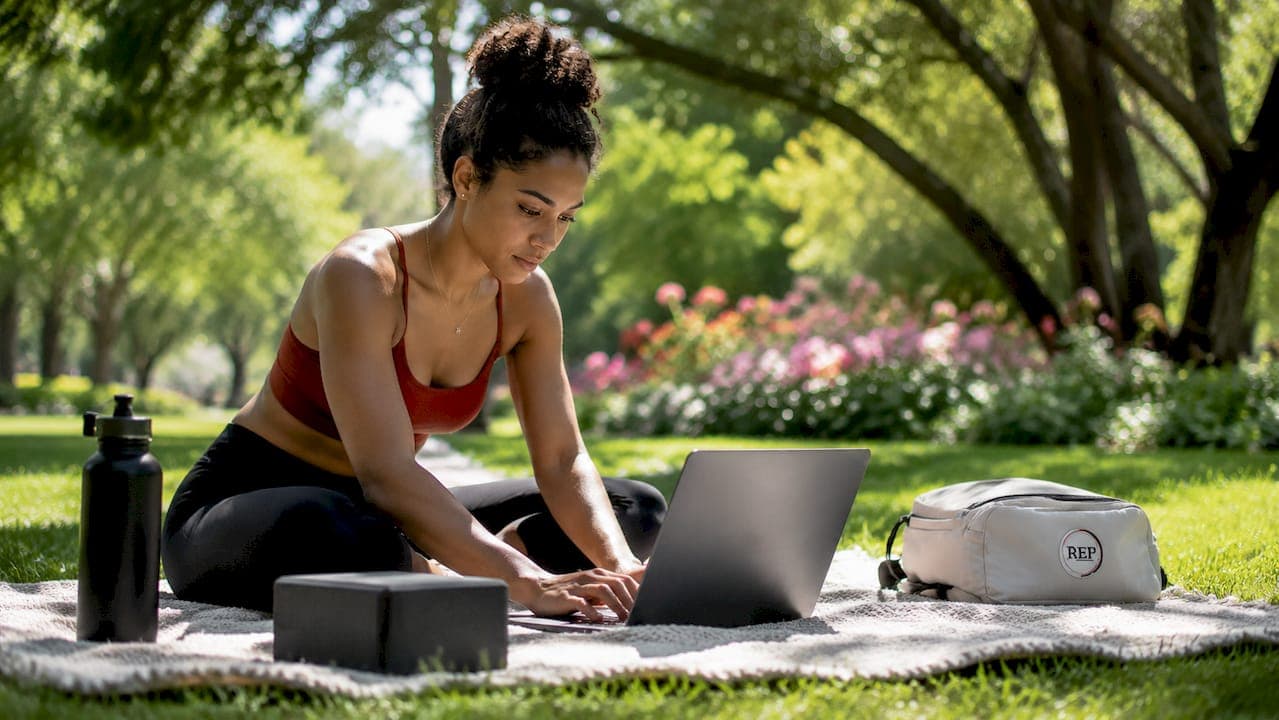
Virtual training is defined as instructor-led, interactive fitness coaching delivered through digital platforms like Zoom, structured workout libraries, or dedicated apps that guide beginners through real movement practice from any location. This format works for beginners because it removes the logistical and psychological barriers that stop most people from ever walking into a gym. You get guided, repeatable sessions with real feedback, without the intimidation of a crowded fitness floor. Research confirms that without reinforcement, learners forget up to 70% of new information within 24 hours. Virtual training solves that problem by making consistent, structured sessions easy to schedule and repeat.
Why virtual training works for beginners: retention and skill building
The biggest challenge beginners face is not motivation. It is memory. Your brain needs repeated exposure to new movement patterns before they stick, and a single gym session or YouTube video simply does not cut it. That 70% forgetting rate is not a personal failure. It is how human memory works, and virtual training is built to fight it.
Repeated virtual sessions create the reinforcement loops your brain needs to turn new exercises into habits. Each time you revisit a squat cue or a breathing technique in a live session, you are strengthening that neural pathway. Think of it like saving a file multiple times instead of once.
Cognitive load is the other hidden obstacle for beginners. When you are new to fitness, everything feels like too much at once: form, breathing, rep count, rest time. Microlearning units of 3–5 minutes per segment improve completion rates and retention far better than marathon sessions. Breaking your workout into focused blocks means you actually absorb what you are doing, rather than just surviving it.
Active participation is what separates virtual training from passive video watching. Scrolling through a fitness influencer's workout on Instagram is not training. It is entertainment. Effective virtual training, as outlined in online personal training models, is hands-on practice where you make and correct mistakes in real time with a coach watching.
- Repeated sessions reinforce movement patterns and prevent the 70% memory drop
- Microlearning blocks reduce overwhelm and keep your focus sharp
- Active practice builds real skill faster than passive video consumption
- Instructor feedback catches bad habits before they become injuries
Pro Tip: Schedule your virtual sessions at the same time each day for the first two weeks. Consistency in timing trains your brain to expect the session, which lowers resistance and improves focus.
Virtual training vs. in-person training: what beginners gain
The comparison between virtual and in-person training is not about which is better overall. It is about which serves you better right now, as someone just starting out. For most beginners, virtual training wins on the factors that matter most at the start.
Virtual and in-person training achieve approximately equal learning outcomes, but virtual offers greater scalability and lower costs. That means you are not sacrificing results by training online. You are just removing the friction that keeps beginners from showing up consistently.
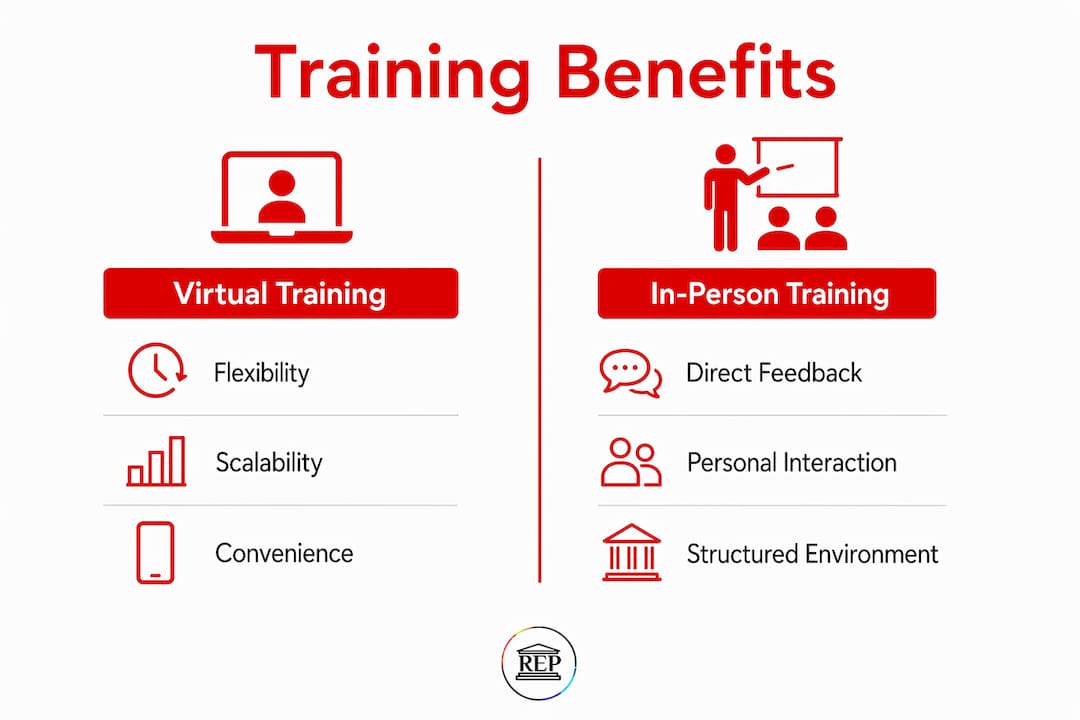
Travel time, gym intimidation, and rigid class schedules are the three most common reasons beginners quit before they build momentum. Virtual training eliminates all three. You train in your own space, on your schedule, without feeling like everyone is watching you figure out how to use a cable machine.
Virtual training labs provide hands-on environments that accelerate proficiency by letting learners practice real tasks from day one without hardware or location restrictions. In a fitness context, this means you can practice foundational movements at home with bodyweight before ever stepping into a gym, building confidence and competence simultaneously.
| Factor | Virtual Training | In-Person Training |
|---|---|---|
| Scheduling flexibility | Train any time, any day | Fixed class or appointment times |
| Cost | Lower, no travel or facility fees | Higher, gym memberships and commute |
| Intimidation factor | Low, train in your own space | Higher for beginners in public gyms |
| Instructor feedback | Real-time via video | Direct, hands-on correction |
| Repeatability | Sessions recorded and replayable | One-time unless you rebook |
| Accessibility | Available anywhere with internet | Requires proximity to a facility |
The advantages of online training for beginners are not just about convenience. They are about removing every excuse your brain will manufacture to skip a session. When training is this accessible, showing up becomes the easy choice.
How live coaching and digital tools build beginner confidence
The single most powerful element in any virtual training program is a live instructor. Instructor-led sessions decrease psychological barriers compared to self-paced videos, which is critical for beginners who are still figuring out whether they belong in fitness at all. A coach who sees you, calls your name, and corrects your form in real time changes everything.
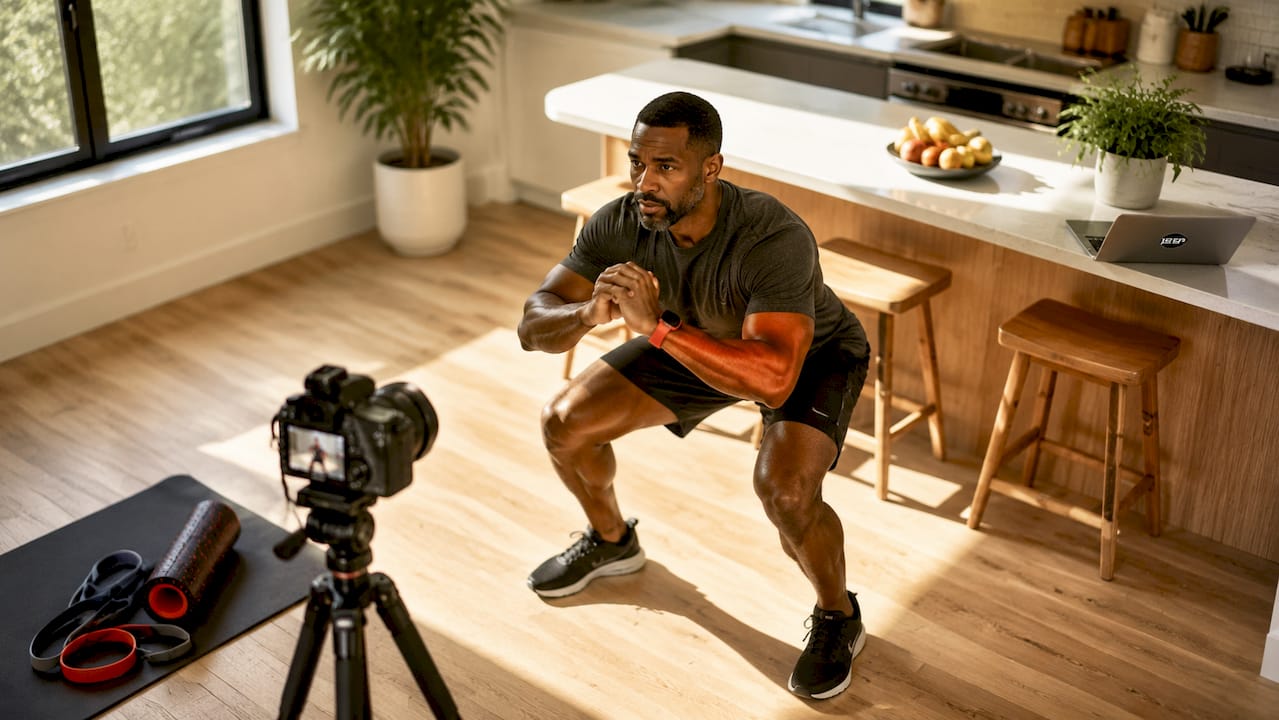
The "magic" of virtual training lies in that live interaction. When a coach gives you immediate feedback, you stop second-guessing yourself. You build trust in your own movement, and that trust compounds over time into real confidence.
Digital tools inside platforms like Zoom, Google Meet, or dedicated fitness apps amplify that connection. Live chat, polls, and breakout rooms increase learner engagement by replicating interactive classroom elements. In a fitness session, this might look like a coach using a quick poll to check how everyone is feeling before a workout, or a chat feature where you can ask a form question without interrupting the flow.
- Turn your camera on. Coaches can only correct what they can see. Camera-off sessions are passive, not active.
- Use the chat actively. Ask questions, confirm cues, and engage. This is your session.
- Treat it like a live class. Proactive participation patterns improve learning outcomes more than any single exercise choice.
- Request real-time feedback. Do not wait until the end of a session to ask if your form is right.
Pro Tip: Before your first virtual session, set up your phone or laptop so your full body is visible to the camera. Your coach needs to see your feet, knees, and hips to give you accurate feedback on most beginner movements.
How to structure your virtual sessions for the best results
Session structure is where beginner success in virtual courses either takes off or falls apart. Most beginners either try to do too much at once or treat every session like a one-time event. Neither approach works.
Capping virtual sessions at 90 minutes and segmenting content into shorter modules helps beginners manage cognitive load and improves learning efficiency. For fitness beginners, this means a session should have a clear warm-up block, a focused skill or strength block, and a cooldown. Three distinct phases, each with a specific purpose.
Here is a practical structure that works for most beginners:
- Warm-up block (10–15 minutes). Mobility work and light cardio to prepare your joints and nervous system. This is not optional. Skipping it is the fastest route to an early injury.
- Skill or strength block (30–45 minutes). Focus on two to three movements maximum. Going deeper on fewer exercises beats skimming across ten. Your coach should be cueing form throughout this block.
- Conditioning or cardio block (10–20 minutes). Apply the movements you just practiced at a slightly higher intensity. This is where the work becomes real.
- Cooldown and review (10 minutes). Stretch, breathe, and talk through what you learned. This reflection step is where retention actually happens.
- Follow-up reinforcement. Schedule your next session within 48 hours of your first. The blended learning approach, combining virtual reinforcement with occasional in-person sessions, creates the strongest beginner outcomes over time.
Consistency between sessions matters more than intensity within them. A beginner who trains three times a week at moderate intensity will outperform someone who trains once a week at maximum effort every single time. Virtual training makes that consistency possible because the barrier to showing up is so low.
Key takeaways
Virtual training works for beginners because it combines live instructor feedback, microlearning structure, and flexible scheduling to build real fitness skills without the barriers that cause most newcomers to quit.
| Point | Details |
|---|---|
| Retention requires repetition | Learners forget up to 70% of new information in 24 hours without reinforcement, making repeated sessions non-negotiable. |
| Microlearning beats marathon sessions | Breaking workouts into 3–5 minute focused blocks improves retention and prevents beginner overwhelm. |
| Live coaching is the key differentiator | Instructor-led virtual sessions reduce anxiety and build confidence faster than self-paced video alone. |
| Structure determines success | Capping sessions at 90 minutes with clear phases keeps beginners focused and progressing. |
| Blended learning amplifies results | Pairing virtual sessions with occasional in-person work creates the strongest long-term outcomes for newcomers. |
What i have learned coaching beginners through virtual training
I will be honest with you. When I first started offering virtual coaching through Repphilosophy, I was skeptical. I thought fitness required presence. I thought you needed to be in the same room to really coach someone. I was wrong.
What I discovered is that many beginners actually perform better in a virtual setting at first. The privacy of their own space removes the self-consciousness that shuts people down in a gym. They ask more questions. They try harder. They show up more consistently because there is no commute to talk themselves out of.
The misconception I hear most often is that virtual training is just watching videos. It is not. The benefits of virtual personal training come from the live interaction, the real-time correction, and the accountability of a coach who knows your name and your goals. That is what separates a virtual training program from a YouTube playlist.
My advice for choosing the right virtual program is simple. Look for live sessions, not just pre-recorded content. Look for a coach who asks about your history, your limitations, and your goals before prescribing anything. And look for a program that builds in repetition, because one session will never be enough to build a habit.
Virtual training is not a compromise. For beginners, it is often the best possible starting point.
— Coach Justin
Start your fitness journey with Repphilosophy
Ready to put this into practice? Repphilosophy offers virtual coaching memberships built specifically for people who are new to fitness and want real guidance without the gym floor anxiety. You get structured workouts, a video library you can return to between live sessions, and a coach who is genuinely invested in your progress.
Whether you want live one-on-one coaching, a group class format, or a self-paced library to complement your sessions, Repphilosophy has a membership tier that fits your schedule and your budget. Every program is designed around the same principles covered in this article: repetition, live feedback, and sessions structured to build confidence from day one. Explore your options at the Repphilosophy shop and take that first meaningful stride toward a stronger you.
FAQ
Why does virtual training work for beginners specifically?
Virtual training removes the intimidation and logistical barriers that stop most beginners from starting. Live instructor feedback, flexible scheduling, and repeatable sessions build confidence and skill faster than sporadic in-person visits.
How long should a beginner's virtual training session be?
Sessions capped at 90 minutes with content broken into focused modules produce the best results for beginners. Shorter, more frequent sessions outperform long, infrequent ones every time.
Is virtual training as effective as in-person training?
Research confirms that virtual and in-person training achieve approximately equal learning outcomes. Virtual training adds cost savings and scheduling flexibility, making it a strong choice for beginners building a consistent routine.
What makes a virtual fitness session better than watching workout videos?
Live instructor-led sessions provide real-time feedback and accountability that pre-recorded videos cannot replicate. A coach who sees your form and corrects it in the moment prevents bad habits and reduces injury risk for beginners.
How often should beginners train virtually to see results?
Training three times per week with sessions scheduled within 48 hours of each other gives your brain and body the reinforcement needed to retain new movement patterns. Consistency in frequency matters more than intensity at the beginner stage.