

What are the main types of resistance training for beginners?
Resistance training is any exercise that makes your muscles work against a force or load to build strength, improve bone density, and support metabolic health. If you're just getting started, the good news is that you have more options than you might think. According to NASM's resistance training guide, you can train effectively with bodyweight, free weights, resistance bands, or machines, and each approach has real merit for new lifters.
Here's a quick look at the main categories you'll encounter as a beginner:
- Bodyweight exercises: Squats, push-ups, lunges, and chin-ups use your own body as the load. No equipment needed, which makes them perfect for home training or travel.
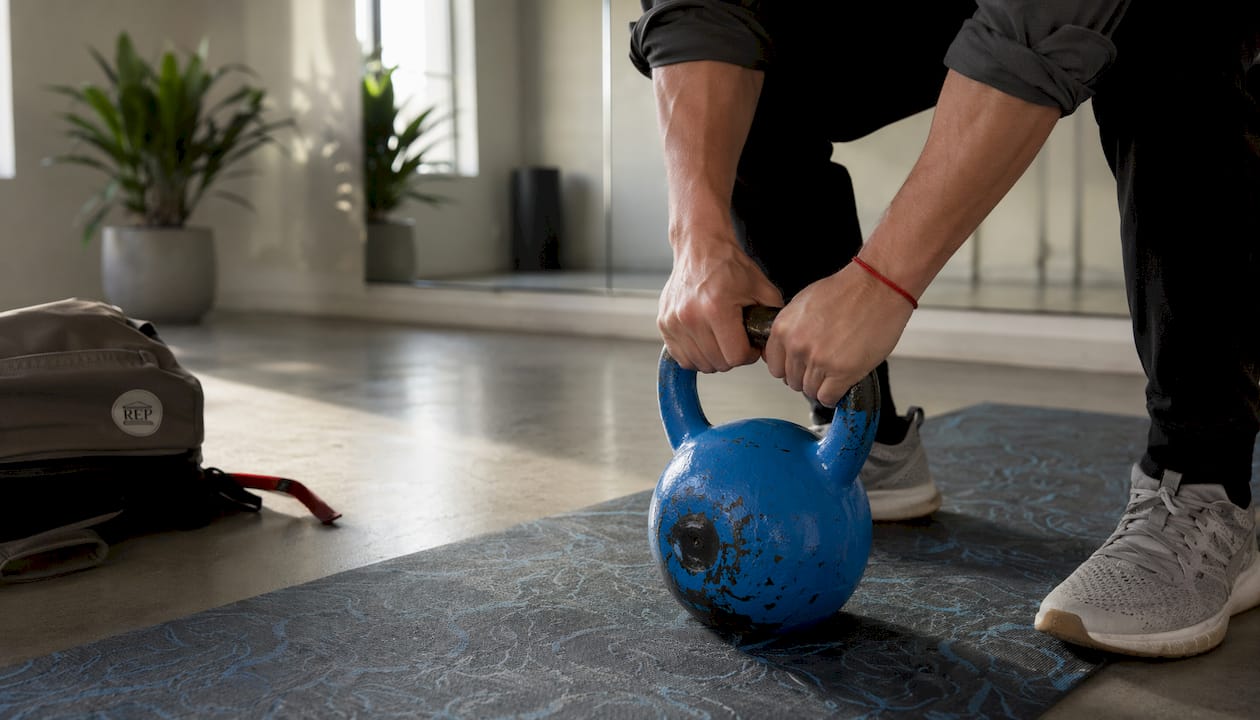
- Free weights: Dumbbells, barbells, and kettlebells are classic tools that build strength while also challenging your balance and coordination.
- Resistance bands: Portable, affordable, and joint-friendly, bands provide continuous tension throughout a movement and adapt to almost any exercise.
- Weight machines: Machines guide your movement along a fixed path, which helps beginners learn the feel of an exercise before adding load.
- Suspension equipment: Tools like suspension trainers use gravity and your bodyweight to create resistance at varying angles.
One concept worth understanding early is the difference between compound and isolation movements. Compound exercises, like squats and presses, work multiple muscle groups at once. Isolation exercises, like a leg extension, target one muscle. For beginners, compound movements deliver the most return on your time, and you'll see why as you read on.
Simple beginner exercises to kick things off safely
You don't need a complicated program to start seeing results. UC Davis Health Professor of molecular exercise physiology Keith Baar recommends building your first routine around three movement patterns: a big leg push, an upper body push, and an upper body pull. That simple framework covers most of your major muscle groups in one session.
Here are beginner-friendly examples for each resistance training type:
- Bodyweight: Squats, push-ups, lunges, and glute bridges. Begin with 8–12 repetitions per set, aiming for 3–4 sets per exercise if possible, but listen to your body as you learn the movements.
- Free weights: Dumbbell chest press, dumbbell rows, and goblet squats. Light dumbbells let you practice form before increasing load.
- Resistance bands: Band pull-aparts, banded rows, and resistance band squats. Bands are forgiving on joints and great for learning movement patterns.
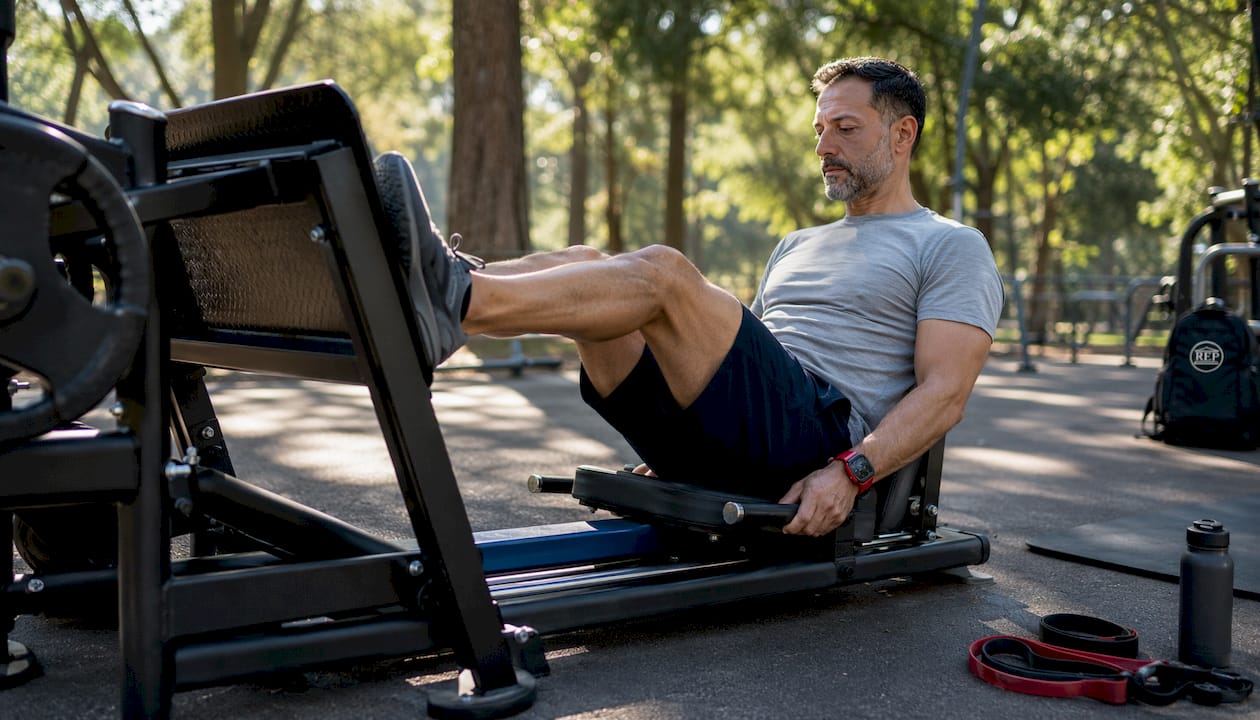
- Machines (if available): Leg press, chest press machine, and lat pulldown. Machines are a smart starting point because they reduce the coordination demand.
Progression is built right into the method. Keith Baar's guidance from UC Davis Health is straightforward: record how much you lifted and how many reps you completed, then next session either add a rep or nudge the weight slightly higher. That simple habit compounds over weeks into real, measurable strength.
Once you're comfortable with the basics, you can layer in isolation work. For example, after mastering the leg press, add leg extensions and leg curls. When using an isolation machine, try going up on a one-count and down on a two-count to spend more time on the eccentric, or lengthening, phase. That extra time under tension gives your muscle a stronger growth signal.
Pro Tip: Focus your first 4–6 weeks entirely on compound movements. They train more muscles per set, build functional strength faster, and keep your sessions short enough that you'll actually show up for them.
How often should beginners train, and how hard?
Getting the frequency and volume right from the start protects you from burnout and injury while still producing real gains. Research supports training 2–3 times per week for beginners to build strength, bone density, and metabolic benefits without overloading your recovery.
Here's what a sound beginner program looks like in practice:
- Frequency: 2–3 sessions per week, targeting all major muscle groups each session.
- Sets and reps: Aim for 8–12 repetitions per set, completing 3–4 sets per exercise. You don't need to train to failure to see results.
- Rest between sets: Take 2–5 minutes between heavy compound sets to let your nervous system recover fully.
- Rest between sessions: Allow at least 48 hours before training the same muscle group again. Your muscles grow during recovery, not during the workout itself.
- Starting volume: Begin with one set per exercise if you're brand new, then build toward 3–4 sets over your first few weeks.
The Better Health Channel recommends starting with 8–10 exercises covering the major muscle groups, performed two to three times per week. Once you can complete 12 reps of an exercise with good form, that's your signal to progress, whether by adding weight, reps, or a more challenging variation.
Moderate loads with multiple sets twice weekly capture the bulk of strength and hypertrophy gains for beginners with a lower time investment than most people expect. You don't need to live in the gym to get stronger.
Safety tips and common mistakes to avoid when starting out
Starting resistance training the right way matters more than starting fast. The American Heart Association recommends completing a pre-exercise screening and consulting a health professional before beginning a new training program, especially if you have any existing health conditions. A doctor, physiotherapist, or certified exercise professional can clear you for training and help tailor a program to your specific needs.
Common beginner mistakes and how to sidestep them:
- Using too much weight too soon: Start lighter than you think you need to. Mastering form first protects your joints and builds a foundation for heavier loads later.
- Skipping the warm-up: Five to ten minutes of light movement, like walking or bodyweight squats, raises your core temperature and prepares your joints for load.
- Poor form under fatigue: When your technique breaks down, stop the set. A rep done poorly trains bad movement patterns and raises injury risk.
- No rest days: Training the same muscles every day slows progress. Your body needs time to rebuild.
- Ignoring pain: Muscle soreness is normal. Sharp or joint pain is not. Stop and seek guidance if something doesn't feel right.
For a deeper look at pre-exercise screening and professional consultation, it's worth reading up before your first session. Getting clearance takes minutes and can prevent setbacks that cost you weeks.
If you're training at home and want expert eyes on your form without a gym membership, virtual training is a genuinely practical option for beginners in 2026.
An expert-backed approach to building a program you'll actually stick with
The biggest obstacle for most beginners isn't effort. It's sustainability. Professor Keith Baar of UC Davis Health and physician Peter Attia MD both point to a "minimum effective dose" approach as the most practical framework for new lifters: use moderate weight and compound movements to get the stimulus you need without grinding yourself into the ground.
Here's what that looks like as a set of guiding principles:
- Consistency beats intensity: Showing up twice a week for three months outperforms one brutal week followed by two weeks off. Peter Attia's analysis emphasizes consistency over maximal effort as the key to building a lasting routine.
- Track your numbers: Write down your weights and reps after every session. That record is what drives progress, because you always have a target to beat.
- Progress gradually: Add one rep or a small amount of weight each week. Small, steady increases add up to dramatic changes over months.
- Keep the program simple: Three to four exercises per session is enough when you're starting out. Complexity is the enemy of adherence.
- Pair sustainable fitness habits with a program you enjoy: If you dread every session, the program won't last. Find the equipment type and setting that feels right for you.
Pro Tip: Don't chase soreness as a measure of a good workout. A well-designed beginner program should leave you feeling worked but not wrecked. If you're struggling to walk for three days after leg day, you've done too much too soon.
The goal isn't to be perfect from day one. It's to build a body that gets stronger every week, and to make the process feel worth repeating. That's the philosophy at the heart of every good beginner program.
Key Takeaways
Beginners who train 2–3 times per week with moderate loads, compound movements, and consistent progression build strength effectively while keeping injury risk low.
| Point | Details |
|---|---|
| Start with four equipment types | Bodyweight, free weights, resistance bands, and machines all work well for beginners. |
| Train 2–3 times per week | This frequency builds strength and bone density without overloading recovery. |
| Use 8–12 reps, 3–4 sets | Moderate loads with multiple sets capture most beginner gains without training to failure. |
| Rest at least 48 hours | Allow 48 hours between sessions for the same muscle group to recover and grow. |
| Prioritize consistency | Showing up regularly with moderate effort outperforms sporadic intense sessions every time. |
Ready to start your strength journey with real guidance?
You now have the foundation. The next step is putting it into motion with support that keeps you accountable and progressing. At Repphilosophy, we work with beginners every day, helping you build strength safely, confidently, and on your schedule. Whether you prefer training in person in 4S Ranch or working with a coach from home, we have a path for you.
Start your first session and experience what a truly personalized beginner program feels like. Or explore our on-demand exercise library to get moving today, wherever you are.