
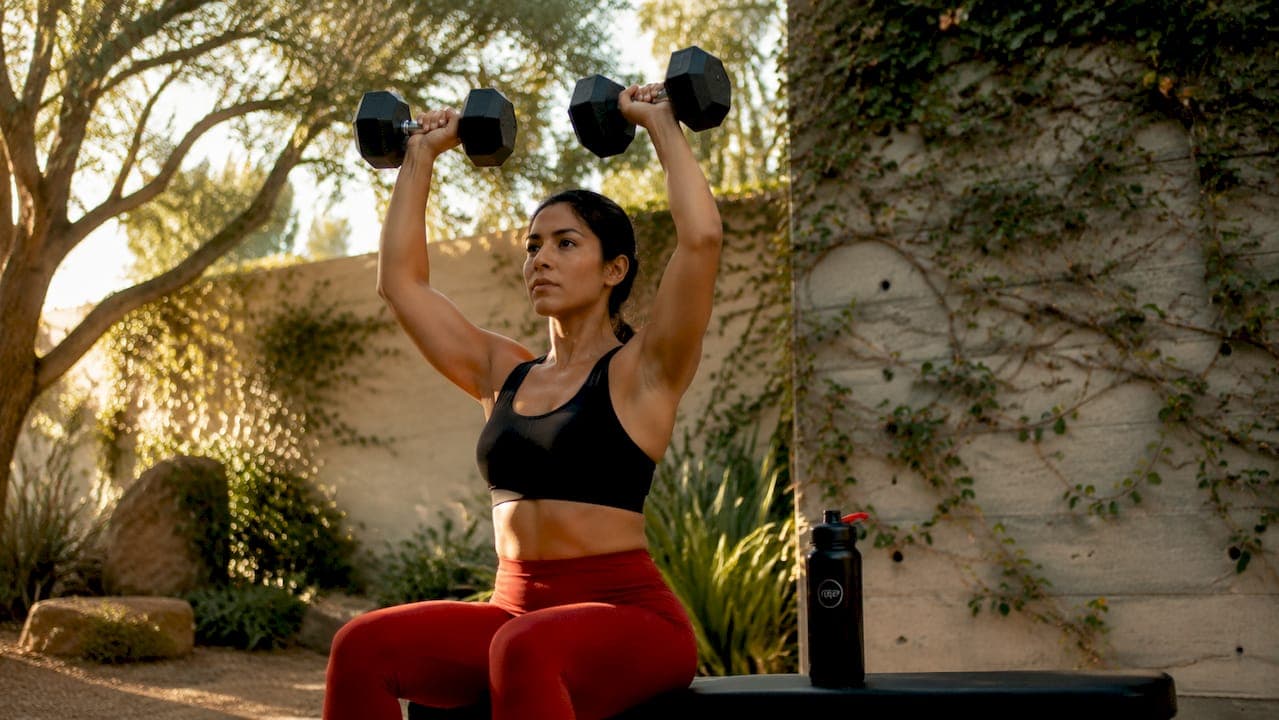
Strength training is defined as any exercise that uses resistance to build muscle strength, size, and physical function. The American College of Sports Medicine recommends that healthy adults perform resistance training at least twice weekly, targeting all major muscle groups. That recommendation is backed by data from over 30,000 participants showing significant muscle improvements with that frequency alone. Whether you are picking up a dumbbell for the first time or refining your powerlifting techniques, the science points to one clear truth: resistance training works for everyone.
What are the benefits of strength training for overall health?
Strength training does far more than build muscle. Regular resistance work improves your metabolic rate, which means your body burns more calories at rest. That effect makes muscle building workouts one of the most efficient tools for long-term fat loss and blood sugar regulation.
The physical benefits extend well beyond the gym floor:
- Muscle strength and power: Stronger muscles make everyday tasks easier, from carrying groceries to climbing stairs without fatigue.
- Bone density: Resistance training places stress on bones, which signals the body to increase bone density. This reduces fracture risk as you age.
- Balance and fall prevention: Older adults who train regularly show measurably better balance and coordination, reducing fall risk significantly.
- Cardiovascular health: Resistance training lowers resting blood pressure and improves cholesterol profiles over time.
- Mental health: Regular lifting is linked to reduced symptoms of anxiety and depression, with mood improvements appearing within weeks of starting.
The resistance training benefits apply at every fitness level. Even minimal engagement with resistance work produces measurable improvements in muscle and physical function compared to no training at all. That means you do not need to be an athlete to see real results. Starting small still moves the needle.
Pro Tip: If you are managing a health condition or recovering from injury, check with your doctor before starting any new resistance program. A short conversation can save you months of setbacks.
How to start strength training safely as a beginner
Starting right matters more than starting heavy. The most common mistake beginners make is loading too much weight before their form is ready. Poor form under heavy load is how injuries happen, and injuries are the fastest way to derail progress.
Harvard Health recommends this foundational protocol for beginners:
- Start light. Use 3–5 lb weights or body-weight exercises to learn movement patterns before adding load.
- Follow a simple set and rep structure. Three sets of 8–12 reps per exercise gives your muscles enough stimulus to adapt without overdoing it.
- Rest between sets. Take 60–90 seconds of rest between sets to let your muscles recover enough to perform the next set well.
- Train your whole body. Full body strength workouts that hit legs, back, chest, shoulders, and arms give beginners the most return per session.
- Progress gradually. Add weight or reps only when you can complete all sets with clean form. Rushing progression is the number one cause of beginner burnout.
Proper technique acquisition takes time. Beginners often need weeks or even months on mobility drills and foundational movement patterns before progressing to heavier lifts. That is not a setback. That is the process working exactly as it should.
Pro Tip: Film yourself from the side during squats and deadlifts. You will spot form issues in seconds that you would never feel in the moment.
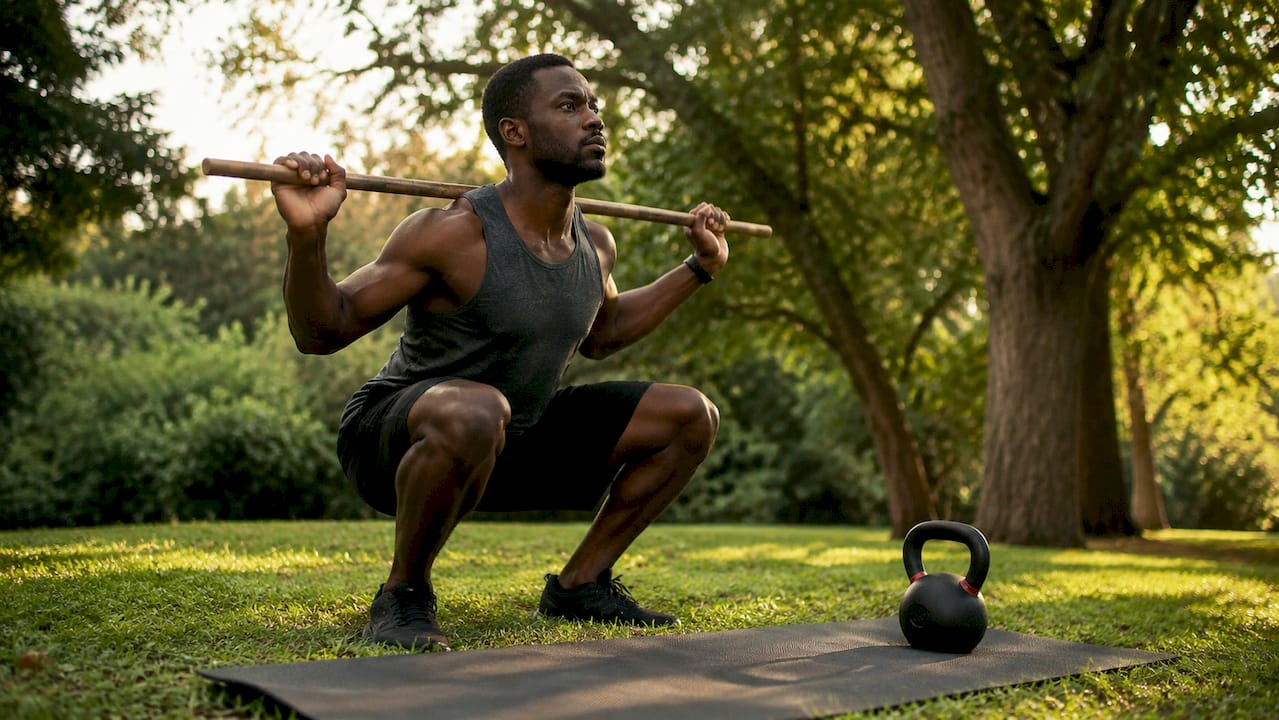
If you want a structured path from day one, the beginner strength training guide at Repphilosophy walks you through the foundational exercises with clear coaching cues.
What training methods and programs work for different fitness levels?
Not every program fits every person. The right method depends on your goal, your schedule, and how long you have been training.
Full-body workouts vs. split routines
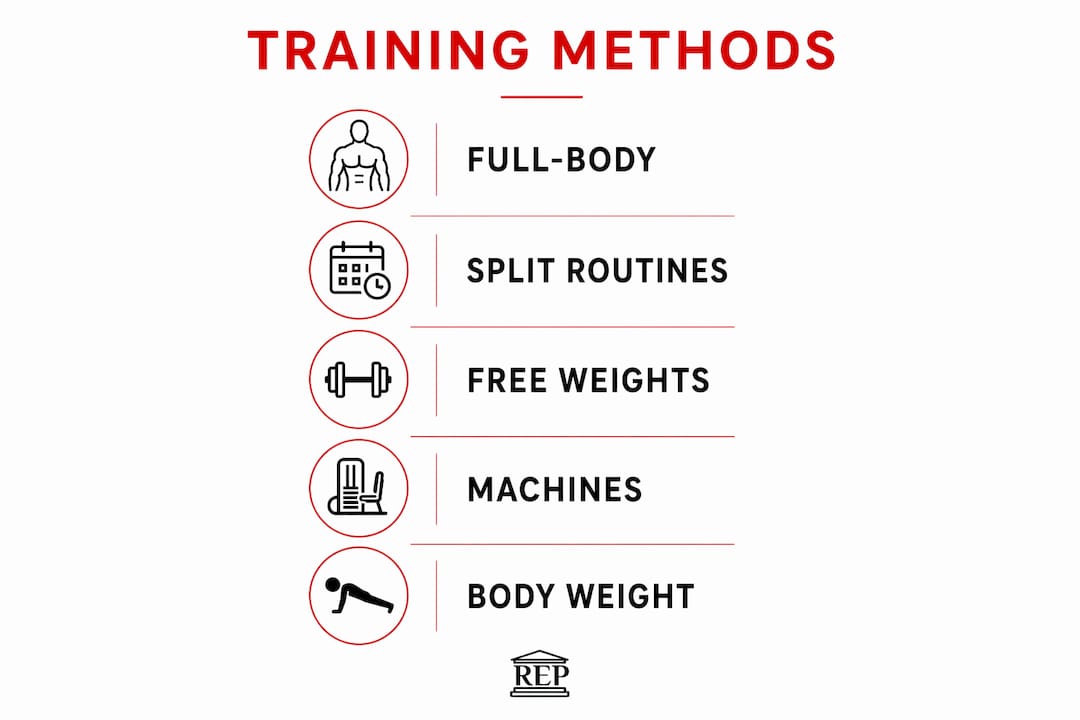
Full-body workouts are effective and time-efficient for beginners and people with limited training days. Training the whole body two or three times per week gives each muscle group enough frequency to grow without requiring daily gym visits. Split routines, where you train specific muscle groups on separate days, suit intermediate lifters who need more volume per muscle group to keep progressing.
| Training style | Best for | Weekly sessions | Key advantage |
|---|---|---|---|
| Full-body workout | Beginners, busy schedules | 2–3 | High frequency per muscle group |
| Upper/lower split | Intermediate lifters | 4 | Balanced volume and recovery |
| Push/pull/legs split | Advanced lifters | 5–6 | Maximum volume per muscle group |
| Body-weight only | All levels, no equipment | 2–4 | Accessible anywhere |
Resistance types and how to choose
Free weights, machines, resistance bands, and body weight each have a place in a well-rounded program. Home workouts with body weight and resistance bands are as effective as gym equipment for general strength training. A scientific review found no meaningful difference in muscle gains between home and gym resistance training. That finding removes the "I don't have a gym membership" excuse entirely.
Volume and intensity by goal
The 2026 ACSM guidelines specify that muscle hypertrophy requires at least 10 sets per muscle group per week. Strength gains, by contrast, benefit from heavier loads at 80% or more of your one-rep maximum. Those are two different goals with two different programming approaches. Knowing which one you are chasing shapes every decision you make in the gym.
Progressive overload is the engine behind all of it. Gradually increasing resistance, reps, or training volume over time forces your muscles to keep adapting. Without progressive overload, your body has no reason to get stronger. It is the single most important principle in any strength training program.
How to integrate strength training into your weekly routine
Consistency beats intensity every time. A moderate program you stick to for six months will always outperform an aggressive program you abandon after three weeks.
Here is how to build a routine that actually holds:
- Train at least twice weekly. The ACSM minimum of two sessions per week targeting all major muscle groups is the floor, not the ceiling. Two sessions produce real results. Three or four sessions accelerate them.
- Protect your recovery days. Muscles grow during rest, not during the workout itself. Skipping rest days does not make you tougher. It slows your progress.
- Balance your training. Pair resistance training with aerobic activity and flexibility work. Cardio supports heart health. Mobility work keeps joints healthy and reduces injury risk.
- Use progressive overload consistently. Add one small challenge each week, whether that is one extra rep, five more pounds, or one additional set. Small wins compound fast.
- Schedule your sessions like appointments. Treat your training days as non-negotiable. People who plan their workouts in advance are far more likely to complete them.
Pro Tip: If you miss a session, do not try to make it up by doubling the next one. Just pick up where you left off. Doubling up increases injury risk and rarely adds meaningful benefit.
Working muscles to momentary failure is unnecessary for most people. Research shows that 2–3 sets per exercise at moderate intensity produce optimal gains without the recovery cost of training to failure. That is good news if you have a life outside the gym.
For those managing weight alongside building strength, the personal training benefits resource at Repphilosophy covers how to structure sessions for both goals simultaneously.
Key Takeaways
Strength training works best when it combines consistent frequency, progressive overload, and adequate recovery across all major muscle groups.
| Point | Details |
|---|---|
| Train at least twice weekly | ACSM guidelines confirm two sessions per week produce significant muscle and strength improvements. |
| Start light, prioritize form | Beginners should use 3–5 lb weights and master movement patterns before increasing load. |
| Progressive overload drives results | Gradually increasing resistance or reps is the core mechanism behind all strength gains. |
| Full-body workouts suit beginners | Training the whole body two to three times per week maximizes frequency and efficiency for new lifters. |
| Recovery is part of the program | Muscles adapt during rest; skipping recovery days slows progress and raises injury risk. |
What I have learned coaching strength training at every level
The biggest mistake I see is people treating heavy weight as the goal instead of the tool. Early in my coaching career, I watched client after client rush to load the bar before their movement patterns were solid. The result was almost always the same: a nagging injury, a forced break, and a reset back to square one.
Form is not a beginner concept. It is a lifelong discipline. I still coach experienced lifters on their squat depth and hip hinge mechanics because the fundamentals never stop mattering.
Here is something most articles will not tell you: single-sided exercises are where a lot of people leave serious gains on the table. Unilateral movements like single-leg presses and single-arm rows correct the muscle imbalances that bilateral lifts quietly allow to grow. Those imbalances show up as pain, poor performance, and eventually injury if you ignore them long enough.
My honest advice is this: be patient with your progress. Muscle does not grow on your timeline. It grows on biology's timeline. What you can control is showing up consistently, moving well, and adding challenge gradually. Do those three things and the results will come. Age, starting weight, and fitness level matter far less than most people think. I have coached clients in their 60s who built more functional strength in six months than they had in decades. The body responds when you give it the right signal.
— Coach Justin
Repphilosophy coaching: built for where you are right now
Ready to put these principles into practice with a coach in your corner? Repphilosophy offers personalized training solutions for every fitness level, from complete beginners to athletes chasing performance goals.
Whether you prefer training in person at the 4S Ranch facility, joining a group class, or working from home, there is a format that fits your life. The virtual coaching memberships give you access to structured strength programs and expert guidance without the commute. For a full look at coaching packages, supplements, and on-demand workouts, visit the Repphilosophy shop and find the option that matches your goals and budget.
FAQ
What is strength training, exactly?
Strength training is exercise that uses resistance to build muscle strength, size, and physical function. Resistance can come from free weights, machines, bands, or body weight.
How many days per week should I strength train?
The ACSM recommends at least two sessions per week targeting all major muscle groups. Two days produces real results; three to four days accelerates progress for most people.
Can beginners build muscle with body weight alone?
Yes. Research shows no meaningful difference in muscle gains between body-weight training and gym equipment for general strength development. Consistency and progressive overload matter more than the tool.
How long before I see results from resistance training?
Most people notice strength improvements within two to four weeks of starting a consistent program. Visible muscle changes typically appear after six to eight weeks of regular training.
Do I need to train to failure to build muscle?
No. Research shows that 2–3 sets per exercise at moderate intensity produce optimal gains for most people. Training to failure frequently can impair recovery without adding meaningful muscle growth.