
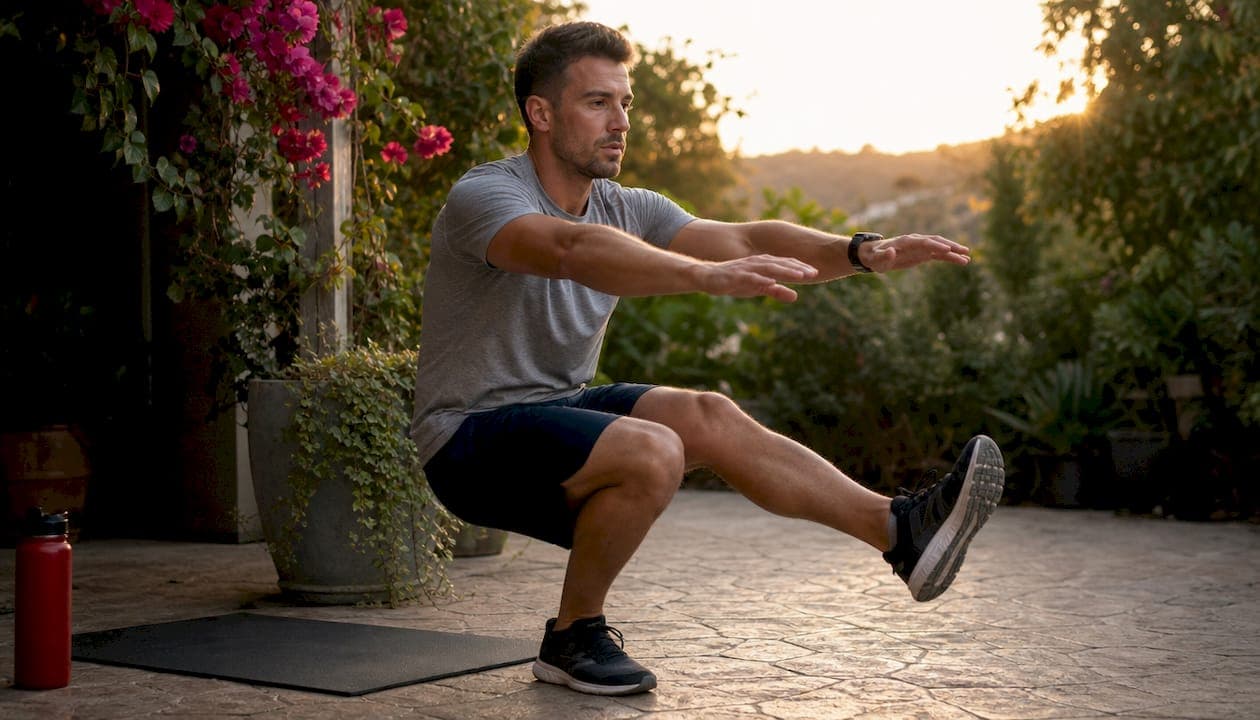
Single leg strength is defined as the ability of one leg to independently stabilize the body and generate force through a full range of motion. This capability sits at the core of athletic performance. Running, cutting, jumping, and landing all happen on one leg at a time. Athletes who neglect unilateral strength training leave real performance gains on the table and expose themselves to preventable injuries. This guide walks you through the foundational balance work, the best exercises, smart programming, and how to troubleshoot the obstacles that slow most athletes down.
What is single leg strength and why does it matter?
Single leg strength, also called unilateral lower body strength, is the foundation of functional movement. Stronger hip stabilizers maintain proper knee alignment during single-leg activities, which directly reduces compensations that cause inefficient movement and injury risk. That means every step you take during a run, every lateral cut on a court, and every landing from a jump relies on this quality.
Runners benefit especially from this type of training. Running involves repetitive single-leg support phases that demand both strength and stability from each leg independently. Bilateral exercises like squats and leg presses build raw strength, but they allow the stronger leg to compensate for the weaker one. Unilateral training forces each leg to carry its own load, exposing and correcting those imbalances.
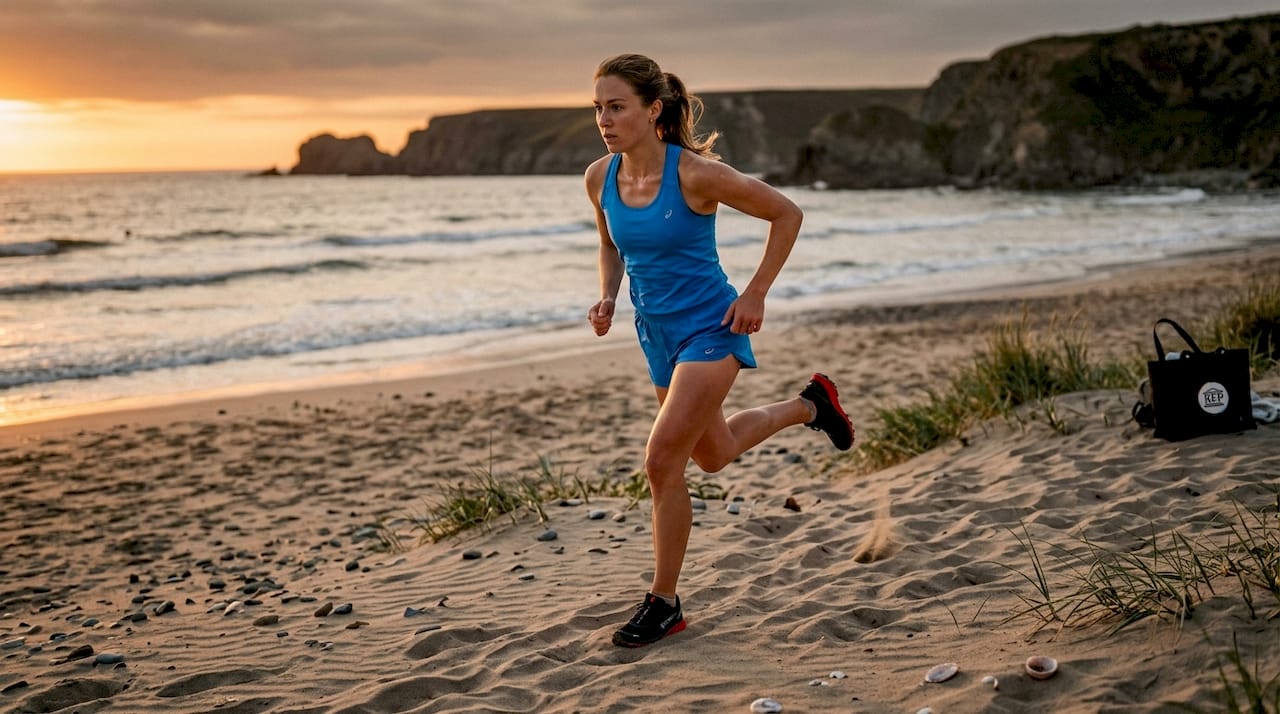
The functional payoff goes beyond sport. Unilateral leg training builds usable stability and coordination that transfers to everyday movement, not just maximal load scenarios. Whether you are an athlete chasing a personal record or someone who wants to move well for decades, building strength on one leg at a time is one of the most direct investments you can make.
What foundational balance work do you need first?
Balance is the prerequisite for everything else in unilateral training. Jumping straight into Bulgarian split squats without a stable base is like building a house on sand. Your muscles and nervous system need to learn how to manage your body weight on one leg before you add external load.
The single-leg stand is the entry point. Holding balance for 30–60 seconds is considered an effective foundation for progressing to more complex movements. That benchmark tells your coach and your body that your ankle, hip, and proprioceptive systems are ready for the next challenge.
Here is how to build your balance foundation progressively:
- Eyes open, flat surface: Stand on one foot with a soft knee bend. Hold for 30 seconds per side. This is your starting point.
- Eyes closed: Removing vision forces your ankle and hip stabilizers to work harder. This is a significant step up in difficulty.
- Unstable surface (foam pad): Adds proprioceptive demand. Use this for balance goals, not as a primary strength tool.
- Single-leg stand with arm reach: Reach forward, to the side, and diagonally while balancing. This mimics real movement demands.
- Progress marker: A balance hold exceeding 60 seconds with minimal deviation signals you are ready for loaded unilateral exercises.
The muscles doing the most work here are the gluteus medius, tibialis anterior, and the deep ankle stabilizers. These are the same muscles that protect your knee during a landing or a lateral cut.
Pro Tip: Film yourself from the front during a single-leg stand. If your hip drops on the non-standing side, your gluteus medius is the weak link. Address that before adding weight to any unilateral exercise.
Which single leg exercises build strength most effectively?
Once your balance foundation is solid, you can move into loaded unilateral work. These four exercises cover the full spectrum of unilateral strength development and are ranked by their overall training value.
-
Bulgarian split squat. Place your rear foot on a bench at knee height and lower your front knee toward the floor. Keep your torso upright and your front knee tracking over your second toe. This exercise loads the quad, glute, and hip flexor of the working leg under a deep range of motion. Start with bodyweight, then add dumbbells, and eventually a barbell.
-
Single-leg deadlift. Hinge at the hip on one leg while the other extends behind you for counterbalance. The goal is a flat back and a hip crease that drives the movement, not a rounded spine. This exercise targets the hamstring, glute, and lower back of the working leg while demanding serious balance. Perform it on a stable surface for strength goals.
-
Step-up. Use a box at knee height. Drive through the heel of the working leg to stand fully upright on the box, then lower under control. Step-ups are underrated because they closely mimic the mechanics of running and stair climbing. Add a knee drive at the top to increase the balance and hip flexor demand.
-
Cossack squat. Shift your weight to one side while the other leg extends straight along the floor. This builds lateral hip strength and ankle mobility simultaneously. It is a bodyweight exercise that challenges athletes who can squat heavy bilaterally, because the lateral demand exposes mobility gaps most traditional training misses.
| Exercise | Primary muscles | Best for |
|---|---|---|
| Bulgarian split squat | Quad, glute, hip flexor | Strength and hypertrophy |
| Single-leg deadlift | Hamstring, glute, lower back | Posterior chain and balance |
| Step-up | Quad, glute | Sport-specific power |
| Cossack squat | Hip adductor, glute, ankle | Mobility and lateral strength |
Common form mistakes cut across all four movements. Collapsing inward at the knee, rushing progression, and neglecting core engagement are the top errors. Fix the knee cave first. It signals weak hip abductors and puts the joint under shear stress it was not designed to handle.
Pro Tip: For the single-leg deadlift, hold a light dumbbell in the opposite hand from the working leg. This contralateral load creates a natural counterbalance that makes the hip hinge pattern click much faster for most athletes.
How do you fit unilateral training into your weekly routine?
Programming unilateral work does not require rebuilding your entire schedule. Fitness experts recommend integrating single-leg exercises at least once per week to improve muscle balance and performance. That is a floor, not a ceiling. Most athletes benefit from two sessions per week.
Here is a practical framework for fitting it in:
- Pair unilateral with bilateral work. Do your barbell squats first, then follow with Bulgarian split squats. The bilateral movement primes the nervous system, and the unilateral work exposes and corrects any imbalances that show up under fatigue.
- Warm up with balance work. A two-minute single-leg stand circuit before your session activates the stabilizers you need for every exercise that follows.
- Adjust volume by goal. For strength, use 3–5 sets of 4–6 reps per side with heavy load. For endurance and stability, use 2–3 sets of 10–15 reps with moderate load.
- Cool down with mobility. Cossack squats and hip flexor stretches after a session reduce soreness and maintain the range of motion you need for the next workout.
A sample weekly structure for an athlete training four days per week might look like this: Monday covers lower body bilateral strength, Tuesday covers upper body, Thursday covers unilateral lower body as the primary focus, and Saturday combines plyometrics with single-leg balance work. You can find more on structuring your full program in this complete strength training guide from Repphilosophy.
| Training goal | Frequency | Sets x reps per side | Load |
|---|---|---|---|
| Strength | 2x per week | 3–5 x 4–6 | Heavy |
| Hypertrophy | 2x per week | 3–4 x 8–12 | Moderate to heavy |
| Stability and endurance | 1–2x per week | 2–3 x 12–15 | Light to moderate |
What are the common challenges in single leg training?
Every athlete hits friction points in unilateral training. Knowing what to expect keeps you from misreading a normal adaptation challenge as a reason to quit.
- Balance breaks down under load. This is normal early on. Reduce the weight and focus on the quality of each rep. Balance improves faster than strength, so you will not be stuck here long.
- One side is noticeably weaker. Always train the weaker side first, and match the reps and load on the stronger side. Never let the stronger leg set the standard.
- Knee pain during Bulgarian split squats. Check your front foot position. If your knee shoots past your toes aggressively, move your front foot forward a few inches. Also check for knee cave, which signals hip weakness.
- Plateau in balance or strength. Add a new stimulus. Change the tempo, add a pause at the bottom, or shift to a more demanding variation.
One specific issue deserves extra attention: unstable surfaces. Performing single-leg deadlifts on unstable surfaces significantly increases ankle joint sway while reducing hip and knee range of motion. That reduced range of motion can compromise the mechanical loading needed for strength adaptation. Unstable surfaces have a place in proprioceptive training, but they are not the right tool for building maximal strength.
Unstable surface training increases neuromuscular demand but reduces the joint mobility and mechanical load necessary for maximal strength gains. Reserve it for proprioceptive goals, not primary strength development. Your strength sessions belong on solid ground.
This connects to a broader point about injury prevention. Yoga-based rehabilitation work, for example, can support single-leg recovery and complement your unilateral training when joint stress is high. Knowing when to back off and when to push is the skill that separates athletes who stay healthy from those who cycle through injuries.
Key Takeaways
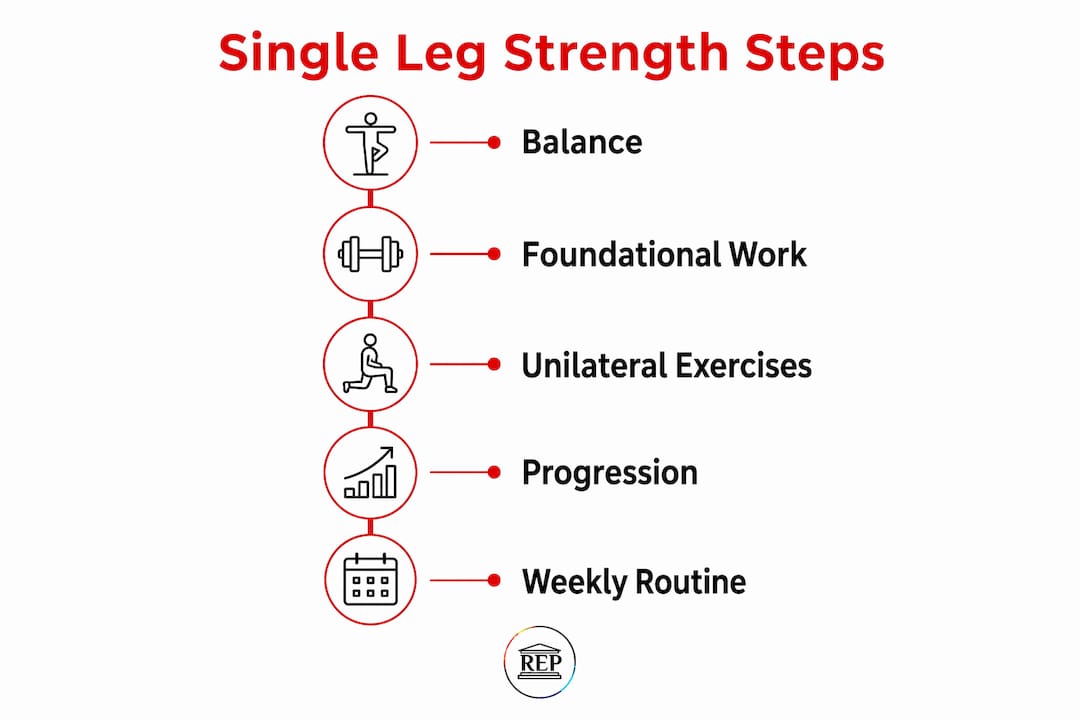
Single leg strength is built progressively, starting with balance, advancing to loaded unilateral exercises, and supported by smart weekly programming.
| Point | Details |
|---|---|
| Balance comes first | Hold a single-leg stand for 30–60 seconds before adding any external load. |
| Four exercises cover everything | Bulgarian split squats, single-leg deadlifts, step-ups, and Cossack squats address the full unilateral spectrum. |
| Train each side independently | Always start with the weaker leg and match volume on the stronger side. |
| Stable surfaces for strength | Reserve unstable surfaces for proprioceptive work, not primary strength development. |
| Frequency matters | Train unilateral lower body at least once per week, with two sessions delivering the best results. |
What I have learned coaching single leg training
I have coached athletes across a wide range of sports, and the pattern I see most often is this: athletes who struggle with unilateral training are not weak. They are unstable. The strength is there. The nervous system just has not learned to express it on one leg yet. That distinction changes everything about how you program and how you coach.
The single-leg stand test is the most underused diagnostic tool in strength training. I put every new athlete through it in the first session. If they cannot hold 30 seconds without significant hip drop or ankle wobble, we do not touch a barbell for unilateral work yet. That is not a punishment. That is the fastest path to real progress.
I also want to push back on the idea that unilateral training is only for runners or rehabilitation clients. Every sport I have worked with, from youth soccer to adult recreational basketball, has athletes who move better and get hurt less when they build this quality deliberately. If you are serious about sport-specific performance, single-leg work is not optional. It is the foundation.
The trend I am most excited about right now is pairing unilateral strength with plyometric work. Once an athlete can handle a heavy Bulgarian split squat, adding a plyometric training component turns that strength into explosive power. That combination is where real athletic performance lives.
— Coach Justin
Ready to build your unilateral strength with Repphilosophy?
Repphilosophy offers personal training in 4S Ranch and virtual coaching options that put targeted unilateral programming in your hands, wherever you train. Whether you want a personal training trial session to work through your form in person, or prefer to follow structured workouts on your own schedule, there is a program built for your goals.
The on-demand exercise library includes focused single-leg exercise demonstrations you can reference before and after every session. Group classes, buddy training memberships, and youth sports performance programs are also available for athletes at every level. Your next step is one session away.
FAQ
What is single leg strength?
Single leg strength is the ability of one leg to independently stabilize the body and generate force through movement. It is the foundation of running, jumping, cutting, and landing mechanics.
How long should I hold a single-leg stand before progressing?
Holding a single-leg stand for 30–60 seconds with minimal deviation is the standard benchmark before advancing to loaded unilateral exercises.
Are unstable surfaces good for building single leg strength?
Unstable surfaces increase muscle activation but reduce hip and knee range of motion, which limits strength adaptation. Use them for proprioceptive training, not as your primary strength tool.
How often should I train single leg exercises?
Train unilateral lower body work at least once per week. Two sessions per week produces better results for athletes focused on closing strength imbalances and improving performance.
What is the best single leg exercise for beginners?
The step-up is the best starting point. It mirrors natural movement patterns, requires no equipment beyond a sturdy box, and teaches the hip drive mechanics that carry over to every other unilateral exercise.