
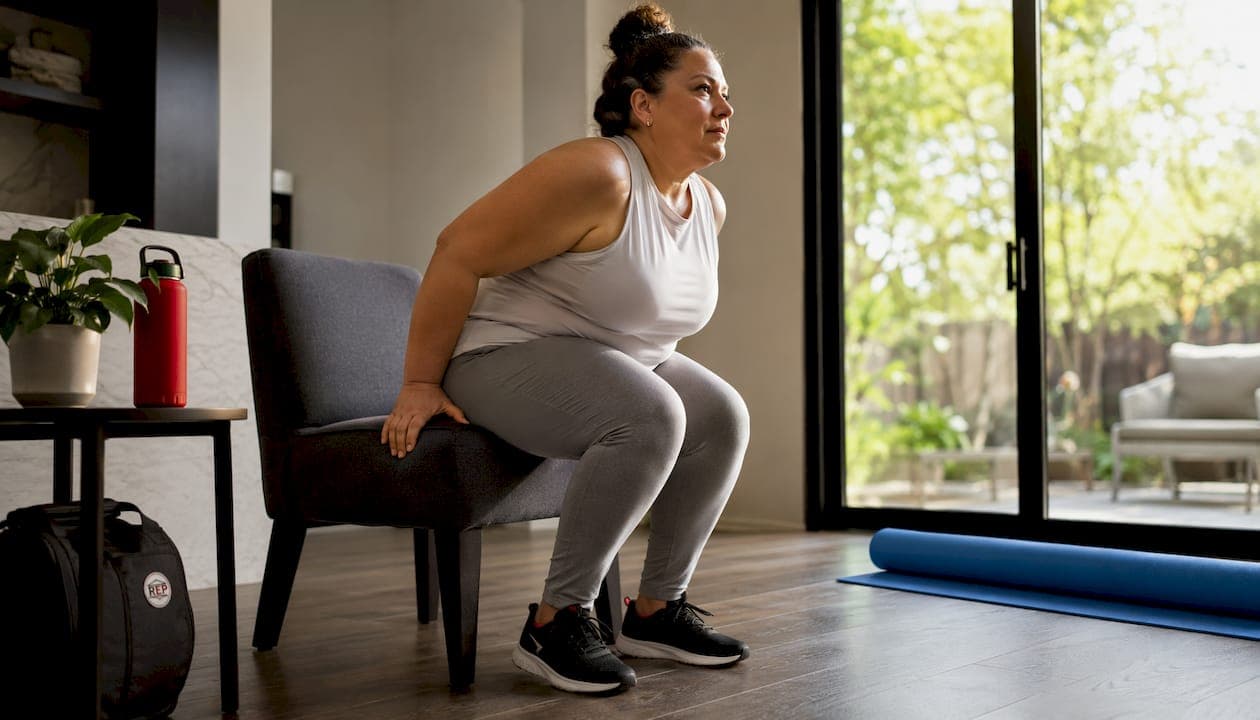
Functional fitness is movement training that mirrors everyday tasks, and yes, it can be tailored safely and effectively for people who are overweight. According to the Cleveland Clinic, functional strength training focuses on multi-joint, multi-muscle patterns like standing up, bending, pushing, pulling, and carrying — the exact movements that make daily life easier and more independent. If you've been wondering what functional fitness for overweight bodies actually looks like in practice, you're in the right place.
Here's why it matters for you specifically:
- Mobility gains can appear within several weeks with low-complexity, accessible exercises, according to a PMC systematic review on exercise for people with severe obesity.
- Daily independence improves because you're training the exact movements you use every single day, from getting off the couch to carrying groceries.
- Muscle preservation supports your resting metabolic rate, which matters enormously for long-term weight management.
Read on for safe regressions, a ready-to-use 20–30 minute workout, and a clear plan for getting started without risking injury.
Table of Contents
- What functional fitness actually means for your daily life
- Why functional fitness helps people who are overweight
- Functional exercises with safe regressions and progressions
- How to start safely: screening, warm-up, and progression rules
- A safe 20–30 minute beginner functional workout
- Can functional fitness help you lose weight?
- When to work with a trainer and what to ask them
- How Repphilosophy approaches functional training for overweight clients
- Key Takeaways
- Why I always start with function, not fitness
- Ready to move better, starting this week?
- Further reading and authoritative sources
What functional fitness actually means for your daily life
Functional training trains your body as a whole unit rather than isolating single muscles. Think of it as practicing the movements your body already performs every day, but with intention and progressive challenge. The core movement patterns are:
- Squat / sit-to-stand: Getting up from a chair, out of a car, off the toilet
- Hinge: Picking something up from the floor, loading the dishwasher
- Lunge / step: Climbing stairs, stepping over a curb
- Push: Opening a heavy door, getting up from the floor
- Pull: Opening a drawer, pulling a seatbelt across
- Carry: Groceries, laundry baskets, a bag of dog food
- Rotate: Looking over your shoulder while driving, reaching across your body
- Gait / walking: Every step you take
Take the sit-to-stand as a concrete example. When you rise from a chair, your glutes, quads, core, and lower back all fire in sequence. Training that exact pattern in the gym means your body gets better at it everywhere else. Harvard Health describes this as the kinetic chain at work: when all parts function well together, movement flows smoothly. When one link is weak or stiff, the whole chain compensates, and that's often where pain and injury begin.
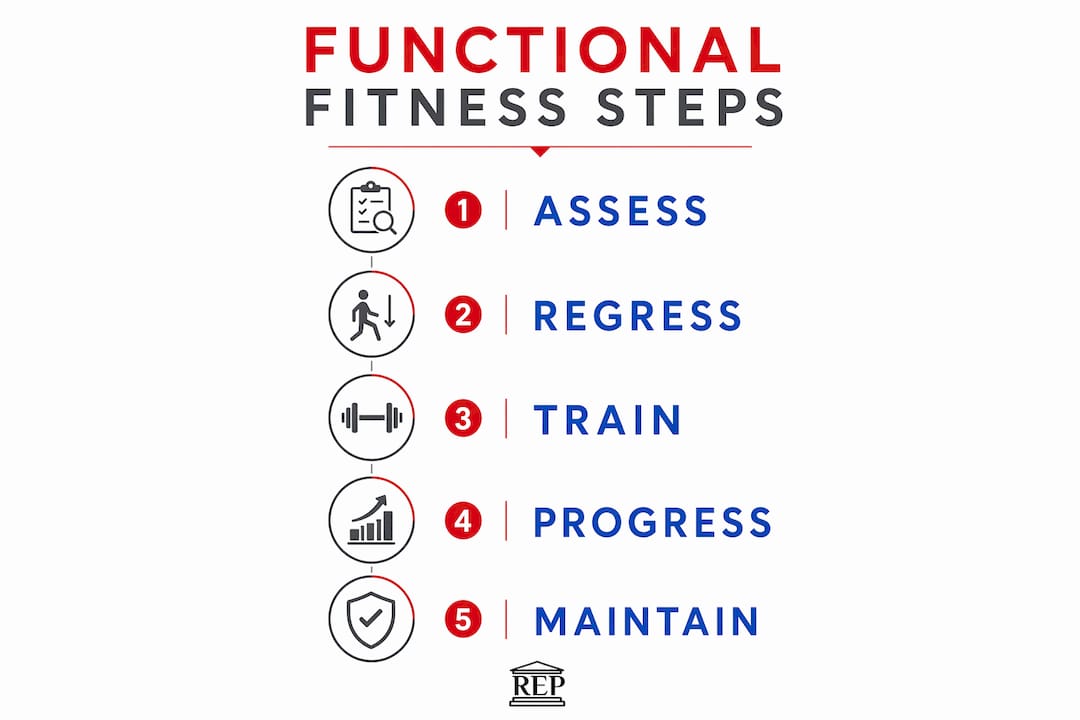
Why functional fitness helps people who are overweight
The benefits go well beyond burning calories during a session. Functional training improves joint mechanics, which reduces the load stress that extra body weight places on your knees, hips, and ankles. Better neuromuscular control means your body learns to move more efficiently, so everyday tasks feel less exhausting. And because you're building lean muscle, you're also supporting your resting metabolic rate, the calories your body burns even at rest.
Here's a realistic timeline of what you might notice:
- Early weeks: Improved mobility and reduced stiffness, especially in the hips and lower back. The PMC review found these changes can appear within several weeks of starting a low-complexity program.
- Weeks 5–8: Noticeable gains in endurance during daily tasks (stairs feel easier, standing longer is less tiring) and early strength improvements.
- Weeks 9–12: Greater confidence in movement, improved balance, and a measurable increase in the number of reps or resistance you can handle.
Balance and confidence tend to build together. When your body feels more capable, you move more throughout the day, which compounds the benefit over time.
Pro Tip: Exercise is a genuine support for weight loss, but nutrition is the primary driver. Functional training builds the physical foundation; what you eat determines how much body fat you lose. Expect both to work together, not one to replace the other.
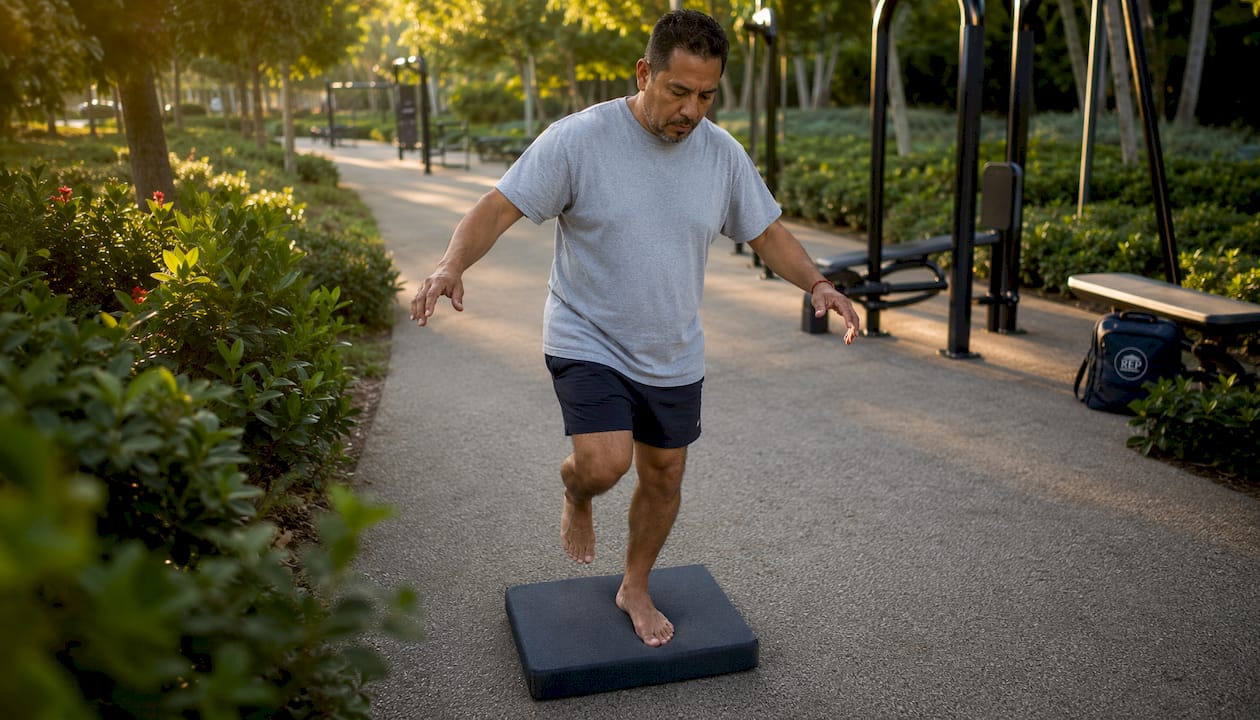
Functional exercises with safe regressions and progressions
Functional fitness is scalable for any starting point. Below are 10 core movements with a cue, a regression to start safely, and a progression to aim for as you get stronger. For strength training for overweight beginners, these are the movements that deliver the most real-world payoff.
- Sit-to-stand: Hinge at the hips, lean forward slightly, then drive through your heels to stand tall. Regression: Use a higher chair or add a cushion to reduce range of motion. Progression: Lower the chair height gradually, then add a pause at the bottom.
- Box / assisted squat: Stand in front of a sturdy box or chair, lower until you lightly touch it, then stand. Regression: Hold a doorframe or TRX strap for balance. Progression: Remove the box and add a resistance band above the knees.
- Hip hinge / hip bump: Stand a foot from a wall, push your hips back to touch it, keeping a neutral spine. Regression: Use the wall as a tactile cue throughout. Progression: Add a light kettlebell or dumbbell held at the hips.
- Step-up: Step onto a low, stable surface (4–6 inches) and drive through the heel to stand. Regression: Use a single step with a handrail. Progression: Increase step height or add light dumbbells.
- Glute bridge: Lie on your back, feet flat, drive hips toward the ceiling, squeeze glutes at the top. Regression: Reduce range of motion and hold for 2 seconds. Progression: Single-leg bridge or add a resistance band above the knees.
- Supported lunge: Hold a chair or wall, step one foot back, lower the back knee toward the floor. Regression: Reduce depth significantly; just a small step back. Progression: Remove support, then add a light dumbbell in each hand.
- Farmer carry: Hold a light weight in each hand, stand tall, walk 20 steps. Regression: Use water bottles or no weight at all; focus on posture. Progression: Increase weight or distance.
- Elevated push: Place hands on a wall or a sturdy elevated surface, lower your chest toward it, push back. Regression: Use a higher surface (wall). Progression: Lower the surface height (counter, then bench).
- Banded row: Anchor a resistance band at chest height, hold both ends, pull elbows back. Regression: Lighter band, seated on a chair. Progression: Heavier band, standing with a slight hip hinge.
- Plank regression: Place forearms on a bench or elevated surface, hold a straight line from head to heels. Regression: Hands on wall, standing plank. Progression: Lower the surface, then move to a floor plank.
Pain red flags to stop immediately: sharp or shooting joint pain, new swelling in a joint, dizziness, chest tightness, or numbness. Normal discomfort includes muscle burn, mild breathlessness, and general fatigue. If you're unsure, stop and check with a clinician before continuing.
Pro Tip: Exhale on the effort (the hardest part of the movement) and inhale on the return. For overweight bodies specifically, brace your core gently before every rep by pulling your belly button slightly inward, and keep a neutral spine — avoid arching your lower back or rounding your upper back. These two cues alone reduce injury risk significantly.
How to start safely: screening, warm-up, and progression rules
Getting the start right matters more than getting started fast. Work through these steps before your first session.
- Get medical clearance if any of these apply: cardiac symptoms (chest pain, shortness of breath at rest), uncontrolled type 2 diabetes, severe joint instability, recent surgery, or a physician-diagnosed condition affecting exercise tolerance. A quick conversation with your doctor is all it takes.
- Do a simple readiness check: Can you stand from a chair without using your hands? Can you walk for 5 minutes without significant pain? If yes, you're ready to begin with regressions. If no, start with a clinician-supervised program.
- Warm up for 5–8 minutes before every session. A good sequence: ankle circles (10 each direction), hip circles (10 each side), bodyweight sit-to-stand x 8, arm swings x 10, and a 3-minute slow walk or march in place. This activates the joints and muscles you'll use without taxing your system.
- Start with 2 sessions per week and add a third session in week 3 or 4 once you're recovering well. Most beginners do well at 2–4 sessions per week. Allow at least one full rest day between sessions.
- Follow the 2-for-2 progression rule: when you can complete 2 extra reps beyond your target for 2 sessions in a row, increase the challenge slightly, either one more rep, a slightly heavier band, a deeper range of motion, or a shorter rest period. Never increase more than one variable at a time.
- Use RPE (Rate of Perceived Exertion) as your guide. Aim for a 5–6 out of 10 during working sets: you should be able to speak in short sentences but not hold a full conversation. If you're at a 3, add challenge. If you're at an 8 or above, scale back.
For a deeper look at how to build on these principles over time, progressive fitness programming explains micro-progression strategies that keep you moving forward without plateauing.
A safe 20–30 minute beginner functional workout
This circuit works with minimal equipment. Pick the version that fits your joints and access.
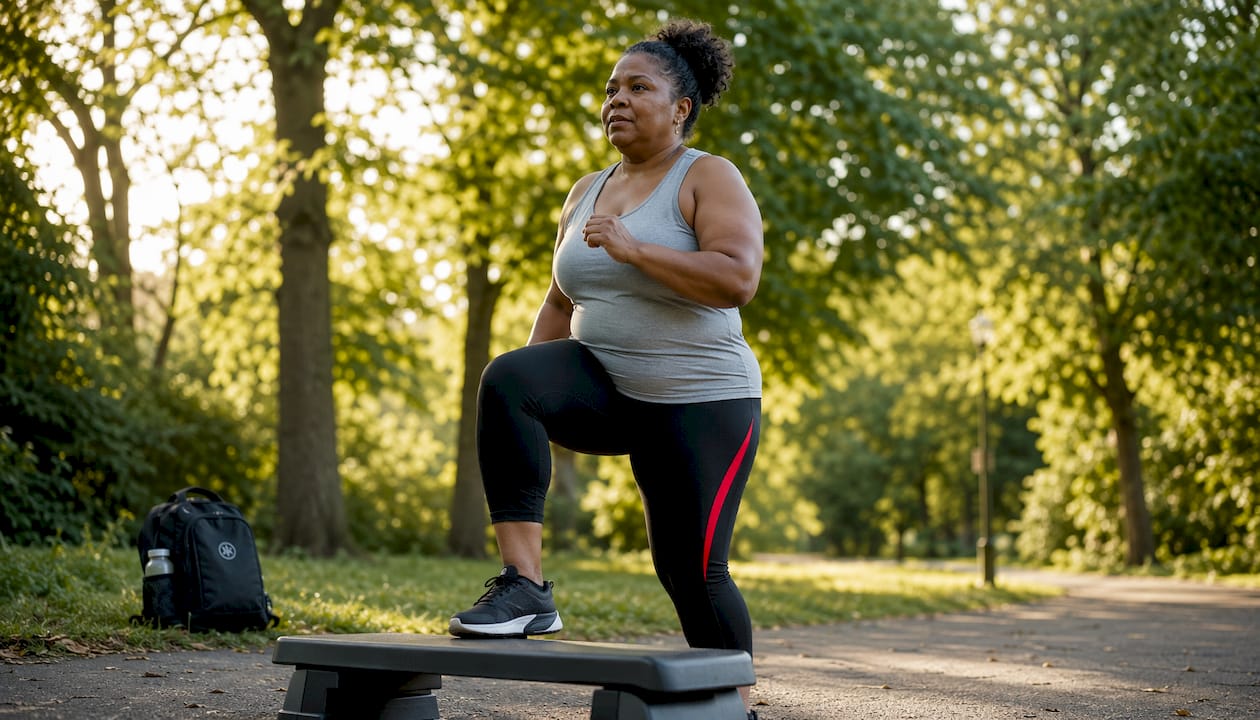
Warm-up (5 minutes): Ankle circles, hip circles, 8 sit-to-stands, arm swings, 3-minute slow walk or march.
Circuit (2 rounds, 60 seconds rest between rounds):
- Sit-to-stand x 10
- Hip hinge / hip bump x 10
- Elevated push x 8
- Banded row x 10
- Step-up x 8 each leg
- Glute bridge x 12
- Farmer carry x 20 steps
Cool-down (5 minutes): Seated hip stretch (30 seconds each side), chest opener (arms wide, gentle hold), slow walk or march.
How hard should it feel? Aim for RPE 5–6. If round two feels significantly harder than round one, take a longer rest or reduce reps by two. Splitting a session into halves is a smart early strategy if a full circuit feels daunting.
Which format works best for you?
| Format | Joint stress | Accessibility | Typical intensity | Best for |
|---|---|---|---|---|
| Chair-based | Very low | High (home-friendly) | Light to moderate | Limited mobility, early beginners |
| Resistance band | Low to moderate | High (minimal equipment) | Moderate | Home training, travel |
| Pool-based | Very low | Moderate (pool access needed) | Moderate to vigorous | Joint pain, high body mass |
Water-based exercise reduces joint stress while still providing meaningful resistance, making it one of the most practical long-term options for people with joint pain or high body mass. Functional fitness requires minimal equipment and still produces real improvements in functional capacity and quality of life, so don't let a lack of a gym membership stop you.
Can functional fitness help you lose weight?
Honestly, yes, but with an important caveat. Functional training contributes to weight loss through three mechanisms: calories burned during activity, increased lean muscle mass (which raises your resting calorie burn), and improved NEAT (non-exercise activity thermogenesis), meaning you simply move more throughout the day as your body gets stronger and more capable.
Research on high-intensity functional training shows some body-composition benefits, but the evidence comparing it to traditional aerobic-plus-resistance training is mixed. What that means practically: the style of training matters less than the consistency of training. A program you enjoy and stick with will always outperform a theoretically superior one you abandon.
Here's how to pair functional training with nutrition for the best results:
- Track your daily steps as a proxy for NEAT. Gradually increasing your step count is one of the most underrated weight-management tools available.
- Prioritize protein at each meal to support muscle preservation during a calorie deficit. Muscle is what keeps your metabolism working in your favor.
- Use small daily behavior targets rather than sweeping overhauls. Adding one extra serving of vegetables or walking an extra 10 minutes is more sustainable than a complete diet reset.
- Combine progressive resistance with cardio rather than choosing one. Functional training naturally blends both, which is part of what makes it so practical for this goal.
Functional training supports weight management by building muscle and teaching movement patterns that increase day-to-day physical activity. Diet remains the primary driver of fat loss, but training is what preserves the muscle underneath.
When to work with a trainer and what to ask them
Some situations genuinely benefit from professional guidance. If you have a prior injury, chronic joint pain, limited mobility, or you simply want accountability and a plan that adapts to you in real time, a qualified trainer is worth the investment. Personal training benefits for overweight adults go well beyond exercise instruction — a good coach adjusts your program as you progress and keeps you safe when you're unsure.
Here's a checklist of questions to ask before hiring anyone:
- Do you have experience programming for overweight or obese clients specifically?
- Can you show me an example of a scaled or regressed workout you've used with a beginner?
- How do you handle a client who reports joint pain mid-session?
- What does your progress-tracking process look like?
- Do you collaborate with physical therapists or physicians when a client has a medical condition?
Credentials that signal competence: NASM (National Academy of Sports Medicine), ACSM (American College of Sports Medicine), NSCA (National Strength and Conditioning Association), or certified adaptive fitness credentials. Experience working with clinical populations or in therapeutic settings is a strong bonus.
Red flags: one-size-fits-all programming with no modifications, pressure to attempt advanced movements before you've mastered the basics, or dismissiveness about pain and discomfort. A good trainer meets you exactly where you are.
How Repphilosophy approaches functional training for overweight clients
At Repphilosophy, based in 4S Ranch, San Diego, the approach to functional training starts with one principle: meet the client where they are, not where a generic program assumes they should be. Coach Justin works with overweight and deconditioned clients using individualized programming that draws on the exact regressions and progressions outlined in this guide.
Every new client begins with a movement screen. That screen identifies which patterns need the most attention, which regressions are appropriate, and where mobility or stability limitations exist. From there, Coach Justin builds a short, manageable plan and runs through a practice session so you leave the first appointment knowing exactly what to do and how it should feel.
Repphilosophy offers one-on-one in-person training, small group and buddy training memberships, group fitness classes, and a virtual exercise library with on-demand video instruction for those who prefer to train at home. The certified trainer approach here prioritizes safety, progressive challenge, and real-world function over performance metrics that don't serve beginners. Whether you're working on getting out of a chair more easily or building toward a consistent weekly training habit, the programming adapts to your pace.
Key Takeaways
Functional fitness for overweight adults works best when it starts with regressions, builds progressively, and pairs consistent movement with smart nutrition.
| Point | Details |
|---|---|
| Start with regressions | Use chair height, wall support, or elevated surfaces to make every movement safe and achievable from day one. |
| Mobility gains come early | Research shows improvements in mobility and balance can appear within 4 weeks of starting a low-complexity program. |
| Nutrition drives fat loss | Functional training supports weight management through muscle and NEAT, but diet remains the primary driver of fat loss. |
| Progress by small increments | Apply the 2-for-2 rule: add one variable (reps, range, resistance) only after completing 2 extra reps for 2 sessions in a row. |
| Repphilosophy offers tailored support | Coach Justin at Repphilosophy provides movement screens, individualized regressions, and in-person or virtual programming for overweight clients in San Diego. |
Why I always start with function, not fitness
Most people come to me thinking they need to "get fit enough" before they can start training. That belief is one of the most common barriers I see, and it's completely backwards. You don't earn the right to move well by losing weight first. You move well, and everything else follows from there.
What I've seen consistently with overweight clients is that the early wins aren't about the scale. They're about the stairs getting easier. About standing at a family event for two hours without your back screaming at you. About getting up from the floor without needing to grab something. Those wins are real, they're measurable, and they happen faster than most people expect when the program is built around actual human movement.
The barrier isn't your body. It's usually a program that wasn't designed for you. Functional fitness, done with proper regressions and honest progression, is one of the most inclusive training approaches available. Start where you are. Celebrate what your body can do today. Build from there.
Pro Tip: Habit stacking works. Attach your new workout to something you already do every day, like doing 10 sit-to-stands right after your morning coffee. Small, consistent wins compound into real change over weeks and months.
Ready to move better, starting this week?
Repphilosophy is the hands-on alternative to generic gym programs for overweight adults in 4S Ranch and the greater San Diego area. The difference is straightforward: every session is built around your movement patterns, your limitations, and your pace, not a template designed for someone else.
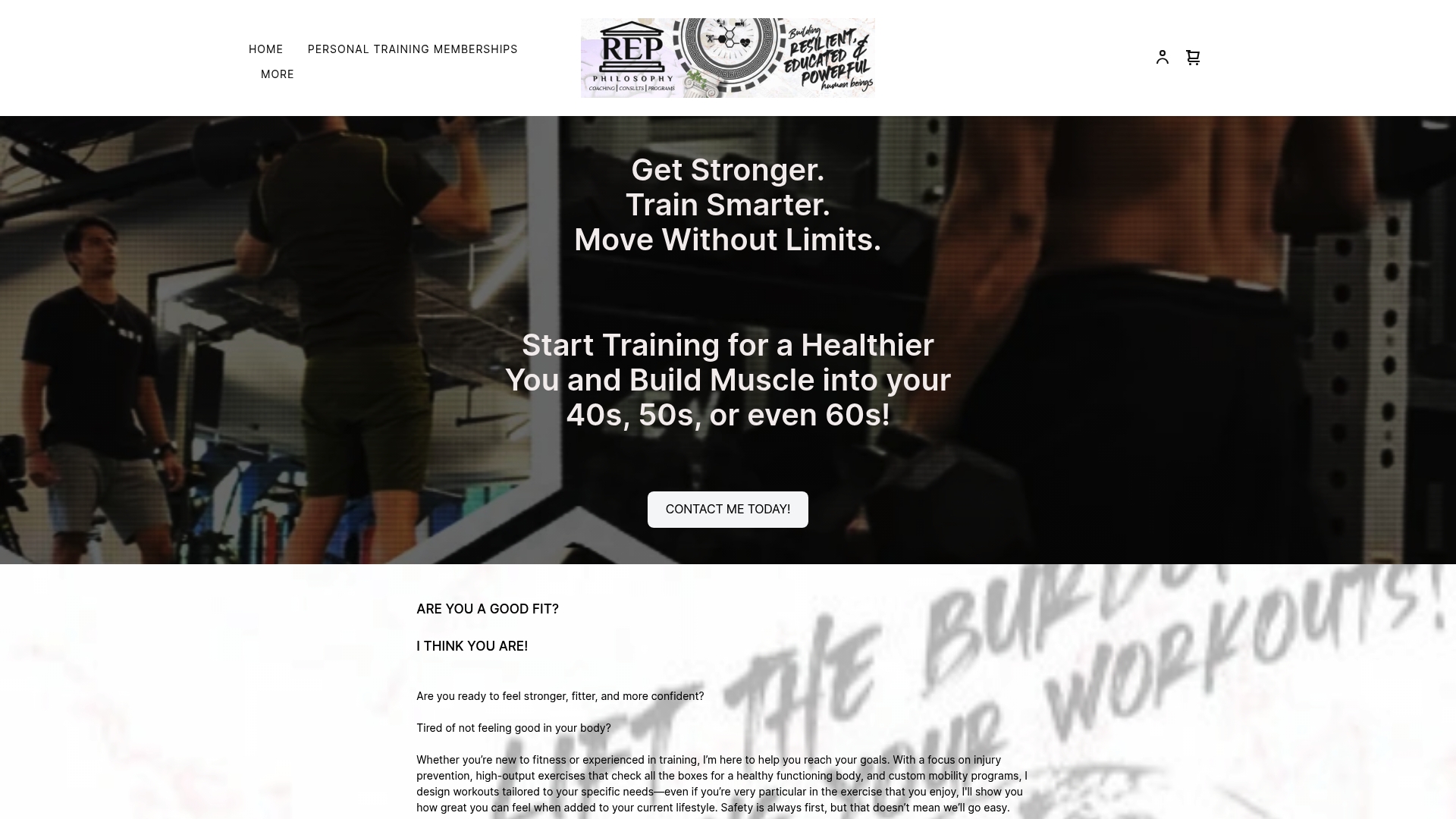
If you're ready to try it, a trial training session starts with a movement screen, a set of individualized regressions, and a short practice workout so you know exactly what to expect. Prefer to start at home? The virtual exercise library gives you on-demand video instruction you can follow at your own pace. Book your first session or explore the full range of services at Repphilosophy and take the first real step toward moving better every day.
This article is general fitness information, not medical advice. Consult your physician or a qualified healthcare professional before starting any new exercise program, especially if you have a diagnosed health condition.
Further reading and authoritative sources
These sources offer clinical guidance, peer-reviewed evidence, and practical frameworks for anyone who wants to go deeper on functional fitness and exercise for overweight adults.
- Exercise Guidelines for Enhancing Mobility and Stability in Individuals with Severe Obesity (PMC): A systematic review synthesizing evidence on low-complexity exercise programs for people with severe obesity; the strongest clinical source for regressions and early mobility gains.
- Getting Started With Functional Strength Training (Cleveland Clinic): A clear, clinician-reviewed primer on functional movement patterns and their role in daily life and weight management.
- Safe Workouts When You Are Overweight (WebMD): Practical guidance on low-impact modalities including water-based exercise, with a focus on joint safety and long-term adherence.
- Effects of Eight Weeks of High Intensity Functional Training on Glucose Control and Body Composition (MDPI Sports): A peer-reviewed trial examining HIFT's effects on body composition and glucose in overweight and obese adults; useful for setting realistic expectations.
- Why Functional Fitness Is Important for Everyone (Healthline): An accessible overview of functional fitness accessibility, equipment needs, and quality-of-life benefits for general audiences.
- Functional Fitness (Harvard Health): Harvard Medical School's report on functional fitness, covering the kinetic chain, real-world strength, and how training transfers to everyday activity.