
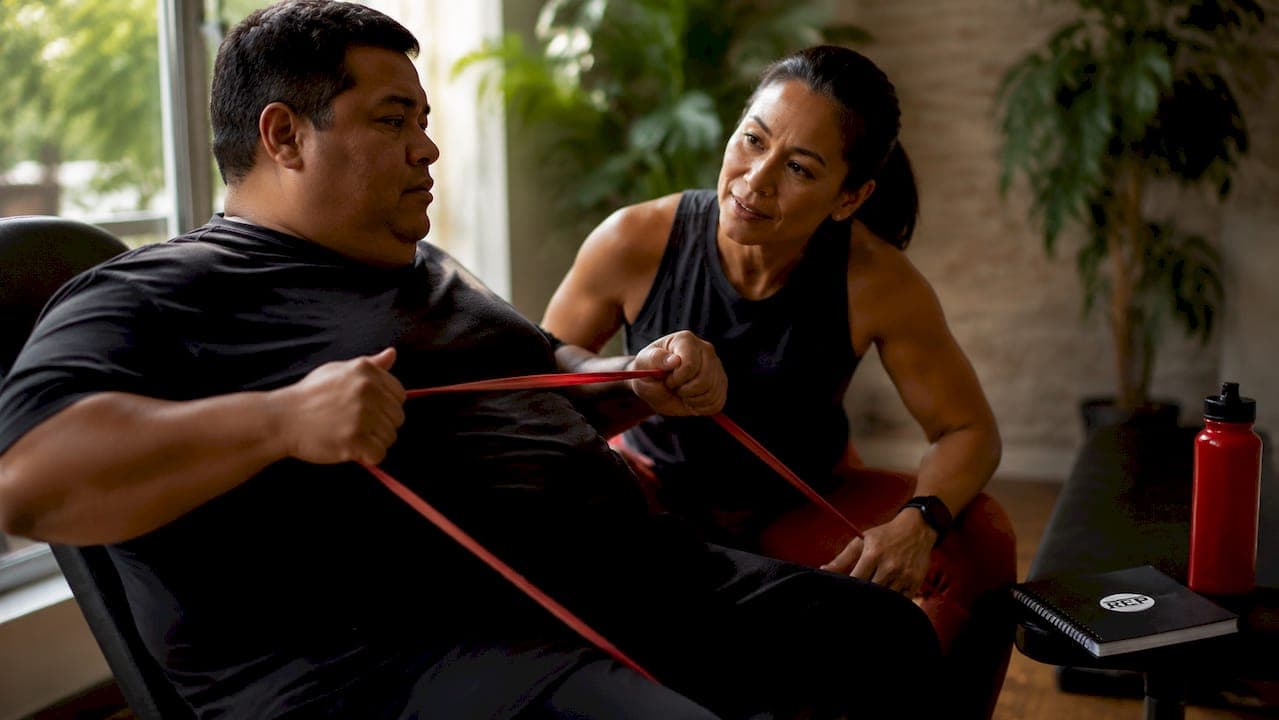
A certified trainer working with obese clients is defined as a qualified fitness professional who delivers safe, individualized exercise programming while addressing the physical, emotional, and medical complexities of obesity. The role of certified trainer obese clients encounter goes far beyond counting reps. It connects clinical healthcare guidance with real-world fitness coaching, and it demands specialized knowledge in physiology, empathy, and behavior change. Organizations like the American College of Sports Medicine (ACSM) and the American Council on Exercise (ACE) have established standards that shape how these professionals operate. When the right trainer meets the right client, lasting lifestyle change becomes possible.
What qualifies a certified trainer to work with obese clients?
The most qualified trainers for this population hold credentials from recognized bodies like ACSM, ACE, or the National Exercise and Sports Trainers Association (NESTA). These certifications go beyond general fitness knowledge. They cover chronic disease risk factors, contraindications to exercise, and the physiological differences that come with carrying excess body weight.
Medical clearance knowledge is non-negotiable. ACSM requires clearance for morbidly obese clients or those with multiple chronic conditions before beginning vigorous exercise. That protocol protects clients from cardiac events, joint injury, and metabolic complications that a general trainer might miss entirely.

Trainers also need to understand how medications affect exercise response. GLP-1 receptor agonists like semaglutide (Ozempic, Wegovy) are now widely prescribed for weight loss, and they change the game for programming. A trainer who does not account for these drugs is working with incomplete information.
Emotional intelligence rounds out the picture. Certified trainers who work effectively with obese clients develop communication skills that build trust without judgment. They recognize when a client needs encouragement versus when they need space. That skill is learned, not assumed.
- ACSM or ACE certification with obesity or chronic disease specialization
- Medical clearance protocols and knowledge of contraindications
- Understanding of GLP-1 medications and their impact on muscle mass
- Empathy and communication training to support clients emotionally
- Ongoing education to stay current on research and reduce personal bias
Pro Tip: If you are evaluating a trainer, ask directly whether they have completed any obesity-specific continuing education. A trainer who cannot answer that question clearly has likely not done it.
Certified trainers also earn significantly more than non-certified peers. Average earnings reach $78,000 for certified professionals compared to $34,000 for those without credentials. That gap reflects the real difference in expertise and accountability clients receive.
How do trainers design safe programs for obese clients?
Program design for obese clients starts with a thorough assessment, not a workout. A certified trainer gathers health history, identifies any movement limitations, and confirms medical clearance before a single exercise is prescribed. Skipping this step is one of the most common and costly mistakes in fitness coaching for obese individuals.
From there, programming follows a progressive model built on low-impact foundations.
- Baseline assessment covering cardiovascular fitness, mobility, and strength capacity
- Low-impact cardio such as walking, cycling, or water aerobics to build aerobic base without joint stress
- Resistance training introduced early and progressed carefully to preserve muscle mass
- Flexibility and mobility work to improve range of motion and reduce injury risk
- Regular reassessment every four to six weeks to adjust intensity and volume
The resistance training piece deserves special attention right now. Up to 25% of weight lost from GLP-1 medications can be muscle tissue if structured resistance training is not part of the plan. That is a significant loss that undermines long-term metabolic health. A certified trainer who understands this builds muscle preservation protocols into every program for clients on these medications.
| Programming Element | Purpose | Example |
|---|---|---|
| Low-impact cardio | Build aerobic capacity safely | Walking, pool aerobics |
| Resistance training | Preserve and build muscle mass | Bodyweight squats, resistance bands |
| Mobility work | Reduce injury risk | Hip flexor stretches, shoulder circles |
| Progressive overload | Drive adaptation over time | Adding reps or resistance weekly |
| Recovery protocols | Prevent overtraining | Rest days, sleep guidance |
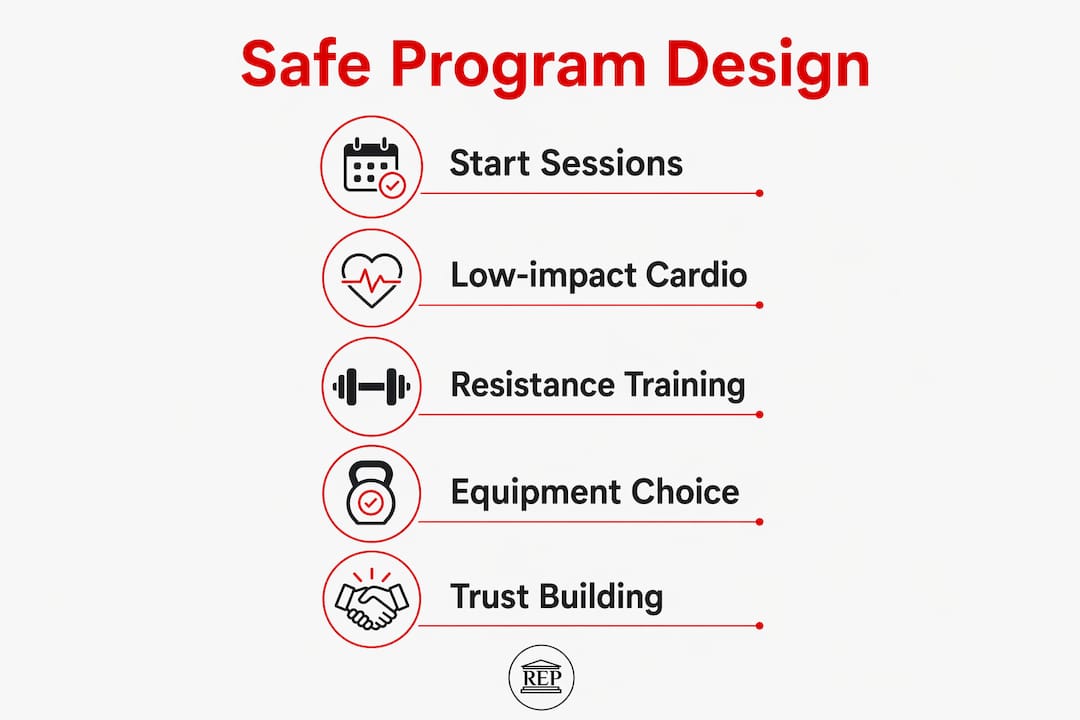
Equipment selection also matters. Standard benches, narrow chairs, and small resistance bands may not accommodate larger bodies comfortably. A trainer who sets up the environment thoughtfully sends a message before the first rep is even performed.
Pro Tip: Start every new obese client with two to three sessions focused entirely on movement patterns and trust-building before introducing any significant intensity. The physical output will be better for it.
What emotional factors must trainers address with obese clients?
The mental side of fitness coaching for obese clients is where most trainers underinvest. Obese clients often experience body dissociation, a disconnect between mind and body that can make exercise feel foreign or even threatening. Building emotional trust can take several sessions and is frequently the first real step before physical intensity increases.
This is not a soft skill. It is a clinical reality that shapes every programming decision.
- Acknowledge previous negative experiences with fitness environments before assuming a client is unmotivated
- Create size-sensitive spaces with appropriate equipment, private areas, and no unsolicited commentary on body size
- Celebrate non-scale victories like improved sleep, better energy, or completing a full session
- Avoid urgency language that frames weight loss as a race with a deadline
- Check in emotionally at the start of each session, not just physically
"Qualified exercise professionals serve as indispensable connectors between healthcare and fitness communities. The mental game and behavior change are the primary drivers of success, beyond just exercise routines."
Self-efficacy, a client's belief in their own ability to succeed, is one of the strongest predictors of long-term fitness adherence. Trainers who build it deliberately, through small wins and consistent encouragement, create clients who keep showing up even when progress slows.
Trainer self-awareness matters just as much as client psychology. Trainers must address their own biases about weight and food before they can effectively help obese clients trust their bodies and heal. A trainer who carries unexamined assumptions about willpower or laziness will communicate those assumptions, even without saying a word.
The fitness lifestyle transformation that obese clients are working toward is not just physical. It is a full shift in identity, habit, and self-perception. Trainers who understand that become true partners in the process.
How do certified trainers collaborate with healthcare providers?
A certified trainer is not a doctor, dietitian, or therapist. Knowing where that boundary sits is one of the most important competencies in this field. Fitness professionals should refer clients to dietitians for nutrition advice, acting in a supportive, multidisciplinary capacity rather than overstepping into medical territory.
That boundary is not a limitation. It is a strength. Trainers who build strong referral networks with physicians, registered dietitians, and behavioral health counselors deliver far better outcomes than those who try to handle everything alone.
| Role | Responsibility | Trainer's Action |
|---|---|---|
| Physician | Medical clearance, medication management | Request clearance, share progress notes |
| Registered Dietitian | Nutrition planning and counseling | Refer for dietary guidance, avoid prescribing diets |
| Behavioral Health Counselor | Emotional eating, mental health | Refer when psychological barriers emerge |
| Certified Trainer | Exercise programming and motivation | Design and deliver safe, progressive workouts |
Effective collaboration also means keeping records. A trainer who tracks client progress, documents session notes, and communicates changes to the healthcare team creates a feedback loop that benefits everyone. When a client's physician adjusts their medication, the trainer needs to know. When the trainer notices a client is struggling emotionally, the therapist needs to know.
Group fitness classes can also serve as a bridge between individual training and broader community support, giving obese clients a sense of belonging that reinforces the work done in one-on-one sessions.
Key takeaways
Certified trainers are the most effective support system for obese clients when they combine medical knowledge, empathetic coaching, and strong professional collaboration.
| Point | Details |
|---|---|
| Medical clearance is non-negotiable | ACSM requires clearance for morbidly obese clients before vigorous exercise begins. |
| Muscle preservation requires resistance training | GLP-1 medications can cause up to 25% muscle loss without structured resistance work. |
| Emotional trust precedes physical output | Body dissociation is common in obese clients; trust-building sessions come before intensity. |
| Trainer bias must be addressed first | Self-reflection on weight and food attitudes is required before effective client support. |
| Collaboration expands trainer impact | Referrals to dietitians, physicians, and therapists produce better long-term outcomes. |
What i have learned training clients through real weight loss
I have worked with clients across a wide range of starting points, and the ones who made the most lasting progress were rarely the ones who pushed hardest in the first month. They were the ones who felt safe enough to keep coming back.
The biggest mistake I see trainers make is treating weight loss like a project with a deadline. It is not. Success in training obese clients is a marathon with real setbacks, and trainers who personalize those setbacks burn out fast. When a client plateaus or misses a week, that is not a failure of your programming. It is a normal part of a long process.
What actually moves the needle is consistency in the relationship, not just the workout. When a client knows you will show up with the same energy on their worst day as their best, they start to believe they can do this. That belief is the real training adaptation.
I also think the industry underestimates how much trainer bias shapes client outcomes. You can have a perfect program on paper and still communicate doubt through your tone, your body language, or the way you respond when progress stalls. Continuous education, including the uncomfortable kind that asks you to examine your own assumptions, is not optional for trainers in this space.
The personal training benefits for obese clients are real and well-documented. But those benefits only show up when the trainer brings the full package: knowledge, empathy, patience, and a genuine belief that every client is capable of change.
— Coach Justin
Ready to train smarter with Repphilosophy?
At Repphilosophy, we believe every client deserves a coach who shows up prepared, informed, and genuinely invested in their progress. Whether you are looking for one-on-one guidance, a more affordable group setting, or the flexibility of virtual coaching, we have built our programs around what actually works for real people with real lives.
Our virtual coaching memberships give you access to structured, progressive workouts you can do on your schedule, with the same quality of programming you would get in person. If you are ready to take the first step toward a stronger, healthier version of yourself, explore everything available in the Repphilosophy coaching shop and find the right fit for where you are right now.
FAQ
What certifications should a trainer have to work with obese clients?
Trainers should hold credentials from ACSM, ACE, or NESTA, ideally with an obesity or chronic disease specialization. These programs cover medical clearance protocols, exercise contraindications, and behavior change strategies specific to this population.
Why is resistance training critical for obese clients on weight-loss medications?
GLP-1 medications can cause up to 25% of total weight lost to come from muscle tissue without structured resistance training. A certified trainer builds muscle preservation protocols into the program to protect metabolic health long-term.
How does a certified trainer support the emotional side of weight loss?
Certified trainers build emotional trust before increasing physical intensity, recognize body dissociation, and create non-judgmental environments. Behavior change and mindset are the primary drivers of long-term success, not just exercise volume.
When should a trainer refer an obese client to another professional?
Trainers should refer clients to a registered dietitian for nutrition guidance, a physician for medical concerns, and a behavioral health counselor when emotional or psychological barriers emerge. Staying within scope of practice protects both the client and the trainer.
What is the biggest mistake trainers make with obese clients?
The most common mistake is pushing intensity too fast before building trust and assessing the client's baseline. Skipping the emotional and medical foundation leads to injury, dropout, and damaged confidence that can set a client back significantly.