
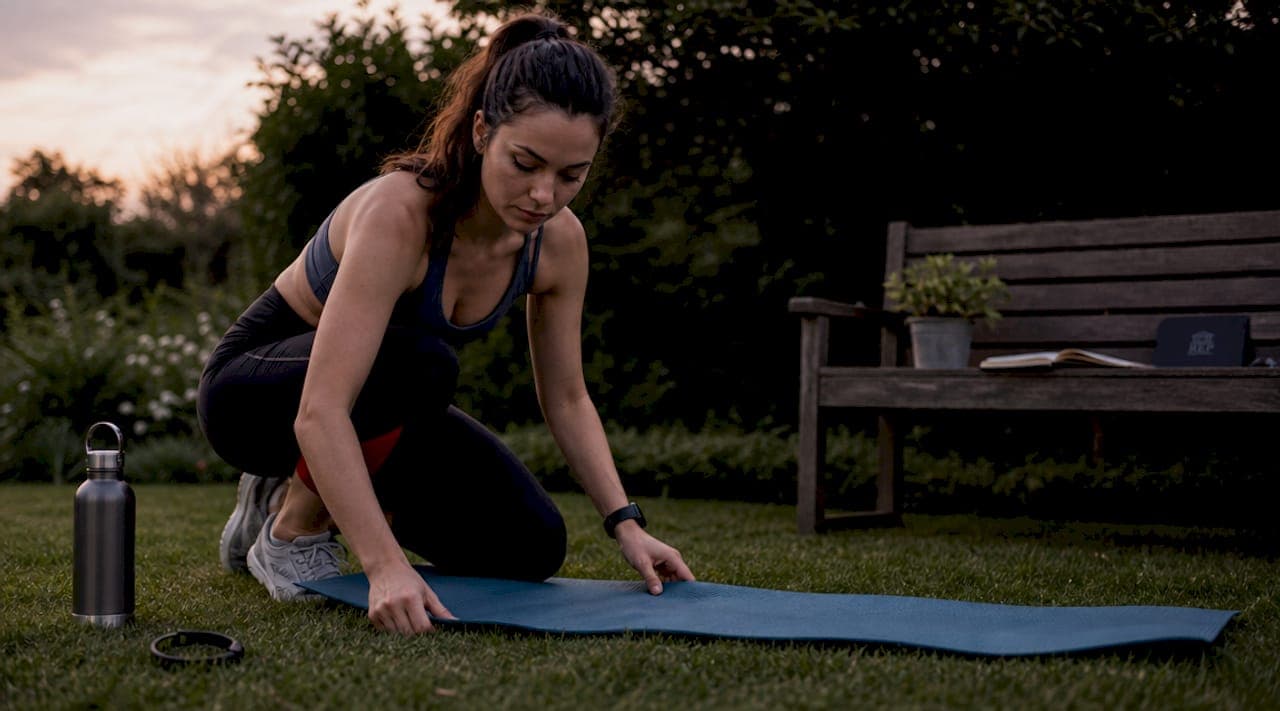
Fitness lifestyle transformation is defined as the process of replacing occasional workouts and short-term dieting with long-term sustainable habits that prioritize physical activity, balanced nutrition, restorative sleep, and stress management as permanent parts of daily life. This is not a 30-day challenge or a crash diet. It is a deliberate, ongoing shift in how you think about and practice your health, every single day. The difference between a fitness transformation and a typical workout plan comes down to one word: permanence. When you understand what this process truly involves, you stop chasing quick results and start building a life that supports your well-being from the inside out.
What does fitness lifestyle transformation really mean?
A fitness lifestyle transformation means changing your habits at the root level, not just adding a gym session to your week. Harvard Health identifies physical activity, nutrition, sleep, stress management, and emotional well-being as the core pillars of self-care. Each one reinforces the others. Neglect sleep, and your workouts suffer. Ignore stress, and your nutrition choices deteriorate. The transformation only holds when all these pillars receive consistent attention.
This is what separates a fitness lifestyle change from a fitness phase. A phase ends. A lifestyle does not. The goal is to build repeatable daily and weekly behaviors that persist even when motivation fades, life gets busy, or progress stalls. That kind of durability is what defines real transformation.

Mental and emotional well-being are just as central to this process as physical changes. Exercise-induced improvements in mood, stress reduction, and self-esteem are documented outcomes of sustained fitness habits. You are not just reshaping your body. You are reshaping how you feel, think, and respond to the demands of your life.
What core components make up a fitness lifestyle transformation?
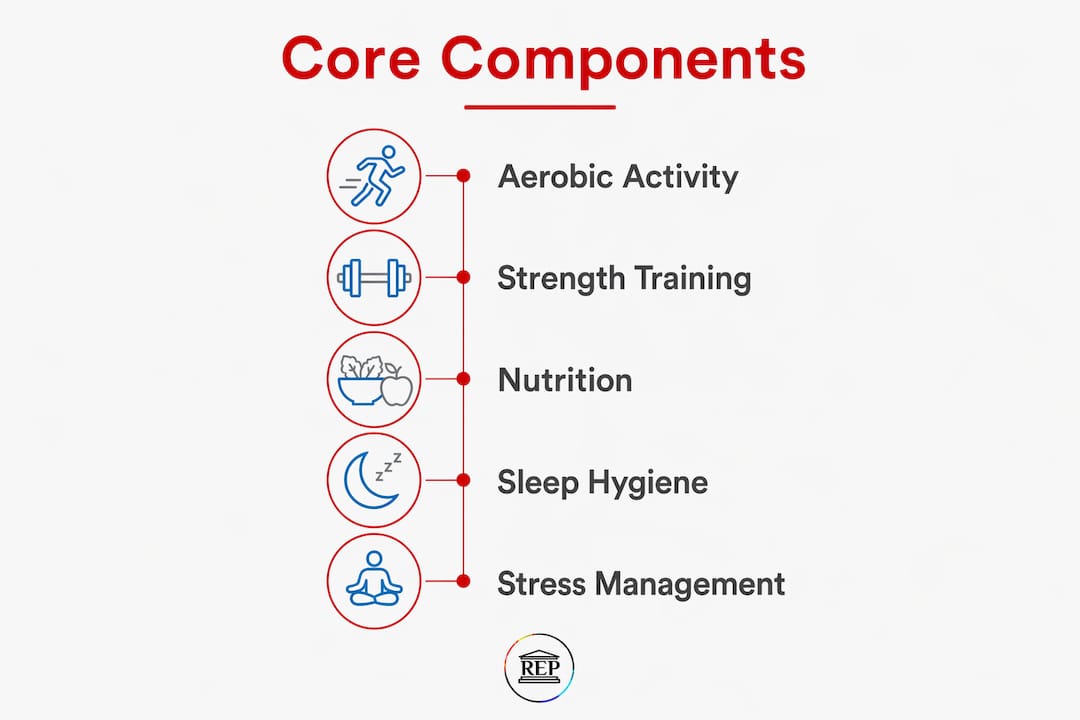
Understanding fitness transformation means knowing exactly what habits you are building. The components are not complicated, but they do require consistency across multiple areas of your life.
Physical activity forms the foundation. Federal guidelines recommend at least 150 minutes per week of moderate aerobic activity plus muscle-strengthening exercises at least twice weekly. That target is achievable for most people and supports cardiovascular and metabolic health without requiring extreme effort.
Here is how the core components break down:
- Consistent movement: Brisk walking, cycling, swimming, or any aerobic activity that raises your heart rate for sustained periods
- Strength training: At least two sessions per week targeting major muscle groups to build functional strength and support metabolism
- Balanced nutrition: A diet centered on fruits, vegetables, whole grains, lean proteins, and healthy fats rather than restrictive calorie counting
- Restorative sleep: Seven to nine hours per night to support recovery, hormone regulation, and cognitive function
- Stress management: Practices like breathwork, meditation, time in nature, or structured recovery that reduce chronic stress load
- Mind-body integration: Attention to emotional health, including post-workout recovery nutrition and stress-reducing practices that connect physical effort with mental resilience
| Component | Why it matters |
|---|---|
| Aerobic activity (150 min/week) | Supports heart health, energy, and mood regulation |
| Strength training (2x/week) | Builds lean mass, improves metabolism, reduces injury risk |
| Nutrition quality | Fuels performance and recovery, reduces inflammation |
| Sleep (7-9 hours) | Drives hormonal balance and physical repair |
| Stress management | Prevents burnout and supports consistent adherence |
No single component carries the full load. The transformation happens at the intersection of all of them working together over time.
How do fitness transformation programs differ from regular workout routines?
A structured fitness transformation program and a general workout routine are not the same thing, and the difference matters enormously for your results. Transformation programs are structured, time-bound, and personalized, typically spanning 30 to 90 days, with clear targets for training, nutrition, rest, and habit tracking built in from day one. A generic workout routine, by contrast, gives you exercises but leaves the rest of the puzzle unsolved.
The real power of a transformation program is that it removes guesswork. You know what to eat, when to train, how to track progress, and who to turn to when you hit a wall. That structure is what converts short-term effort into long-term habit. Personalized coaching accelerates this process by adapting the plan to your specific body, schedule, and goals rather than applying a one-size-fits-all template.
| Feature | Transformation program | Generic workout routine |
|---|---|---|
| Personalization | High, tailored to individual goals | Low, standardized for general use |
| Nutrition guidance | Included | Rarely included |
| Accountability | Structured check-ins and tracking | Self-directed |
| Duration | 30 to 90 days with maintenance phase | Open-ended |
| Habit focus | Central to the program design | Incidental |
One critical distinction that most people miss: lasting results depend on the maintenance phase, not just the coached phase. The 90-day program gets you started. The maintenance system, including tracking, social support, and relapse re-entry strategies, is what keeps you there. Without that second phase, most people revert within months.
Pro Tip: When evaluating any fitness program, ask specifically what happens after the program ends. A program without a maintenance plan is just a temporary fix wearing a transformation label.
What role does behavior change play in sustaining your transformation?
The psychology behind fitness lifestyle transformation is as important as the physical work. Behavior change is rarely linear, and understanding this prevents the most common reason people quit: believing that a slip-up means failure.
The Transtheoretical Model, developed by James Prochaska and Carlo DiClemente, maps behavior change across five stages: precontemplation, contemplation, preparation, action, and maintenance. Most people cycle through these stages multiple times before a new behavior becomes truly automatic. Relapse is framed as part of a spiral that leads to durable change through repeated attempts, not as evidence that you cannot succeed.
Here is how to apply this framework practically:
- Identify your current stage. Are you still thinking about changing, or are you actively in the process? Your starting point determines your next step.
- Build self-efficacy deliberately. Start with small wins. Completing a 20-minute walk three times a week builds more confidence than attempting a daily hour-long workout and burning out.
- Plan for setbacks explicitly. Write down what you will do when you miss a week. Having a re-entry plan removes the shame spiral that derails most people.
- Expect multiple cycles. Repeated cycles with relapse planning are not signs of weakness. They are the mechanism through which lasting habits form.
- Track behavior, not just outcomes. Measuring aerobic minutes and strength days each week tells you more about your trajectory than the number on a scale.
"The prevailing cause of failure to sustain lifestyle changes is unrealistic all-or-nothing expectations. Embracing iterative cycles with relapse recovery accelerates progress far more than demanding perfection."
Self-efficacy and readiness are the two strongest predictors of sustained fitness behavior change. You build both by designing a process that allows for imperfection while still moving forward.
What practical steps help you start and maintain a fitness lifestyle transformation?
Starting a fitness lifestyle transformation does not require a dramatic overhaul of your entire life on day one. The most durable changes begin small and build momentum over weeks and months.
Set SMART goals from the start. Specific, Measurable, Achievable, Relevant, and Time-bound goals give your effort direction. "I will walk briskly for 30 minutes on Monday, Wednesday, and Friday for the next four weeks" is a SMART goal. "I want to get fit" is not.
Designing plans around the smallest sustainable weekly targets is one of the most practical strategies available. During a busy week, hitting 150 aerobic minutes and two strength sessions is your floor, not your ceiling. Protecting that floor prevents the all-or-nothing collapse that derails most people.
Here are the steps that consistently produce results:
- Schedule workouts like appointments. Block time on your calendar and treat it as non-negotiable. Consistency of timing builds automaticity faster than intensity alone.
- Build social support. Finding a training partner or joining a group class dramatically improves adherence. Accountability to another person is one of the most powerful behavior change tools available.
- Track simple metrics weekly. Log aerobic minutes, strength sessions, sleep hours, and one nutrition habit. Simple tracking surfaces patterns and keeps you honest without becoming a burden.
- Prepare for inevitable setbacks. Write your re-entry plan before you need it. "If I miss three days, I will restart with one 20-minute walk" is more useful than any motivational quote.
- Shift your motivation anchor. Focus on how consistent habits make you feel, not just how they make you look. Energy, mood, sleep quality, and stress resilience are daily rewards that sustain effort long after aesthetic goals plateau.
Pro Tip: Federal guidelines emphasize that small increases in movement produce notable health improvements in previously inactive individuals. Starting with brisk walking and two simple strength sessions per week is not a beginner shortcut. It is the evidence-based entry point.
Key takeaways
Fitness lifestyle transformation succeeds when sustainable daily habits across activity, nutrition, sleep, and stress management replace short-term effort, supported by structured programs, behavior-change planning, and consistent accountability.
| Point | Details |
|---|---|
| Transformation is multi-habit | Lasting change requires consistent attention to activity, nutrition, sleep, and stress, not exercise alone. |
| Programs beat routines for habit formation | Structured 30 to 90-day programs with nutrition guidance and accountability outperform generic workout plans. |
| Relapse is part of the process | The Transtheoretical Model confirms that multiple cycles with planned re-entry strategies build durable habits. |
| Small targets protect consistency | Designing around the minimum sustainable weekly effort prevents all-or-nothing collapse during busy periods. |
| Mental health is a core outcome | Exercise-induced improvements in mood, stress, and self-esteem are central benefits of a fitness lifestyle, not side effects. |
What I have learned coaching real people through this process
I have worked with enough people at Repphilosophy to know that the biggest obstacle to fitness lifestyle transformation is almost never physical. It is the belief that transformation has to look a certain way, happen at a certain speed, or feel a certain level of intense to count.
The most common thing I see is someone doing everything right for three weeks, missing four days because life happened, and then deciding the whole thing is ruined. That all-or-nothing thinking is the real enemy. Not the missed days. I have watched clients who stumbled repeatedly in their first two months go on to build the most consistent, sustainable habits I have ever seen, precisely because they learned how to recover without drama.
What I have also noticed is that the people who stay with it longest are the ones who stop measuring success by the mirror and start measuring it by how they feel getting out of bed, how they handle a stressful week, and whether they actually enjoy moving their body. That shift in focus changes everything.
The science backs this up. Behavior change frameworks confirm that self-efficacy and readiness are the strongest predictors of sustained change. But in practice, what builds self-efficacy is simply showing up enough times to trust yourself. You do not need a perfect plan. You need a forgiving one.
If you are reading this and wondering whether you are ready, you probably are. The fact that you are asking the question means something is already shifting. Let that be enough to take the next step.
— Coach Justin
Ready to build your fitness lifestyle with Repphilosophy?
Understanding the concept is one thing. Having the right support structure makes all the difference when it comes to actually living it.
At Repphilosophy, based in 4S Ranch, the coaching options are designed to meet you where you are. Whether you prefer 1-on-1 personal training, bring-a-buddy sessions, group classes, or the flexibility of virtual coaching memberships, every program includes personalized workout planning, nutrition guidance, and the accountability that turns short-term effort into lasting habit. Youth sports performance training is also available for families looking to build strong foundations early. If you are ready to stop cycling through programs and start building something that lasts, explore the coaching options at Repphilosophy and find the fit that works for your life.
FAQ
What does fitness lifestyle transformation mean exactly?
Fitness lifestyle transformation means replacing short-term fitness efforts with permanent daily habits across physical activity, nutrition, sleep, and stress management. It focuses on sustainable behavior change rather than temporary results.
How long does a fitness transformation take?
Structured transformation programs typically run 30 to 90 days, but the maintenance phase that follows is what determines lasting results. Real lifestyle change is measured in months and years, not weeks.
Is relapse normal during a fitness lifestyle change?
Yes. The Transtheoretical Model confirms that relapse is a normal part of the behavior change process, not a sign of failure. Planning explicitly for setbacks and having a re-entry strategy significantly improves long-term adherence.
How is a fitness transformation different from a workout routine?
A fitness transformation program includes personalized nutrition guidance, habit tracking, accountability, and a maintenance phase. A generic workout routine provides exercise structure but leaves the broader lifestyle components unaddressed.
What is the most important factor for sustaining a fitness lifestyle?
Self-efficacy and readiness are the strongest predictors of sustained fitness behavior change. Building small, consistent wins over time creates the confidence and momentum that keep the lifestyle going long after initial motivation fades.