

The trainer-to-athlete ratio in a fitness class is defined as the number of athletes or clients assigned to each coach during a single training session. This ratio is the single most important structural variable in any group training program. It determines how much individual attention each athlete receives, how safely a coach can monitor technique, and how effectively programming can be personalized. Whether you run small group sessions or large fitness classes, the role of trainer-to-athlete ratio classes cannot be overstated. A 2026 fitness industry analysis identifies approximately 4 clients per trainer as the sweet spot for most training goals, and the research behind that number is worth understanding in full.
How does trainer-to-athlete ratio affect individual programming?
Small group personal training typically involves 3–6 clients per trainer. This format enables individualized programming and real-time form correction that larger classes simply cannot replicate. Groups exceeding 8 clients tend to shift toward general group fitness, where programming becomes uniform and supervision becomes surface level.
The distinction between formats matters more than most gym owners realize. Here is how the three primary formats break down by ratio and function:
- Small group training (3–6 clients): The trainer can observe each athlete's movement patterns, correct technique in real time, and adjust load or volume on the fly. This is the format where personalized coaching lives.
- Semi-private training (2–6 clients): Each client follows an individualized program while training alongside others. The trainer rotates attention rather than delivering one universal cue to the group.
- Large group fitness (8+ clients): Programming is standardized. Trainers like those at F45 Training or Orangetheory shift into a demonstration and motivation role. Individual correction becomes the exception, not the rule.
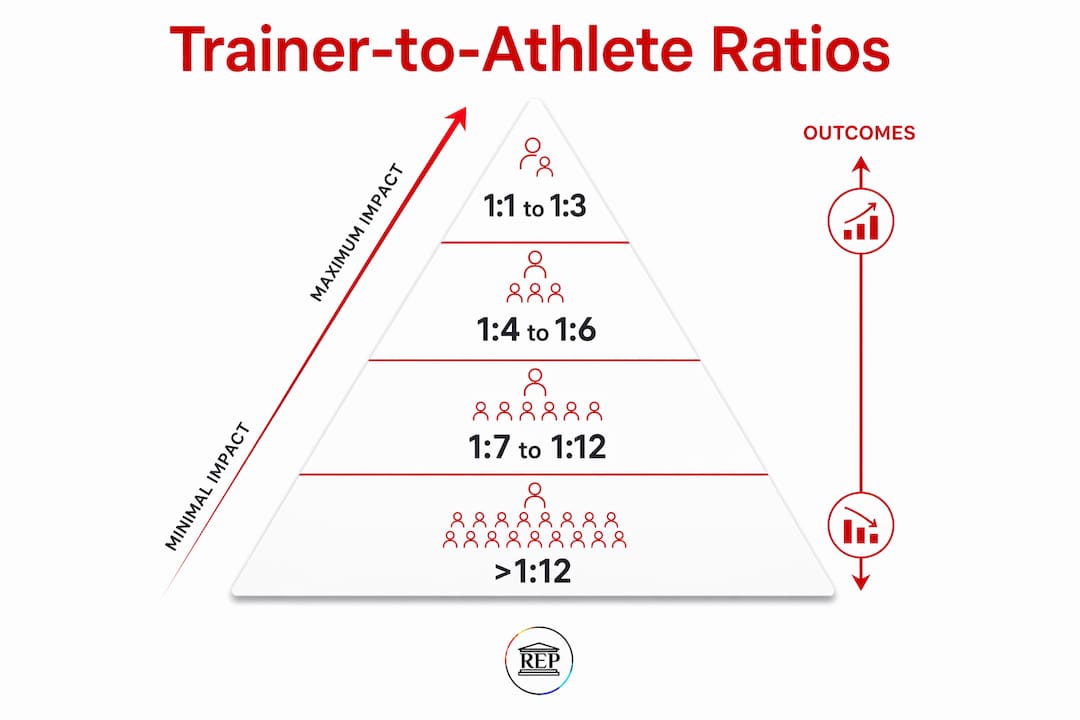
The practical gap between a 1:4 ratio and a 1:12 ratio is not just a number. At 1:4, a trainer can spend meaningful time with each athlete every few minutes. At 1:12, that window collapses to brief check-ins, and technique errors go unaddressed. For coaches managing youth athletes or clients learning new movement patterns, that gap directly affects both safety and progress.
Pro Tip: If you run classes of 8 or more, build a standardized cueing script for your most technically demanding exercises. This keeps coaching quality consistent even when individual attention is limited.
What does research say about ratios and athletic outcomes?
The evidence linking trainer-to-athlete ratios to real outcomes is clear and consistent. Collegiate athletic programs with lower student-athlete-to-trainer ratios report 9.5% lower injury incidence, 2.7% lower reinjury incidence, and 6.7% lower concussion incidence. Those are not marginal differences. They represent meaningful reductions in athlete harm that compound over a full season.
Supervision also directly affects how hard athletes work. Research confirms that supervised resistance training produces higher time under load and greater perceived exertion than unsupervised sessions. Athletes train closer to failure when a coach is watching. That means the training stimulus itself is stronger, which drives better strength and performance gains over time.
"Reducing supervision may lower trainees' effort and session effectiveness." — Research on resistance training supervision
The mechanism is straightforward. When athletes know a coach is observing them, they push harder and maintain better form. When supervision is diluted by a high ratio, effort drops and technique degrades. Both outcomes reduce the quality of the training session, regardless of how well the program is written on paper.
| Ratio range | Supervision level | Key outcome impact |
|---|---|---|
| 1:1 to 1:3 | Full, continuous | Maximum technique correction, highest effort output |
| 1:4 to 1:6 | High, rotational | Strong programming quality, manageable safety risk |
| 1:7 to 1:10 | Moderate, periodic | Standardized programming required, effort varies |
| 1:11 and above | Low, demonstrative | Group motivation focus, individual correction rare |
For youth athletes specifically, the importance of supervision is even greater. Young athletes are still developing movement literacy, and uncorrected errors at this stage can create compensatory patterns that lead to injury years later.
How does a trainer's role change as class size grows?
Coaching bandwidth is the total time and attention a trainer has available per session. It includes time for setup cues, live technique observation, athlete transitions, and individual feedback. As the ratio rises, each component of that bandwidth gets compressed.
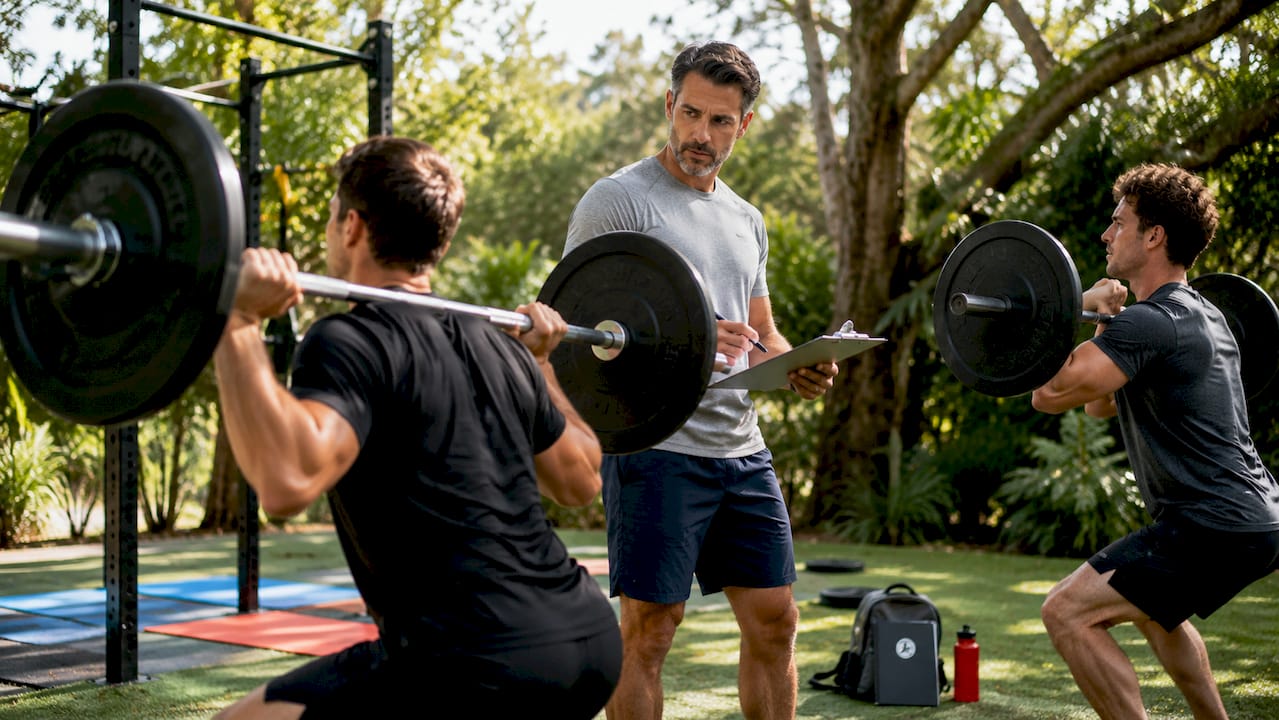
At a 1:3 ratio, a trainer can deliver tens of minutes of individual feedback across a session. At 1:8, that shrinks to single-digit minutes per athlete. The math is unforgiving, and it shapes what a trainer can realistically accomplish.
Here is how the trainer's role evolves as class size increases:
- 1:1 to 1:3 (individual coach): The trainer monitors biomechanics continuously, adjusts load in real time, and delivers detailed verbal and tactile feedback. Every rep can be coached.
- 1:4 to 1:6 (small group coach): The trainer rotates attention systematically. Programming systems and exercise libraries become necessary to maintain quality without constant individual oversight.
- 1:7 to 1:12 (group trainer): The trainer leads from the front, demonstrating movements and delivering group cues. Individual correction happens opportunistically, not systematically.
- 1:13 and above (group fitness instructor): The trainer functions primarily as a motivator and demonstrator. Classes with over 20–30 participants reduce the trainer's practical ability to supervise biomechanics, which raises injury risk.
Successful semi-private training at the 1:4 to 1:6 range requires standardized exercise libraries, consistent progression rules, and shared session structure. These systems allow a trainer to manage individualized programs simultaneously without needing to give constant attention to each client. Without those systems in place, quality degrades fast.
Pro Tip: Build a rotation pattern before your session starts. Knowing which athlete you will check in with at each minute mark keeps your attention distributed evenly and prevents you from gravitating toward the same two or three clients every session.
What guidelines help coaches choose the optimal ratio?
The optimal coach-to-athlete ratio depends on three variables: the technical demand of the training task, the experience level of the athletes, and the revenue model you need to sustain. Getting all three right is where most gym owners struggle.
Trainer-to-athlete ratios should be treated as an upper bound on individual feedback bandwidth, not a marketing number. Technical or intensive training benefits from smaller groups in the 1:3 to 1:5 range. Exploratory fitness classes or conditioning work can accommodate ratios up to 1:10 without a significant drop in quality.
| Training type | Recommended ratio | Reason |
|---|---|---|
| Olympic lifting, powerlifting | 1:3 to 1:4 | High technical demand, injury risk requires close supervision |
| Semi-private strength training | 1:4 to 1:6 | Individualized programs with rotational attention |
| Youth sports performance | 1:5 to 1:8 | Developing movement literacy needs regular correction |
| Conditioning or HIIT classes | 1:8 to 1:12 | Lower technical complexity allows broader supervision |
| Large group fitness | 1:12 to 1:20 | Demonstration-led format, standardized programming |
Revenue also shapes ratio decisions. Semi-private training with 3–4 clients per session allows trainers to charge clients 40–60% of the 1-on-1 rate while earning significantly more per hour. At 4 clients per slot, a trainer can earn around $140 per session. That model balances coaching quality with financial sustainability in a way that neither 1-on-1 nor large group formats can match.
For gym owners managing waitlists, capping small group sessions at 6 clients is a stronger business decision than expanding to 10. The drop in coaching quality at higher ratios leads to lower client retention, which costs more in the long run than the short-term revenue gain from adding two extra spots.
Key Takeaways
The trainer-to-athlete ratio is the primary structural variable that determines coaching quality, athlete safety, and training effectiveness across every class format.
| Point | Details |
|---|---|
| Sweet spot ratio | Approximately 4 clients per trainer delivers the best balance of attention and efficiency for most training goals. |
| Injury reduction | Lower ratios in collegiate programs correlate with 9.5% lower injury incidence, making supervision a safety tool. |
| Supervision drives effort | Supervised athletes train with higher effort and closer to failure, producing stronger training stimulus and better results. |
| Coaching bandwidth shrinks fast | Individual feedback time drops from tens of minutes at 1:3 to single digits at 1:8, making systems essential at higher ratios. |
| Semi-private is the revenue sweet spot | A 1:4 semi-private model earns trainers around $140 per session while maintaining individualized coaching standards. |
What I have learned from years of coaching different class sizes
I have run sessions with one athlete and sessions with twenty. The honest truth is that the quality of coaching does not scale linearly with group size. It drops off a cliff somewhere around the 1:8 mark if you do not have the right systems in place.
The mistake I see most often from coaches and gym owners is treating ratio as a revenue lever rather than a coaching variable. They add two more clients to a session because the math looks good on paper. What they do not account for is the compounding cost of reduced attention: slower client progress, more technique breakdowns, and eventually, clients who stop coming back because they do not feel seen.
The semi-private model has been one of the most rewarding formats I have worked with. When you cap a session at four clients, each with their own program, you get the energy of a group and the depth of individual coaching. Clients push each other. They also get corrected when they need it. That combination is hard to beat for both results and retention.
One thing I want coaches to sit with: your ratio decision is also a safety decision. Classes with over 20–30 participants genuinely reduce your ability to catch a dangerous movement before it becomes an injury. That is not a hypothetical. It is a structural limitation of your attention. Build your class sizes around what you can actually supervise, not what fills the room.
— Coach Justin
Repphilosophy coaching programs built around the right ratios
At Repphilosophy, every program is built with ratio in mind from the start. Whether you are a coach looking for structured tools to manage semi-private sessions or a gym owner in 4S Ranch wanting to offer group classes that actually deliver results, Repphilosophy has a format that fits.

From bring-a-buddy memberships to youth sports performance training and virtual coaching memberships, Repphilosophy structures every offering around the coaching quality that the right ratio makes possible. The goal is always the same: every athlete feels coached, not just counted. Explore the full range of coaching programs and find the format that matches your training goals and your business model.
FAQ
What is the ideal trainer-to-athlete ratio for group classes?
A ratio of approximately 1:4 is the sweet spot for most training goals, balancing individualized attention with group energy. Technical disciplines like Olympic lifting benefit from ratios as low as 1:3.
How does trainer ratio affect performance outcomes?
Lower ratios increase supervision intensity, which research confirms drives higher effort, better technique, and stronger training stimulus in resistance training sessions.
What is semi-private personal training?
Semi-private training involves 2–6 clients training simultaneously, each following an individualized program. It separates itself from large group fitness by maintaining personalized coaching at a lower price point than 1-on-1 sessions.
At what ratio does injury risk increase significantly?
Classes with over 20–30 participants reduce a trainer's practical ability to supervise biomechanics, raising injury risk. Collegiate programs with lower ratios report 9.5% lower injury incidence compared to programs with higher ratios.
How should gym owners cap class sizes for small group training?
Capping small group sessions at 6 clients preserves coaching quality and client retention. Expanding beyond that threshold without additional staff or programming systems leads to a measurable drop in individual attention and long-term client outcomes.