

Online coaching is the process of receiving expert fitness, sports performance, or personal development guidance entirely through digital means, giving you flexible, personalized support regardless of where you live. Remote coaching services have expanded access to world-class expertise beyond geography, making quality guidance available to anyone with an internet connection. Efficient coaches can manage up to 40 clients with just one hour of admin daily, which shows how well-designed virtual programs scale without sacrificing the personal touch. Whether you want to build strength, sharpen athletic skills, or grow as a person, online coaching delivers structured, accountable progress on your schedule.
How does online coaching work?
Online coaching operates through a combination of video calls, app-based messaging, and digital program delivery. Your coach builds a plan around your goals, sends it through a coaching platform or app, and checks in with you regularly to track progress and adjust the approach. The technology handles scheduling, payment, and communication so both you and your coach can focus on the work itself.
Most digital training sessions run 45–60 minutes over video call, though many coaches also offer asynchronous check-ins where you log workouts, submit form videos, and receive written feedback. This flexibility is one of the biggest reasons people choose virtual training for fitness over traditional gym appointments. You get expert eyes on your progress without rearranging your entire day.

Successful online coaching businesses automate administrative tasks and use platforms that integrate video analysis, communications, and payments to handle large client volumes efficiently. That automation frees coaches to spend more time on what actually matters: your results.
Common formats in virtual coaching programs include:
- 1:1 live video sessions for personalized, real-time coaching and form correction
- Asynchronous video review where you submit workout clips and receive detailed feedback
- App-based program delivery with structured weekly training blocks and progress logging
- Group coaching calls combining community support with expert instruction
- On-demand workout libraries for self-guided training within a coach-designed framework
Initial consultations are generally 15–30 minutes and free to assess whether the coach and client are a good fit. Use that call to ask about communication frequency, session structure, and how the coach tracks your progress.
Pro Tip: Before your first consultation, write down your top three goals and your biggest obstacle. Coaches who ask about both in the first call are the ones worth hiring.
What are the benefits and challenges of online coaching?
Online coaching delivers real advantages over traditional in-person training, but it also requires honest self-awareness about how you work best.
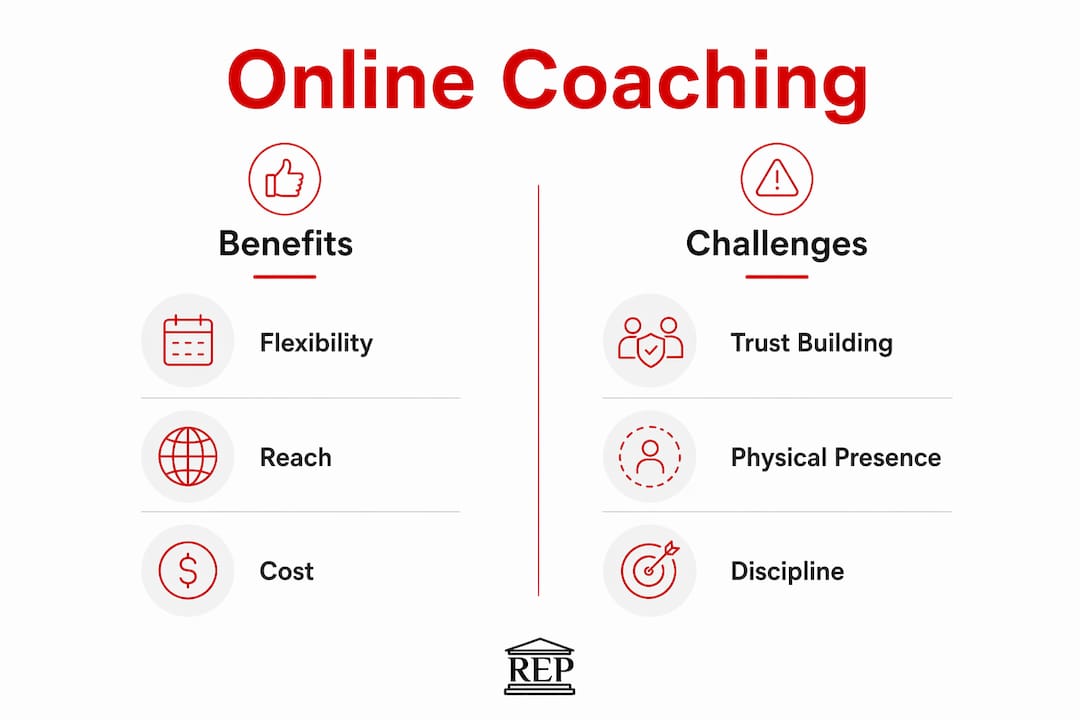
What online coaching does well
Flexibility is the clearest win. You train when it fits your life, not when the gym has an open slot. Remote coaching services also cost less than in-person sessions because coaches eliminate facility overhead and serve more clients simultaneously. Entry-level plans start at $19–$33 per month for software-based services, while personalized 1:1 coaching commands higher rates depending on the coach's specialization and experience. That price range makes quality guidance accessible to people who could never afford a private trainer at a commercial gym.
Reach is another major advantage. A coach based in San Diego can work with an athlete in rural Montana or a professional in New York City. Virtual personal training removes the zip code barrier entirely, which means you choose your coach based on expertise and fit, not proximity.
Where online coaching requires extra effort
Building trust remotely takes more intentional effort than it does in person. Frequent touchpoints multiple times per week build client trust better than only formal session times. That means your coach should be checking in between sessions, not just showing up for the scheduled call.
The absence of physical presence also matters in specific contexts. A coach cannot physically cue your squat form the way an in-person trainer can. Video review closes most of that gap, but it requires you to film your sessions consistently and submit them on time.
| Factor | Online coaching | In-person coaching |
|---|---|---|
| Cost | Lower, often $19–$300+/month | Higher due to facility and time costs |
| Flexibility | Train anywhere, anytime | Fixed location and schedule |
| Coach selection | Global talent pool | Limited to local options |
| Form correction | Video review, asynchronous | Immediate, hands-on feedback |
| Community | Digital groups and forums | In-person training partners |
| Accountability | App check-ins and messaging | Direct, face-to-face accountability |
Pro Tip: If you struggle with self-discipline, choose a coach who offers at least three touchpoints per week. Accountability frequency predicts results more reliably than session length.
Effective online coaching programs design a complete digital experience, integrating virtual classrooms, practice methods, and social community components. That is a fundamentally different design than simply moving an in-person session to a video call.
What should you expect when starting online coaching?
Cost, time commitment, and program structure vary widely, so knowing the typical ranges helps you plan realistically.
Typical costs and program length
Professional virtual coaching programs often last 6–8 months with biweekly or monthly sessions, typically requiring 2–3 hours per month. Leadership and performance cohorts can reach $3,300 per participant. Fitness and sports performance programs generally cost less, with personalized plans ranging from under $100 to several hundred dollars per month depending on session frequency and coach credentials.
Shorter programs of 4–8 weeks exist, but they work best for specific skill goals rather than broad fitness or performance development. Sustainable change in body composition, athletic output, or personal habits takes consistent effort over months, not weeks.
What your sessions will look like
Most coaches structure sessions around three phases: review what happened since the last call, address current challenges, and set clear priorities for the next period. Session notes delivered within 24–48 hours post-call support client accountability and provide a clear roadmap between sessions. Those notes are not a luxury. They are the difference between a session that sticks and one you forget by Thursday.
Data matters too. Implementation-focused coaching uses data dashboards to track real client performance rather than theoretical models. In fitness, that means tracking actual lifts, body measurements, sleep, and recovery, not just how you feel.
Key things to expect when you start:
- An onboarding assessment covering your history, goals, and current fitness or skill level
- A written plan delivered before your first session so you know exactly what to do
- Regular check-ins between sessions via app, text, or email
- Progress reviews every 4 weeks to adjust the plan based on real data
- Clear communication expectations set from day one
How do you choose the right online coach or program?
Choosing well at the start saves you months of wasted effort and money. Work through these steps before committing to any program.
-
Verify credentials and specialization. A certified coach with a specialization in your goal area, whether that is strength training, sports performance, or personal development, brings targeted knowledge that a generalist cannot match. Ask for certifications and check that they come from recognized bodies.
-
Assess communication style during the free consultation. The consultation is not just for the coach to evaluate you. You are evaluating them. Notice whether they ask about your obstacles, not just your goals. A good coach, as certified coach Sharon Lee puts it, develops clarity in clients rather than simply providing answers.
-
Understand the program format before you sign. Know whether you are getting live 1:1 sessions, group calls, asynchronous feedback, or a self-guided app program. Each format suits a different type of person. If you need real-time accountability, a self-guided app will not serve you well.
-
Check the platform and support tools. Ask what app or platform the coach uses, how you submit progress data, and how quickly they respond to messages. A coach with no clear system for client communication will frustrate you within weeks.
-
Request a trial period or short-term commitment. Reputable coaches offer a free consultation and often a short initial commitment before locking you into a long contract. If a coach pushes a six-month contract before you have had a single session, that is a red flag.
Pro Tip: Ask your potential coach to show you a sample week of what a client's program looks like. Coaches who can do this immediately have a real system. Coaches who hesitate are building it as they go.
Key takeaways
Online coaching delivers structured, expert-guided fitness, sports, or personal development support remotely, and choosing the right coach and format determines whether you see real results.
| Point | Details |
|---|---|
| Cost range varies widely | Entry-level plans start around $19/month; personalized 1:1 programs can reach $3,300 per engagement. |
| Program length matters | Most effective programs run 6–8 months with consistent biweekly or monthly sessions. |
| Touchpoint frequency builds trust | Coaches who check in multiple times per week produce better client outcomes than those who only meet at session time. |
| Session notes drive accountability | Written notes delivered within 24–48 hours post-session keep clients on track between calls. |
| Format must match your style | Choose 1:1 live sessions for accountability, asynchronous review for flexibility, or group coaching for community support. |
What I've learned coaching clients remotely
Working with clients online taught me something that took longer than I expected to fully accept: online coaching is not a lesser version of in-person training. It is a different discipline entirely. The coaches who struggle with it are the ones who try to replicate what they do in the gym through a screen. The ones who thrive build a digital experience from the ground up.
The biggest mistake I see clients make is treating online coaching like a subscription they can pause mentally. The program is always running. Your body does not take weeks off because you missed a check-in. That is why I prioritize communication between sessions, not just during them. A quick message on a Tuesday asking how Monday's workout felt tells me more about a client's trajectory than the formal session ever could.
I also believe in documentation. Every session produces notes. Every four weeks produces a data review. When a client says "I feel like I'm not making progress," I can pull up six weeks of logged lifts and show them exactly where they were and where they are now. That kind of clarity is what keeps people going when motivation dips.
If you are considering remote coaching, the single most important thing you can do is be honest in your intake assessment. Tell your coach what has not worked before. Tell them when you tend to quit. The more real information I have at the start, the better the plan I can build for you.
— Coach Justin
Repphilosophy online coaching and membership options
Repphilosophy offers virtual coaching memberships built for people who want real structure and real results without being tied to a single location. Whether you are working on fitness, sports performance, or personal development, the programs are designed to meet you where you are.

From on-demand workout libraries to personalized training plans, Repphilosophy makes it straightforward to get started. The coaching shop includes options for individuals, buddy training memberships, and youth sports performance programs through the WayALife Athletics center in 4S Ranch. If you want to know which program fits your goals, reach out directly. The first conversation is always free, and it is always worth having.
FAQ
What is online coaching?
Online coaching is expert fitness, sports, or personal development guidance delivered entirely through digital tools such as video calls, apps, and messaging platforms. It provides structured, personalized support without requiring in-person meetings.
How much does online coaching cost?
Entry-level software-based plans start at $19–$33 per month, while personalized 1:1 programs vary widely based on coach credentials and session frequency. High-end leadership or performance cohorts can reach $3,300 per participant.
How long does an online coaching program last?
Most professional programs run 6–8 months with biweekly or monthly sessions requiring roughly 2–3 hours per month. Shorter programs exist for specific skill goals but are less effective for broad fitness or performance development.
How do I know if an online coach is right for me?
Use the free initial consultation, typically 15–30 minutes, to evaluate the coach's communication style, program structure, and how they track progress. A coach who asks about your obstacles, not just your goals, is the one worth hiring.
Can online coaching replace in-person training?
Online coaching delivers comparable results for most fitness and performance goals when the coach uses frequent check-ins, video review, and data tracking. It works best for clients who are self-motivated and consistent with logging their workouts and submitting progress data.