
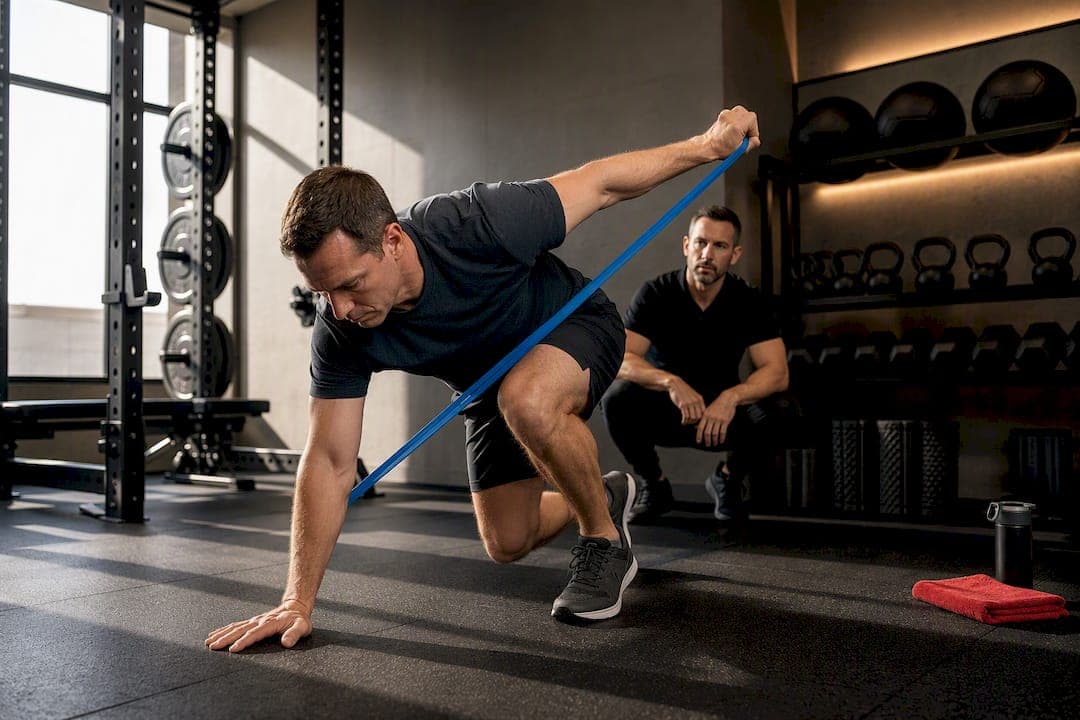
Hybrid personal training combines scheduled in-person coaching with online programming, video check-ins, and app-based tracking. Done well, it gives you the accountability of face-to-face coaching plus the flexibility and lower ongoing cost of remote support. Research on videoconference-delivered exercise backs this up, and it's the model that fits most busy adults better than either extreme.
TL;DR:
- Hybrid personal training often achieves similar exercise and quality-of-life improvements as in-person programs, with around 70% session attendance and minimal safety risks.
- Effective hybrid programs use structured in-person assessments, live video check-ins, and objective tracking that influences program adjustments to ensure progress.
- Cost-efficient hybrid models typically include less frequent in-person sessions, app-based programming, and clear safety workflows, making them suitable for busy, intermediate exercisers.
- Proper setup, reliable technology, and quick coach response are essential for addressing technical issues, maintaining adherence, and reducing injury risk remotely.
- Research supports hybrid training's effectiveness, but success depends on individualized structure, consistent contact, and honest communication about equipment and comfort with technology.
Table of Contents
- What Are the Benefits of Hybrid Personal Training?
- What Makes a Hybrid Program Actually Work?
- Who Is Hybrid Personal Training Best For?
- How Are Hybrid Programs Structured and Priced?
- What Tools and Technology Should You Expect?
- What Common Problems Come Up, and How Do You Fix Them?
- What Does the Research Say About Hybrid and Tele-Exercise Training?
- How Coach Justin Runs Hybrid Coaching at Repphilosophy
- Ready to Try Hybrid Training With Repphilosophy?
- Sources
- FAQ
What Are the Benefits of Hybrid Personal Training?
The core appeal is simple: you keep a coach's eyes on your form and your plan without needing to show up to a gym three or four times a week. That single shift changes how sustainable training becomes for people juggling jobs, kids, and travel schedules.
Flexibility is the headline benefit, but it only works because oversight doesn't disappear. Your coach still designs the plan, reviews your lifts, and adjusts week to week. You're not left guessing between sessions.
Adherence tends to improve too, mostly because hybrid programs build in more frequent touchpoints than a once-a-week gym visit ever could, which is a smart way to reduce sports no-shows and keep clients engaged through the program's flexibility and accountability (How to Reduce Sports No-Shows in Pickup Games). A quick message check-in on a Tuesday catches a missed workout before it becomes a missed week.
The research signal: A meta-analysis of multiple trials found videoconferencing exercise interventions can produce small to moderate improvements in exercise capacity and quality of life comparable to in-person programs, with session attendance around 70% and absence of serious adverse events(https://bjsm.bmj.com/content/56/18/1042). That's a strong signal that remote-supported training holds up clinically, not just anecdotally.
Here's what shows up most often when clients move from purely in-person or purely online training to a hybrid structure:
- Cost efficiency. Fewer required in-person sessions per week, paired with app-based programming, usually costs less than weekly one-on-one training.
- Travel continuity. A business trip or family visit doesn't derail your program when your workouts live in an app instead of a single gym.
- Injury prevention through periodic checks. Regular in-person technique reviews catch form drift before it becomes a strain or a plateau.
- Adherence tied to results. One combined training study found strength and estimated VO2max gains were closely linked to adherence rates generally considered good, often reported as 75% or higher, reinforcing that showing up consistently, in whatever format, is what drives progress.
If you've read about personalized fitness programs and wondered how personalization survives without a trainer standing next to you every session, this is the mechanism: consistent contact, not constant proximity.
What Makes a Hybrid Program Actually Work?
Not every hybrid setup delivers results. The difference between a good one and a mediocre one comes down to structure, not marketing language.

1. Purposeful in-person sessions. These aren't filler. They're where your coach runs assessments, corrects technique under load, and tests whether you're ready to progress a lift or a program phase.
2. A real program library, not a PDF. Effective hybrid coaching uses an app or video library where workouts are logged, demonstrated, and tracked over time. Industry guidance from the National Academy of Sports Medicine recommends structured content libraries specifically because they scale safety alongside convenience.
3. Synchronous check-ins plus asynchronous feedback. Live video calls matter more than most people assume. A systematic review of tele-exercise trials found synchronous programs often produced better adherence and functional gains than asynchronous-only setups. The best hybrid programs use both: live calls for coaching moments, async video reviews for everyday form checks.
4. Objective tracking that actually changes your program. If your coach isn't adjusting your plan based on logged data, you're paying for a template, not coaching.
5. Documented safety workflows. Liability waivers, PAR-Q screening, and a clear technique-check cadence aren't paperwork for paperwork's sake. NASM's guidance treats these as core requirements for scaling virtual training safely, not optional extras.
Pro Tip: Ask any hybrid coach how often you'll do in-person technique checks versus video form reviews. If they can't answer specifically, that's a red flag about how organized the program actually is.
Who Is Hybrid Personal Training Best For?
Hybrid training fits some situations far better than others. Running through a quick self-check saves you from picking the wrong format.
Good fits:
- Busy professionals who need structure but can't commit to three weekly gym visits
- Frequent travelers who want continuity between cities and time zones
- Intermediate exercisers who already know basic form and need programming plus periodic correction
- Parents managing unpredictable schedules who need workouts they can shift by a day without losing momentum
Better served by full in-person care:
- Anyone managing complex rehab from a recent injury or surgery who needs hands-on manual assessment every session
- People training with heavy specialized equipment (Olympic lifting platforms, certain machines) not available at home
- True beginners who need constant physical spotting before they've built body awareness
A simple decision flow helps here: start with your goal, check what equipment you have access to, be honest about your comfort with apps and video calls, then match that against your budget. Someone training for general strength with a home rack and dumbbells, comfortable texting a coach a form video, is a near-perfect hybrid candidate. Someone six weeks post-surgery rebuilding range of motion is not, at least not yet.
How Are Hybrid Programs Structured and Priced?
Pricing in hybrid coaching usually breaks into a few recognizable tiers, and understanding them helps you compare offers without getting confused by marketing labels.
- Maintenance tier. Lower in-person frequency (often biweekly or monthly), with the bulk of programming delivered through an app and message-based check-ins. This suits people who've already built solid habits and just need oversight.
- Progress tier. Weekly in-person sessions combined with structured remote programming and video reviews. This is the most common hybrid setup for people actively chasing a strength or physique goal.
- Intensive tier. Multiple in-person sessions weekly, plus daily app access and frequent coach contact. This tier closely resembles traditional personal training with added remote support layered on top.
Billing models vary. Monthly subscriptions are common for the app or video-library component, while in-person sessions often get sold as block packages (four, eight, or twelve sessions) with the option to add single top-up sessions when needed.
What justifies a higher price? Trainer credentials matter, along with how often in-person work happens and whether tech support and video review are actually included rather than tacked on. Before signing anything, ask what happens if you miss a session, how quickly your coach responds to messages, and whether program adjustments are included or billed separately.
What Tools and Technology Should You Expect?
Hybrid coaching runs on a small, practical tech stack, not a complicated app ecosystem.
- Videoconferencing platforms for live coaching calls, useful for real-time cueing but limited by camera angle and connection quality. Ask your coach how they handle a dropped call mid-session.
- Training apps with exercise libraries, workout logging, and built-in messaging so feedback doesn't get lost in text threads.
- Wearables, when used sensibly, give coaches heart-rate and recovery data that inform program adjustments rather than becoming a distraction.
- Secure file and waiver management for PAR-Q forms and liability documentation, which should exist before your first session, not after.
Before starting, ask what devices you'll need, whether support is available if the app glitches, and how quickly your coach reviews submitted form videos.
What Common Problems Come Up, and How Do You Fix Them?
Every hybrid program hits friction points. What separates a good coach from a mediocre one is how quickly those get solved.
- Technical hiccups. A shaky camera angle or weak connection ruins a video call. Fix it by testing your setup once before your first session and propping your phone or laptop at hip height, not eye level, so your coach can see your full range of motion.
- Adherence slippage. Motivation dips are normal. Coaches who build in short, frequent check-ins (even a 30-second voice message) catch this faster than those relying on a single weekly call.
- Technique and injury risk from remote work. This is the biggest legitimate concern with hybrid training, and it's solvable. Requiring short form-check videos for key lifts, reviewed against a standardized checklist, dramatically reduces remote technique risk compared to casual verbal feedback alone.
- Administrative gaps. Confirm waivers, PAR-Q screening, and cancellation policies are handled before your first paid session, not improvised afterward.
Pro Tip: If a coach asks you to submit a squat or deadlift video weekly, that's a sign they're taking remote safety seriously, not micromanaging you.
What Does the Research Say About Hybrid and Tele-Exercise Training?
Independent research on remote and hybrid training is stronger than most people assume, though it comes with real caveats worth understanding before you commit.
- A meta-analysis of 32 trials found videoconferencing exercise produced comparable improvements in exercise capacity and quality of life versus in-person delivery, with acceptable attendance and no serious safety issues.
- A 20-week pragmatic randomized controlled trial in women with obesity found hybrid coaching improved one subscale of self-perceived health, though several psychosocial measures showed mixed results compared with in-person-only coaching.
- Broader telerehabilitation reviews report comparable functionality, pain, and satisfaction outcomes between remote and face-to-face therapy for many musculoskeletal conditions.
The practical takeaway: hybrid coaching works for most adults when the coach maintains genuine two-way contact and actually adjusts your program based on what they see. The gaps in the research are honest ones. Certain psychosocial outcomes and specific populations need more study, so treat hybrid as a strong, evidence-supported option rather than a guaranteed fix for every goal.
How Coach Justin Runs Hybrid Coaching at Repphilosophy

At Repphilosophy, hybrid coaching blends in-person sessions with access to our exercise video library and regular virtual check-ins, so your program doesn't stall the moment life gets busy. Every plan starts with an assessment, gets adjusted based on what we see in your logged workouts and form videos, and stays flexible enough to shift around your schedule without losing structure.
Safety and personalization aren't afterthoughts here. Every client goes through proper screening before programming begins, and adjustments happen based on real feedback, not a template running on autopilot. Hybrid coaching through Repphilosophy tends to serve busy professionals and intermediate exercisers best, people who want real oversight without needing a trainer standing next to them every single session. If you're recovering from a serious injury or need constant hands-on support, we'll tell you that honestly rather than sell you a plan that doesn't fit.
— Coach Justin
Ready to Try Hybrid Training With Repphilosophy?
If you've been weighing weekly in-person sessions against a fully online program, Repphilosophy's hybrid setup gives you a middle path built for real schedules, not idealized ones. Our 60-minute and 30-minute Personal Training Memberships pair in-person coaching in 4S Ranch with the structure you need between sessions, while our Exercise Video Library Membership runs $12.50 per month for on-demand programming you can follow anywhere.
If small-group energy motivates you more than solo sessions, our small-group training option keeps costs down while keeping coach oversight intact. For clients who want a fully remote setup with custom programming and coach feedback, our Virtual Coaching Sessions fill that gap directly. First sessions typically start with a quick goals conversation and a movement assessment, so come ready to talk about your schedule, your equipment access, and what's tripped up your consistency before.
Ready to see which format fits your life? Book a personal training trial session in 4S Ranch and find out firsthand.
Sources
- Effectiveness of exercise via videoconferencing (British Journal of Sports Medicine)
- Impact of in-person and mobile exercise coaching on psychosocial factors (PMC)
- How to build an online personal training business (NASM PDF)
- Impact of synchronous vs asynchronous tele-exercise (Frontiers, 2025)
FAQ
Is Hybrid Training Better Than CrossFit?
They solve different problems, so "better" depends on your goal. CrossFit centers on group-based, high-intensity workouts with fixed class times, while hybrid personal training combines individualized programming with flexible in-person and remote coaching. If you want personalized progression with schedule flexibility, hybrid training generally fits better; if you thrive on group competition and fixed structure, CrossFit-style classes may suit you more.
What Is the 3-3-3 Rule in the Gym?
The "3-3-3 rule" isn't a standardized or research-backed training principle, and definitions vary widely depending on the source. Rather than follow an unverified rule, focus on proven fundamentals: consistent frequency, progressive overload, and adherence, all of which the research on hybrid and tele-exercise programs consistently ties to real results.
Does Hybrid Training Actually Work?
Yes, for most adults. A meta-analysis of 32 trials found videoconference-delivered exercise produced comparable improvements in exercise capacity and quality of life versus in-person-only programs, with strong attendance and no serious safety issues reported.
Who Has the Best Hybrid Training Program?
The best hybrid program is the one matching your specific goals, equipment access, and comfort with technology, since no single format works for everyone. Hybrid training programs can include in-person sessions, access to exercise video libraries, and virtual coaching, providing various options to combine oversight with scheduling flexibility.
How Much Does Hybrid Personal Training Cost?
Costs vary by provider and tier, but Repphilosophy's Exercise Video Library Membership runs $12.50 per month, while pricing for personal training memberships and virtual coaching sessions is available directly on the site.