

Weight loss coaching is a professional support system that combines personalized nutrition guidance, structured exercise, and behavior change strategies to help you lose weight and keep it off. Clinical guidelines show that comprehensive lifestyle interventions typically produce a 5% to 10% body weight reduction within 6 months. That kind of result does not happen by accident. It happens when a qualified coach builds a plan around your specific habits, barriers, and goals, then holds you accountable every step of the way. Repphilosophy was built on exactly that principle.
What does weight loss coaching involve?
Weight loss coaching is structured support that addresses every layer of why losing weight is hard. It starts with a thorough assessment of your current lifestyle, eating habits, sleep patterns, and personal barriers. From there, your coach builds a plan that fits your life, not a generic template.
The core components of an effective program include:
- Lifestyle assessment: Identifying your current caloric intake, activity level, and behavioral triggers before making any changes.
- Personalized nutrition planning: Building a caloric deficit that targets 1 to 2 pounds per week, which preserves lean muscle and keeps your metabolism healthy.
- Structured physical activity: Combining resistance training with cardio, tailored to your fitness level, to protect muscle while burning fat.
- Behavioral coaching: Using frameworks like the 5As model (Assess, Advise, Agree, Assist, Arrange) to build lasting habits through supportive, nonjudgmental conversations.
- Progress monitoring: Tracking body composition, measurements, and habit logs rather than relying on scale weight alone.
- Accountability check-ins: Regular sessions that keep you honest, motivated, and on track when life gets in the way.
Pro Tip: Ask your coach to track your body composition monthly, not just your scale weight. Fat loss and muscle gain can cancel each other out on the scale, making real progress invisible.
Technology also plays a growing role. Self-monitoring apps, food logs, and wearable trackers give your coach real data to work with between sessions. That data makes every adjustment faster and more accurate.

What does the science say about coaching effectiveness?
The evidence for structured weight loss coaching is strong and consistent. Programs lasting 6 to 12 months with frequent coach contact produce the most reliable long-term results. Short programs with minimal follow-up rarely sustain the same outcomes.
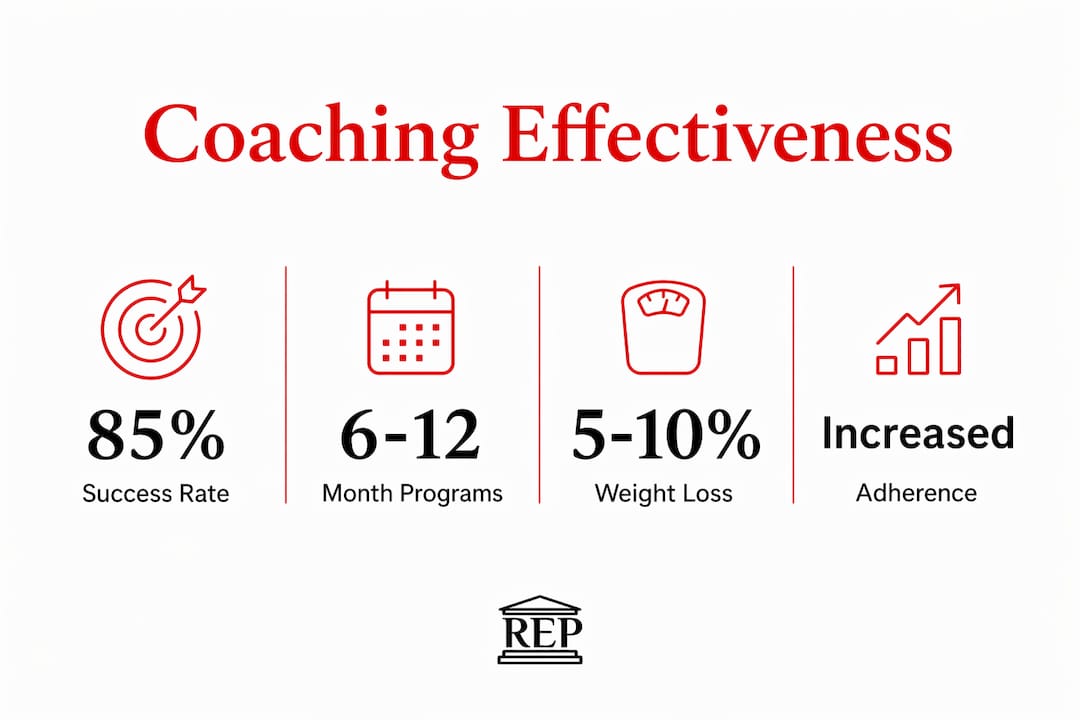
Meta-analyses confirm that structured coach interactions improve adherence and long-term success significantly more than self-directed methods. The reason is simple: accountability changes behavior in ways that willpower alone cannot.
| Factor | Why it matters |
|---|---|
| Program duration (6–12 months) | Longer programs allow habits to solidify and prevent relapse |
| Frequent coach contact | Regular check-ins improve adherence and catch problems early |
| Caloric deficit of 500 cal/day | Supports safe loss of 1–2 pounds weekly without muscle loss |
| Resistance training inclusion | Preserves lean mass and maintains metabolic rate during fat loss |
| Behavioral frameworks (5As, SMART) | Shift focus from dieting to sustainable lifestyle change |
"Coaching is the catalyst that drives adherence and greater weight loss success compared to self-help approaches." — Frontiers in Nutrition, 2026
Resistance training during a caloric deficit is one of the most underused tools in weight management. It preserves lean muscle mass, which keeps your resting metabolic rate from dropping as you lose weight. Coaches who skip this piece are leaving results on the table.
How does coaching help you push through common obstacles?
Every person who loses weight hits a wall at some point. Plateaus, motivation dips, and emotional eating are not signs of failure. They are predictable parts of the process, and a good coach prepares you for them in advance.
Here is how effective coaching addresses the most common obstacles:
- Plateaus: Plateaus are biological adaptations to a new energy balance, not a sign that your plan stopped working. Your coach recalculates your caloric needs and adjusts exercise intensity to break through them.
- Motivation dips: Coaches use SMART goal frameworks (Specific, Measurable, Achievable, Relevant, Time-bound) to refocus you after a setback without shame or discouragement.
- Emotional eating: Behavioral coaching identifies your triggers and builds replacement habits before cravings take over.
- Yo-yo dieting cycles: Coaches shift your focus from short-term restriction to long-term behavior change, which breaks the restrict-and-rebound pattern.
- Progress blindness: Tracking body composition and habit logs alongside scale weight shows real progress even when the number on the scale stalls.
Pro Tip: When you hit a plateau, do not cut calories further right away. Ask your coach to review your protein intake and training volume first. Often, adding muscle stimulus breaks a stall faster than reducing food.
The psychological side of weight loss is just as real as the physical side. Coaches who address both give you a far better chance of lasting success.
How to choose a weight loss coach that fits your needs
Choosing the right coach is one of the most important decisions you will make in your weight management effort. The wrong fit wastes time and money. The right fit changes your life.
Look for these qualities when evaluating your options:
- Verified credentials: Look for certifications from recognized bodies like NASM, ACE, or NSCA, combined with practical experience in weight management.
- Clear methodology: Your coach should explain their approach to nutrition, training, and behavior change before you commit to anything.
- Personalized planning: A quality coach builds your plan around your schedule, food preferences, and physical limitations. One-size-fits-all programs are a red flag.
- Coaching mode flexibility: Decide whether in-person, virtual, or a hybrid format works best for your lifestyle. Virtual coaching memberships are a strong option if your schedule or location limits in-person access.
- Honest communication style: Your coach should ask questions, listen carefully, and adjust based on your feedback, not just hand you a meal plan and disappear.
- Integration with medical care: If you have a health condition, your coach should be willing to coordinate with your doctor or dietitian.
Red flags include coaches who promise rapid weight loss beyond 2 pounds per week, push supplements as the primary solution, or refuse to explain the reasoning behind their recommendations. Trust your instincts. If a program feels like a quick fix, it probably is.
How to get the most out of your coaching program
Showing up is not enough. Getting real results from weight management support requires active participation and honest effort on your part.
- Commit to every check-in. Regular sessions only work if you show up prepared and honest about what happened since the last one.
- Set SMART goals from day one. Vague goals like "lose weight" produce vague results. Specific targets like "lose 8 pounds in 10 weeks" give your coach something to build toward.
- Prioritize resistance training. Strength work protects your muscle and keeps your metabolism from slowing as you lose fat. This is non-negotiable for lasting results.
- Log your food and habits. Self-monitoring is one of the strongest predictors of weight loss success. Your coach can only help you fix what they can see.
- Plan for setbacks. Talk to your coach about what you will do when you miss a workout or overeat at a social event. Having a plan prevents a single slip from becoming a month-long derailment.
- Focus on nutrient density. Eating enough protein, vegetables, and whole foods within your caloric target keeps hunger manageable and energy stable.
Pairing your coaching with a supportive community also helps. Group fitness classes add social accountability that keeps you moving on days when solo motivation runs low. Some people also find that having a training partner amplifies the results they get from their coach.
Key takeaways
Effective weight loss coaching combines personalized nutrition, resistance training, behavioral frameworks like the 5As and SMART goals, and consistent coach contact over 6 to 12 months to produce sustainable fat loss.
| Point | Details |
|---|---|
| Coaching outperforms self-guided efforts | Structured coach contact improves adherence and long-term results more than willpower alone. |
| 5–10% body weight loss in 6 months | This is the clinically supported outcome of comprehensive lifestyle coaching programs. |
| Plateaus require adjustment, not quitting | Recalculate calories and increase training intensity rather than abandoning the plan. |
| Track more than the scale | Body composition scans and habit logs reveal real progress that scale weight can hide. |
| Program length matters | Coaching programs lasting 6–12 months with frequent check-ins produce the most consistent results. |
What I have learned after years of coaching real people
The biggest misconception I see is that people think they need more information to lose weight. They do not. Most people already know they should eat less processed food and move more. What they actually need is someone who holds them accountable, adjusts the plan when life gets messy, and reminds them why they started when motivation fades.
I have worked with people who tried every diet on the market before they came to me. The ones who succeeded were not the ones with the most discipline. They were the ones who stopped treating every setback as a reason to start over and started treating it as data. That mindset shift is something a coach can help you build. A meal plan cannot.
The other thing I will tell you honestly is that the first two weeks are the hardest. Your body is adjusting, your habits are being challenged, and the results are not visible yet. Every client I have coached who pushed through that window made real, lasting progress. The ones who quit in week two never found out what was possible.
Weight loss is not a sprint with a finish line. It is a skill you build over time, with the right support standing by your side. That is what coaching actually is.
— Coach Justin
Ready to build your personalized plan with Repphilosophy?
Repphilosophy offers personalized coaching programs built around your goals, your schedule, and your life. Whether you prefer in-person sessions in 4S Ranch, virtual training from home, or a bring-a-buddy membership that keeps costs low and motivation high, there is a program designed to fit where you are right now.
Every Repphilosophy program integrates strength training, nutrition guidance, and real accountability so you build the habits that make results last. You do not have to figure this out alone. Reach out today and let's kick things off together.
FAQ
What is weight loss coaching?
Weight loss coaching is a professional service that combines personalized nutrition planning, structured exercise, and behavioral support to help you lose fat and maintain a healthy weight long-term.
How long does it take to see results from coaching?
Clinical guidelines show that comprehensive coaching programs produce 5% to 10% body weight loss within 6 months. Programs lasting 6–12 months with frequent check-ins deliver the most consistent results.
Is virtual weight loss coaching as effective as in-person?
Virtual coaching can be equally effective when it includes regular check-ins, personalized programming, and consistent accountability. The key factor is coach contact frequency, not location.
How do I know if a weight loss coach is qualified?
Look for certifications from recognized bodies like NASM, ACE, or NSCA, a clear methodology, and a willingness to personalize your plan. Coaches who promise rapid results beyond 2 pounds per week are a red flag.
What should I do when I hit a weight loss plateau?
Plateaus are natural biological adaptations, not failures. Work with your coach to recalculate your caloric needs and adjust your training intensity rather than cutting calories further on your own.