

Non-scale victories (NSVs) are defined as measurable health and performance improvements that occur independent of changes in body weight. The role of non-scale victories in fitness is pivotal because they capture real progress the scale simply cannot see. People who track non-scale victories are 3 times more likely to maintain healthy lifestyle habits for over a year compared to those who focus only on scale weight. That statistic tells you something important: the scale is a poor motivator, and NSVs are a far more reliable engine for lasting change. Markers like resting heart rate, sleep quality, and blood pressure reveal what is actually happening inside your body, often weeks before the scale budges.
What are the most common and impactful non-scale victories in fitness?
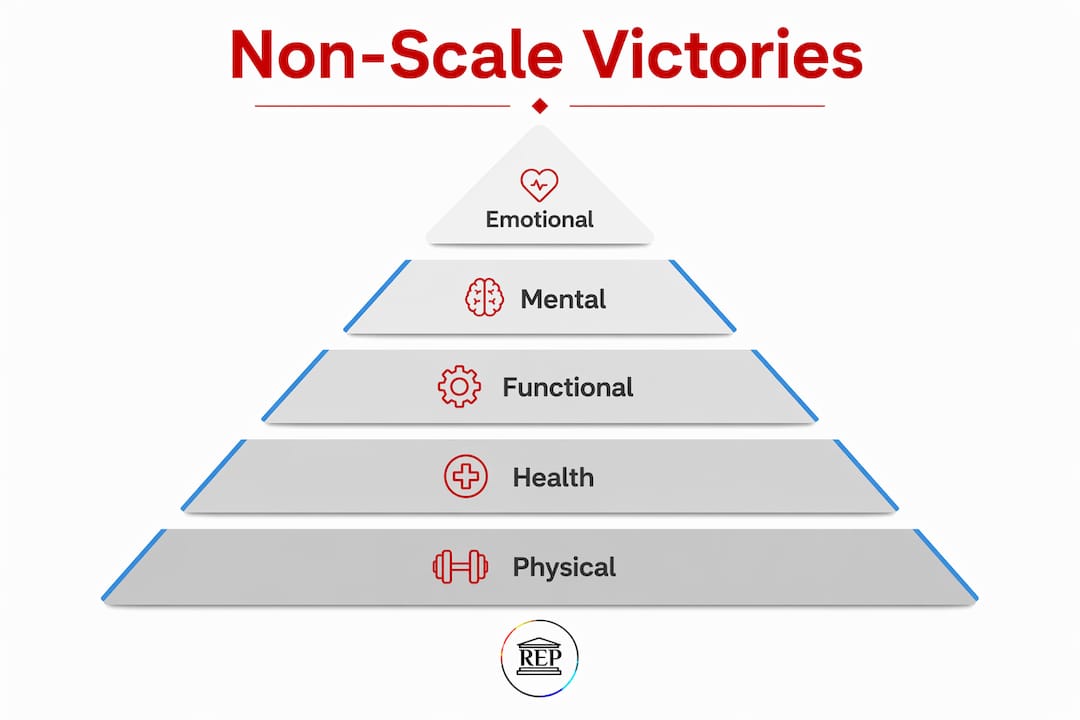
NSVs span every dimension of health, from physical performance to mental clarity. Recognizing them gives you a complete picture of your progress rather than a single, often misleading number.
Physical performance gains
Strength gains are among the most motivating NSVs you can experience. Lifting heavier weights, completing more reps, or finishing a workout that once left you wrecked are all signs your body is adapting. Endurance improvements follow the same pattern. Running a mile without stopping, cycling longer distances, or recovering faster between sets all signal real cardiovascular growth. Cardiovascular efficiency improvements can reduce workout recovery times by 50%–80%, independent of any weight loss. That kind of recovery shift changes how you feel every single day, not just in the gym.

Health indicator changes
Your resting heart rate dropping, your blood pressure normalizing, and your sleep quality improving are all NSVs with serious medical weight. For adults aged 40 and older, biomarkers like resting heart rate and sleep quality are more accurate for assessing metabolic health than body weight alone. These are the numbers your doctor actually cares about. Tracking them gives you objective proof that your habits are working, even when the scale stays flat.
Functional and lifestyle milestones
Clothes fitting differently, climbing stairs without losing your breath, carrying groceries without strain. These are NSVs hiding in plain sight. Muscle is approximately 18% denser than fat, which means your body can recompose significantly before the scale reflects any change. You might drop a pants size while your weight stays the same. That is body recomposition at work, and it is a powerful win worth celebrating.
Mental and emotional victories
Reduced anxiety, better mood after workouts, and growing self-confidence are NSVs that compound over time. They make fitness feel like something you do for yourself, not something done to punish your body. These emotional shifts are often the first sign that your relationship with fitness is becoming sustainable.
Pro Tip: Keep a weekly "win log" where you write down one physical and one emotional NSV. Reviewing it on tough weeks reminds you how far you have actually come.
How do non-scale victories provide better motivation than the scale?
The scale is a reactive tool. It measures an outcome influenced by hydration, digestion, hormones, and dozens of other variables that have nothing to do with your fitness habits. NSVs, by contrast, are proactive signals. They show you that your body is changing in real time.
NSVs prevent "all-or-nothing" thinking by shifting your definition of success away from a single number toward a broader set of health and performance improvements. This matters because all-or-nothing thinking is one of the top reasons people quit fitness programs. When the scale does not move for two weeks, someone focused only on weight often concludes that nothing is working. Someone tracking NSVs notices that they slept better, lifted more, and felt less winded on the stairs. They keep going.
"Weight is influenced by hydration, digestion, and hormones, so focusing on performance and functional abilities builds body respect rather than punishment. Shifting your attention to what your body can do, rather than what it weighs, is the foundation of a sustainable fitness mindset."
Focusing on function and strength encourages a positive, respectful relationship with your body. That shift from punishment to respect is not just feel-good advice. It is the psychological foundation of long-term adherence. People who enjoy their fitness practice and feel capable within it stay consistent far longer than those chasing a number. NSVs are what make fitness feel worth doing, even on the hard days.
Self-efficacy, the belief that you can succeed, grows every time you recognize an NSV. Each small win reinforces the identity of someone who is getting healthier. That identity becomes a powerful motivator on its own. You can read more about building that foundation in this guide on setting weight loss goals that actually stick.
What objective methods can you use to track non-scale victories effectively?
Vague progress is easy to dismiss. Specific, tracked data is not. The key to making NSVs work for your motivation is treating them like real metrics, because they are.
Here is a practical system for tracking NSVs with consistency:
- Start a fitness journal. Record your workouts, energy levels, sleep quality, and mood after each session. Review it weekly to spot trends.
- Use a wearable device. Devices that track step counts, resting heart rate, and sleep stages give you objective data without any guesswork.
- Take body measurements monthly. Measure your waist, hips, chest, and arms. These numbers often shift before the scale does.
- Log your performance numbers. Track reps, weights, distances, and times for your key exercises. Progress here is undeniable proof of improvement.
- Rate your sleep and energy daily. A simple 1–10 scale for sleep quality and daily energy gives you a fast, trackable snapshot of recovery.
Tracking NSVs as specific data points, such as step counts, sleep ratings, and blood pressure readings, avoids vague progress perception and builds stronger motivation. Concrete numbers give your brain something real to celebrate.
| NSV Category | What to Track | How Often |
|---|---|---|
| Cardiovascular fitness | Resting heart rate, recovery time | Weekly |
| Strength and performance | Reps, weight lifted, workout duration | Per session |
| Body composition | Measurements, clothing fit | Monthly |
| Sleep and recovery | Sleep quality rating, energy level | Daily |
| Mental health | Mood, anxiety levels, confidence | Weekly |
NSVs often appear weeks or months before weight changes, so waiting at least four weeks before assessing your progress is the recommended standard. Patience with your tracking system pays off. The data you collect in those early weeks becomes the evidence that keeps you motivated when progress feels invisible.
Pro Tip: Pair your NSV tracking with a fitness tracking system that logs multiple metrics simultaneously. Seeing several data points improve together is far more motivating than watching one number.
How do non-scale victories reflect deeper health improvements?
NSVs are not just motivational tools. They are clinical indicators of real health change. This distinction matters, especially as you get older.
A dropping resting heart rate signals that your heart is becoming more efficient. A heart that pumps more blood per beat does less work over the course of a day. That efficiency reduces cardiovascular risk over time. Recovery time improvements tell a similar story. When your body bounces back from a hard workout in one or two days instead of four or five, your cardiovascular and muscular systems are operating at a higher level.
For people over 40, metabolic health assessments that include resting heart rate, blood pressure, and sleep quality provide a far more accurate picture of health than the scale alone. Weight can stay the same while metabolic health improves dramatically. The reverse is also true, which is why scale-only thinking is genuinely misleading for this age group.
Physical function gains deserve equal attention. Reduced joint pain, improved balance, and greater mobility are NSVs that directly improve quality of life. They also reduce injury risk, which keeps you training consistently. NSVs are leading indicators of success, meaning they show up before the scale does and signal that your body is adapting in the right direction. Waiting for scale validation while these changes are already happening means missing the most meaningful evidence of your progress.
Sleep and mental clarity improvements round out the picture. Better sleep reduces cortisol, supports muscle recovery, and sharpens focus. These benefits feed back into your training, creating a positive cycle that compounds over months. The benefits of fitness milestones like these extend well beyond the gym.
Key Takeaways
Non-scale victories are the most reliable early indicators of genuine fitness progress, and tracking them consistently is the single most effective way to stay motivated through plateaus.
| Point | Details |
|---|---|
| NSVs outperform scale metrics | People tracking NSVs are 3x more likely to maintain healthy habits for over a year. |
| Health markers matter more | Resting heart rate, blood pressure, and sleep quality are stronger health indicators than weight, especially for adults 40+. |
| Body recomposition precedes scale change | Muscle density means clothing fits better before the scale reflects any difference. |
| Objective tracking beats vague perception | Logging specific metrics like steps, sleep scores, and reps prevents false conclusions about progress. |
| NSVs build sustainable motivation | Shifting focus from weight to function reduces all-or-nothing thinking and supports long-term adherence. |
Why I tell every client to ditch the weekly weigh-in
I have coached people at every fitness level, and the pattern is always the same. The clients who obsess over the scale are the ones who quit. The clients who get excited about lifting five more pounds, sleeping through the night, or finally keeping up with their kids at the park. Those are the ones who stay.
The scale is not a bad tool. It is just a terrible primary metric. It tells you almost nothing about what is actually changing in your body. I have watched clients lose inches, drop a clothing size, and improve their blood pressure, all while the scale barely moved. If they had been judging success by weight alone, they would have quit something that was genuinely working.
What I have found is that celebrating small wins regularly is not just a feel-good habit. It is a behavioral strategy. Every time you recognize an NSV, you reinforce the identity of someone who is getting healthier. That identity is what carries you through the weeks when progress feels slow. The clients I work with at Repphilosophy who track their performance, sleep, and energy alongside their workouts consistently outperform those who track weight alone. Not because they are more talented, but because they have more reasons to keep going.
My advice is simple. Pick three NSVs to track this week. Write them down. Celebrate them out loud. Then do it again next week. That habit, repeated over months, builds the kind of resilience that no scale can measure.
— Coach Justin
How Repphilosophy coaching puts NSVs to work for you
At Repphilosophy, every training plan is built around what your body can do, not just what it weighs. Whether you are working toward strength gains, better sleep, or simply feeling more capable in daily life, the coaching approach here tracks the metrics that actually matter.
Clients in the personal training programs at Repphilosophy regularly report NSVs like improved recovery times, stronger lifts, and better energy levels within the first few weeks. These wins keep motivation high between scale changes. Ready to experience that for yourself? Explore a personal training session in 4S Ranch and see what real, measurable progress feels like. If you prefer flexibility, the on-demand exercise library lets you train on your schedule while still building toward meaningful milestones.
FAQ
What are non-scale victories in fitness?
Non-scale victories are measurable health and performance improvements that occur independently of body weight changes. They include strength gains, improved sleep, lower resting heart rate, better mood, and increased endurance.
How do I track non-scale victories effectively?
Track specific metrics like step counts, reps lifted, sleep quality ratings, body measurements, and resting heart rate. Logging these consistently over at least four weeks reveals clear trends that the scale cannot show.
Why are NSVs more motivating than scale weight?
NSVs reflect real biological changes happening in your body right now, while scale weight fluctuates daily based on hydration and digestion. Recognizing NSVs prevents all-or-nothing thinking and keeps motivation strong through plateaus.
Are non-scale victories medically relevant?
Yes. Biomarkers like resting heart rate, blood pressure, and sleep quality are more accurate indicators of metabolic health than weight alone, particularly for adults over 40.
How long before I start seeing non-scale victories?
NSVs often appear within the first few weeks of consistent training, well before scale changes occur. Fitness experts recommend tracking for at least four weeks to capture meaningful trends.