
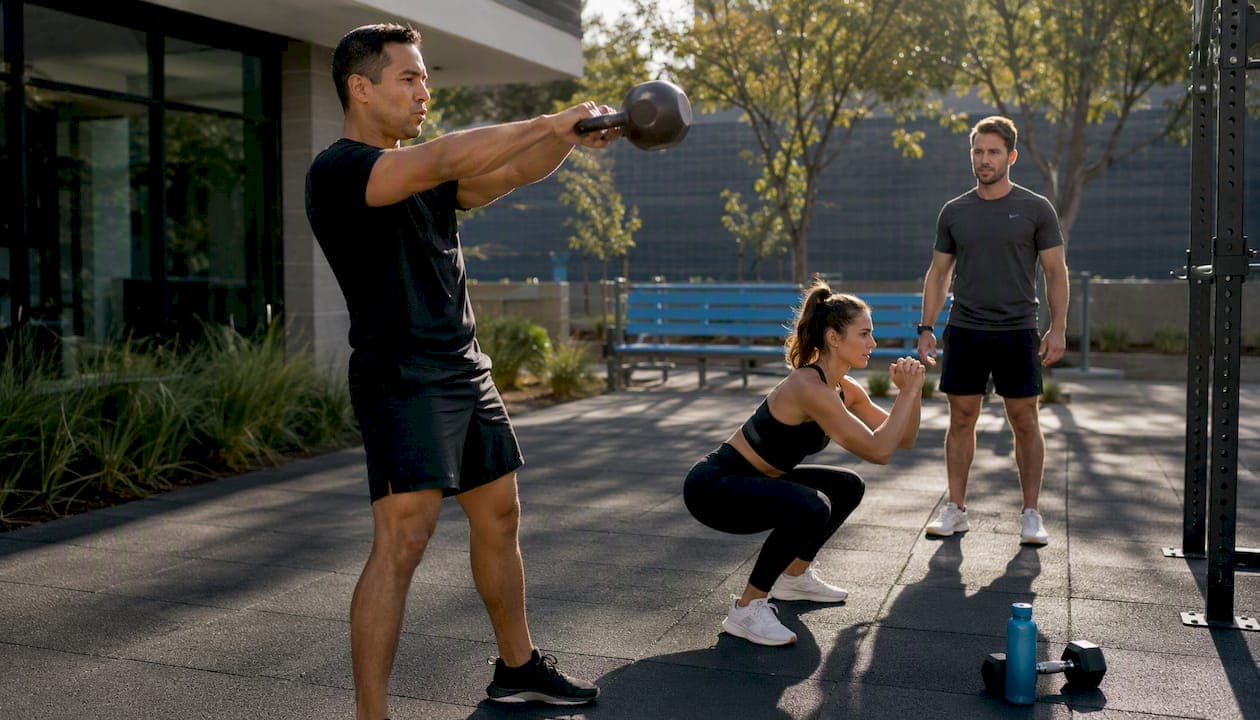
Yes, for most people, semi-private training gives you personalized coaching and real accountability at a fraction of what one-on-one sessions cost, making it the more sustainable choice unless you need continual, minute-by-minute supervision. The trade-off is simple: you get slightly less individual attention in exchange for individualized programming, community, and a price point that lets you train more often. That last part matters more than people realize.
Here's what this guide covers so you can decide with confidence:
- What semi-private training actually looks like day to day
- The core benefits: personalization, cost savings, accountability, technique coaching, and motivation
- Where private training still wins, and how to manage those gaps
- Real cost comparisons and how to spot a low-quality program
- How to pick a coach and what a good first session should feel like
Key Takeaways
Semi-private training works best as a cost-effective middle ground that preserves individualized coaching while letting clients train more frequently for better long-term results.
| Point | Details |
|---|---|
| Group size stays small | Most quality programs cap groups between one and six clients per coach to protect attention. |
| Savings fund frequency | Choosing semi-private over one-on-one can save $320 to $345 a month, letting you train more often. |
| Accountability drives adherence | Supervision and social support in small groups are linked to stronger long-term exercise consistency. |
| Private training still has its place | Recent injuries, rehab coordination, and tight event deadlines call for one-on-one attention instead. |
| Repphilosophy offers a low-risk trial | Repphilosophy's 4S Ranch programs include a bookable trial session to test coaching quality before committing. |
Table of Contents
- What Are the Benefits of Semi-Private Training Sessions, Starting With the Format Itself?
- What Are the Main Benefits of Semi-Private Coaching?
- When Should You Choose Private Training Over Semi-Private?
- Who Gets the Most Value From Semi-Private Training?
- What Does a Semi-Private Session Actually Look Like?
- How Much Does Semi-Private Training Cost, and Where Does the Savings Go?
- What Should You Ask Before Choosing a Semi-Private Program?
- Who's Coaching You, and Can You Try It First?
- Is Semi-Private Training Worth It? A Coach's Honest Take
- Try a Session Before You Decide
- Frequently Asked Questions
- Sources
What Are the Benefits of Semi-Private Training Sessions, Starting With the Format Itself?
Semi-private training means you get an individualized program, built specifically for your goals and limitations, delivered inside a small group with one coach. You're not doing the same workout as the person next to you. You're doing your workout, in the same room, at the same time, with a coach who's watching both of you.
Most reputable programs cap groups between one and six clients per coach, though some run slightly larger depending on the space and equipment. That range keeps the coach close enough to correct your squat depth or adjust your load on the fly, rather than lecturing from the front of a room.
The coaching model itself is what makes this work: the coach moves between clients in short cycles, checking form, loading the next set, and answering questions, then circling back. In practice, that might look like:
- Client A doing a strength circuit for a marathon comeback
- Client B working mobility drills after a knee scope
- Client C running conditioning intervals for a triathlon
- All three sharing one coach, one room, and one clock
That's the model detailed by programs like Redefine RVA's semi-private format, which describes exactly this kind of individualized programming running in parallel within a small coached group.
What Are the Main Benefits of Semi-Private Coaching?
The benefits of semi-private training sessions stack up in ways that go beyond "cheaper than a personal trainer." Each one solves a specific problem that either private training or big group classes leaves unaddressed.
1. Personalized programming that still fits your goals. Your coach writes your program around your goals, injuries, and experience level, then adjusts weights, exercises, and rep schemes as you progress. If you're rebuilding after a shoulder issue, you're not doing overhead presses because the group is.
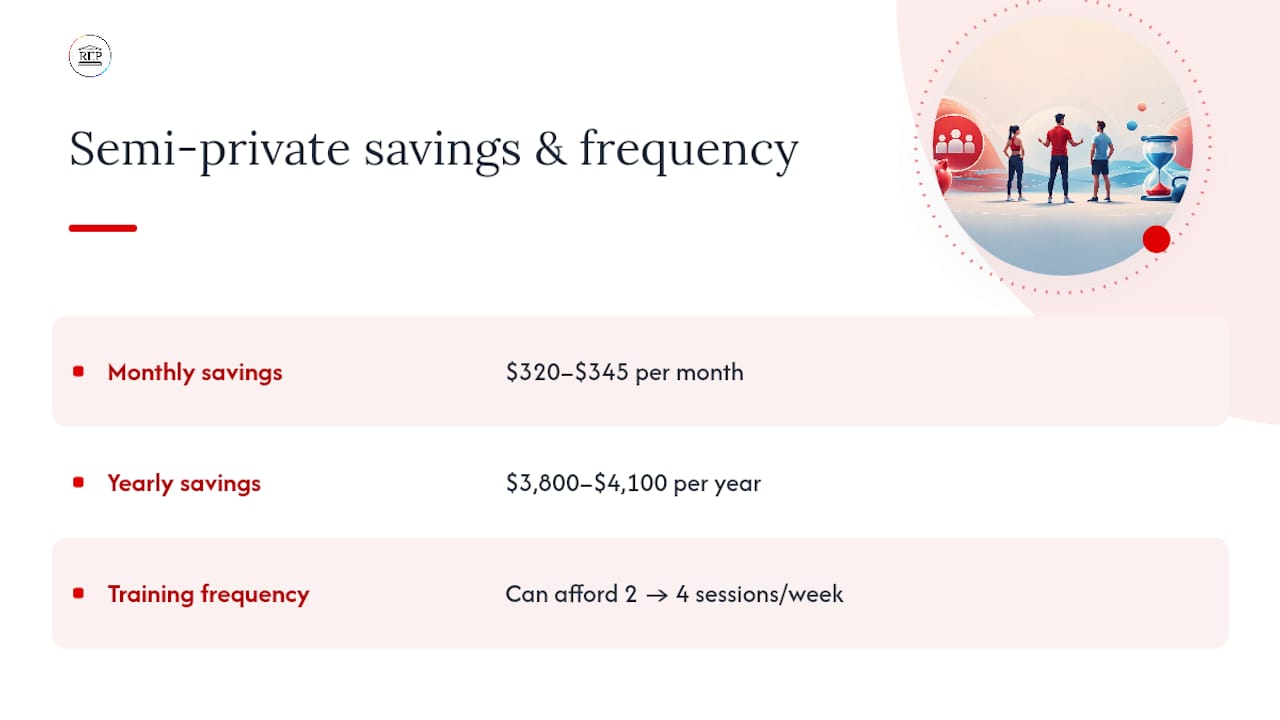
2. Cost-effectiveness that changes your training frequency. This is the benefit that reshapes everything else. Choosing semi-private over one-on-one training can save roughly $320 to $345 per month, or about $3,800 to $4,100 a year. That's not pocket change. It's the difference between affording two sessions a week and affording four.
3. Accountability and social support that actually stick. Training with the same small group builds a mild social obligation that keeps people showing up on the days motivation is low. This isn't a soft claim. Research published in Frontiers in Psychology identifies supervision and social support as strong predictors of long-term exercise adherence, which is precisely what a consistent small group provides.

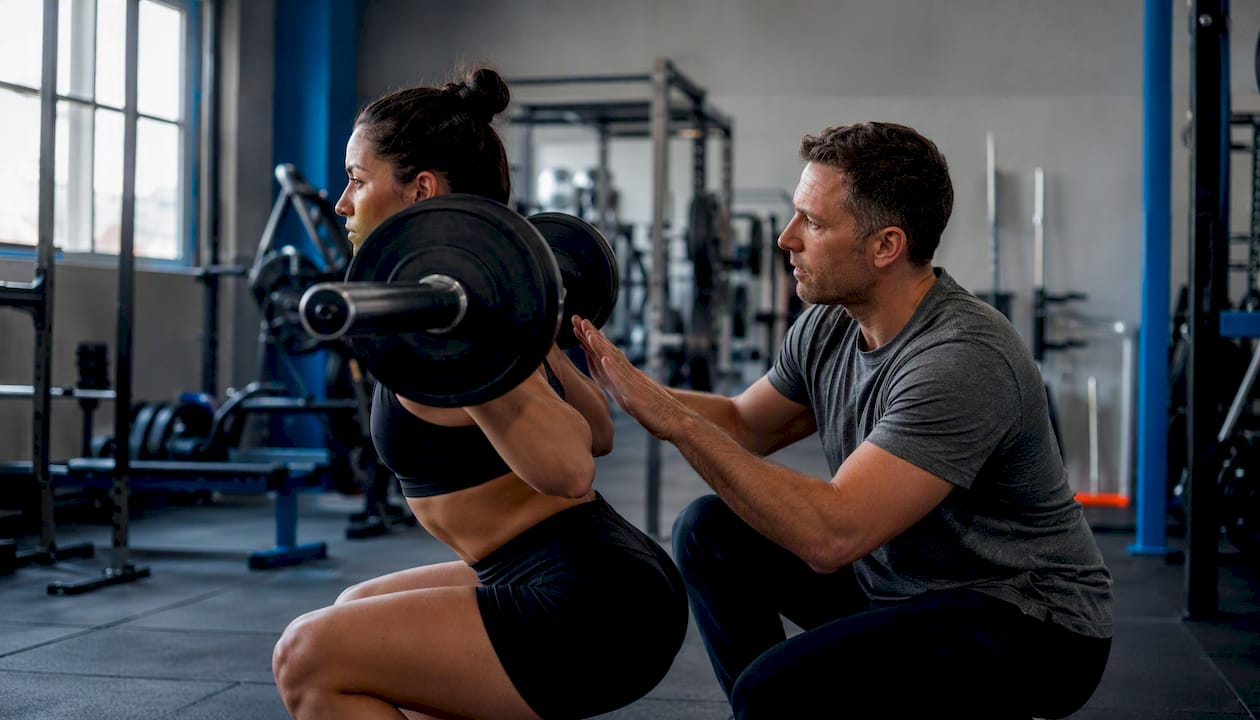
4. Better technique coaching than large classes allow. A coach watching six people can catch a rounding lower back or a caving knee in real time. A coach watching thirty people in a boot camp class simply can't. That gap is where injuries quietly happen.
5. Motivation through visible, low-pressure competition. Watching a training partner grind through the last rep of a set tends to pull more effort out of you than training alone. It's not about winning. It's about not wanting to be the one who quits early.
6. More frequent training sessions, which compounds results. Training two to four times a week with coached programming beats one polished session every other week. Consistency, not intensity on a single day, is what drives most of the visible change people are chasing.
Industry writeups from studios like Higher Level Fitness consistently point to the same pattern: clients who train more often at a lower per-session cost report better long-term consistency than those stretching an expensive private package into once-a-week sessions.
Pro Tip: Ask a prospective coach how many total clients they're actively programming for that day, not just per session. A coach juggling twelve different programs across four groups is still individualizing your work, but a coach running the same circuit for everyone in the room is not delivering semi-private training. They're running a class with a different name.
When Should You Choose Private Training Over Semi-Private?
Semi-private training isn't the right fit for every situation, and pretending otherwise would do you a disservice. A few scenarios genuinely call for one-on-one attention.
- Recent or complex injuries. If you're coordinating recovery with a physical therapist, you need a coach's full attention on load management, not split between three clients.
- Post-rehab transitions. Moving from clinical rehab back into strength training requires tight, session-by-session communication that a group format can't always deliver.
- Last-minute event prep. If you have six weeks until a wedding, a competition, or a physical test, one-on-one lets a coach optimize every single variable for you alone.
- Skill or pace mismatches. A beginner placed in a group of advanced lifters, or vice versa, can slow everyone down or leave one person unchallenged.
Scheduling is the other honest limitation. Semi-private sessions run on fixed group times, so make-ups after a missed session are less flexible than rebooking a private slot, and you have less control over exact session pacing.
Pro Tip: You don't have to choose one format forever. Many clients run semi-private as their base and book an occasional private tune-up before a big event or after an injury flare-up. Ask if your program allows this hybrid approach before you commit to a package.
If you're dealing with a recent injury, it's worth reading up on natural recovery timelines or understanding when to see a physical therapist versus a chiropractor before deciding which coaching format fits your recovery stage.
Who Gets the Most Value From Semi-Private Training?
Certain profiles get outsized value from this format. If you recognize yourself here, that's a strong signal.
- Beginners past the first 4 to 8 weeks. Early on, you need close attention on fundamentals. Once basic movement patterns are solid, a small group setting gives you enough coaching to keep refining technique without paying for full-time supervision.
- Midlife adults who want consistent oversight. You need a coach watching your joints and recovery, but not at a price that makes three sessions a week impossible. This is the group where the savings from semi-private most directly translate into sustainable, long-term training habits.
- Budget-conscious trainees who want more frequency. Lower per-session cost means more sessions per month, and more sessions per month is usually the bigger lever for results.
- Recreational athletes running sport-specific blocks. Triathletes, weekend soccer players, and recreational lifters benefit from structured programming without needing a private coach's undivided attention every session.
- Poor fit: anyone needing constant supervision or full privacy. If you require someone watching every single rep, or you strongly prefer training without anyone else in the room, private sessions remain the better call.
What Does a Semi-Private Session Actually Look Like?
A well-run session follows a predictable rhythm: warm-up, individualized work blocks, coach check-ins, and a cool-down. Watching this rhythm during a trial tells you more about program quality than any sales pitch will.
During the session, a good coach:
- Circulates between clients on a short, consistent cycle instead of parking at one station
- Adjusts loads, reps, or exercise selection in real time based on how you're moving
- Corrects form cues out loud, so you learn the "why" behind the fix
- Tracks what you did that day, whether on paper, an app, or a shared log
Your job as the client is straightforward: communicate pain, fatigue, or schedule changes early, and keep a simple log of weights and reps so your coach can adjust week to week.
On timeline, expect technique improvements within the first two to four weeks, since form correction happens fast in a small group. Strength and conditioning gains typically show up over 8 to 12 weeks of consistent attendance, which is a realistic window whether you're doing semi-private, private, or personalized programming of any kind.
How Much Does Semi-Private Training Cost, and Where Does the Savings Go?
The number that matters most here: switching from one-on-one to semi-private training can save you roughly $320 to $345 a month, close to $4,000 a year. That's not a marginal discount. It's enough to fund an entirely different training frequency.
Here's the practical math: if private sessions eat your budget down to one session a week, semi-private at a lower per-session rate often lets you train three or four times weekly for the same money. More frequent, coached training tends to outperform one polished weekly session, simply because consistency compounds.
A few budgeting notes worth acting on:
- Buying a session pack usually beats drop-in pricing if you're committing for more than a month
- Redirect part of your savings toward an occasional private tune-up before a big event
- Watch for pricing red flags: cohorts larger than eight or ten with one coach, vague add-on fees, or every client running the identical workout regardless of goals
That last point is the biggest tell. If everyone in the room is doing the same circuit, you're paying semi-private prices for a group class.
What Should You Ask Before Choosing a Semi-Private Program?
A quality program is easy to verify if you know what to look for. Before signing up, run through this checklist:
- What's the cohort cap? Ask directly how many clients train per coach in a single session, and hold them to it.
- How is my program individualized? A strong coach can explain, in specific terms, how your plan differs from the client next to you.
- What are the coach's qualifications? Certifications and hands-on experience with your specific goals (return from injury, sport prep, general strength) matter more than years in business alone.
- How is progress tracked? Ask whether they log your weights, reps, and benchmarks, and how often they reassess.
- Is a trial session available? A program confident in its coaching will let you test a session before committing to a package.
- What's the cancellation and make-up policy? Get this in writing before you pay for a multi-month package.
Pro Tip: During your trial, count how many times the coach speaks directly to you by name and corrects a specific movement. If it happens fewer than two or three times in a 45 to 60 minute session, the group is likely too large for real individualization.
Who's Coaching You, and Can You Try It First?
This guide is written from the coaching perspective of Coach Justin at Repphilosophy, based in 4S Ranch, San Diego. Repphilosophy runs semi-private and buddy training memberships alongside private sessions, group fitness classes, youth sports performance programs, and virtual training with a full exercise video library.
A few things worth knowing before you commit to any semi-private program, including ours:
- Look for transparent, published pricing rather than a sales call before you see a single number
- Ask whether the coach can describe their certification background and specific experience with your goals
- A trial session is the single best way to judge coaching quality firsthand, not a sales page
- You can book a trial training session to see how individualized programming feels inside a small group before committing further
Is Semi-Private Training Worth It? A Coach's Honest Take
Most people overthink this decision by treating it as personalization versus price. It's actually about frequency. I've watched clients get further in three semi-private sessions a week than they ever did with one expensive private session every other week, simply because they showed up more.
I recommend semi-private to almost everyone who isn't managing an acute injury or racing a hard deadline. The consistency wins more often than the extra minute of individual attention does.
If you're unsure which fits you, a single trial session tells you more than any comparison chart.
Try a Session Before You Decide
You've seen the trade-offs. Now here's the direct comparison that matters for your wallet: private training gets you more one-on-one minutes, but semi-private training at Repphilosophy gets you individualized programming, a coach watching your form, and a small group of training partners, at a price that lets you train several times a week instead of once.

Repphilosophy's semi-private and buddy training memberships in 4S Ranch, San Diego run small coached groups with programs built around your goals, not a one-size circuit. If you're budget-conscious but still want real coaching, this is the format built for you. Start with a personal training trial session to feel the coaching quality firsthand, or head straight to the training packages if you're ready to commit. Prefer to train on your own schedule? The on-demand exercise library gives you coached programming without a fixed session time.
Frequently Asked Questions
What are the main benefits of semi-private training sessions compared to one-on-one coaching? Semi-private training gives you individualized programming and coach attention at a lower cost, which typically lets you train more often and build the consistency that drives real results.
How many people are usually in a semi-private training session? Most quality programs keep groups between one and six clients per coach, small enough for the coach to correct form and adjust your program throughout the session.
Is semi-private training as effective as personal training? For most goals, yes. The frequency you can afford with semi-private pricing often outweighs the extra individual attention you'd get from fewer, pricier private sessions.
When is one-on-one personal training a better choice than semi-private? Choose private training if you're managing a recent injury, coordinating rehab, or preparing for a specific event on a tight deadline that requires full coaching attention every session.
How do I know if a semi-private program is actually individualized? Ask the coach directly how your program differs from other clients in your group, and watch during a trial session whether they adjust your exercises, loads, and cues in real time.
Sources
- Semi-Private vs 1-on-1 Personal Training — Which Should You Pick? — Redefine RVA
- Frontiers in Psychology — supervision and social support in exercise adherence
- Semi-Private vs 1-on-1 Personal Training — Which Should You Pick? — Redefine RVA
- Why Semi-Private Training Beats 1-on-1 and Big Classes — Higher Level Fitness