

The most effective low back pain fix is consistent, targeted movement. Not rest, not painkillers, and not waiting it out. 85% to 90% of low back pain cases are classified as non-specific, meaning no structural fault shows up on imaging. That fact changes everything about how you should approach relief. Clinical guidelines now firmly support conservative, movement-based management over invasive diagnostics or surgery. The good news is that the tools you need are simple, accessible, and backed by solid research.
What are the best exercises for low back pain relief?
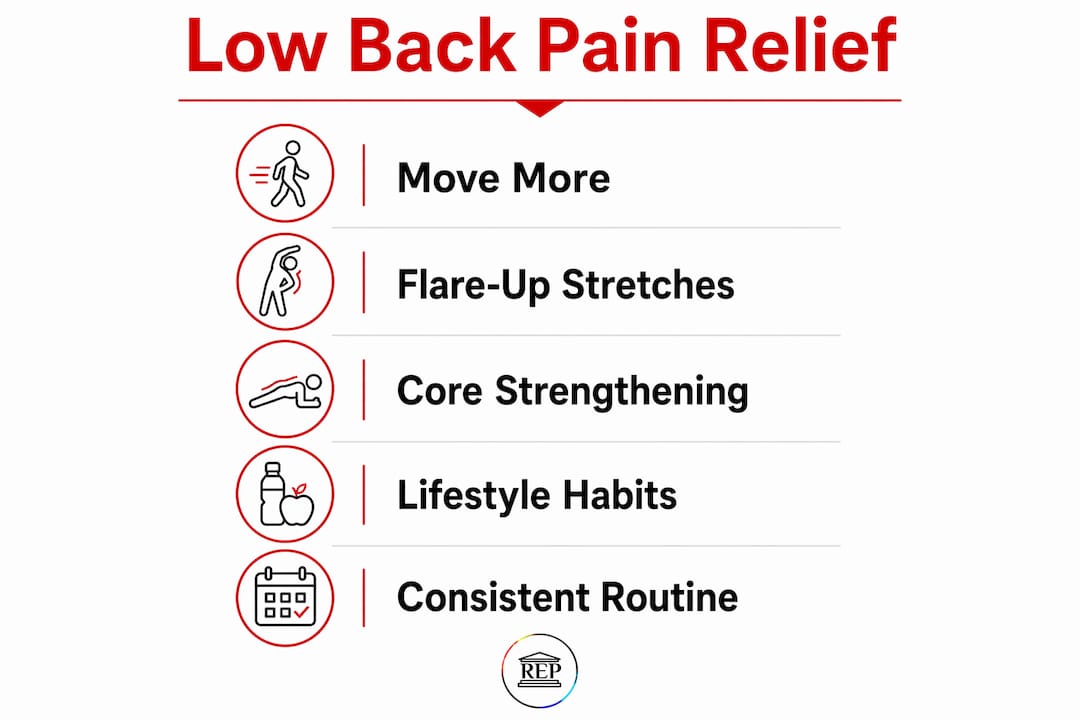
The right exercises are the foundation of any real lower back pain relief plan. Research confirms that traditional exercise protocols performed 15–20 minutes per session, 6–7 times a week, over at least 16 weeks produce the strongest results for chronic pain. That frequency matters because your nervous system and muscles need repeated, consistent input to adapt. Short, daily sessions beat long, infrequent workouts every time.
Flare-up stretches: gentle and repeated
During an active flare-up, gentle repeated motion calms pain faster than static holds. Prone press-ups and cat-cow are two of the most effective moves because they restore motion without loading the spine aggressively. Knee-to-chest stretches also work well. Hold each position for 5–10 seconds, repeat 10 times, and move slowly. The goal is to reduce guarding and restore range of motion, not to push through pain.

Maintenance stretches for ongoing care
Once the acute phase settles, your routine should expand. These five moves build flexibility and reduce recurrence:
- Hip flexor stretch (kneeling lunge position, 30 seconds per side): releases tension from prolonged sitting.
- Figure-4 glute stretch (lying on your back, ankle over opposite knee): targets the piriformis, a common contributor to low back tightness.
- Child's pose (arms extended, hips back toward heels, 30–45 seconds): decompresses the lumbar spine gently.
- Seated hamstring stretch (legs extended, hinge forward from hips, not the waist): reduces posterior chain tension pulling on the pelvis.
- Cat-cow (on hands and knees, alternate arching and rounding the spine, 10 reps): keeps the lumbar spine mobile and warms up the supporting muscles.
Pro Tip: Pair your morning stretches with three minutes of slow walking before you begin. That light movement primes blood flow and makes every stretch more effective.
How do treatment options beyond exercise help fix low back pain?
Exercise is the core, but a complete chronic back pain solution includes several other layers. Physical therapy, yoga, and tai chi reduce pain and improve function more effectively than passive treatments like rest or massage. Active approaches build resilience. Passive treatments only offer temporary relief without addressing the underlying movement deficits.
Yoga for back pain is particularly well supported because it combines flexibility, breath control, and body awareness. That combination helps people move with more confidence and less fear, which is a major factor in recovery. Tai chi offers similar benefits through slow, controlled movement patterns that retrain balance and coordination.
Lifestyle changes carry equal weight. Here is what the evidence supports:
- Maintain a healthy weight. Excess body weight increases compressive load on the lumbar discs and joints.
- Avoid prolonged sitting. Stand or walk for at least two minutes every 30–45 minutes to reduce disc pressure.
- Manage stress actively. Chronic stress increases muscle tension and lowers pain tolerance. Breathing exercises, sleep hygiene, and regular movement all help.
- Stay hydrated. Spinal discs are largely water. Dehydration reduces their ability to absorb shock.
Physical therapy combined with lifestyle habits like weight management and stress reduction leads to better functional outcomes and less reliance on medication. If your pain persists beyond six weeks despite consistent effort, seek a professional evaluation. A physical therapist can identify movement patterns that are working against you and correct them before they become chronic.
What mistakes make low back pain worse?
The most common mistake people make is stretching too aggressively during a flare-up. Intense forward bends, lumbar rotation stretches, and weighted stretching all increase symptoms and can aggravate nerve-related pain. The spine is already sensitized during a flare-up. Adding load or deep stretch to that state tells your nervous system there is a threat, which triggers more guarding and more pain.
Avoid these movements during acute episodes:
- Toe touches (standing forward fold): places high tensile load on already irritated posterior structures.
- Deep lumbar rotation (lying twist with knees pulled hard to one side): can compress inflamed facet joints.
- Weighted stretches (using a resistance band or weight to deepen a stretch): removes your body's natural protective limit.
- Sit-ups and full crunches: create high spinal flexion load and are counterproductive during flare-ups.
- High-impact activity (running, jumping): adds compressive force before the tissue is ready.
If you experience shooting pain, numbness, or tingling down one or both legs, stop all stretching immediately and consult a medical professional. These symptoms may indicate nerve compression that requires clinical assessment before any exercise program continues.
Aggressive stretching worsens muscle guarding by triggering a protective response from the nervous system. Gentle, repeated movements do the opposite. They signal safety to the brain and gradually restore normal motion. Think of it as a conversation with your nervous system, not a battle against your muscles.
For people managing pain alongside other musculoskeletal issues, safe activity modifications during recovery apply the same principle: reduce intensity, maintain movement, and progress gradually.
How do you build a routine that prevents future back pain?
Preventing recurrence requires consistency over months, not days. Consistent exercise over at least 16 weeks is necessary because reversing central sensitization and building musculoskeletal resilience takes time. There is no shortcut. People who stop exercising after two or three weeks of feeling better are the ones who end up back where they started.
The most effective prevention routine combines three elements: daily stretching, core strengthening, and aerobic activity. Combining stretching with core work and regular walking reduces recurrence rates more effectively than stretching alone. Walking is especially underrated. It loads the spine in a healthy, rhythmic way, activates the deep stabilizers, and improves circulation to the discs.
Core strengthening does not mean crunches. It means training the deep stabilizers: the transverse abdominis, multifidus, and pelvic floor. Dead bugs, bird dogs, and modified planks are far more effective than traditional ab exercises for spinal stability. These muscles support the lumbar spine during every movement you make throughout the day.
Posture and ergonomics also matter for long-term prevention. Set your workstation so your screen is at eye level, your feet are flat on the floor, and your lower back has light support. Vary your positions throughout the day. No single posture is perfect for extended periods. Movement variety is the goal. For people with busy schedules, practical workout strategies that prioritize injury prevention make consistency far easier to maintain.
Pro Tip: Schedule your core and stretching sessions like appointments. People who block time on their calendar for movement are significantly more consistent than those who fit it in "when they can."
Most acute low back pain resolves within six weeks with active management. That timeline is encouraging, but it also means the work you do in those first six weeks sets the foundation for whether pain returns. Build the habit now, and your back will thank you for years.
Key Takeaways
The most effective low back pain fix combines daily gentle movement, targeted core strengthening, and consistent lifestyle habits maintained for at least 16 weeks.
| Point | Details |
|---|---|
| Movement beats rest | Active approaches like physical therapy and yoga outperform passive treatments for lasting relief. |
| Frequency matters | 15–20 minute sessions, 6–7 days per week produce the strongest outcomes for chronic pain. |
| Flare-up protocol | Use gentle, repeated moves like cat-cow and prone press-ups; avoid deep stretches during acute episodes. |
| Combine modalities | Pair daily stretching with core strengthening and walking to reduce recurrence rates. |
| Commit to 16 weeks | Musculoskeletal adaptation and nervous system changes require sustained effort over months, not days. |
What I've learned coaching people through back pain
Most people come to me convinced their back is broken. They've had an MRI, seen a number of specialists, and been told to rest. By the time they reach me, they're afraid to move. That fear is the real problem.
Education on movement safety changes the recovery trajectory more than any single exercise. When someone understands that their pain is not a sign of structural damage but a sensitized nervous system, they start moving differently. Less bracing. Less guarding. More trust in their own body.
What I've seen consistently is that the people who recover fastest are not the ones who do the most. They're the ones who show up every single day and do a little. Ten minutes of cat-cow and a 15-minute walk beats one aggressive gym session followed by three days of rest every time. Patience is not passive. It's the most active choice you can make.
I also want to be honest about something the fitness industry rarely admits: there is no perfect exercise for back pain. The best exercise is the one you will actually do consistently. Start where you are. Progress when you're ready. And if something hurts in a sharp, shooting way, stop and get it checked. Pain is information, not weakness.
The non-specific nature of most back pain means the solution is rarely structural. It's behavioral. Change how you move, how often you move, and how you think about movement. That's where real recovery lives.
— Coach Justin
Repphilosophy coaching for your back pain recovery
If you're ready to stop guessing and start moving with a plan, Repphilosophy is here to help. Based in 4S Ranch, Repphilosophy offers personalized training programs built around evidence-based protocols exactly like the ones covered in this article.
You don't have to figure this out alone. The on-demand exercise library gives you video-guided routines you can follow at home, at your own pace, with professional coaching built in. Whether you prefer working one-on-one, joining a group class, or training virtually, Repphilosophy has a program that fits your life and your budget. Your back deserves a real plan, not another round of rest and hope.
FAQ
What is the fastest way to relieve lower back pain?
Gentle, repeated movements like cat-cow and prone press-ups provide the fastest relief during a flare-up. Avoid static deep stretches, which can increase muscle guarding and worsen symptoms.
How often should I exercise for chronic low back pain?
Research supports 15–20 minute sessions performed 6–7 times per week for at least 16 weeks. Consistency and frequency matter more than session length for chronic pain management.
Can yoga help fix low back pain?
Yes. Yoga reduces pain and improves function by combining flexibility, breath control, and body awareness. It is one of the most well-supported non-drug approaches for managing back pain.
When should I see a doctor for low back pain?
Seek medical evaluation if pain persists beyond six weeks, or if you experience numbness, tingling, or shooting pain down your legs. These symptoms may indicate nerve involvement requiring clinical assessment.
Does walking help low back pain?
Walking is one of the most effective low-impact activities for back pain. It loads the spine rhythmically, activates deep stabilizing muscles, and improves circulation to the spinal discs.