
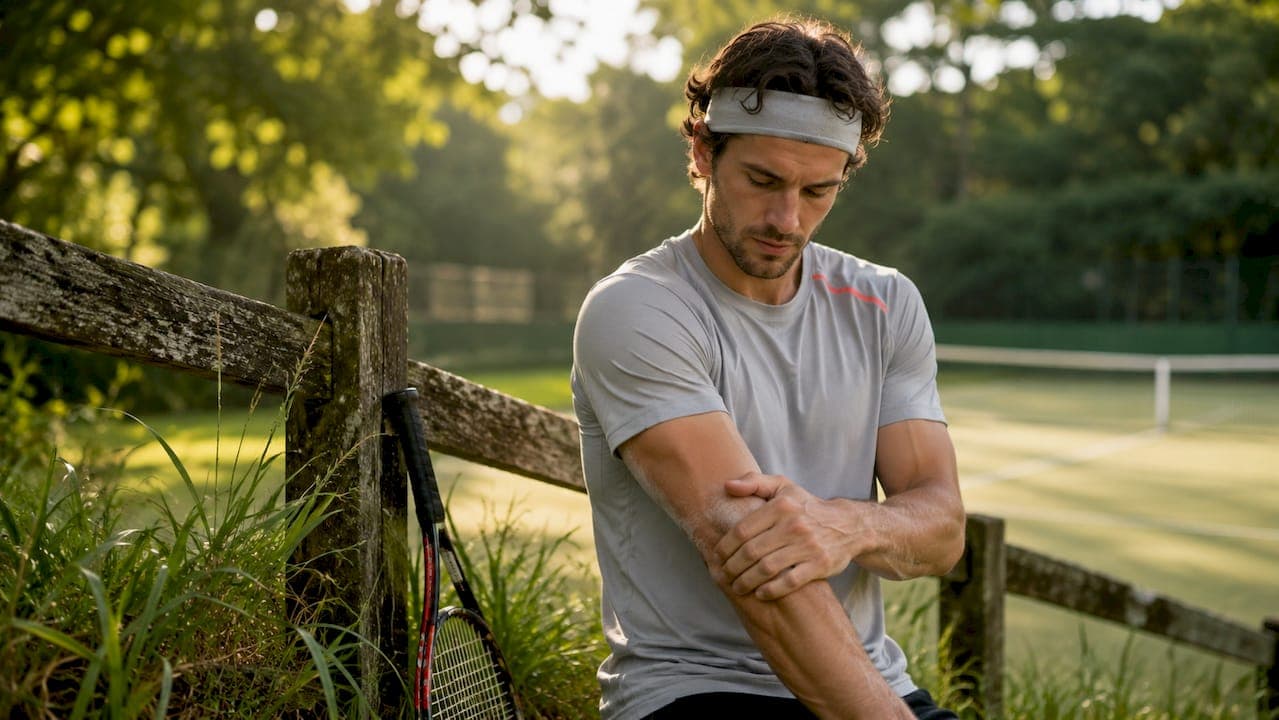
Tennis elbow, clinically known as lateral epicondylitis, is defined as a tendon overload condition affecting the forearm muscles that attach to the outer elbow. The most effective tennis elbow fix is a structured, progressive loading exercise program that rebuilds tendon strength over 6–16 weeks. 80–90% of people recover without surgery when they follow a quality physiotherapy program. Rest alone does not work. Load management does. This guide walks you through every stage of recovery, from the first exercises to knowing when to call in a specialist.
What is tennis elbow and why does it happen?
Tennis elbow is a load-management issue, not a simple inflammation problem. That distinction matters because it changes everything about how you treat it. Anti-inflammatory approaches alone will not fix the underlying tendon damage.
The condition develops when the extensor tendons of the forearm are repeatedly overloaded beyond their capacity. This happens in tennis, yes, but also in carpentry, painting, typing, and any task that involves repeated gripping or wrist extension. The tendon fibers break down faster than they can repair themselves, leading to a degenerative state called tendinopathy.
Here is what makes tendinopathy tricky:
- The tendon loses its organized collagen structure and becomes disorganized and weak.
- Blood flow to the area is limited, which slows natural healing.
- Pain signals become sensitized, meaning even light activity can feel intense.
- Complete rest weakens tendon capacity further, making the problem worse over time.
The concept of "tendon capacity" is central to recovery. Every tendon has a load threshold. When you regularly exceed that threshold, breakdown wins. When you apply the right amount of load consistently, the tendon remodels and grows stronger. The goal of any good tennis elbow treatment is to raise that threshold through progressive, controlled stress.
Understanding this is not just reassuring. It is the first step toward doing something real about it.
How to fix tennis elbow with progressive loading exercises
Progressive loading is the gold standard for lateral epicondylitis rehabilitation. The approach works by applying controlled mechanical stress to the tendon, which signals the body to rebuild stronger collagen fibers. Tendon remodeling requires consistent moderate load stimulation over 6–16 weeks. Rushing the process or skipping phases leads to setbacks.
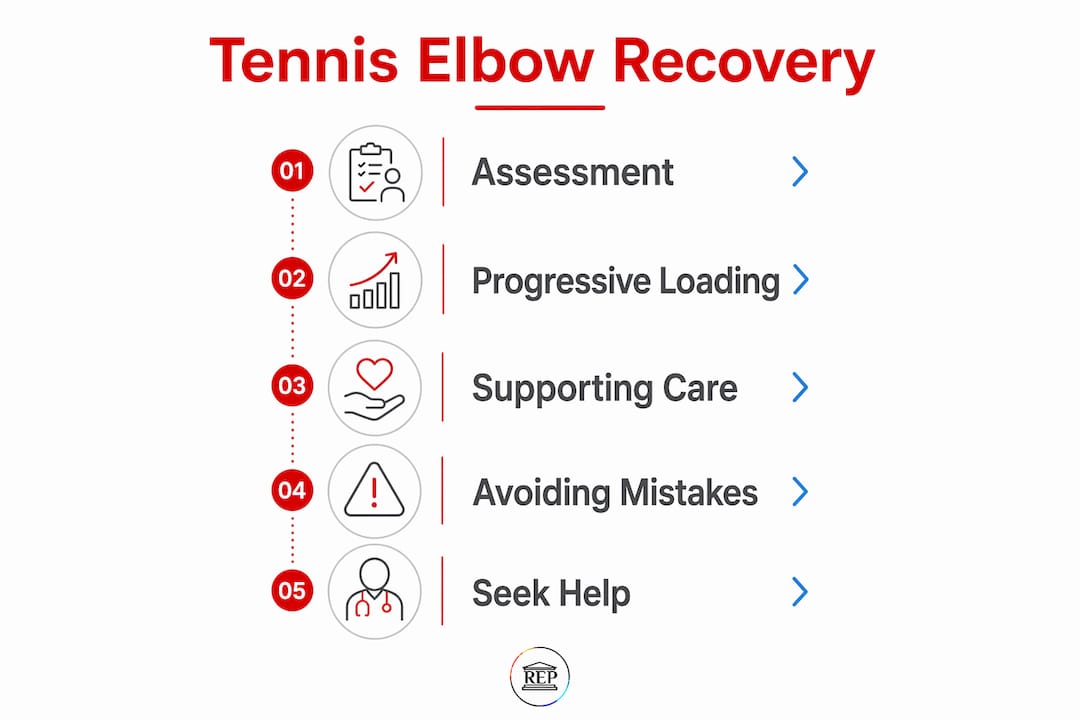
The program follows three phases:
-
Isometric loading (weeks 1–2). Hold a wrist extension position against resistance without moving the joint. This reduces pain quickly and maintains tendon tension without aggravating the tissue. A simple example: press the back of your hand against a wall and hold for 30–45 seconds.
-
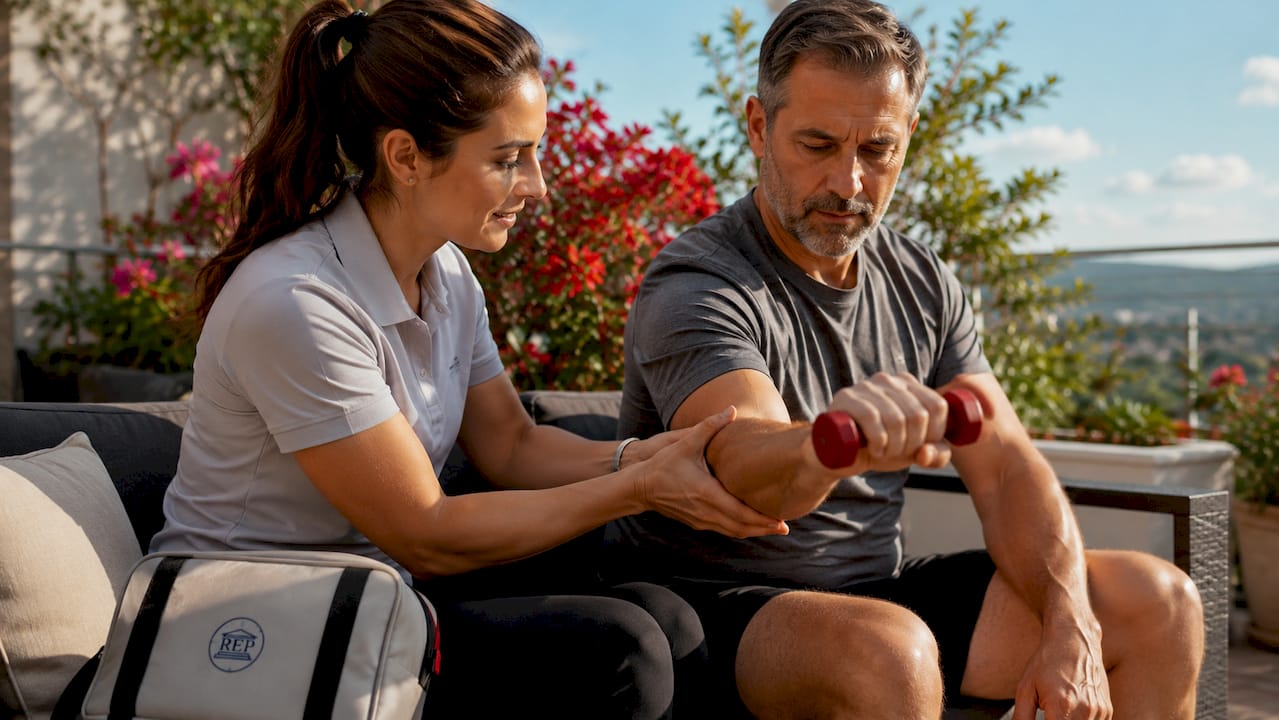
Eccentric loading (weeks 3–6). Slowly lower a light dumbbell from a wrist-extended position. Eccentric contractions, where the muscle lengthens under load, are especially effective at stimulating tendon remodeling. Use a weight that causes mild discomfort but not sharp pain.
-
Heavy Slow Resistance, or HSR, training (weeks 6–16). This method uses heavier loads performed at a slow tempo, typically 3 seconds up and 3 seconds down. HSR has strong clinical support for rebuilding tendon structure and restoring full strength. Wrist curls, reverse wrist curls, and forearm pronation and supination exercises all fit here.
Pro Tip: Pain during exercise is acceptable if it stays below a 4 out of 10 on a pain scale and returns to baseline within 24 hours. If pain lingers longer, reduce the load.
Shoulder and upper-back stability exercises belong in this program too. Insufficient shoulder blade stability forces the elbow and wrist to compensate, increasing stress on the already damaged tendon. Rows, face pulls, and scapular retractions are not optional extras. They are part of the fix.
Serious players looking to protect their technique while rehabbing can also find value in structured coaching approaches that address how stroke mechanics contribute to elbow overload. Fixing the movement pattern prevents the injury from coming back.
Supporting treatments and symptom management during recovery
Adjunctive treatments help you manage pain so you can keep training. They do not cure the tendon. That distinction is critical.
| Treatment | Short-term benefit | Long-term value | Best use |
|---|---|---|---|
| Ice and NSAIDs | Reduces pain and swelling | Low | First 1–2 weeks of acute flare |
| Counterforce brace | Reduces tendon load during activity | Moderate | During work or sport, not rest |
| Corticosteroid injection | Rapid pain relief in 4–6 weeks | Poor | Cautious, one-time use only |
| PRP injection | Moderate improvement | Better than cortisone long-term | After 3–6 months of failed rehab |
| Shockwave therapy | Stimulates healing response | Moderate to good | Chronic cases, 3–6 months in |
Braces and NSAIDs provide symptom relief but do not fix tendon structure. Think of them as tools that let you participate in rehab more comfortably, not as solutions on their own.
Corticosteroid injections deserve special attention. They feel like a cure because pain drops fast. But cortisone provides rapid relief in 4–6 weeks while producing worse outcomes at 12 months compared to exercise-based physiotherapy. The injection masks pain without addressing the tendon's structural deficit. People who rely on it often return with the same injury, or worse.
Platelet-Rich Plasma, or PRP, shows better long-term results than cortisone for persistent cases. PRP uses your own blood, processed to concentrate growth factors, and injected into the tendon to stimulate repair. It is not a first-line option, but it earns its place when conservative care has not worked after several months.
Pro Tip: If a doctor recommends a corticosteroid injection before you have completed at least 6–8 weeks of progressive loading, ask about alternatives. The injection may delay your actual recovery.
Common mistakes that slow down tennis elbow rehabilitation
Most people make the same errors. Knowing them in advance saves weeks of frustration.
- Resting completely. Complete rest feels logical but weakens tendon capacity and sensitizes pain signals. The tendon needs load to heal. Zero activity is not the answer.
- Progressing too fast. Jumping from isometric holds to heavy lifting in week two causes flare-ups. Each phase needs time. Respect the 6–16 week timeline.
- Relying only on a brace. A counterforce brace reduces load during activity, which is useful. But wearing it all day as a substitute for rehab delays recovery. It is a bridge, not a destination.
- Avoiding all triggers. Modifying how you grip, lift, or swing is smart. Avoiding every activity that uses your forearm is not. Graded exposure keeps the tendon adapting.
- Stopping rehab when pain fades. Pain disappears before the tendon fully remodels. Stopping at the pain-free mark is the most common reason tennis elbow comes back.
Managing a flare-up during rehab is straightforward. Drop back one phase, reduce load by 20–30%, and let symptoms settle for 48–72 hours before progressing again. You do not need to start over. You just need to back off briefly and rebuild.
Return to sport or physical work follows the same logic. Gradually reintroduce the specific movements that caused the problem, starting at reduced intensity. For tennis players, this means hitting groundstrokes before serving, and practicing technique before full-pace rallying. Interactive sports apps for tennis can help you track technique changes and monitor how your elbow responds during this phase.
When should you seek advanced treatment or a specialist?
Most people do not need advanced care. But some cases genuinely require it, and knowing the timeline prevents you from suffering longer than necessary.
| Timeline | Recommended action |
|---|---|
| 0–6 weeks | Begin progressive loading program; use bracing and NSAIDs as needed |
| 6–12 weeks | Reassess progress; add shoulder stability work if not already included |
| 3–6 months | Consider shockwave therapy or PRP if quality rehab has not produced improvement |
| 6–12 months | Surgical referral appropriate if comprehensive conservative care has failed |
Shockwave therapy or specialist referral is the recommended next step for chronic cases that have not responded after 3–6 months of quality rehab. Shockwave uses acoustic pulses to stimulate tissue repair and increase blood flow to the tendon. It works best when combined with continued loading exercises, not as a standalone fix.
Surgery is a last resort. Only 1–2% of people with tennis elbow require it. The procedure involves removing the degenerated tendon tissue and reattaching healthy fibers. Recovery from surgery takes 3–6 months on its own, which is why exhausting conservative options first always makes sense.
A sports medicine physician or orthopedic specialist can evaluate imaging, rule out other causes of elbow pain, and guide you toward the right next step. Do not wait 12 months in pain before asking for help. If your rehab program is not producing measurable improvement at the 3-month mark, get a professional assessment.
Key takeaways
Progressive loading exercise is the most effective and evidence-backed tennis elbow fix, with 80–90% of people recovering fully through structured physiotherapy over 6–16 weeks.
| Point | Details |
|---|---|
| Load, not rest, heals tendons | Complete rest weakens the tendon; progressive loading rebuilds it over 6–16 weeks. |
| Follow three exercise phases | Progress from isometric holds to eccentric loading to Heavy Slow Resistance training. |
| Use adjuncts carefully | Braces, NSAIDs, and cortisone manage symptoms but do not fix tendon structure. |
| Shoulder stability matters | Strengthening the shoulder and upper back reduces compensatory stress on the elbow. |
| Seek help at 3 months | If quality rehab has not improved symptoms after 3 months, pursue specialist evaluation. |
What I have learned from watching people fight through elbow pain
Most people who come to me with elbow pain have already tried two things: rest and a brace. Neither worked. That is not a coincidence.
The uncomfortable truth about tennis elbow recovery is that you have to load the thing that hurts. Not aggressively, not recklessly, but consistently and progressively. Every person I have worked with who committed to that process got better. Every person who kept waiting for the pain to disappear on its own kept coming back with the same problem.
The other thing I have seen repeatedly is how much shoulder weakness contributes to elbow overload. People focus entirely on the forearm and ignore the fact that a weak, unstable shoulder blade forces the elbow to absorb forces it was never designed to handle. Fixing the elbow without addressing the shoulder is like fixing a leak without turning off the water. The importance of sport-specific training and proximal stability applies here just as much as it does in athletic performance.
My honest advice: be patient, be consistent, and do not let short-term pain relief fool you into thinking you are healed. The tendon needs weeks to remodel. Give it that time, and it will reward you.
— Coach Justin
Ready to build a recovery program that actually works?
Recovering from tennis elbow requires a structured plan, not guesswork. At Repphilosophy, we build programs around your specific needs, whether you are rehabbing a tendon, rebuilding strength, or returning to sport. Our coaching is available in person at our 4S Ranch facility and virtually for those who prefer to train from home.
If you want expert guidance through every phase of your recovery, our on-demand exercise library gives you access to guided programs you can follow at your own pace. Prefer a personal touch? Book a personal training trial session and let us build your plan together. Your tendon is ready to get stronger. Let's get to work.
FAQ
What is the fastest way to relieve tennis elbow pain?
Isometric wrist extension exercises reduce pain quickly in the first 1–2 weeks and are the safest starting point. Ice and a counterforce brace can support comfort during daily activity while you begin loading.
How long does tennis elbow take to recover?
Most people recover fully in 6–16 weeks with a structured progressive loading program. Cases that go untreated or are managed with rest alone often take much longer.
Can tennis elbow heal without physical therapy?
Mild cases sometimes resolve on their own, but progressive physiotherapy produces the highest recovery rates and the lowest recurrence. Self-directed loading exercises following a structured plan can substitute when professional care is not accessible.
Is a golfer's elbow fix the same as for tennis elbow?
The approach is similar. Both conditions involve tendinopathy from repetitive overload, and both respond to progressive loading. The key difference is location: golfer's elbow affects the inner elbow, so the exercises target flexor tendons rather than extensors.
When should I stop exercising and see a doctor?
Stop and seek evaluation if pain is sharp and constant, if you experience numbness or tingling in the hand, or if symptoms have not improved after 3 months of consistent, quality rehab.