

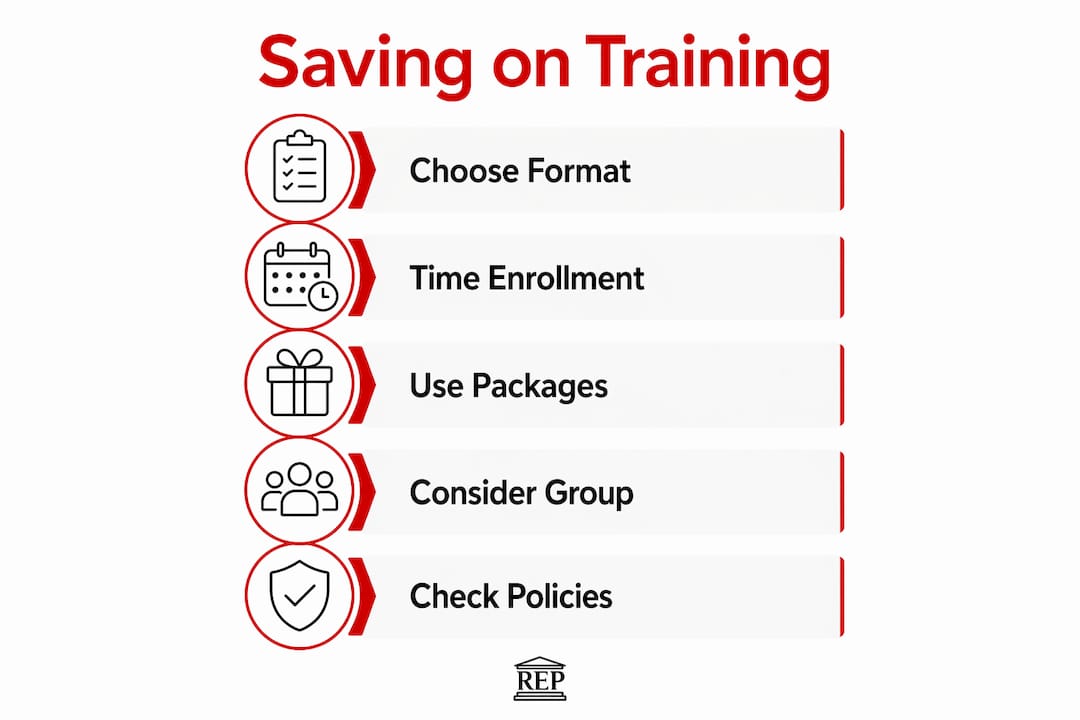
Saving money on a personal training membership means choosing the right pricing model, timing your enrollment, and using group formats that split trainer costs across multiple clients. In San Diego, options range from discount gym memberships starting at $15 per month to semi-private studio plans under $100 per month. Repphilosophy, based in 4S Ranch, offers bring-a-buddy memberships, group classes, and virtual coaching that make professional guidance genuinely affordable. The strategies in this article will help you cut costs without cutting corners on your results.
How to save money on a personal training membership: your options in San Diego
Personal training memberships in San Diego span a wide range of formats and price points, and understanding the baseline helps you spot real savings. The industry term for structured, recurring coaching access is a "training membership," which differs from a drop-in session or a gym-only pass. Knowing the difference puts you in control of your budget from day one.
Planet Fitness is the most recognizable budget option in the market. Its Classic Card starts at $15 per month and includes trainer-led small-group sessions called PE@PF at no extra charge. The Black Card upgrade runs $24.99 per month and adds guest privileges and access to all locations. That is a meaningful value if you use the group training sessions consistently.
FastFit sits in the mid-tier range and offers a more structured coaching experience. Semi-private training starts at $99 per month, while 1-on-1 sessions start at $319 per month. The gap between those two numbers is the clearest argument for choosing a group format when your goals allow it. FastFit also requires a complimentary intro session to confirm exact pricing at your location, which is worth scheduling before you commit.

| Membership Type | Provider | Starting Monthly Cost | Coaching Format |
|---|---|---|---|
| Classic Card | Planet Fitness | $15 | Trainer-led group (PE@PF) |
| Black Card | Planet Fitness | $24.99 | Group + guest access |
| Semi-private | FastFit | $99 | 2-4 clients per trainer |
| 1-on-1 private | FastFit | $319 | Individual sessions |
| Bring-a-buddy | Repphilosophy | Flexible | Partner or small group |
| Virtual coaching | Repphilosophy | Flexible | Remote, on-demand |
Local boutique studios in San Diego increasingly offer small-group formats in the 3 to 6 client range, which sit between semi-private and full group classes in both price and attention. These are worth comparing against traditional gym memberships when you want more personalized programming without paying private rates.
How do package deals and group training cut your per-session cost?
The economics behind group training are straightforward. Trainers earn more per hour by coaching multiple clients simultaneously, and that efficiency is passed on to you as a lower per-person rate. A trainer charging $100 for a private hour can charge $50 per person in a pair session and still earn more. That math is why partner and small-group training consistently delivers the best value in the market.
Session block contracts amplify those savings further. Buying 8 or 12 sessions upfront typically reduces the per-session rate compared to paying one at a time. Some trainers and studios structure their pricing so that every third session is free when two or more clients attend together. That structure rewards consistency and gives you a built-in incentive to keep showing up.
Pro Tip: Before signing any session block contract, ask specifically about the expiration policy and what happens to unused sessions. Some contracts expire in 30 days, which can turn a "deal" into a loss if life gets in the way.
Attendance policies matter more than most people realize. Trainer session-sharing policies vary widely, and some require upfront payment for blocks with strict rules on missed classes. If your training partner skips a session, confirm in writing whether you still receive the group discount or revert to the private rate for that day. Clarifying this before you sign protects the savings you planned for.
For a deeper look at how group fitness classes compare to private sessions in both cost and results, the difference is often smaller than people expect when the programming is well-designed.
When and how to use promotional discounts in 2026
Timing your enrollment is one of the most underrated ways to save on fitness programs. Promotional pricing windows predominantly reduce first-month and enrollment costs rather than changing baseline monthly fees. That means the smartest move is to join during a promo period and lock in the lowest possible entry cost, then stay long enough for that upfront saving to compound.
Planet Fitness runs recurring promotions throughout the year, including offers with $1 down payments and $15 monthly fees. In early 2026, the brand promoted free massage amenity access alongside standard membership enrollment. These windows typically align with January, spring, and back-to-school seasons, which are the three highest-demand periods for new memberships.
Here is how to make the most of promotional windows:
- Track promo cycles. Planet Fitness, local studios, and Repphilosophy each run seasonal deals. Set a calendar reminder for January, March, and August to check current offers.
- Evaluate the full cost picture. Look beyond the monthly fee. Annual fees, enrollment fees, and cancellation terms all affect your true cost. A $10 per month plan with a $49 annual fee costs more than a $15 per month plan with no annual fee over 12 months.
- Ask about app access and partner discounts. Memberships with app access and partner discounts add value beyond session pricing alone. Apps with tracking tools reduce the trainer hours you need, which lowers your total spend.
- Negotiate enrollment fees. Many studios will waive or reduce enrollment fees during slower months. It never hurts to ask directly, especially if you are committing to a longer contract.
Pro Tip: If you find a promo you like but are not quite ready to start, ask the studio to honor the promotional rate for a start date two to four weeks out. Many will accommodate this, especially at the end of a month when they are working toward enrollment targets.
Can you use an HSA or FSA to save on personal training?
Health savings accounts (HSAs) and flexible spending accounts (FSAs) are tax-advantaged accounts that let you pay for qualifying medical expenses with pre-tax dollars. The catch is that fitness expenses are not automatically eligible. IRS guidance requires a Letter of Medical Necessity linking the specific fitness expense to a diagnosed medical condition before gym memberships or personal training qualify for reimbursement.
A Letter of Medical Necessity, or LMN, is a document from your physician stating that a specific fitness activity is medically required to treat or manage a diagnosed condition. Examples include obesity, Type 2 diabetes, hypertension, or orthopedic rehabilitation. Without this documentation, fitness expenses are considered non-eligible wellness costs and will be denied at reimbursement.
Here is what you need to use your HSA or FSA for personal training costs:
- A formal diagnosis from a licensed physician connecting your condition to the need for structured exercise
- A Letter of Medical Necessity on official letterhead, signed by your doctor
- Itemized receipts from your training provider showing dates, services, and costs
- Confirmation from your HSA or FSA administrator that the specific expense qualifies under your plan
The most common misconception is that a trainer's recommendation or a general wellness goal is sufficient. Relying solely on a provider's recommendation often results in denial unless a formal LMN connects the expense to a specific medical diagnosis. If you have a qualifying condition, this process is worth pursuing because it can reduce your net training cost by 20 to 37 percent depending on your tax bracket.
What practical steps help you get the most from your training budget?
The most cost-effective training model combines professional expertise at the start with self-guided execution in the middle and periodic check-ins to keep you on track. This approach balances paying for expertise where it matters most and maximizing low-cost workout execution the rest of the time. It is how serious athletes train, and it works just as well for everyday fitness goals.
- Start with a professional assessment and custom program. Invest in two to four sessions upfront to get a baseline assessment, movement screen, and personalized program. This is where professional guidance has the highest return. Repphilosophy builds this into its initial client process so you are never guessing about what to do next.
- Shift to self-guided workouts for the bulk of your training. Once you have a solid program, execute it on your own three to four days per week. A home workout routine or gym floor work costs nothing beyond your base membership. This is where most of your weekly volume should live.
- Schedule periodic check-ins instead of weekly 1-on-1 sessions. Monthly or bi-weekly check-ins with your trainer keep your program fresh and your form sharp without the full cost of constant private sessions. Many clients find this cadence more sustainable over 6 to 12 months.
- Use virtual or hybrid training to fill the gaps. Virtual coaching from Repphilosophy delivers real-time feedback and programming adjustments at a fraction of in-person rates. The benefits of virtual training include flexibility, lower cost, and access to your coach from anywhere in San Diego or beyond.
- Find a training partner. Splitting sessions with a friend through a bring-a-buddy model cuts your per-session cost immediately. It also adds accountability, which research consistently links to better adherence and results. Repphilosophy's partner training membership is built exactly for this.
Key takeaways
Saving money on personal training requires combining the right membership format, smart timing, and a training structure that uses professional guidance where it counts most.
| Point | Details |
|---|---|
| Choose group or partner formats | Semi-private and buddy sessions cut per-person costs significantly compared to private rates. |
| Time your enrollment | Join during promotional windows to minimize enrollment fees and first-month costs. |
| Use HSA or FSA strategically | A Letter of Medical Necessity from your doctor can make training costs tax-deductible. |
| Shift to a hybrid training model | Combine an initial assessment with self-guided workouts and periodic check-ins to reduce total spend. |
| Read session policies carefully | Attendance and expiration rules on block contracts directly affect whether advertised savings are real. |
What I have learned coaching in San Diego about making training affordable
Working with clients across 4S Ranch and the broader San Diego area, I have seen one pattern repeat itself more than any other. People overspend early, burn out on the cost, and quit before they see results. The fix is not finding the cheapest option available. It is building a structure that matches your budget and your lifestyle from the start.
Semi-private training is genuinely underutilized in this market. Most clients who try it are surprised by how much attention they still receive and how much more motivated they feel training alongside one or two other people. The social element is not a compromise. For many people, it is actually better than training alone with a coach.
Seasonal promo windows are real and worth planning around. I have watched clients save hundreds of dollars simply by waiting three weeks to enroll during a January or spring promotion. That patience pays off, especially when you are committing to a 6 or 12 month program.
My honest advice is this: prioritize consistency over amenities. A $15 per month membership you use four times a week beats a $200 per month membership you use twice. The best training plan is the one you actually follow, and the best membership is the one that fits your life without creating financial stress. Start where you are, build the habit, and scale up when the results give you the confidence to invest more.
— Coach Justin
Affordable personal training in San Diego starts here
Repphilosophy offers flexible, cost-effective training options designed for real people with real budgets right here in San Diego.

From bring-a-buddy memberships and group classes to virtual coaching and on-demand workout libraries, there is a format that fits your schedule and your wallet. The virtual coaching memberships are especially popular for clients who want professional programming without committing to in-person session rates every week. If you are ready to take the first stride toward your goals without overpaying, explore the full range of training plans and memberships at Repphilosophy and find the option that works for you.
FAQ
How much does personal training cost per month in San Diego?
Personal training costs in San Diego range from $15 per month for group-included gym memberships like Planet Fitness to $319 per month or more for private 1-on-1 studio sessions. Semi-private options like those at FastFit start around $99 per month and offer a strong middle ground.
What is the cheapest way to get personal training?
The cheapest personal training option is a bring-a-buddy or small-group session, where trainer costs are split across two to four clients. Virtual coaching memberships are another cost-effective solution, delivering professional programming at a lower rate than in-person private sessions.
Can I use my HSA or FSA for a personal training membership?
You can use an HSA or FSA for personal training if your physician provides a Letter of Medical Necessity linking the training to a diagnosed medical condition. Without that documentation, fitness expenses are not eligible for reimbursement under IRS guidelines.
When is the best time to join a gym or training program to save money?
January, March, and late summer are the most common promotional windows for gyms and training studios. Promotional periods typically reduce enrollment fees and first-month costs, making them the best time to lock in a lower entry price.
Is virtual personal training actually worth it for saving money?
Virtual personal training delivers professional programming and real-time coaching at a fraction of in-person rates, making it one of the most practical ways to save on fitness programs without sacrificing structure or accountability.