
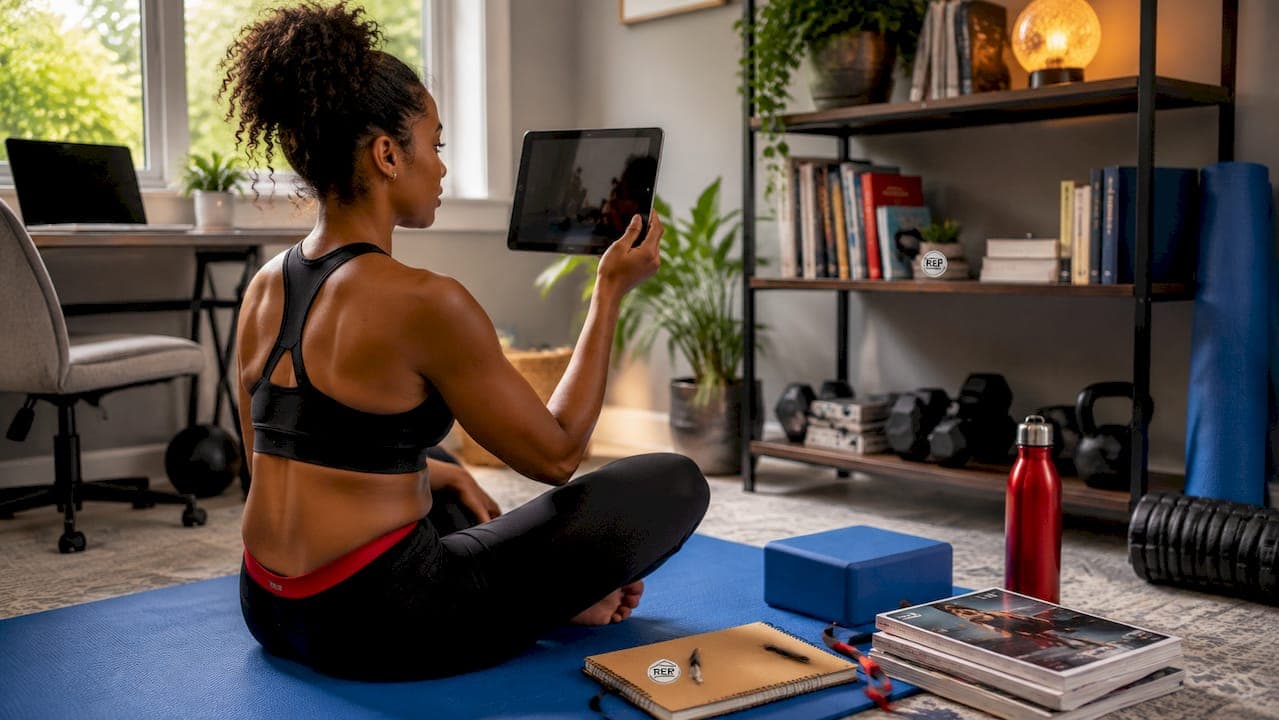
An exercise video library is a curated, searchable database of guided exercise videos paired with coaching cues, muscle group tags, and filtering tools designed to support safe and effective workouts at home. Unlike a random playlist or a generic search result, a quality library gives you structure, context, and the kind of coaching detail that keeps you moving correctly and consistently. Repphilosophy builds its virtual training around exactly this principle: that guided, on-demand access to coached exercise videos is one of the most practical tools available for anyone trying to build real fitness habits without a gym.
What features make a high-quality exercise video library?
The best fitness video collections share a clear set of qualities that separate them from basic video uploads. Knowing what to look for saves you time and keeps you safe.
Video quality and coaching context
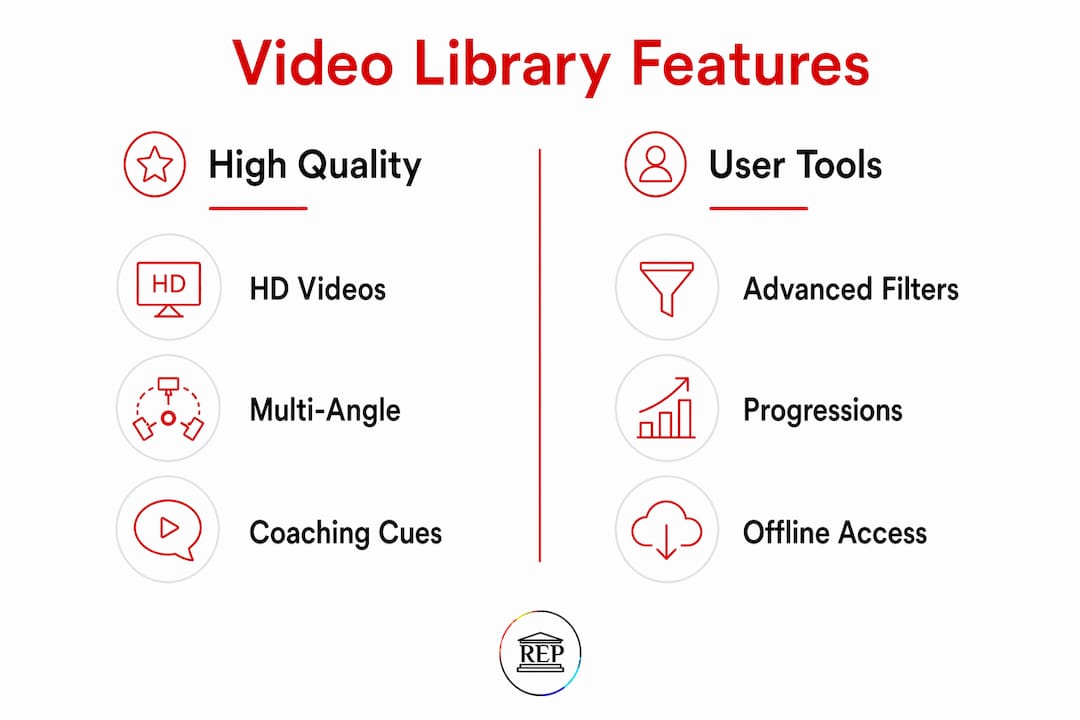
HD video demonstrations are the baseline. A quality library films exercises from multiple angles so you can see foot placement, spine position, and joint alignment clearly. Reputable exercise libraries as of Q2 2026 typically provide 1,000 to 2,000+ exercises with HD demonstrations, muscle group tags, and equipment filters. That volume matters because it means you will rarely hit a dead end when searching for a movement that fits your equipment or ability.
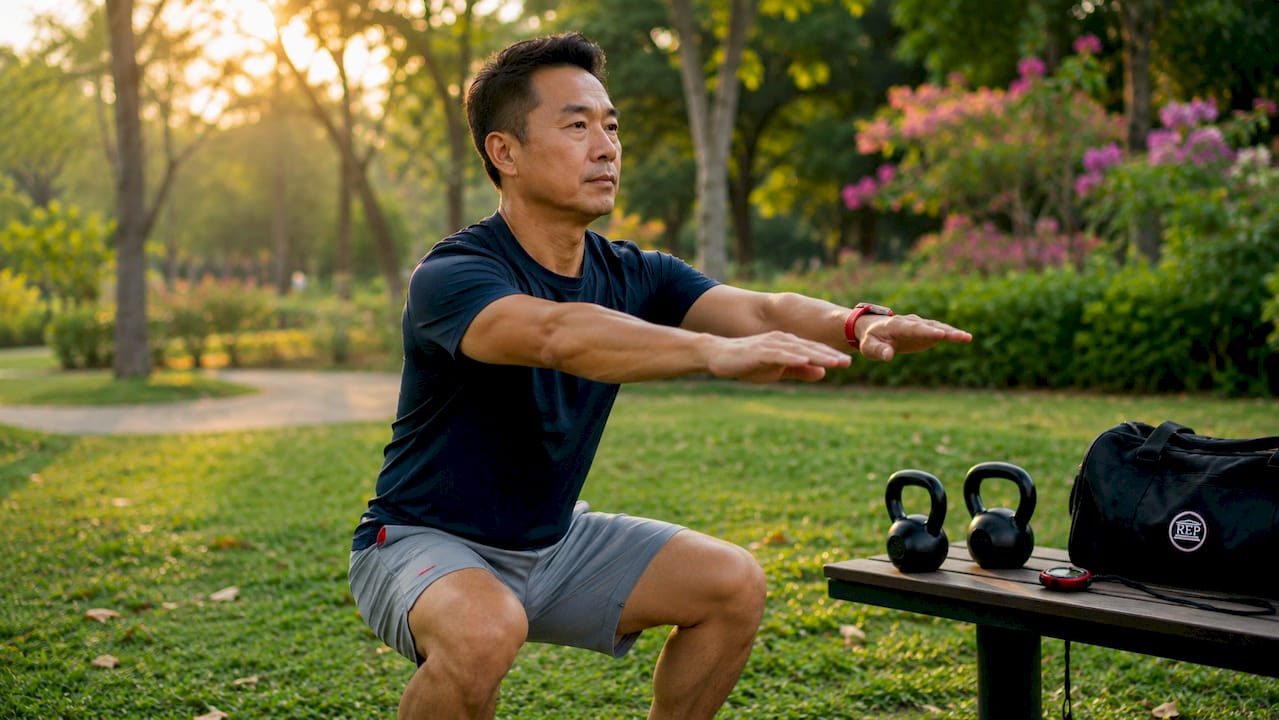
Coaching context goes beyond the video itself. Written cues and muscle labels help you understand the how and why of each movement, not just what it looks like. That understanding is what separates a library that builds skill from one that simply shows you shapes to copy.
Metadata, filtering, and search tools
Advanced libraries include over 40 data points per exercise, covering muscle activation, safety tips, variations, and equipment needs. That structured data lets you filter by body part, difficulty level, available equipment, and workout duration. Without strong filtering, even a 2,000-video collection becomes frustrating to use.
Progressions, regressions, and modifications
A library built for real people includes easier and harder versions of every movement. Regressions and modifications make workouts accessible for beginners and protect against injury when you are learning a new pattern. This is especially valuable when you are working without a live coach watching your form.
Pro Tip: Before committing to any fitness video collection, search for an exercise you find difficult, like a single-leg deadlift or a push-up. If the library offers a regression and a progression for that movement, it is built for real-world use.
Offline access and video caching
Offline capabilities and video caching improve the experience for anyone with unreliable internet at home. Some platforms allow video downloads so your workout continues without buffering interruptions. This feature is easy to overlook until you need it.
How do exercise video libraries support busy schedules and beginners?
Time and safety are the two biggest barriers for people starting home workouts. A well-built exercise tutorial library addresses both directly.
Guided home workout videos accommodate busy schedules with sessions ranging from 10 to 45 minutes, including no-equipment options suited to small spaces. A 10-minute session done consistently beats a 60-minute session done twice a month. That is the core truth behind time-efficient training, and a good library makes short sessions easy to find and follow.
For beginners, the structure a library provides is genuinely protective. Here is how to use it well:
- Consult your physician first. Standard industry advice requires checking with a doctor before starting any new workout regimen. This applies especially if you have joint issues, cardiovascular concerns, or have been inactive for an extended period.
- Start with regressions. Choose the easier version of every exercise for your first two weeks. Your ego will recover faster than a strained muscle.
- Use the coaching cues, not just the video. Read the written instructions alongside watching the demonstration. This combination builds correct movement patterns faster than video alone.
- Pick a consistent session length. Match your workout duration to what you can realistically repeat five days a week, not what feels ambitious on a Monday morning.
- Track your sessions. Even a simple note of which videos you completed builds accountability and shows you how far you have come.
Pro Tip: If you are a beginner, safe and effective workouts start with movement quality, not intensity. Pick one or two exercises per muscle group, nail the form, and add difficulty only when the movement feels natural.
Consistency and matching workout length to daily availability are the factors most responsible for sustained home fitness success. A library that offers 10-minute sessions is not cutting corners. It is meeting you where you actually are.
What are the advantages of using an exercise video library over generic video searches?
Generic video searches give you content. A curated library gives you a system. The difference shows up every time you try to build a real workout.
| Feature | Curated exercise library | Generic video search |
|---|---|---|
| Content quality | Vetted, coached, consistent | Variable, unverified |
| Coaching cues | Written instructions included | Rarely available |
| Filtering | By muscle, equipment, difficulty | Limited or none |
| Ad interruptions | None | Frequent |
| Workout building | Integrated tools available | Manual, external |
| Progressions | Built in | Inconsistent |
Coaching context is the core advantage of a structured library over a random search. When you understand why a movement works and what muscles it targets, you perform it better and adapt it more safely. A generic search result rarely provides that layer of instruction.
The absence of ads and autoplay distractions is also more significant than it sounds. Mid-workout interruptions break focus and momentum. A library keeps you in the session. That continuity directly supports the habit-building that makes home fitness stick.
Integrating exercise videos directly into workout builders avoids distraction, supports program adherence, and improves engagement over time. When your videos live inside a structured plan rather than a loose playlist, you are far more likely to complete the session and return the next day.
A personal trainer with a busy schedule approach will tell you that the best workout is the one you actually finish. A curated library removes the friction that causes people to quit mid-session or skip entirely.
How do you choose and get the most out of a home workout video library?
Choosing the right virtual fitness library comes down to a few clear criteria. Use this list to evaluate any platform before committing your time.
- Exercise variety. Look for at least several hundred movements across strength, mobility, cardio, and flexibility categories. A narrow library forces you into repetitive routines quickly.
- Video quality. Multi-angle HD demonstrations are non-negotiable. Poor video quality makes it impossible to check your form against what you see on screen.
- Coaching depth. Written cues, safety tips, and muscle activation notes should accompany every video. Video alone is not enough.
- Filtering capability. You need to search by equipment, difficulty, muscle group, and session length. Without filters, a large library becomes unusable.
- Offline access. If your home internet is inconsistent, confirm the platform supports video downloads before signing up.
- Integration with a workout plan. An exercise library is a database of movements, but it is not a substitute for a structured program with sets, reps, and progression built in. The best libraries connect directly to workout builders or come paired with coaching support.
For beginners specifically, the most important step is resisting the urge to jump to advanced content. Use regressions. Build the movement pattern first. Intensity comes later, and it comes safely when your foundation is solid.
Online coaching paired with guided video gives you the best of both worlds: the flexibility of on-demand access and the accountability of a real coach watching your progress. That combination closes the gap between watching a video and actually improving.
Key takeaways
A high-quality exercise video library combines HD coaching videos, rich metadata, and filtering tools to make guided home workouts safe, consistent, and effective for beginners and busy people alike.
| Point | Details |
|---|---|
| Coaching context is critical | Written cues and muscle labels improve form and movement understanding beyond video alone. |
| Short sessions drive consistency | Sessions of 10–45 minutes matched to your schedule build habits better than occasional long workouts. |
| Regressions protect beginners | Always start with the easier version of a movement to build form before adding intensity. |
| Libraries need programs | A video library supports but does not replace a structured plan with sets, reps, and progressions. |
| Filtering saves time | Strong search tools by muscle group, equipment, and difficulty make large libraries actually usable. |
What I have learned from coaching with video libraries
I have been coaching clients through video-based training long enough to know what actually moves the needle, and it is not the number of videos in a library. It is the coaching layer wrapped around each one.
The clients who improve fastest are the ones who read the written cues, not just watch the demo. They understand what muscle they are targeting, what mistake to avoid, and why the movement matters. That context turns a passive viewing experience into active learning. Without it, people repeat the same form errors for months and wonder why they are not progressing.
The second thing I have learned is that matching session length to real life is not a compromise. It is the strategy. A client who does a focused 15-minute session four days a week will outperform someone who attempts 60-minute sessions twice a week and burns out by week three. Shorter, consistent effort compounds. Ambitious, sporadic effort does not.
For beginners especially, I always say: the regression is not the easy way out. It is the smart way in. Building movement quality at a manageable intensity protects your joints, builds your confidence, and sets you up to progress without setbacks. A library that offers those regressions is one worth using. One that only shows you the advanced version is one that will eventually hurt you.
— Coach Justin
Repphilosophy's on-demand fitness video library
If you are ready to move beyond random searches and build a real routine, Repphilosophy has you covered. The on-demand exercise video library pairs HD coached demonstrations with the kind of programming structure that turns individual videos into a real fitness plan.
Whether you are a beginner looking for a safe starting point or a busy adult who needs efficient, no-excuses sessions, Repphilosophy's virtual coaching memberships give you access to structured workouts, personalized guidance, and a coach who stands by your side every step of the way. You do not have to figure this out alone. The library is ready when you are.
FAQ
What is an exercise video library?
An exercise video library is a curated database of guided exercise videos with coaching cues, muscle group tags, and filtering tools. It differs from a generic video search by offering vetted, structured content designed to support safe and effective workouts.
How many exercises should a good library include?
Reputable libraries typically offer 1,000 to 2,000+ exercises with HD demonstrations and equipment filters. That range gives you enough variety to build programs across all fitness levels without repetition.
Are exercise video libraries safe for beginners?
Yes, when they include regressions and modifications. Standard guidance also recommends consulting a physician before starting any new workout regimen, particularly if you have existing health conditions.
Can a video library replace a personal trainer?
A library is a movement resource, not a complete coaching relationship. It works best when paired with a structured program and, ideally, a coach who can review your progress and adjust your plan over time.
Do I need equipment to use a home workout video library?
No. Many libraries include no-equipment sessions designed for small spaces, with session lengths as short as 10 minutes. These are ideal for beginners or anyone with limited space and time.
Recommended
- Virtual Personal Trainer Videos • On-Demand Exercise Library | REP Philosophy Coaching
- Safe Effective Workouts: A Practical Guide for Busy Adults
- Online Personal Trainers Video Library | Structured Workouts On-Demand | REP Philosophy Coaching
- Online Personal Trainers Video Library | Structured Workouts On-Demand | REP Philosophy Coaching