

If you're comparing personal trainer cost San Diego options right now, here's the short version: expect to pay between $39 and $177 per session, with most trainers landing around $75 per session on average. Buying a package instead of single sessions drops that per-session number fast, often into the $30 to $90 range once you factor in intro deals and bundled pricing. If you're not sure where to start, book a single trial session or a small 4-pack before committing to anything bigger.
- Average San Diego session price: about $75
- Typical range: $39 to $177 per session
- Best first move: a trial session, or a small pack if you're confident about fit; group sessions if your budget is tight
Pro Tip: Never buy a 12 or 24 session pack before you've trained with that coach at least once. Trial first, commit second.
Key Takeaways
Personal training in San Diego averages about $75 per session, but committing to a package or group format is the single most reliable way to lower your real cost without losing coaching quality.
| Point | Details |
|---|---|
| Average local rate | Expect around $75 per session, with a typical range of $39 to $177 depending on format and trainer level. |
| Packages cut cost fastest | A 4-session pack near $240 brings the per-session price to about $60, well under the citywide average. |
| Cancellation terms matter | Most trainers require 24 hour notice, and multi-session packs are usually nonrefundable once purchased. |
| Group and virtual formats save money | Group classes, buddy training, and virtual coaching typically cost less per person than private sessions while keeping accountability. |
| Test before you commit | Repphilosophy's trial session, bring-a-buddy memberships, and virtual library let San Diego clients confirm fit before buying a larger package. |
Table of Contents
- How Much Does a Personal Trainer Cost in San Diego?
- What Do Package Deals Actually Cost Per Session?
- Why Do Rates Vary So Much Between Trainers?
- How Do You Choose the Right Trainer in San Diego?
- Where Can You Find Cheaper Training That Still Works?
- Coach Justin on Pricing, Trials, and Real Value
- What Does Three Months of Training Actually Cost?
- How Long Does It Take to Start Training With Someone?
- What Happens If You Need to Cancel or Reschedule?
- Personal Trainer Cost in San Diego: What to Expect and How to Save
- Get Started With Repphilosophy in 4S Ranch
- Sources
How Much Does a Personal Trainer Cost in San Diego?
San Diego pricing splits into three rough tiers, and knowing which one you're looking at helps you avoid overpaying for less than you need. CityCostData puts the citywide average at roughly $75 per session, with a documented spread of $39 to $177. Community forums back this up. One thread on personal training prices in the North County area reported rates ranging from about $60 to $150 or more, depending on whether the session happened at a private gym or in someone's home.
Here's what each tier usually buys you; for details on what clients receive from a personalized trainer, see Personal Training — Bodies by Mahmood:
- Low end ($39 to $60): Shorter sessions, often 30 minutes, minimal individual programming, sometimes bundled into a gym membership.
- Mid range ($60 to $100): A full 60 minute session with an initial fitness assessment and a program built around your goals. This is where most working professionals in San Diego land.
- High end ($100 to $177+): Specialized coaching (post rehab, sports performance, or executive clients), premium studio locations, or in-home visits where travel time gets baked into the rate.
Location matters more than most people expect. A trainer working out of a boutique studio in La Jolla or downtown will typically charge more than one operating out of a community center in Poway or 4S Ranch, largely because their overhead is higher. Format changes the math too. Community institutions like UCSD Recreation often list member rates in the $59 to $75 range, well under the citywide average, since they're subsidized by membership fees rather than pure market pricing.
What Do Package Deals Actually Cost Per Session?
Nobody should pay full single-session rate if they're planning to train more than a couple of times a month. Packages exist specifically to reward that commitment, and the math is simple once you see it laid out:
- 4-session pack at $240 works out to $60 per session, roughly $15 below the citywide average.
- 8-session pack at $440 brings it down to $55 per session.
- Monthly subscription models, similar to what the YMCA of San Diego County offers, often price a weekly session around $240 per month, which lands at $60 per session for four visits.
- Groupon and deal-site bundles frequently advertise introductory multi-session offers in the $30 to $90 per session range, though these usually apply only to new clients.
Before you buy any pack, read the fine print. Most punch passes are nonrefundable and many expire within 60 to 90 days, so a "deal" only pays off if you'll realistically use every session in that window.
Why Do Rates Vary So Much Between Trainers?
A $177 session and a $39 session rarely reflect the same product, and the gap usually comes down to a handful of concrete factors:
- Certifications and specialized education. A trainer with an advanced certification in post-rehab work or sports performance coaching typically charges more than someone with a general fitness certificate, because they're solving harder problems.
- Niche focus. Coaches working with injury recovery, youth athletes, or competitive performance training carry rates that reflect that added expertise.
- In-home versus studio. Travel time gets priced in. A trainer coming to your house in 4S Ranch or Rancho Bernardo will usually charge a premium over a client who comes to a fixed studio location.
- Session length. A 30 minute session costs less than a 60 minute one, but not always half as much. Warmup and setup time eat into shorter sessions disproportionately, so the per-minute value often favors the full hour.
- Studio location and overhead. Premium neighborhoods mean premium rent, and that gets reflected in the rate card.
Pro Tip: Before you compare two quotes, ask exactly what's included. "60 minutes" from one trainer might mean a bare workout, while another includes a full movement assessment and a written nutrition plan. Those aren't the same $75.
How Do You Choose the Right Trainer in San Diego?
Picking a trainer on price alone is how people end up paying premium rates for a mediocre experience. Run through this before you hand over a card number:
- Confirm current certification (NASM, ACE, NSCA, or equivalent) and ask how long they've held it.
- Ask for examples of clients with goals similar to yours, whether that's weight loss, strength, or return-to-sport training.
- Confirm they carry liability insurance, which most legitimate independent trainers and studios do.
- Get the cancellation and refund policy in writing before you buy a package.
- Book a single trial session first, even if a bigger pack looks cheaper per session.
Five questions worth asking on that first call:
- How is pricing structured, single sessions, packs, or monthly membership?
- How will you measure my progress, and how often?
- What exactly happens during a typical session?
- What are the terms if I want to try one session before committing?
- Are nutrition guidance or program design included, or billed separately?
Watch for red flags: no initial movement screening, high-pressure sales tactics pushing a large upfront pack, or vague promises about results with no measurable plan behind them.
Where Can You Find Cheaper Training That Still Works?
Private one-on-one sessions aren't the only path to real results, and Harvard Health's review of trainer value points out that the biggest benefit trainers provide is accountability, technique coaching, and structured programming, not the exclusivity of a private room. That value shows up in lower-cost formats too.
- Group classes: Typically the cheapest per-person option, since the trainer's time is split across multiple clients. Best for general fitness and motivation through shared accountability.
- Bring-a-buddy training: Split a session cost with a friend and you both get semi-personal attention at roughly half the private rate.
- Virtual coaching: Lower overhead for the trainer usually means a lower price for you, with programming and video guidance delivered remotely.
- Intro deals: Groupon and similar sites frequently offer discounted first packages, useful for testing a trainer before you commit long term.
Private sessions earn their price when you need close technical correction, post-injury guidance, or highly individualized programming. Group or virtual formats make more sense for general conditioning or when budget is the deciding factor.
Pro Tip: A hybrid approach works well for a lot of people: a monthly group class membership for consistency, plus one or two private sessions a month for form checks and program updates.
Coach Justin on Pricing, Trials, and Real Value
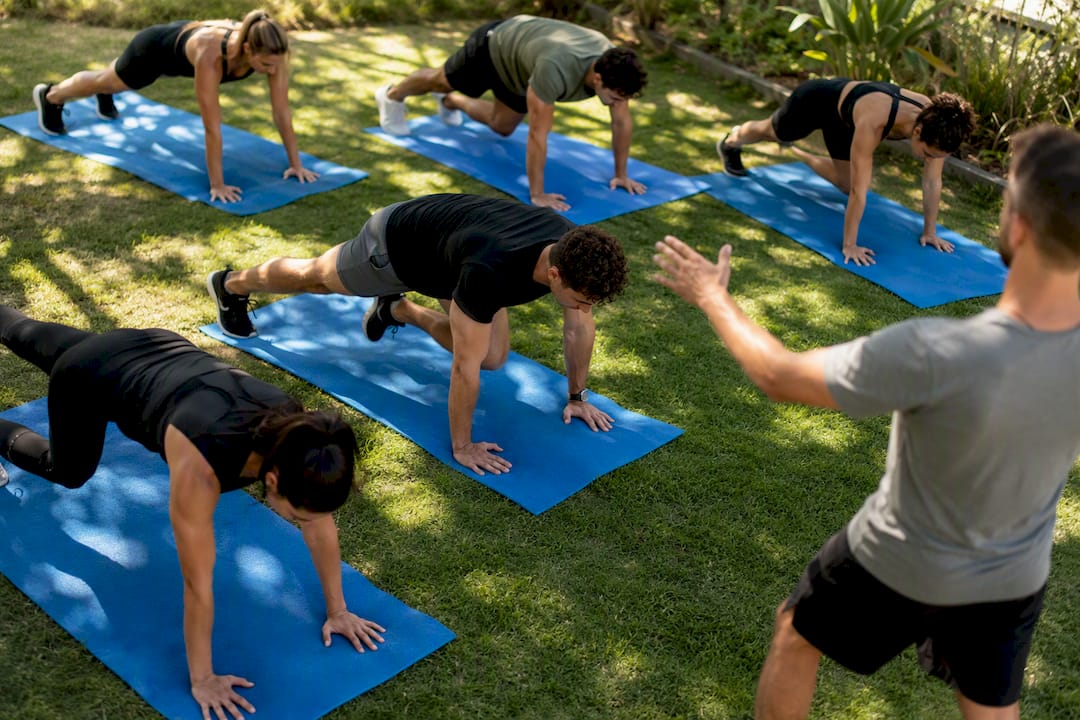
At Repphilosophy, based in 4S Ranch, pricing exists to reduce risk for the client, not to lock people into something before they know it fits. We offer a single trial session, bring-a-buddy memberships, group classes, and a virtual on-demand exercise library, and we structure each one so you can test what actually works for your goals before scaling up.
- Trial sessions let you evaluate coaching style and program design with zero long-term commitment.
- Bring-a-buddy memberships split cost while keeping accountability high.
- The virtual library gives budget-conscious or traveling clients structured programming without studio overhead.
A trainer's real value isn't the workout itself. It's the accountability and the correction you can't give yourself in the mirror. That's worth testing before you buy in bulk.
— Coach Justin
What Does Three Months of Training Actually Cost?
Most people asking about personal training prices San Diego wide aren't budgeting for one session. They're budgeting for a season of change, and three months is the most common commitment length for seeing real results.
At one session per week for 12 weeks, using the $75 average per session, you're looking at roughly $900 total, though a package rate closer to $60 per session brings that down to around $720. Two sessions per week roughly doubles that, landing between $1,440 and $1,800 over three months depending on the rate you lock in.
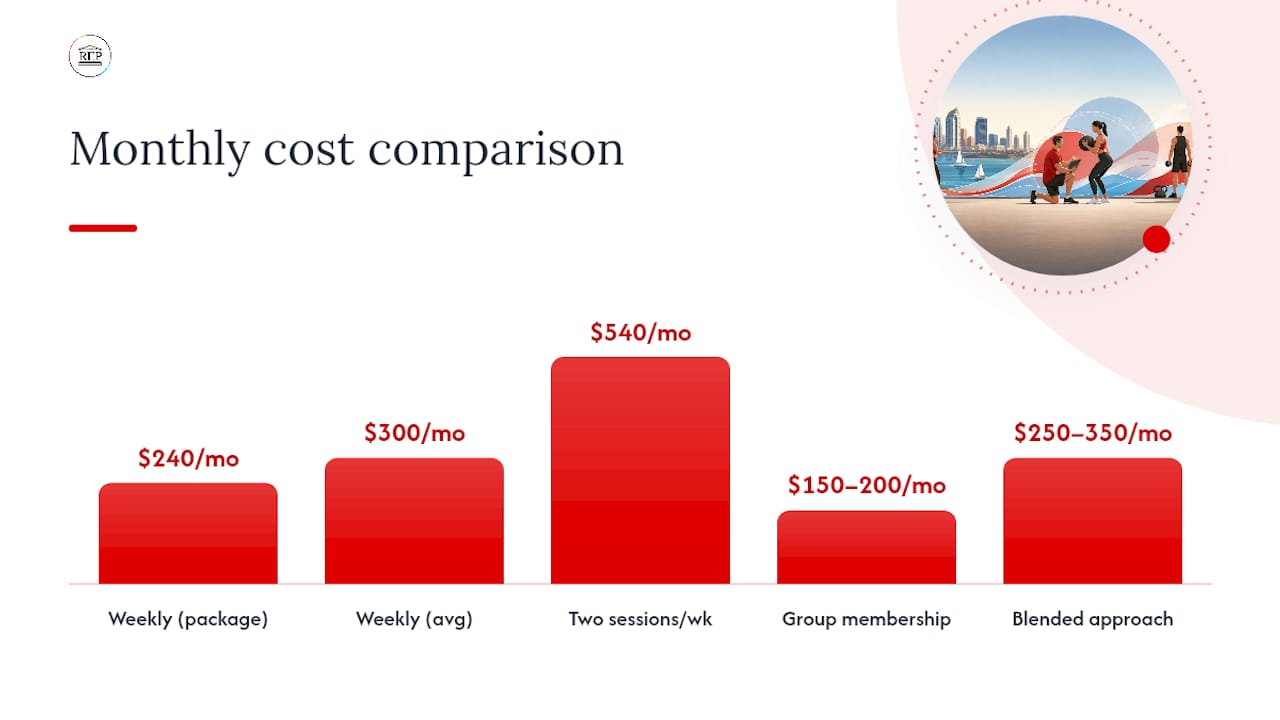
Group classes change the math significantly. A monthly group membership in the range of $150 to $200 covers unlimited or high-frequency classes, which over three months lands between $450 and $600, well under half the cost of weekly private sessions.
Blended approaches often make the most financial sense for people training with a specific goal, like a wedding, a race, or simply rebuilding consistency after a layoff. A common pattern is two group classes per week plus one private session per month for form correction and program adjustment. That combination typically runs $250 to $350 monthly, or $750 to $1,050 across a three month stretch, while still delivering individualized feedback.
Whatever total you land on, the number only matters relative to frequency. A cheaper per-session rate on a package you don't use consistently costs more, in results, than a slightly higher rate you actually show up for every week.
How Long Does It Take to Start Training With Someone?
Getting from "I should hire a trainer" to your first real session usually takes less time than people expect, but rushing the early steps costs you later.
Day one is initial contact, a phone call, form submission, or studio visit to ask about pricing and availability. Most San Diego trainers respond within a day or two. Within that first week, you'll typically schedule either a consultation or go straight into a trial session, especially with providers who build trial pricing into their model specifically to speed up this step.

The trial or first session itself usually includes a movement assessment, a conversation about your goals, and a light introductory workout, not a full-intensity session. That's intentional. A good trainer is gathering information as much as you are evaluating them.
From there, most clients move into a regular cadence within two to three weeks of that first contact: one or two sessions weekly, either private or blended with group classes. The full onboarding, from your first phone call to a settled, recurring schedule, generally lands somewhere between two and four weeks. Trainers who require large upfront package purchases before any trial tend to stretch this timeline, since clients often hesitate before committing sight unseen.
If you're comparing multiple providers, book trial sessions with two or three in the same two week window. It's the fastest way to compare coaching style, communication, and program quality without waiting months to notice a mismatch.
What Happens If You Need to Cancel or Reschedule?
Cancellation policies affect your real cost more than most people realize going in, especially with prepaid packages.
Most San Diego trainers and studios require 24 hour notice to reschedule without penalty. Cancel with less notice, and many providers charge the full session rate anyway, treating it as a held appointment rather than a missed one. That policy exists because trainers block dedicated time for you, and a late cancellation leaves that slot unfillable.
Refund policies on packages are typically stricter than single-session cancellation rules. Most multi-session packs are nonrefundable once purchased, even if unused sessions remain, though many providers allow an extension of the expiration window under specific circumstances like injury or travel. Groupon-style intro deals are usually the least flexible of all, often carrying strict expiration dates and no refund path once redeemed.
Before buying anything beyond a single trial, get three things in writing: the cancellation notice window, whether unused sessions expire, and whether a medical or family emergency qualifies for an exception. A trainer or studio that won't answer these clearly before you pay is telling you something about how they'll handle disputes later.
The practical takeaway: a slightly higher per-session rate with a flexible cancellation policy often costs less over three months than a cheap package with rigid rules, once you account for a missed week or two that real life tends to produce.
Personal Trainer Cost in San Diego: What to Expect and How to Save
The number that actually matters in this whole conversation isn't $75. It's the per-session cost after you account for how often you'll realistically show up, and that's the piece most pricing guides skip entirely.
Conventional advice treats personal training like a fixed-price purchase: pick a number, pay it, done. That's backwards. The trainers charging $150 a session and the ones charging $60 are often selling different products entirely, one with a movement assessment and written programming, one without. Comparing them on price alone is comparing apples to gym equipment.
What San Diego residents should prioritize first isn't finding the cheapest rate. It's finding the format, private, group, buddy, or virtual, that they'll actually stick with for three months, because the real value trainers deliver comes from accountability and consistent coaching, not the exercises themselves. A $60 session you attend weekly beats a $150 session you cancel twice a month, every time.
Get Started With Repphilosophy in 4S Ranch
Comparing rates across San Diego is worth doing, but at some point the smarter move is booking a real session instead of another quote. Repphilosophy keeps the entry point low on purpose: a single trial training session lets you test coaching style and programming before you spend on a package, whether you're rebuilding after a layoff or training for a specific goal.

If group energy motivates you more than a private room, our group classes and bring-a-buddy memberships split cost while keeping accountability high. Traveling often or training on a tighter schedule? The virtual on-demand exercise library gives you structured programming without studio overhead. Parents training young athletes should look at WayALife Athletics, our 4S Ranch sports performance program built for youth development.
Ready to see what fits your goals and budget? Book your trial session or browse packages through the Repphilosophy shop and get your first session on the calendar this week.
Sources
- Personal Trainer Cost in San Diego, California (2025) | USA Service Cost Directory
- San Diego personal training deals — Groupon
- How a personal trainer can enhance your workouts — Harvard Health